Source Air Cooling Commercial Prep Table for Catering, Retail, and Food Service
Explore 30 listings for Air Cooling Commercial Prep Table units featuring stainless steel construction and digital temperature control. Buyers can compare specifications including cooling modes, door types, and certifications like CE and RoHS from verified Chinese manufacturers.
Key considerations
Products List


Restaurant Sandwich Prep Table Refrigerator Commercial Kitchen Equipment Supplier
$560.00 - $782.00
MOQ: 1 Pieces


Commercial Salad Counter Refrigerator Stainless Steel Sandwich Prep Table Manufacturer
$700.00 - $1600.00
MOQ: 1 Pieces


Commercial Refrigerated Stainless Steel Refrigerated Prep Table with Sink
$487.00 - $693.00
MOQ: 5 Pieces

Commercial Refrigerated Stainless Steel Refrigerated Prep Table with Sink
$565.00 - $693.00
MOQ: 5 Pieces


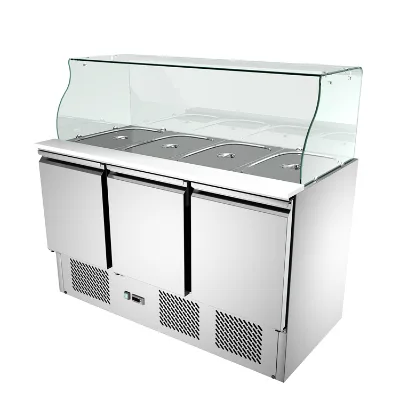


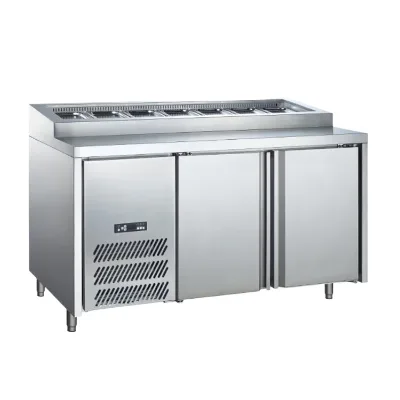
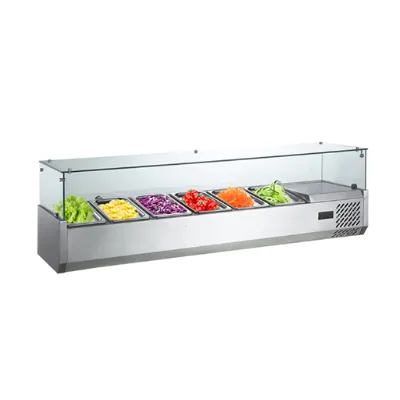
XY Best Commercial Under Counter Salad Prep Table with Refrigerator Display
$425.58 - $435.73
MOQ: 1 pieces
Comprehensive Sourcing Guide
Strategic Sourcing Guide for Air Cooling Commercial Prep Tables
Understanding Core Technical Specifications and Cooling Architecture
When sourcing an Air Cooling Commercial Prep Table, the primary objective is to identify equipment that maintains precise thermal stability while optimizing workspace utility. The fundamental architecture of these units relies on a specific refrigeration method known as direct cooling, often enhanced by fan cooling systems to ensure uniform air distribution across the preparation surface. Unlike static air systems, the fan cooling mechanism actively circulates chilled air, preventing hot spots that could compromise food safety standards during extended prep periods. Buyers must verify that the unit utilizes a refrigerating fluid compatible with modern environmental standards, such as R290 or R134A, which are frequently cited in current commercial inventory.
The structural integrity of the unit is equally critical. High-quality prep tables typically feature a body constructed from stainless steel, providing resistance to corrosion and ease of cleaning in high-moisture kitchen environments. The insulation thickness is a vital metric for energy efficiency; observed industry standards often point to an insulation layer of approximately 40 mm, which significantly reduces thermal transfer and lowers the load on the compressor. The physical dimensions of the unit must align with the specific workflow of the kitchen. Standard specifications for these units often range from 1200 mm in length, with depths around 600 mm to 800 mm and heights varying between 800 mm and 1415 mm depending on the inclusion of storage or specific cooling zones.
Temperature control is another pivotal technical aspect. Advanced units are equipped with digital controllers and smart thermostats that allow for precise adjustments. The operational temperature range for these units is generally segmented to meet different culinary needs. For cold storage applications, the range typically spans from 0°C to 10°C, suitable for holding fresh ingredients. In scenarios requiring freezing capabilities, the unit may support ranges down to -18°C or even -30°C for quick freezing functions. It is essential to distinguish between units designed solely for cold storage and those offering dual-temperature capabilities, as the latter provide greater versatility for complex kitchen operations.
Compliance, Certification, and Regulatory Standards
Navigating the regulatory landscape is a non-negotiable step in the procurement of commercial kitchen equipment. Buyers must ensure that any supplier provides verifiable documentation confirming compliance with international and regional safety standards. The most common certifications observed in the market include CE, RoHS, ISO, and CCC. The CE mark indicates conformity with health, safety, and environmental protection standards for products sold within the European Economic Area. RoHS compliance ensures that the equipment is manufactured without specific hazardous materials, aligning with global environmental directives. ISO certification validates that the manufacturer adheres to rigorous quality management systems, while the CCC mark is a mandatory certification for products sold within China, indicating compliance with national safety standards.
When evaluating a supplier, it is crucial to request proof of these certifications rather than accepting them as mere marketing claims. The presence of a CCC certification is particularly relevant if the equipment is manufactured in China, as it is a legal requirement for domestic sales and often a baseline for export quality. Similarly, the CE mark is essential for buyers targeting the European market. Buyers should verify that the specific model number, such as LCPST-PT-R1268 or YZSC, is associated with the provided certification documents. Discrepancies between the model number and the certification scope can indicate potential compliance risks.
In addition to electrical and environmental certifications, buyers should verify adherence to specific product standards regarding dimensions and construction. Standard specifications often dictate precise measurements, such as 1200600800 mm or 7008001100 mm. These dimensions are not arbitrary; they are designed to fit standard kitchen layouts and ensure compatibility with other equipment. Furthermore, the product standard should explicitly state whether the unit is built to "Standard Specifications" or if it allows for "Customized" configurations. This distinction is vital for buyers with unique spatial constraints or specific workflow requirements. Ensuring that the supplier can provide a certificate of conformity that matches the exact model and standard is a fundamental quality control measure.
Cost Drivers and Pricing Dynamics in the Market
The pricing of air cooling commercial prep tables is influenced by a complex interplay of factors, including material quality, cooling technology, and customization options. The observed price range in the current market spans from 100 to 3000 USD, a broad spectrum that reflects the diversity of available configurations. At the lower end of this range, buyers may find units with basic features, such as manual defrost systems and standard insulation thickness. These units are often suitable for small-scale operations or temporary setups where budget constraints are the primary driver. However, for commercial environments requiring high reliability and energy efficiency, the investment typically leans toward the higher end of the price spectrum.
Material composition is a significant cost driver. Units constructed entirely from high-grade stainless steel command a premium price compared to those with mixed materials or lower-grade steel. The inclusion of advanced features, such as smart thermostats, digital controllers, and fan cooling systems, also increases the manufacturing cost. Additionally, the type of refrigerant used can impact the price; eco-friendly refrigerants like R290 may incur higher costs due to stricter handling and charging requirements. Customization is another major factor. While standard models are generally more affordable, units requiring custom dimensions, specialized door types (such as sliding or folding doors), or specific internal configurations will carry a higher price tag.
The Minimum Order Quantity (MOQ) also plays a role in the overall cost structure. The observed MOQ range for these products is typically between 1 and 10 units. For buyers purchasing a single unit, the per-unit cost may be higher due to the lack of economies of scale. Conversely, purchasing within the 10-unit range often allows for negotiation on pricing and shipping terms. Buyers should also consider the packaging costs, as units shipped with wooden framing or wooden packages for extra protection may incur additional fees compared to those with general goods packaging. Understanding these cost drivers enables buyers to make informed decisions that balance budget constraints with performance requirements.
Typical Applications and Operational Versatility
Air cooling commercial prep tables are designed to serve a wide array of culinary applications, making them a versatile asset for various food service establishments. The primary function of these units is to provide a hygienic, temperature-controlled workspace for food preparation. In commercial kitchens, these tables are often used to hold ingredients, assemble dishes, and store prepared foods before service. The ability to maintain temperatures between 0°C and 10°C makes them ideal for storing fresh produce, dairy products, and meats, ensuring food safety and extending shelf life.
For establishments requiring freezing capabilities, certain models offer dual-temperature functionality, allowing for both cold storage and freezing operations. This versatility is particularly valuable in restaurants, hotels, and catering services that need to manage a diverse inventory of ingredients. The specific temperature ranges, such as -10°C to -18°C for standard freezing and -20°C to -30°C for quick freezing, enable these units to handle a broad spectrum of food items. The inclusion of features like glass lids or specific door types, such as sliding or folding doors, further enhances their utility in different kitchen layouts.
The design of these units also supports specific operational needs. For instance, models compatible with GN pans (Gn1/6) are tailored for professional kitchens that utilize standardized food containers. This compatibility streamlines the workflow, allowing staff to easily transfer food between the prep table and other kitchen equipment. The capacity of the unit, which can exceed 501 liters or be configured to hold 18 pans, ensures that it can meet the demands of high-volume operations. Whether used in a busy restaurant kitchen, a hospital cafeteria, or a retail food display, the air cooling prep table serves as a critical component in maintaining food quality and operational efficiency.
Supplier Evaluation and Quality Assurance Protocols
Selecting the right supplier is paramount to ensuring the long-term success of the procurement. Buyers should prioritize suppliers who demonstrate transparency in their manufacturing processes and provide clear documentation regarding product specifications. The origin of the product is a key indicator of quality; many reputable suppliers are located in established manufacturing hubs such as Shandong or Guangdong in China. These regions are known for their robust industrial infrastructure and expertise in producing commercial refrigeration equipment. However, the location alone is not a guarantee of quality; buyers must verify the supplier's track record and customer reviews.
Quality assurance protocols should be a central part of the supplier evaluation process. Buyers should inquire about the supplier's testing procedures, including thermal performance tests, durability assessments, and safety checks. The condition of the product, typically listed as "New," should be confirmed through detailed product descriptions and images. Additionally, the structure of the unit, whether assembled or disassembled for shipping, can impact the final quality upon installation. Suppliers who offer assembled units may provide a more immediate solution, while those offering disassembled units might provide better shipping protection.
Buyers should also assess the supplier's ability to provide after-sales support and warranty services. A reliable supplier will offer clear terms regarding maintenance, repair, and the availability of spare parts. The defrost type, whether manual or auto, is another factor to consider, as it impacts the ease of maintenance and operational continuity. Suppliers who offer auto defrost systems may be preferred for high-volume operations where manual intervention is impractical. By conducting a thorough evaluation of the supplier's capabilities, buyers can mitigate risks and ensure a smooth procurement process.
Long-Term Procurement Considerations and Maintenance
Long-term procurement considerations extend beyond the initial purchase price to include the total cost of ownership, which encompasses energy consumption, maintenance requirements, and potential downtime. The choice of cooling mode, such as air cooling or fan cooling, directly impacts energy efficiency. Units with advanced digital controllers and smart thermostats are designed to optimize energy usage, reducing operational costs over time. Buyers should evaluate the energy efficiency ratings of the units they are considering, as this can significantly affect the long-term financial viability of the investment.
Maintenance is another critical factor. The defrost type, whether manual or auto, influences the frequency and complexity of maintenance tasks. Manual defrost systems require regular intervention by kitchen staff, which can be labor-intensive and prone to human error. In contrast, auto defrost systems automate this process, reducing the burden on staff and minimizing the risk of ice buildup that could impair performance. The insulation thickness of 40 mm, as observed in standard specifications, plays a crucial role in maintaining thermal efficiency and reducing the workload on the compressor.
Buyers should also consider the customization options available from the supplier. The ability to customize dimensions, door types, and internal configurations can extend the lifespan of the equipment by ensuring it remains relevant to the evolving needs of the kitchen. Additionally, the availability of spare parts and the supplier's response time to service requests are vital for minimizing downtime. By focusing on these long-term factors, buyers can make procurement decisions that ensure the reliability and efficiency of their commercial kitchen equipment for years to come.
FAQs
What certifications do air cooling commercial prep tables have?
These units typically hold CE, RoHS, ISO, and CCC certifications. The CCC mark is mandatory for products sold in China, while CE and RoHS ensure compliance with European safety and environmental standards for global export.
How is the temperature controlled in these commercial units?
Advanced models feature digital controllers and smart thermostats for precise adjustments. Buyers can select units with dual-temperature capabilities to manage both cold storage ranges of 0-10°C and freezing functions down to -30°C.
Which door types are available for air cooling prep tables?
Available door configurations include sliding, swing, and folding doors to suit different kitchen layouts. Some models also feature double doors or glass lids to enhance visibility and accessibility during food preparation tasks.
Can these units be customized for specific kitchen needs?
Yes, customization is available for dimensions, specifications, and internal configurations. Buyers can request standard sizes like 1200*600*800mm or opt for custom specifications to fit unique spatial constraints and workflow requirements.
What refrigeration fluids are used in these commercial freezers?
Units commonly utilize R290 and R134A refrigerants which align with modern environmental standards. These eco-friendly fluids ensure efficient cooling while meeting global regulations for hazardous material reduction in commercial refrigeration equipment.
How does the insulation thickness affect energy efficiency?
Standard insulation thickness is approximately 40 mm to significantly reduce thermal transfer. This layer lowers the compressor load and improves energy efficiency, ensuring stable temperatures in high-moisture kitchen environments.