Source Airtight BPA Free Glass Container for Daily Use, Food Storage, and Portion Control
Compare 30 listings of Airtight BPA Free Glass Container options from suppliers in China. Buyers can evaluate capacities, lid materials, and thermal shock resistance for daily use and food storage applications.
Key considerations
Products List









Comprehensive Sourcing Guide
Strategic Sourcing Guide for Airtight BPA-Free Glass Containers
Understanding Material Composition and Thermal Performance
When sourcing airtight BPA-free glass containers, the primary technical differentiator lies in the base material and its thermal resilience. The core product category relies heavily on High Borosilicate Glass, a material selected for its superior durability compared to standard soda-lime glass. This specific glass type is engineered to withstand significant thermal stress, making it suitable for a wide range of temperature applications. Buyers must verify that the supplier explicitly states the use of High Borosilicate Glass, as this is the industry standard for containers intended to move from freezing to heating environments without shattering.
The thermal performance specifications observed in the market indicate a usage temperature range extending from -20℃ to 460℃, with some variants capable of withstanding temperatures up to 560℃. A critical metric for procurement is the thermal shock resistance, which is documented at 120℃. This figure represents the maximum temperature differential the container can endure when transitioning between hot and cold states. For instance, moving a container from a freezer at -20℃ directly into an oven at 100℃ should not cause failure if the thermal shock limit is respected. However, buyers should note that while the glass itself is highly resistant, the lid materials introduce different constraints. The lids are typically constructed from a combination of Polypropylene (PP), Silicone, and Tempered Glass. The silicone component is essential for creating the airtight seal, while the PP provides structural rigidity, and tempered glass lids offer a premium, transparent viewing option.
Compliance Verification and Certification Standards
In the B2B procurement of food-grade storage solutions, compliance is not merely a formality but a critical risk mitigation strategy. The supply chain for these containers must adhere to rigorous international safety standards. Verified product attributes consistently list certifications including RoHS, REACH, LFGB, FDA, and ISO. These certifications confirm that the materials used, particularly the plastics in the lids and the glass itself, are free from harmful substances.
The "BPA Free" attribute is a fundamental requirement for this product category. Buyers should ensure that the supplier's documentation explicitly confirms the absence of Bisphenol A in both the glass and the plastic components. The presence of FDA and LFGB certifications provides a strong baseline for food safety, ensuring the containers do not leach chemicals into food products under normal usage conditions. Additionally, the Dgccrf certification is noted in specific product lines, indicating compliance with French regulations, which often serve as a proxy for broader European safety standards.
It is important to distinguish between product-specific certifications and general corporate certifications. While specific product data lists FDA, LFGB, and RoHS, general background information may mention BSCI or ISO9001. Buyers should prioritize the product-specific food safety certifications (FDA, LFGB) when evaluating the safety of the container itself, while using BSCI or ISO9001 as indicators of the supplier's overall management and ethical manufacturing practices. The absence of a specific certification in a product listing does not automatically imply non-compliance, but the absence of a claim requires direct verification with the supplier before proceeding.
Design Variations and Functional Specifications
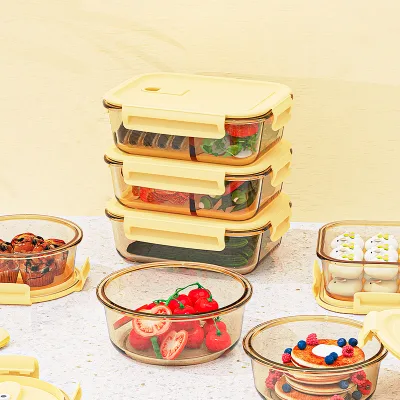
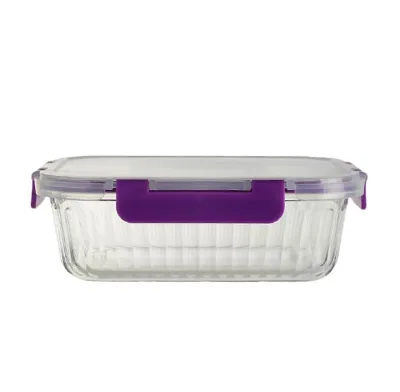
The market for airtight glass containers offers diverse design configurations to meet specific logistical and usage needs. The primary shape variations observed include Rectangular, Round, and Square forms. Rectangular containers, such as those with model numbers like CS1150GVG, are often preferred for efficient stacking and storage in commercial kitchens or home pantries due to their space-saving geometry. Round containers, identified by models like R-CL370C, are typically designed for portion control and ease of cleaning.
Capacity is another critical specification that varies significantly across the product range. Standard capacities observed include 370ml, 470ml, 630ml, 640ml, 800ml, 970ml, 1040ml, 1300ml, 1380ml, 1500ml, and 2600ml. These volumes cater to a spectrum of applications, from individual meal prep to bulk storage. The physical dimensions are often standardized to match these capacities; for example, a 1150ml container may have dimensions of 17717754mm. Buyers should verify the exact dimensions for their specific inventory planning, as the outer dimensions determine the number of units that can fit in a shipping container.
A key functional feature is the "Airtight" and "Leakproof" capability. This is achieved through the integration of high-quality silicone gaskets within the lid assembly. The design ensures that liquids and semi-solids do not escape during transport, a vital feature for meal delivery services or shipping food products. Furthermore, the "Reusable" and "Portion Control" attributes highlight the dual utility of these containers for both long-term storage and single-serving distribution. The "Without Handle" attribute is common, suggesting that these containers are designed to be stacked or placed directly on shelves rather than carried by hand, optimizing storage density.
Cost Drivers and Procurement Economics
The pricing structure for airtight BPA-free glass containers is influenced by several variable factors, including material thickness, lid complexity, and order volume. The observed price range in the market spans from $0.01 to $7.95 USD. This wide variance is not indicative of quality differences alone but reflects the diversity in capacity, packaging, and customization levels. Lower-priced items typically correspond to smaller capacities, bulk packaging, and standard configurations. Higher price points are associated with larger volumes, premium packaging (such as color boxes), and custom branding services.
Minimum Order Quantity (MOQ) is a significant economic driver in this sector. The observed MOQ range is substantial, varying from 50 units to 30,000 units. A standard MOQ of 3,000 pieces is frequently cited, though this is often negotiable. Buyers with smaller volume requirements must be prepared to engage in negotiation or accept higher per-unit costs. The "Negotiable" status of the MOQ suggests that suppliers are willing to adjust terms based on the buyer's potential for repeat business or long-term partnership.
Customization is a major cost driver. Services such as logo printing, custom packaging, and OEM/ODM capabilities are available but will increase the unit price and extend the lead time. The "Customized" packing option allows for branding, which is essential for retailers and private labelers. However, buyers should anticipate that custom orders will require a higher initial investment and longer production cycles compared to off-the-shelf bulk items.
Supplier Evaluation and Operational Logistics
Evaluating suppliers for glass container procurement requires a focus on origin, lead times, and production capacity. The primary manufacturing hubs identified are in Shandong and Anhui, China. These regions are known for their glass manufacturing infrastructure, but buyers should verify the specific factory location to ensure alignment with their supply chain strategy. The production origin can impact shipping costs and lead times, as well as the ease of communication and site visits.
Lead times are a critical operational constraint. The observed delivery times range from 25 to 45 days, with some listings specifying "at least 30-45 days." This timeline encompasses production, quality control, and packaging. For time-sensitive projects, buyers must factor in this duration when planning inventory replenishment. The "Lead Time" of 25–40 days suggests that some suppliers may offer expedited options, but this should be confirmed on a case-by-case basis.
The "OEM/ODM Service: Yes" attribute indicates that suppliers are equipped to handle custom designs. However, buyers should verify the supplier's capacity to handle the specific customization requested, such as unique mold creation or specialized printing techniques. The "Logo: Accept Customize" feature confirms that branding is possible, but the setup time and costs for these customizations must be included in the total cost of ownership.
Quality Control and Product Care Standards
Maintaining product integrity requires adherence to specific care instructions and quality control measures. The product attributes explicitly state that the containers are "Dishwasher Safe," with a specific instruction to place lids on the top rack. This detail is crucial for end-users and must be communicated clearly to avoid damage to the silicone seals or the plastic components. The "Product Care Instructions" also imply that the glass is durable enough for repeated washing cycles, provided the correct rack placement is followed.
The "Special Feature2" attribute highlights compatibility with microwaves, ovens, freezers, and dishwashers. This multi-environment suitability is a key selling point but requires strict adherence to temperature limits. While the glass can withstand high heat, the plastic lids may have lower thermal limits. Buyers should verify the specific temperature tolerance of the lid materials (PP and Silicone) to ensure they do not exceed the manufacturer's recommendations during use.
Quality control should also focus on the integrity of the airtight seal. The "Leakproof" claim must be validated through testing, especially for liquid-heavy applications. Buyers should request test reports or samples to verify that the silicone gaskets maintain their elasticity and sealing capability over time. The "Reusable" attribute suggests a long product lifecycle, which implies that the materials must resist staining, odor retention, and degradation from repeated use.
Long-Term Procurement Considerations
Sourcing airtight BPA-free glass containers is a strategic decision that extends beyond the initial purchase. The "Application: Daily Use" classification indicates that these products are intended for high-frequency use, making durability and safety paramount. Buyers should consider the total cost of ownership, including the potential for replacement due to breakage or wear. The "High Borosilicate Glass" material offers a longer lifespan than standard glass, reducing the frequency of replacement and the associated environmental impact.
Sustainability is another long-term consideration. The "BPA Free" and "Reusable" attributes align with global trends toward reducing single-use plastics. By sourcing these containers, buyers can support their own sustainability goals and appeal to environmentally conscious consumers. The "Customized" packing option allows for the use of recyclable materials, further enhancing the eco-friendly profile of the product.
Finally, the "Negotiable" nature of the MOQ and the availability of OEM/ODM services suggest that these products are suitable for both small-scale startups and large-scale enterprises. Buyers should build relationships with suppliers who offer flexibility in order volumes and customization. This flexibility allows for scaling operations without the need to switch suppliers, ensuring continuity in product quality and supply chain stability. By focusing on verified certifications, material specifications, and supplier capabilities, buyers can secure a reliable supply of high-quality airtight BPA-free glass containers for their business needs.
FAQs
What certifications do these glass containers hold?
These containers hold RoHS, REACH, LFGB, FDA, and ISO certifications. Some listings also include Dgccrf compliance. These standards confirm the materials are safe for food contact and free from harmful substances like BPA.
Can I customize the logo and packaging?
Yes, logo customization and custom packaging are available services. Buyers can request OEM or ODM support to brand the containers. Note that custom orders typically require longer lead times compared to standard bulk items.
What is the minimum order quantity for these items?
The standard minimum order quantity is 3000 pieces, though this is often negotiable. Some suppliers may accept orders starting from 50 units. Buyers should verify specific MOQ terms with the manufacturer before placing an order.
How long does delivery take for these containers?
Delivery times range from 25 to 45 days depending on the supplier. Some listings specify a minimum lead time of 30 to 45 days. Buyers must factor this duration into their inventory planning and shipping schedules.
What temperature range can these containers withstand?
These containers withstand temperatures from -20°C to 460°C or 560°C depending on the model. They also resist thermal shock of up to 120°C. This makes them suitable for use in freezers, ovens, and microwaves.
Where are these glass containers manufactured?
These containers are primarily manufactured in Shandong and Anhui, China. The specific origin affects shipping costs and logistics. Buyers should confirm the exact factory location to align with their supply chain strategy.
Are these containers dishwasher safe?
Yes, the containers are dishwasher safe with lids placed on the top rack. This care instruction prevents damage to the silicone seals and plastic components. The high borosilicate glass is durable enough for repeated washing cycles.