Source Airtight Glass Storage Jar for Home Decor, Food, and Daily Use
Explore 30 listings of Airtight Glass Storage Jar options from Chinese manufacturers. Buyers can compare specifications, sizes, and customization features for home, food, and decorative applications.
Key considerations
Products List


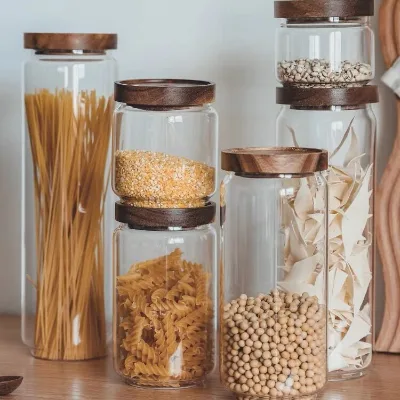
Airtight Canister Storage Jar High Borosilicate Glass Cork Stopper Lid Jar
$0.83 - $1.93
MOQ: 500 Pieces




Comprehensive Sourcing Guide
Strategic Sourcing Guide for Airtight Glass Storage Jars
Understanding Technical Specifications and Material Integrity
When sourcing airtight glass storage jars, the primary focus must be on the material composition and dimensional consistency, as these factors directly dictate the product's longevity and functional reliability. The core material for these containers is consistently identified as glass, a choice driven by its non-porous nature, chemical inertness, and ability to maintain product purity without leaching. In the context of high-volume procurement, the manufacturing process is a critical differentiator. Evidence suggests that "Hand Blown" or "Blown" glass processes are prevalent, offering a distinct aesthetic and structural variance compared to machine-pressed alternatives. Buyers should verify whether the specific supplier utilizes hand-blown techniques, as this often correlates with a "Fashion" or "Japanese Style" aesthetic, which may command a premium in specific market segments.
Dimensional precision is equally vital for ensuring the jar functions as an airtight vessel. The structural integrity of the jar relies on the fit between the glass body and the sealing mechanism. Specifications indicate that dimensional tolerances should be strictly controlled, with observed standards suggesting a tolerance of less than ±1mm. This precision is essential for the lid to sit flush and create an effective seal. Furthermore, the physical attributes of the jar, such as shape and size, vary significantly across different models. While some units are described with dimensions like 27x25x52cm H or specific diameters like Dia.13x28cm H, others may be compact cups or larger storage vessels. The shape is typically round, which is optimal for stacking and maximizing storage density, but buyers must confirm the exact footprint of the model they intend to purchase.
The finish of the glass is another technical parameter that influences both the visual appeal and the functional performance. A "Clear" finish is standard, allowing for easy identification of contents, while other finishes may be available depending on the customization options. The glaze type, if applicable, should be verified against visual references, as some products may feature specific glazing that affects the light transmission or surface texture. Additionally, the weight of the single item is a crucial metric for logistics planning. Observed data points to weights ranging from approximately 0.2kg to 0.364kg per unit, with a weight tolerance of less than ±1%. This consistency ensures that shipping costs are predictable and that the packaging is not over-engineered for the product's actual mass.
Compliance, Certification, and Safety Standards
In the realm of food and beverage storage, compliance with international safety standards is non-negotiable. The sourcing strategy must prioritize suppliers who can demonstrate adherence to rigorous certification protocols. Key certifications observed in the market include FDA (Food and Drug Administration) and ISO standards. These certifications are not merely marketing labels but serve as evidence that the glass material and any associated components, such as lids or seals, have been tested for food safety. The FDA certification specifically validates that the materials in contact with food do not release harmful substances under normal usage conditions. Similarly, ISO certification indicates that the manufacturing facility adheres to international quality management systems, ensuring consistency in production and quality control.
The materials used for the lid and sealing components are equally subject to strict scrutiny. For airtight functionality, the lid material is often a composite of Acacia Wood and Food Grade Silicone. The wood component provides a natural aesthetic and structural rigidity, while the silicone gasket is responsible for creating the airtight seal. Buyers must verify that the silicone used is explicitly rated as "Food Grade," as this ensures it will not degrade or leach chemicals when exposed to various food types, including acidic or oily substances. The absence of handles on certain models, such as specific cup accessories, simplifies the design but requires careful consideration of how the jar will be handled during filling and storage.
When evaluating compliance, it is essential to look beyond the mere presence of a certification claim. Procurement teams should request valid documentation or test reports that correspond to the specific batch or model number. For instance, a model designated as "Box023zym" or "GS026" may have different compliance requirements based on its intended application, whether for daily use, decorative purposes, or specific food storage. The "Suitable for Home" and "Application: Daily Use" attributes suggest that these products are designed for consumer environments, where safety standards are often higher than for industrial applications. However, the "Target People" field, which includes owners of hookah shops or headshops, indicates a dual-use potential. In such cases, buyers must ensure that the certifications cover all intended uses, as regulations for tobacco or related accessories may differ from standard food storage regulations.
Cost Drivers and Pricing Dynamics
The pricing structure for airtight glass storage jars is influenced by a complex interplay of material costs, manufacturing complexity, and order volume. The observed price range in the market spans from $0.01 to $6.50 USD, a wide variance that reflects differences in size, complexity, and customization. Several key factors drive these costs. First, the manufacturing process plays a significant role; hand-blown glass generally incurs higher labor costs compared to machine-pressed glass, which can push the unit price toward the higher end of the spectrum. Second, the inclusion of specialized components, such as Acacia Wood lids with Food Grade Silicone seals, adds material costs that are not present in simple glass-only containers.
Order volume is perhaps the most significant determinant of the final unit price. The Minimum Order Quantity (MOQ) varies widely, ranging from as low as 1 unit to as high as 100,000 units. This flexibility allows buyers to scale their procurement based on their specific needs, but it also means that the unit price is highly sensitive to the order size. Smaller orders, often in the range of 100 units, may carry a higher per-unit cost due to the fixed costs of setup and production runs. Conversely, large-volume orders can leverage economies of scale to reduce the unit price significantly. Buyers should be aware that the "Sales Unit" is typically an individual commodity, meaning pricing is calculated per jar rather than per set, although some models are available in sets of 1-3 pieces.
Customization is another major cost driver. The availability of OEM (Original Equipment Manufacturer) and ODM (Original Design Manufacturer) services allows buyers to tailor the product to their brand, but this customization comes at a premium. Factors such as custom branding, unique shapes, or specific color requirements (e.g., "Colorful" finishes) will increase the cost. Additionally, the packaging method impacts the final price. While some products are shipped in simple OPP bags, others require more robust packaging like foam boxes or cartons to prevent breakage during transit. The choice of packaging, especially for fragile glass items, must be balanced against the cost implications. Buyers should request detailed quotes that break down the costs of the base product, customization fees, and packaging to understand the true cost drivers.
Typical Applications and Market Segmentation
Airtight glass storage jars serve a diverse range of applications, catering to various market segments from residential consumers to specialized retail environments. The primary application is for food storage, where the airtight seal preserves freshness and prevents contamination. These jars are suitable for storing dry goods, spices, liquids, and other food items in home kitchens. The "Japanese Style" and "Fashion" attributes suggest that these products are also marketed as decorative elements, enhancing the aesthetic appeal of a home or retail space. The "Usage: Decorative" and "Suitable for Home" tags indicate a strong consumer market for these items as both functional and stylish storage solutions.
Beyond the home market, there is a specific segment for specialized retail environments. The "Target People" attribute explicitly mentions owners of hookah shops, headshops, and smokeshops. In these contexts, the jars may be used for storing tobacco, herbs, or other related products. The airtight seal is crucial in this application to maintain the potency and freshness of the contents. The "Colorful" and "Clear" options allow these retailers to choose jars that align with their brand identity or display requirements. Additionally, the "Application: Daily Use" tag reinforces the versatility of these products for general household storage, making them suitable for a wide array of consumer needs.
The versatility of these jars extends to their potential use in gift sets or promotional items. The availability of sets ranging from 1 to 3 pieces makes them ideal for bundling with other products or for use in gift packaging. The "Folded: Unfolded" attribute, while seemingly contradictory for a rigid glass jar, may refer to the packaging or specific collapsible features of the lid or accompanying accessories, which could be relevant for specific storage scenarios. Buyers should consider the end-user's needs when selecting the appropriate model. For example, a jar with a capacity of 450ml and dimensions of Dia.13x28cm H might be ideal for storing spices or small snacks, while larger models with dimensions like 27x25x52cm H could be used for bulk storage or display purposes.
Supplier Evaluation and Selection Criteria
Selecting the right supplier for airtight glass storage jars requires a rigorous evaluation process that goes beyond price comparisons. The first step is to verify the supplier's production capabilities and capacity. Given the observed MOQ range of 1 to 100,000 units, it is essential to choose a supplier that can scale with your business needs. A supplier that can handle both small, customized orders and large, high-volume production runs offers greater flexibility. The "OEM/ODM: Acceptable" attribute indicates that many suppliers are willing to collaborate on custom designs, but buyers should assess the supplier's experience and track record in delivering such projects.
Quality control is another critical factor in supplier selection. The "Craft: Handmade/Hand Blown" attribute suggests that manual labor is involved in the production process, which can introduce variability. Buyers should inquire about the supplier's quality control protocols, including how they manage dimensional tolerances (e.g., <±1mm) and weight tolerances (e.g., <±1%). A robust QC process ensures that the final product meets the specified standards and minimizes the risk of defects. Additionally, the supplier's ability to provide valid certifications, such as FDA and ISO, should be a prerequisite for selection. Buyers should request copies of these certifications and verify their validity with the issuing bodies.
Logistics and shipping capabilities are also important considerations. The "Shipment: DHL, UPS, FedEx" attribute indicates that suppliers typically use reputable international couriers, which can be beneficial for tracking and reliability. However, buyers should confirm the supplier's experience with shipping fragile glass items, as breakage is a common risk. The "prod_packing" options, ranging from OPP bags to foam boxes and cartons, should be evaluated based on the supplier's ability to protect the product during transit. Finally, the "prod_origin: China" attribute highlights the primary manufacturing hub for these products. Buyers should be aware of the potential lead times and logistical challenges associated with sourcing from this region and factor these into their procurement planning.
Quality Control and Long-Term Procurement Strategy
Implementing a robust quality control strategy is essential for maintaining the integrity of airtight glass storage jars throughout the procurement lifecycle. Given the fragile nature of glass and the precision required for airtight seals, buyers should establish clear acceptance criteria before placing orders. This includes defining acceptable levels of dimensional deviation, weight variance, and visual defects. The "Dimensional Tolerance: <±1mm (Inclusive)" and "Weight Tolerancerance: <±1% (Inclusive)" specifications provide a baseline for these criteria, but buyers may need to tighten these standards based on their specific requirements.
Long-term procurement considerations involve building a sustainable relationship with suppliers that ensures consistent quality and supply chain stability. This includes regular audits of the supplier's production facilities and quality control processes. Buyers should also consider the environmental impact of their procurement decisions, such as the recyclability of the glass and the sustainability of the packaging materials. The "prod_packing: Foam Box" or "Carton" options may have different environmental footprints, and buyers should evaluate these based on their corporate sustainability goals.
Furthermore, buyers should plan for potential supply chain disruptions by diversifying their supplier base and maintaining safety stock. The "Minimum Order Quantity: 100" suggests that even small orders are feasible, but larger orders may be necessary to secure favorable pricing and ensure supply continuity. By maintaining a strategic approach to procurement, buyers can mitigate risks and ensure a steady supply of high-quality airtight glass storage jars that meet their operational and market needs.
FAQs
What certifications do these glass jars have for food safety?
The jars hold FDA and ISO certifications to ensure food safety compliance. These standards verify that the glass and silicone components do not leach harmful substances. Buyers should request valid documentation for specific batches to confirm adherence to these protocols before procurement.
Can I customize the design and branding of these storage jars?
Yes, OEM and ODM customization services are available for these glass containers. Buyers can request unique shapes, colors, or branding to align with their specific market needs. Customization may affect the unit price and lead time depending on the complexity of the design changes required.
What is the minimum order quantity for purchasing these glass jars?
The minimum order quantity varies significantly, ranging from 1 unit up to 100,000 units depending on the supplier and model. Some specific models may have a baseline MOQ of 100 units. Smaller orders often carry higher per-unit costs due to setup fees and production run constraints.
How are these airtight glass jars packaged for international shipping?
Packaging options include OPP bags, cartons, and foam boxes to prevent breakage during transit. The choice of packaging depends on the specific model and order volume. Buyers should verify the package dimensions and gross weight to ensure accurate logistics planning and cost estimation.
Which materials are used for the lids and seals on these jars?
Lids typically combine Acacia Wood with Food Grade Silicone for a secure airtight seal. The wood provides structural rigidity while the silicone ensures freshness retention. Buyers must verify that the silicone is explicitly rated as food grade to prevent chemical leaching during storage.
What is the dimensional tolerance for the glass jar sizes?
Dimensional tolerance is strictly controlled at less than plus or minus 1 millimeter to ensure proper fit. This precision is essential for the lid to sit flush and create an effective seal. Consistent tolerances help maintain structural integrity and functionality across different production batches.
Can these jars be used for storing items in hookah shops?
Yes, the product attributes indicate suitability for owners of hookah shops and headshops. The airtight seal helps maintain the freshness of tobacco or herbs. However, buyers must ensure that the FDA and ISO certifications cover all intended uses beyond standard food storage.