Source Airtight Food Storage Container for Bulk, Catering, and Retail
Compare 30 verified listings for Airtight Food Storage Container options including PP and PET materials. Buyers can evaluate specifications like temperature resistance, customization support, and MOQs from suppliers in Ningbo and Shandong.
Key considerations
Products List


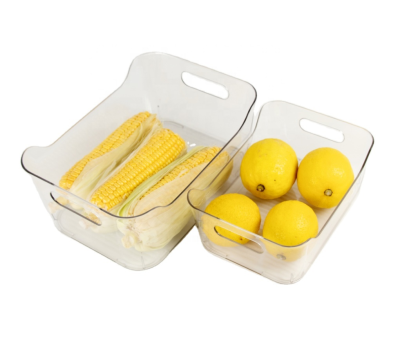


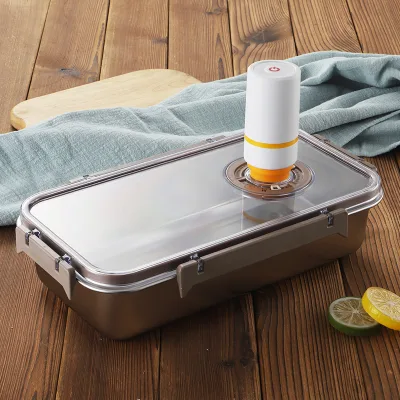


Comprehensive Sourcing Guide
Strategic Sourcing Guide for Airtight Food Storage Containers
Procuring airtight food storage containers requires a nuanced understanding of material science, regulatory compliance, and supply chain logistics. The market for these items is vast, ranging from disposable single-use solutions to durable, reusable systems designed for long-term bulk storage. Buyers must navigate a complex landscape where product attributes often vary significantly between suppliers. This guide provides a disciplined approach to evaluating potential vendors, ensuring that the selected products meet specific operational needs without relying on unverified marketing claims. The following sections detail the critical technical, regulatory, and commercial factors that define a successful procurement strategy in this category.
Material Composition and Physical Properties
The foundation of any food storage container lies in its material composition. In the current market, two primary polymers dominate the sector: Polyethylene Terephthalate (PET) and Polypropylene (PP). PET is frequently selected for applications requiring high transparency and clarity, often mimicking the look of glass while offering superior impact resistance. Products made from PET are typically characterized by their ability to maintain high transparency, which is essential for inventory management where visual identification of contents is necessary. Conversely, Polypropylene (PP) is the preferred material for applications demanding thermal resilience. PP containers are engineered to withstand a wide temperature range, often cited as capable of resisting temperatures from -20°C to 70°C. This thermal stability makes PP ideal for both freezing and microwaving, provided the specific product design supports these functions.
When evaluating specifications, buyers should look for precise dimensional data. Standard models often come in defined capacities such as 500ml, 750ml, 1000ml, 1100ml, 1300ml, and 1500ml. For rigid lunch box styles, dimensions like 22.419.23.5cm are common benchmarks. The physical structure of the container also dictates its utility. Some designs feature a "folded" capability, allowing for space-saving storage when empty, while others are rigid and "unfolded" for immediate use. The shape is another critical variable; while square profiles are standard for maximizing shelf space and stacking efficiency, custom shapes are available to meet unique branding or ergonomic requirements. The transparency of the final product is a key differentiator, with options ranging from clear to colored variants such as red, black, yellow, and white, each serving different aesthetic or functional purposes in a commercial setting.
Regulatory Compliance and Safety Standards
In the food industry, compliance is not merely a formality but a prerequisite for market access. Any supplier claiming to provide food-grade containers must demonstrate adherence to recognized safety standards. The Food and Drug Administration (FDA) certification is a primary benchmark for materials intended for food contact in the United States. Buyers must verify that the specific product model carries this certification, as it confirms the material does not leach harmful substances into food under normal usage conditions. Beyond FDA, other regional standards may apply, and the "prod_standard" field often lists specific model numbers or dimensional standards that serve as proxies for compliance with local regulations.
The distinction between disposable and reusable products also influences compliance requirements. Disposable items, such as certain PET bowls or PP lunch boxes, are often subject to different testing protocols compared to durable, microwavable containers. For reusable items, the ability to withstand repeated heating cycles without degrading is a critical safety metric. The "Microwaveble" attribute, often marked as "Yes" for specific PP models, indicates that the container has been tested for microwave safety. However, buyers should not assume this feature applies to all transparent or colored containers. It is essential to request test reports or certification documents that explicitly cover the intended use case, whether it is for hot food storage, freezing, or microwave reheating. Relying on general claims without documented evidence can lead to product failures and regulatory penalties.
Cost Drivers and Minimum Order Quantities
The economics of sourcing food storage containers are heavily influenced by Minimum Order Quantities (MOQ) and production lead times. The market exhibits a wide variance in entry barriers. Some suppliers may offer low MOQs starting at 5,000 pieces, while others require commitments as high as 100,000 pieces. This disparity often correlates with the complexity of the product and the customization level required. Standard, off-the-shelf items like basic transparent PET bowls or generic PP containers typically command lower MOQs and shorter lead times. In contrast, customized solutions involving specific colors, unique shapes, or specialized packaging can drive the MOQ up to 100,000 pieces or more.
Lead times are another significant cost driver. Production for standard items can be completed within 7 days, but customized production runs often extend to 30 days or longer. The "Delivery Time" and "Delivery Time1" attributes highlight this distinction, with 7 days representing rapid turnaround for stock items and 30 days reflecting the time needed for tooling and custom manufacturing. Buyers must factor these timelines into their inventory planning to avoid stockouts. Additionally, the payment terms, such as Telegraphic Transfer (TT), and the shipping method, typically by sea for large volumes, impact the total landed cost. While some suppliers advertise competitive pricing, the unit cost is often inversely related to the order volume. Therefore, a strategic approach involves balancing the need for customization against the financial impact of higher MOQs and extended lead times.
Typical Applications and Functional Requirements
The application of airtight food storage containers varies widely across different sectors, from commercial food service to bulk retail storage. In the food service industry, disposable lunch boxes and bowls are ubiquitous. These products are often designed with specific features like "Three Grids, Four Grids, and Five Grids" to accommodate portion control and meal variety. The "High Temperature and Freezing Resistance" of PP materials makes them suitable for hot meals that may be reheated or cold meals that require freezing. For bulk food storage, the focus shifts to durability and stackability. Containers labeled as "Bulk Food Storage Container" are designed to withstand the rigors of warehouse environments and frequent handling.
The "Food Container Feature" of being microwavable is a critical requirement for modern food service operations where speed and convenience are paramount. However, this feature must be matched with the correct material; not all transparent containers are microwave-safe. The "Characteristic" of high transparency preservation is particularly valuable for retail environments where visual appeal drives sales. Customers prefer to see the freshness and quality of the food before purchasing. Furthermore, the "Product Use" classification helps buyers identify the right product for their specific niche. Whether the need is for "Food, Tableware" in a restaurant setting or "Bulk Food Storage" in a distribution center, the selection criteria must align with the operational workflow.
Supplier Evaluation and Quality Assurance
Evaluating a supplier requires a rigorous examination of their capabilities beyond the product listing. The "prod_origin" field indicates the manufacturing location, such as Ningbo, Zhejiang, or Shandong, which can influence logistics costs and shipping times. Buyers should verify the supplier's capacity to handle the required volume and their track record in meeting delivery deadlines. The "Sample" availability, often cited as 3-7 days, is a crucial step in the evaluation process. Obtaining a physical sample allows the buyer to test the actual product for fit, finish, and functionality before committing to a large order.
Quality control measures should be a central part of the supplier assessment. Buyers must inquire about the supplier's internal testing protocols, particularly regarding the "High Transparency Preservation" and temperature resistance claims. The "prod_packing" method, whether "Plastic Bag+Cardboard Box" or "Plastic Bag+ Carton," also reflects the supplier's attention to detail and their ability to protect the product during transit. A supplier that uses robust packaging is less likely to have damaged goods upon arrival. Additionally, the "Advantage" of "Competitive Price with Good Quality" should be validated through third-party audits or references from other clients. Relying solely on the supplier's self-assessment can be risky; independent verification of their quality management systems is essential.
Long-Term Procurement Considerations
Sourcing food storage containers is not a one-time transaction but a long-term partnership that requires strategic planning. The "Customization" attribute, available in various forms, suggests that suppliers can adapt their products to changing market demands. However, customization often comes with higher costs and longer lead times. Buyers should consider the scalability of their supply chain. If a business plans to expand, the supplier must be capable of increasing production volume without compromising quality or delivery times. The "Shape" and "Dimension" flexibility offered by some suppliers can be a significant advantage for branding, but it also introduces complexity into the supply chain.
Sustainability is another emerging consideration. While the provided data focuses on material types like PET and PP, buyers should increasingly inquire about the recyclability of these materials and the supplier's environmental policies. The "Disposable" nature of some products raises questions about waste management, which may become a regulatory or reputational issue in the future. Furthermore, the "Payment" terms and "Shipment" methods should be reviewed to ensure they align with the buyer's financial and logistical strategies. A supplier offering flexible payment terms or multiple shipping options can provide a buffer against market volatility. Ultimately, the goal is to establish a supply chain that is resilient, compliant, and capable of supporting the buyer's growth trajectory over the long term.
Comparative Analysis of Product Attributes
To facilitate decision-making, it is helpful to compare the key attributes of different product types found in the market. The following table summarizes the distinctions between common variations based on the observed data.
| Attribute | PET Disposable Bowl | PP Food Container | Customized Lunch Box |
|---|---|---|---|
| Material Type | Pet | PP | Plastic (PP) |
| Primary Color | Transparent | Red, Black, Yellow, White | Customized |
| Key Characteristic | High Transparency Preservation | High Temperature and Freezing Resistance | High Transparency Preservation |
| MOQ Range | 50,000 Pieces | 100,000 PCS | 30,000 PCS |
| Delivery Time | 7 Days (Standard) | 25 Days | 30 Days (Customized) |
| Certification | Not Specified | FDA | Not Specified |
| Microwave Safe | No | Yes | Yes |
| Shape | Standard | Square | Customized |
| Foldable | No | Unfolded | Can Folded |
| Origin | Ningbo, Zhejiang | Shandong | Shandong |
This comparison highlights that while PET offers superior clarity, PP provides the thermal resilience required for microwaving. The MOQ and lead time differences further dictate the suitability of each product for different business models. Buyers must weigh these factors carefully to ensure the selected product aligns with their specific operational requirements and financial constraints. By adhering to these evidence-based guidelines, procurement professionals can navigate the complexities of the food storage container market with confidence and precision.
FAQs
What materials are used for airtight food storage containers?
These containers are primarily made from PET or PP plastics. PET offers high transparency for visual inventory, while PP provides resistance to temperatures ranging from -20°C to 70°C for freezing and microwaving applications.
Can I find FDA certified airtight food storage containers?
Yes, FDA certification is available for specific models intended for food contact. Buyers must verify that the specific product model carries this certification to ensure the material does not leach harmful substances.
What are the typical minimum order quantities for these items?
Minimum order quantities vary significantly from 5,000 to 100,000 pieces depending on customization. Standard transparent PET bowls often have lower MOQs, while customized solutions with specific colors or shapes require higher commitments.
How long does production take for customized airtight food storage containers?
Customized production typically takes 30 days, whereas standard items can be ready in 7 days. The extended timeline accounts for tooling and manufacturing adjustments required for specific colors, shapes, or packaging needs.
Which specifications are available for bulk food storage containers?
Available specifications include capacities like 500ml, 750ml, 1000ml, and dimensions such as 22.4*19.2*3.5cm. Some models feature multiple grids for portion control or are designed to be folded for space-saving storage.
Where are these containers typically manufactured?
Manufacturing origins include Ningbo, Zhejiang, and Shandong in China. The location influences logistics costs and shipping times, so buyers should verify the specific origin when calculating total landed costs.