Source Alcohol Free UV Lash Lamp for Salon, Spa, and Home Use
Compare 30 listings of Alcohol Free UV Lash Lamp options from verified Chinese manufacturers. Buyers can evaluate features like power, certification, and customization for eyelash extension tools used in beauty care and industrial testing.
Key considerations
Products List
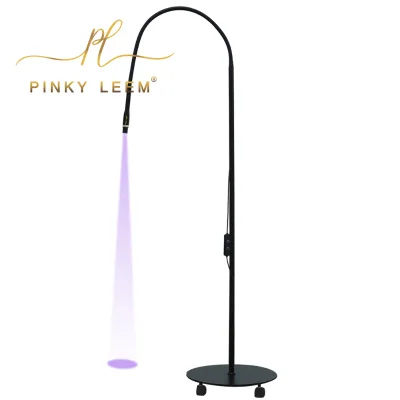
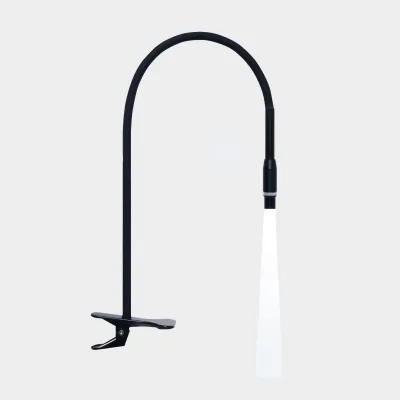

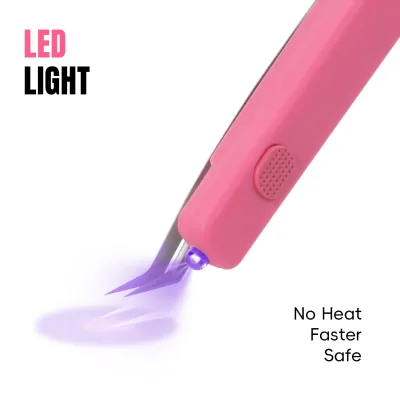
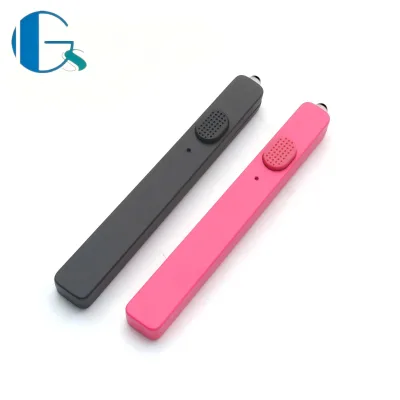
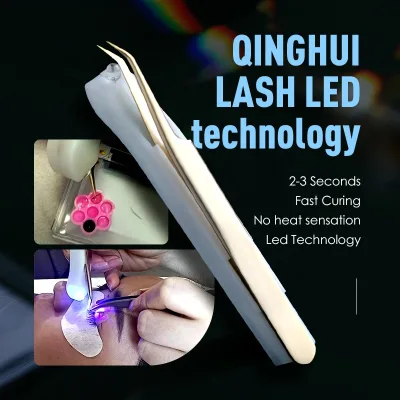
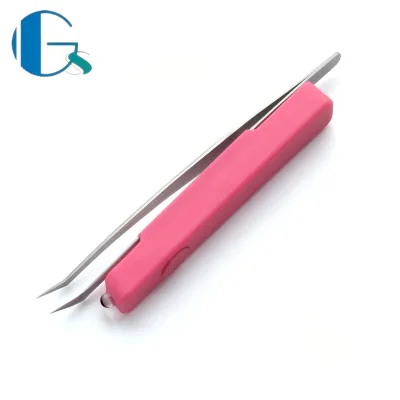
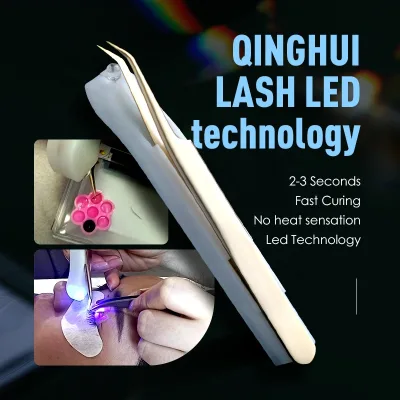
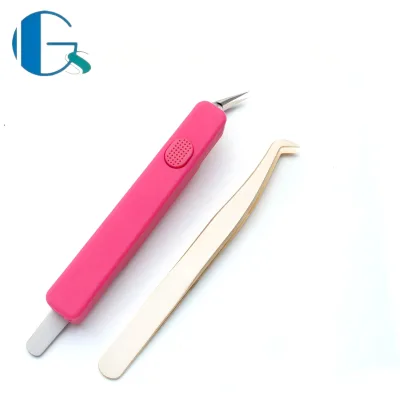
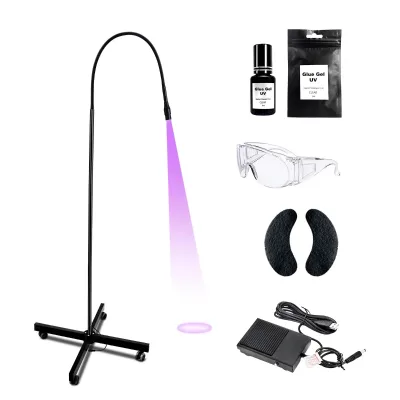


Five Stage Touch Dimming and Touch Power LED Lamp for Eyelash Extension
$69.00 - $180.00
MOQ: 1 Pieces

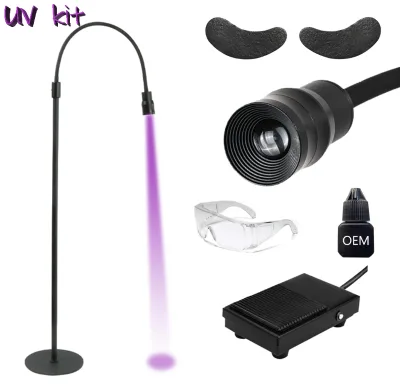
Comprehensive Sourcing Guide
Strategic Sourcing Guide for Alcohol-Free UV Lash Lamp Procurement
Sourcing specialized beauty equipment requires a disciplined approach that separates marketing terminology from verifiable technical specifications. For buyers investigating the core keyword "alcohol-free UV lash lamp," the primary objective is to identify equipment that cures adhesive without introducing volatile organic compounds or harsh chemicals that could compromise the integrity of eyelash extensions or irritate sensitive skin. The available market data indicates a complex landscape where product attributes often overlap between consumer beauty tools and industrial testing equipment. A successful procurement strategy relies on rigorous verification of the curing mechanism, the physical composition of the device, and the specific application environment intended by the manufacturer.
Technical Specifications and Curing Mechanisms
The technical foundation of a UV lash lamp lies in its light source and power output. Based on the observed product data, the relevant technology centers on UV-A wavelengths, which are standard for curing gel-based adhesives used in eyelash extensions. The data explicitly lists "UV-A" as a specific wavelength attribute, distinguishing it from broader UV types that might include UV-B or UV-C, which are typically associated with industrial weathering or sterilization rather than cosmetic curing. Buyers must verify that the device utilizes a UV-A spectrum to ensure compatibility with standard lash glues.
Power consumption is a critical variable that influences curing speed and heat generation. The observed product listings reveal a wide variance in power ratings, ranging from 2W to 10W in specific beauty tool configurations, while other entries list industrial ranges of 4W, 6W, and 8W. This discrepancy suggests that "alcohol-free" in this context refers to the curing process being chemical-free rather than the device's internal components. For eyelash extension tools, the optimal power range typically balances fast drying times with user comfort. Devices listed with "Fast Drying" and "Long lasting" features often correlate with the 5W to 10W range, whereas lower wattage units may require longer exposure times.
The physical form factor also dictates usability. The product data indicates a "Liquid" form attribute for some entries, which is highly anomalous for a lamp and likely refers to a specific component or a data entry error, while other entries clearly define the product as a "Solid" form or a "Soap" type, which is inconsistent with a lamp. The reliable attributes for a UV lash lamp include a "Metal" or "Stainless Steel" construction, often paired with a "Glass" component for the light housing. The shape is predominantly "Round," and the dimensions vary significantly, with single package sizes ranging from 35x20x10 cm to 35x25x15 cm. Buyers should prioritize units with a "Portable" design and a "2 In 1" capability if they require versatility in a salon setting.
Compliance and Certification Verification
In the beauty equipment sector, certification serves as a proxy for safety and electrical compliance. The supplied data confirms the presence of "CE" and "ROHS" certifications in multiple product entries. The CE mark indicates conformity with health, safety, and environmental protection standards for products sold within the European Economic Area, while RoHS restricts the use of specific hazardous materials in electrical and electronic equipment. For an "alcohol-free" claim to be meaningful in a safety context, the device must also ensure that the light source does not emit harmful UV radiation levels that could damage the user's eyes or skin.
The data also lists "FCC" certification, which is relevant for electronic devices sold in the United States to ensure they do not cause harmful interference. However, buyers must exercise caution when interpreting these certifications. The presence of a certification label on a listing does not guarantee that every unit in a batch meets the standard, nor does it validate the specific "alcohol-free" curing claim. The "alcohol-free" aspect is primarily a functional characteristic of the curing process (i.e., the glue cures via light, not chemical reaction with alcohol), but the device itself must be electrically safe.
Furthermore, the data mentions "Industrial use" and "Weathering Aging Test" applications alongside "Beauty Care Make Tools." This suggests that some suppliers may list the same model number for different markets. A buyer must verify that the specific unit purchased carries the appropriate certification for its intended use. For example, a lamp certified for "Industrial Use" with "UVB" wavelengths is unsuitable for eyelash extensions, which require "UV-A" and "Beauty Care" certifications. The warranty period of "1 Year" is a standard indicator of manufacturer confidence, but it should be cross-referenced with the specific certification documents provided for the batch.
Cost Drivers and Pricing Dynamics
The pricing structure for UV lash lamps is influenced by material quality, power output, and the level of customization. The observed price range in the market spans from $27.99 to $5,000. This vast disparity is not merely a reflection of brand premium but likely stems from the inclusion of different product categories in the search results. The lower end of the spectrum likely corresponds to basic, single-function units with standard power outputs (e.g., 2W or 5W) and minimal features. The higher end may include industrial-grade units, multi-function systems, or bulk procurement packages.
Material composition is a significant cost driver. Units constructed with "Stainless Steel" and "Metal" generally command a higher price than those with plastic housings due to durability and heat dissipation properties. The "Eco-Friendly" and "Reusable" attributes also add value, as they imply a longer product lifecycle and reduced waste. Additionally, the "Service" attribute indicating "OEM: CUSTOMER LOGO" availability suggests that customization costs will be factored into the final price. Buyers seeking a branded product for their salon will need to account for the setup fees associated with custom branding, which are often separate from the unit cost.
The "MOQ" (Minimum Order Quantity) range of 1 to 100 units further complicates cost analysis. For small businesses or individual stylists, the ability to purchase a single item at a lower unit price is crucial. However, bulk orders may offer significant per-unit savings, though the total capital outlay increases. The "Single gross weight" of approximately 5.5 kg to 6.0 kg per unit also impacts shipping costs, which can be a hidden expense in the total cost of ownership. Buyers should request a detailed breakdown of the landed cost, including shipping and any potential duties, to accurately compare suppliers.
Typical Applications and Functional Versatility
The primary application for an alcohol-free UV lash lamp is the curing of eyelash extension adhesives. The data explicitly lists "Eyelash Extension Tools" and "Beauty Care Make Tools" as the intended usage. The "Fast Drying" and "Long lasting" features are critical for this application, as they ensure the adhesive sets quickly without the need for chemical accelerators that might contain alcohol. The "Multifunctional" attribute suggests that some units may be capable of curing other beauty products, such as gel nail polish, which is a common feature in modern salon equipment.
However, the data also reveals a confusing overlap with industrial applications. Some entries list "Industrial use" and "Lab Use" with functions like "Weathering Aging Test." This indicates that the search results may include general UV curing lamps that are not specifically designed for delicate beauty applications. A lamp designed for "Weathering Aging Test" might emit a broader spectrum of UV radiation, including UV-B, which could be harmful to human skin and eyes. Therefore, buyers must strictly differentiate between a lamp intended for "Beauty Care" and one intended for "Industrial Use."
The "Plug Type" and "AC Adaptor" specifications are also vital for application compatibility. The data shows a "EU" plug type and a voltage range of "100-240V 50/60HZ," which ensures global compatibility. However, other entries list a specific "220V" voltage, which may limit the device's use to specific regions. Buyers must verify that the power supply matches the local electrical infrastructure to prevent equipment failure. The "Warranty" of 1 year provides a safety net for these applications, ensuring that any malfunction during the curing process can be addressed promptly.
Supplier Evaluation and Operational Capacity
Evaluating a supplier for UV lash lamps requires a focus on their production capacity and customization capabilities. The data indicates a "Productivity" of 10,000 PCS/Month, which suggests a significant manufacturing scale. This capacity is essential for ensuring consistent supply and meeting demand during peak seasons. However, buyers should verify if this capacity is dedicated to the specific product line or if it is shared across various industrial and beauty products.
The "Place of Origin" is listed as "Guangdong, China" and "Jiangsu, China," both of which are major manufacturing hubs for beauty equipment and electronics. Guangdong is particularly known for its electronics supply chain, while Jiangsu has a strong presence in industrial manufacturing. Buyers should consider the logistical implications of sourcing from these regions, including lead times and shipping reliability. The "Customization: Available" attribute is a key differentiator, allowing buyers to request specific features, such as custom logos or modified power outputs.
When evaluating suppliers, buyers should also look for evidence of quality control processes. The "Feature" list includes "Durable" and "Reusable," which implies a focus on product longevity. However, without specific test data or third-party audit reports, these claims remain assertions. Buyers should request samples to verify the build quality, the accuracy of the UV wavelength, and the effectiveness of the curing process. The "Service" attribute mentioning "OEM" suggests that the supplier is willing to work closely with buyers to meet specific requirements, which is a positive indicator of a partnership-oriented approach.
Quality Control and Long-Term Procurement Considerations
Long-term procurement success depends on establishing a robust quality control framework. The "Single package size" and "Product Size" variations (e.g., 2020130 cm vs. 35X20X10 cm) highlight the need for precise specification matching. Buyers must ensure that the dimensions of the purchased unit align with their salon's spatial requirements and that the packaging is sufficient to protect the device during transit. The "Single gross weight" of 5.5 kg to 6.0 kg indicates that the units are substantial and likely to be durable, but also that they require careful handling.
For long-term operations, the "Eco-Friendly" and "Reusable" attributes are significant. These features reduce the environmental impact and lower the total cost of ownership by minimizing the need for frequent replacements. However, buyers should verify the actual lifespan of the UV bulbs or LEDs, as these are the components that will eventually degrade. The "Warranty" of 1 year is a standard baseline, but buyers should negotiate extended warranty terms if possible, especially for high-volume purchases.
Finally, the "Model Number" (e.g., PL004, PL04W) serves as a unique identifier for the product. Buyers should maintain a record of the specific model numbers and their corresponding specifications to ensure consistency in future orders. The "Color" options (Black, White) and "Shape" (Round) allow for aesthetic customization, which can be important for brand alignment. By maintaining a disciplined approach to specification verification and supplier evaluation, buyers can secure high-quality, alcohol-free UV lash lamps that meet the rigorous demands of professional beauty applications.
Comparative Analysis of Product Attributes
To facilitate decision-making, the following table summarizes the key attributes observed in the market data, highlighting the distinctions between beauty-focused and industrial-focused units.
| Attribute Category | Beauty Application (Eyelash Tools) | Industrial/Lab Application | Verification Requirement |
|---|---|---|---|
| Primary Function | Eyelash Extension Tools, Beauty Care | Weathering Aging Test, Industrial Use | Confirm "Application" field matches intent |
| UV Wavelength | UV-A | UV-A, UVB | Ensure UV-B is excluded for skin safety |
| Power Output | 2W, 5W, 10W | 4W, 6W, 8W | Match power to curing speed needs |
| Certification | CE, ROHS, FCC | CE, RoHS | Verify specific certification for use case |
| Material | Stainless Steel, Metal, Glass | Metal, Glass | Check for durability and heat resistance |
| Plug Type | EU (100-240V) | 220V | Confirm voltage compatibility with region |
| Form Factor | Solid, Portable, Round | Industrial, Lab Use | Ensure size fits workspace |
| Features | Fast Drying, Reusable, Eco-Friendly | Durable, Multifunctional | Prioritize "Fast Drying" for efficiency |
This comparison underscores the importance of filtering search results to isolate products specifically designed for beauty applications. By focusing on the "UV-A" wavelength, "Beauty Care" application, and "Fast Drying" features, buyers can avoid the pitfalls of purchasing industrial equipment that may be unsuitable or unsafe for eyelash extension procedures. The disciplined verification of these attributes ensures that the procurement process yields reliable, high-performance tools that support professional standards and client safety.
FAQs
How does UV-A wavelength ensure safe curing for eyelashes?
UV-A wavelength is the standard spectrum for curing gel-based lash adhesives without damaging skin. This specific light type distinguishes the device from industrial lamps that may emit harmful UV-B rays. Buyers must verify the product lists UV-A to ensure compatibility with standard lash glues and safety for sensitive skin.
What certifications confirm the electrical safety of these lamps?
The devices typically carry CE, ROHS, and FCC certifications to ensure compliance with safety standards. CE indicates conformity for the European market while RoHS restricts hazardous materials. These marks verify the device meets health and environmental protection requirements for electrical equipment used in beauty salons.
Which power range offers the fastest drying time for extensions?
Power ratings between 5W and 10W typically provide the fastest drying times for eyelash extensions. Lower wattage units may require longer exposure, while higher wattage ensures quick curing. Devices labeled with fast drying features often correlate with this specific power range for optimal salon efficiency.
Can I customize the product with my own brand logo?
Yes, OEM customization is available to allow buyers to add their customer logo to the device. This service enables branding for salons or distributors seeking a unique product identity. Buyers should note that setup fees for custom branding may be separate from the unit cost.
What is the minimum order quantity for purchasing these lamps?
The minimum order quantity ranges from 1 to 100 units depending on the supplier and product configuration. Small businesses can often purchase single items while bulk orders may offer per-unit savings. Buyers should verify the specific MOQ with the vendor before placing an order.
How long is the warranty period for the UV lash lamp?
The standard warranty period provided for these devices is one year. This coverage ensures that any malfunction during the curing process can be addressed promptly by the manufacturer. Buyers should cross-reference this warranty with specific certification documents provided for their batch.
Which materials are used to construct the lamp housing?
The lamp housing is constructed from durable materials like stainless steel, metal, and glass. These components ensure heat dissipation and longevity during repeated use in salon environments. The solid form and metal construction distinguish these units from plastic alternatives.