Source All Terrain Tracked Tractor for Lawn, Garden, and Farm Use
Compare 30 All Terrain Tracked Tractor models from verified Chinese manufacturers. Evaluate specifications including drive systems, emission standards, and service life to find the right crawler tractor for your specific agricultural or landscaping needs.
Key considerations
Products List


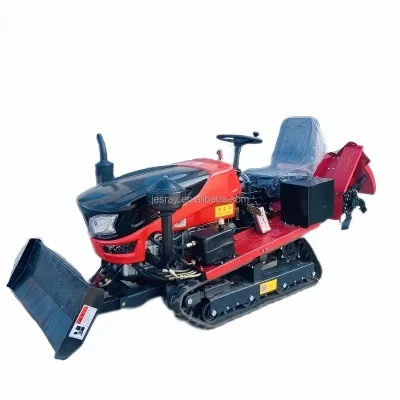

All-Terrain Mini Tractor for Orchard Farming with Hydraulic Steering
$2380.00 - $2830.00
MOQ: 1 Pieces


4WD Agricultural Tractor with Adjustable Wheel Track for Different Field Conditions
$23000.00 - $25100.00
MOQ: 1 Set

Farm Tractor with Adjustable Wheel Track for Different Crops and Fields
$23000.00 - $25100.00
MOQ: 1 Set


Comprehensive Sourcing Guide
Strategic Sourcing Guide for All-Terrain Tracked Tractors
Procuring an all-terrain tracked tractor requires a nuanced understanding of the intersection between mechanical engineering, regulatory compliance, and operational logistics. Unlike traditional wheeled agricultural machinery, tracked systems offer superior traction and flotation on soft, uneven, or steep terrain, making them critical for specialized farming, landscaping, and forestry applications. This guide synthesizes available market data to assist buyers in navigating the complexities of sourcing these machines, focusing on technical differentiation, certification verification, and total cost of ownership.
Technical Architecture and Operational Specifications
The fundamental distinction of an all-terrain tracked tractor lies in its walking system. While standard agricultural equipment relies on pneumatic tires, these units utilize a track system designed to distribute weight over a larger surface area. This design minimizes ground pressure, preventing soil compaction and allowing operation in muddy or snowy conditions where wheeled tractors would become immobilized. The observed market data indicates a diversity in drive configurations, with specific models featuring 4WD (Four-Wheel Drive) systems that are essential for maintaining momentum on inclines.
Transmission and control systems vary significantly between models, influencing both performance and operator fatigue. Some units are equipped with a mechanical transmission system paired with an electronic control system, offering a balance of robust durability and modern operational precision. In contrast, other configurations may rely on hydraulic steering mechanisms to ensure smooth maneuverability in tight spaces. The steering system itself is a critical specification; options range from self-returning direction mechanisms, which assist in straight-line travel, to fully hydraulic steering for enhanced agility.
Engine specifications are another primary differentiator. The powertrain often dictates the machine's capability to handle heavy loads. For instance, certain models in the current market are rated at 80 HP, while others may utilize specific engine brands such as Laidong. The fuel type is predominantly gas or diesel, reflecting the high torque requirements of tracked propulsion. Buyers must also evaluate the service life, which ranges from 3-6 years for certain entry-level or specialized units to 6-10 years for heavy-duty industrial models. This variance suggests that the intended application intensity should drive the selection of the specific powertrain and chassis.
Compliance, Certification, and Emission Standards
Navigating the regulatory landscape is a non-negotiable aspect of international procurement. The machinery industry is subject to stringent environmental and safety standards that vary by region. The observed product data highlights a range of emission standards, including Euro II, Euro III, Euro IV, and even references to "Il Stages." This inconsistency in listed standards underscores the necessity for buyers to verify the specific compliance status of the unit against the regulations of the destination country.
Certification is equally critical for market access and insurance validity. The data indicates that suppliers may hold multiple certifications, including ISO, CE, CCC, EPA, and EEC. Some listings mention specific quality management standards like ISO/TSXQC or ISO/TSISO. However, the presence of these labels in a product listing does not automatically guarantee that every unit in a batch is certified. Buyers must treat these as observations and request valid, current certificates for the specific model being purchased. For example, if a machine is destined for the European market, the CE mark is mandatory, while entry into the United States may require EPA compliance.
The following table summarizes the typical certification and emission profiles observed in the current market to illustrate the need for verification:
| Certification / Standard | Observed Variations in Listings | Verification Requirement |
|---|---|---|
| Emission Standards | Euro II, Euro III, Euro IV, Il Stages | Confirm specific stage matches destination law. |
| Quality & Safety | ISO, CE, CCC, EPA, EEC | Request valid certificate copies for the model. |
| Management Systems | ISO/TSXQC, ISO/TSISO | Verify the scope of the certification. |
| Origin Standards | China, Shandong China | Ensure origin matches trade agreement requirements. |
Cost Drivers and Pricing Dynamics
The pricing of all-terrain tracked tractors is influenced by a complex matrix of factors, including horsepower, transmission complexity, and the sophistication of the control system. The observed price range in the market spans from approximately $1,580 to $25,100 USD. This wide disparity reflects the difference between smaller, specialized units and larger, high-horsepower industrial machines.
Several specific attributes drive the cost upward. First, the inclusion of an electronic control system typically adds to the manufacturing cost compared to purely mechanical systems. Second, the material used for the frame and packing plays a role; while some units are shipped in "nude" or "wooden packing," others utilize an "iron frame" for enhanced structural integrity. The size of the machine is another determinant, with dimensions ranging from small configurations (e.g., 260015002400mm) to larger units (e.g., 368015602500mm).
Buyers should also consider the Minimum Order Quantity (MOQ) and customization options. The data suggests an MOQ of 1 unit is common, which is favorable for small-scale buyers or those testing the market. Furthermore, customization is listed as available, which can impact the final price. Customization might involve altering the color (observed options include Blue and Red), modifying the tire size (e.g., 7.50-16/11.2-28), or adjusting the gear ratios (observed ranges include 8+8 or 8+2). These bespoke requirements often extend lead times and increase the unit cost.
Typical Applications and Usage Scenarios
The versatility of tracked tractors makes them suitable for a wide array of applications, primarily dictated by the terrain and the specific task at hand. The observed usage categories include lawn tractors, garden tractors, and farm tractors. This indicates that these machines are not limited to large-scale agriculture but are also effective in landscaping and residential property maintenance.
The "Type" attribute further clarifies the intended environment. Models are categorized as either "Crawler Tractor" or "Wheel Tractor," though the core keyword focuses on the tracked variant. Crawler tractors are particularly suited for "Drought and Flood" conditions, suggesting their utility in regions with volatile weather patterns or difficult soil conditions. The presence of a "Three Point Linkage" with rear suspension on some models highlights their capability to handle various implements, from plows to mowers.
The drive wheel configuration, specifically 4WD, is essential for these applications. It ensures that power is delivered to all tracks, maximizing traction when pulling heavy loads or navigating steep slopes. The service life of 3-10 years suggests that these machines are built for long-term durability, making them a viable investment for commercial farming operations that require consistent performance over multiple seasons.
Supplier Evaluation and Origin Considerations
When evaluating potential suppliers, the geographic origin of the product is a significant factor. The data indicates that many units originate from China, with specific mentions of Shandong China. This region is a known hub for agricultural machinery manufacturing. However, buyers must look beyond the country of origin and assess the specific capabilities of the supplier.
Key evaluation criteria should include the supplier's ability to provide valid documentation for the certifications listed. Since the market data shows a mix of certifications (ISO, CE, EPA, etc.), a reputable supplier should be able to provide the specific certificate for the model in question, not just a generic list. Additionally, the supplier's capacity for customization should be verified. If a buyer requires a specific color, gear ratio, or engine brand (such as Laidong), the supplier must confirm their ability to meet these specifications without compromising the warranty or safety standards.
The packing method is another indicator of supplier professionalism. Options range from "Nude" to "Wooden Packing" or "Iron Frame." Wooden packing is generally preferred for international shipping to protect the machine from moisture and impact during transit. A supplier that offers robust packing solutions demonstrates a commitment to ensuring the product arrives in the condition specified.
Quality Control and Long-Term Procurement Strategy
Quality control in the manufacturing of tracked tractors must address the unique stresses placed on the track system and the undercarriage. Buyers should inquire about the testing procedures for the walking system, including the durability of the tracks and the tensioning mechanisms. The observed service life of 3-10 years implies that the quality of materials used in the track system is a critical variable.
For long-term procurement, the availability of spare parts is paramount. The mechanical nature of the transmission and the specific gear configurations (8+8, 8+2) mean that wear and tear are inevitable. A supplier that maintains a robust inventory of parts, particularly for the clutch (single-stage type) and the engine components, will reduce downtime and maintenance costs.
Furthermore, the emission standard compliance is a long-term consideration. As global regulations tighten, a machine compliant with Euro II or Euro III standards may face restrictions in certain markets in the future. Buyers should prioritize units that meet the highest observed standards, such as Euro IV, to ensure longevity and regulatory compliance. The overall weight and dimensions (e.g., 1950kg to 2195kg, and dimensions around 3680mm length) also impact transport logistics and storage requirements, which should be factored into the total cost of ownership.
In conclusion, sourcing an all-terrain tracked tractor requires a meticulous approach that balances technical specifications with regulatory compliance and supplier reliability. By carefully verifying certifications, understanding the cost drivers related to horsepower and customization, and evaluating the supplier's quality control processes, buyers can secure a machine that meets their operational needs while adhering to international standards. The diversity in the market, from small garden units to large farm tractors, offers ample opportunity for tailored procurement strategies that align with specific project requirements.
FAQs
What emission standards do all terrain tracked tractors meet?
Models meet Euro II, Euro III, or Euro IV standards depending on the specific unit. Buyers must verify the exact stage against destination laws, as listings vary between Il Stages and Euro IV compliance.
Which certifications are available for these tracked tractors?
Common certifications include ISO, CE, CCC, EPA, and EEC. Some listings also mention ISO/TSXQC or ISO/TSISO, but buyers should request valid certificates for the specific model to ensure market access.
How long is the service life of a crawler tractor?
Service life ranges from 3-6 years for specialized units to 6-10 years for heavy-duty industrial models. This variance depends on the intended application intensity and the specific powertrain selected.
Can buyers customize the color and gear ratios of the tractor?
Customization is available for attributes like color, which appears in Blue or Red, and gear ratios such as 8+8 or 8+2. These bespoke requirements may extend lead times and affect the final unit cost.
What is the minimum order quantity for sourcing these machines?
The minimum order quantity is typically 1 unit, allowing for small-scale purchases or market testing. This low threshold supports buyers who need single units for specific landscaping or farm operations.
Which transmission systems are used in these tracked tractors?
Systems include mechanical transmission paired with electronic control or hydraulic steering mechanisms. The choice affects operator fatigue and performance, with some models offering 8+8 gears for versatile traction.