Source Aluminum Hull Inflatable Rib Boat for Sport, Fishing, and Rescue
Find 30 Aluminum Hull Inflatable Rib Boat with Air Pump options featuring CE certification and customizable designs. Buyers can compare specs like beam width, load capacity, and engine types for sport, fishing, and rescue applications.
Key considerations
Products List


Motor Inflatable Rubber Boat and Marine Yacht Aluminium Hull Inflatable Boat
$8000.00 - $12000.00
MOQ: 1 Pieces


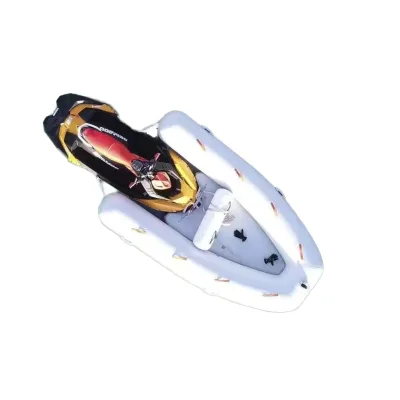


11.8foot 3.6m Aluminum Hull Inflatable Boat Rib Boat PVC Boat Aluminum Boat
$980.00 - $1600.00
MOQ: 1 set


Rigid Inflatable Boat Sport Aluminum Inflatable Rigid Hull Boat Rigid Inflatable Boat
$9510.00 - $15901.00
MOQ: 1 Pieces


Comprehensive Sourcing Guide
Strategic Sourcing Guide for Aluminum Hull Inflatable RIB Boats with Air Pumps
Understanding the Core Product Architecture
The aluminum hull inflatable rigid inflatable boat (RIB) represents a distinct category within the marine procurement landscape, combining the structural rigidity of a solid hull with the buoyancy and shock absorption of inflatable tubes. When sourcing a product described as an "Aluminum Hull Inflatable Rib Boat with Air Pump," buyers must first recognize that the terminology often encompasses a spectrum of vessel types, ranging from small, foldable utility craft to larger sport yachts. The fundamental architecture relies on a hard floor, typically constructed from aluminum, which provides a stable platform for mounting motors and equipment. This is contrasted with the inflatable side tubes, which are frequently manufactured from materials such as PVC, Hypalon, or Orca. The presence of an air pump is a critical accessory requirement, ensuring the tubes can be inflated to the necessary pressure for operational safety and stability.
The supply data indicates a diverse range of configurations available in the market. Some units are designed as foldable or inflatable structures with aluminum floors, offering portability for users who require compact storage solutions. Others are presented as rigid sport yachts or sport fishermen vessels, where the aluminum hull serves as the primary structural element. The observed product models, such as the YL-360, RIB520A, RIB520B, RIB270, RIB390, and RIB-680, suggest a standardized naming convention based on length or beam dimensions. Buyers should note that while the core concept remains consistent, the specific application—whether for fishing, sport, or general utility—drives the variation in beam width, passenger capacity, and power requirements. The inclusion of an air pump is standard for these inflatable components, but the specific capacity and type of pump must be verified against the tube volume and chamber count of the specific unit being procured.
Technical Specifications and Performance Parameters
When evaluating the technical specifications of aluminum hull RIBs, several key metrics define the vessel's capability and suitability for specific tasks. The beam width is a critical dimension; observed data points to a standard width of 1.78 meters for certain models, which influences stability and interior space. The load capacity is another vital parameter, with specific listings indicating a maximum load of 500kg. This figure must be carefully cross-referenced with the intended usage, as it dictates the total weight of passengers, fuel, gear, and the motor itself that the vessel can safely carry.
Power requirements are equally significant. The market data reflects a maximum power rating of 30HP for certain configurations, which aligns with smaller, more portable aluminum floor boats. However, larger models in the RIB series may support higher horsepower outboard engines, essential for sport fishing or high-speed applications. The engine type is consistently identified as an outboard motor, which is standard for RIBs due to the shallow draft and ease of maintenance. The seating capacity varies, with observations noting configurations for 2, 4, or 5 persons. This variation often correlates with the length of the hull and the number of air chambers, which are typically three in the observed models.
The construction of the hull and floor is a primary differentiator. The hull material is explicitly aluminum, providing durability and resistance to corrosion, which is essential for saltwater environments. The floor type is also aluminum, offering a solid, non-slip surface that is superior to inflatable floors for heavy-duty use. The air chambers, typically numbering three, provide redundancy; if one chamber is compromised, the others maintain buoyancy. Buyers must verify the specific tube material, as options include PVC, Hypalon, or Orca, each offering different trade-offs between cost, UV resistance, and puncture resistance. The standard length for some models is listed as 3.6 meters, while others follow a model-specific standard like 520A or 680, which likely refers to the overall length in centimeters.
Compliance, Certification, and Regulatory Standards
Navigating the compliance landscape is essential for international procurement, particularly when dealing with marine vessels that cross borders. The observed product data highlights several certifications and standards that buyers should verify. The CE certification appears frequently in the listings, indicating compliance with European safety, health, and environmental protection requirements. Additionally, some products reference "CE/Doc," suggesting a specific documentation package accompanying the certification. The HS code 8903190000 is a critical identifier for customs classification, categorizing these vessels under inflatable boats, which affects duty rates and import regulations.
Standards play a pivotal role in ensuring the vessel meets industry expectations. While specific numerical standards vary by manufacturer, the data references standards such as "CE," "3.6m," "520A," "520B," "270," "390," and "680." These likely represent internal model standards or length-based classifications rather than universal international safety codes. Buyers must understand that the presence of a "CE" mark does not automatically guarantee compliance with all local regulations in the destination country. It is imperative to request the full technical file and test reports associated with the certification. The production origin is noted as Qingdao City, Shandong, China, which is a major hub for marine manufacturing. However, the specific production capacity is listed as 20,000 units per year, a figure that can help buyers gauge the scale of the supplier's operation and their ability to handle large orders.
Cost Drivers and Pricing Dynamics
The pricing for aluminum hull inflatable RIBs with air pumps exhibits a wide range, observed between 160 and 80,000 USD. This significant variance is driven by multiple factors, including the size of the vessel, the quality of materials used, the complexity of the design, and the level of customization. Smaller, foldable models with basic PVC tubes and aluminum floors likely occupy the lower end of this spectrum. In contrast, larger sport yachts or specialized fishing vessels with high-grade Hypalon tubes, advanced aluminum hulls, and integrated systems will command prices at the higher end.
Material costs are a primary driver. The choice between PVC, Hypalon, and Orca for the tubes significantly impacts the final price. Hypalon and Orca generally offer superior durability and UV resistance but come at a premium compared to standard PVC. The thickness of the aluminum used for the hull and floor also affects cost; thicker gauges provide better impact resistance but increase the overall weight and material expense. Customization is another major cost factor. The data confirms that customization is available, allowing buyers to tailor the vessel to specific needs. Customized orders often involve higher unit costs due to the setup of production lines and the use of specialized components.
The minimum order quantity (MOQ) is observed to be very low, ranging from 1 to 2 units. This flexibility is advantageous for buyers who do not require bulk procurement but still need to source specific configurations. However, buyers should be aware that unit prices for single-unit orders may be higher than those for bulk purchases, even if the MOQ is low. Packaging methods, such as plywood crates, whole containers, foam and 7-layer brown cartons, or wooden cases, also contribute to the overall cost, particularly for international shipping where secure packaging is essential to prevent damage during transit.
Typical Applications and Usage Scenarios
The versatility of aluminum hull RIBs makes them suitable for a diverse array of applications. The observed usage categories include sport fishing, general fishing, and sport yacht activities. For sport fishing, the combination of a stable aluminum floor and inflatable tubes provides a secure platform for casting and reeling, while the inflatable sides offer protection against waves. The seating capacity of up to 5 persons and a load capacity of 500kg support the needs of small fishing crews or recreational groups.
The "Sport Yacht" classification suggests a higher-end application, where aesthetics and performance are paramount. These vessels often feature sleek designs and are equipped with powerful outboard motors for high-speed transit. The "Tandem Kayak" style mentioned in the data indicates a niche application for paddling or low-speed exploration, where the aluminum floor provides a stable base for standing or sitting. The foldable nature of some models makes them ideal for users with limited storage space, such as those living in apartments or those who need to transport the boat on a trailer.
The power source, identified as a motor, is crucial for these applications. The maximum power of 30HP for smaller models is sufficient for calm waters and short-distance travel, while larger models likely support higher power ratings for open-water operations. The guarantee period, observed as either 1 year or 3 years, can also influence the buyer's decision based on the intended intensity of use. A longer guarantee may indicate higher confidence in the product's durability, which is essential for commercial or frequent recreational use.
Supplier Evaluation and Quality Assurance
Evaluating suppliers requires a rigorous approach to ensure that the product meets the specified requirements. The production origin in Shandong, China, provides a geographic context, but buyers must verify the specific factory capabilities. The stated production capacity of 20,000 units per year suggests a substantial operation, but buyers should request evidence of this capacity, such as factory audit reports or recent production logs. The availability of customization is a positive indicator of a flexible supplier, but it also necessitates clear communication of technical requirements to avoid misunderstandings.
Quality control is paramount, especially for marine vessels where safety is critical. Buyers should verify the manufacturing processes for the aluminum hull and the tube construction. The use of high-quality materials like Hypalon or Orca should be confirmed through material certificates. The air pump, a critical accessory, must be compatible with the tube pressure requirements and durable enough for repeated use. The packaging method, whether it be a wooden case, plywood crate, or carton, should be evaluated for its ability to protect the vessel during shipping. The "Folded" and "Inflatable" attributes indicate that the vessel is designed for easy transport, but the quality of the folding mechanism and the durability of the valves must be assessed.
Buyers should also consider the guarantee period as an indicator of quality. A 3-year guarantee is more robust than a 1-year guarantee and suggests the supplier stands behind their product. However, the terms of the guarantee must be clearly understood, including what is covered and the process for claiming warranty support. The certification status, particularly the CE mark, should be verified with the issuing body to ensure authenticity. Finally, the lead time and delivery terms should be confirmed, as these can impact the overall procurement timeline and cost.
Long-Term Procurement and Maintenance Considerations
Sourcing an aluminum hull RIB is not just a one-time transaction but the beginning of a long-term relationship with the vessel. Maintenance is a key consideration, as the materials used—aluminum, PVC, Hypalon, or Orca—require specific care to ensure longevity. Aluminum hulls are resistant to corrosion but may require regular cleaning and inspection for pitting or damage, especially in saltwater environments. The inflatable tubes need periodic pressure checks and inspection for leaks or abrasion. The air pump must be maintained to ensure it functions correctly when needed.
The availability of spare parts is another critical factor for long-term procurement. Buyers should inquire about the supplier's policy on spare parts, including the availability of replacement tubes, valves, and pump components. The customization options allow for tailored maintenance plans, but the supplier must be able to support these customizations over the life of the vessel. The guarantee period, whether 1 or 3 years, provides a safety net, but buyers should understand the limitations and exclusions of the warranty.
Environmental considerations are also becoming increasingly important in marine procurement. The choice of materials, such as Hypalon versus PVC, can have different environmental impacts. Buyers should inquire about the sustainability of the manufacturing processes and the recyclability of the materials. The packaging, whether it be plywood, wooden cases, or cartons, should be evaluated for its environmental footprint. By considering these long-term factors, buyers can ensure that their investment in an aluminum hull RIB remains viable and sustainable for years to come.
Comparative Analysis of Key Product Attributes
To facilitate decision-making, the following table summarizes the key attributes observed in the market for aluminum hull inflatable RIB boats with air pumps. This comparison highlights the variations in specifications, materials, and certifications that buyers should consider.
| Attribute | Observation Range / Specific Values | Notes for Verification |
|---|---|---|
| Hull Material | Aluminum | Verify thickness and alloy grade for corrosion resistance. |
| Tube Material | PVC, Hypalon, or Orca | Hypalon/Orca offer higher durability; PVC is cost-effective. |
| Beam Width | 1.78m (Standard) | Confirm actual beam for stability calculations. |
| Load Capacity | 500kg | Ensure this includes passengers, fuel, and gear. |
| Max Power | 30HP (Specific Models) | Verify compatibility with larger models if needed. |
| Passenger Capacity | 2 to 5 Persons | Correlate with beam width and tube volume. |
| Air Chambers | 3 | Redundancy is critical for safety. |
| Certification | CE, CE/Doc | Verify authenticity and scope of certification. |
| Guarantee | 1 Year or 3 Years | Review terms and coverage details. |
| Production Origin | Qingdao City, Shandong, China | Confirm factory location and capacity. |
| MOQ | 1 to 2 Units | Low MOQ allows for single-unit testing. |
| Packing | Plywood, Wooden Case, Carton | Ensure packaging suits shipping method. |
| Customization | Available | Define specific requirements clearly. |
This table serves as a reference point for buyers to compare different offerings and ensure that the selected vessel meets their specific operational needs. By carefully evaluating these attributes, buyers can make informed decisions that balance cost, performance, and safety.
FAQs
What customization options are available for aluminum hull inflatable rib boats?
Customization is available for these vessels to meet specific buyer requirements. Buyers can request tailored specifications such as tube materials, floor types, and seating configurations to match their intended usage scenarios like sport fishing or general utility.
Which certification standards apply to these aluminum hull inflatable boats?
Many listed models carry CE certification or CE/Doc documentation to meet safety standards. Buyers should verify the specific certification package provided by the supplier to ensure compliance with import regulations in their target destination markets.
How many passengers can a typical 3.6m aluminum hull RIB carry?
Standard configurations listed support between 2 to 5 persons depending on the specific model. The load capacity is often rated at 500kg, which must account for the total weight of passengers, fuel, and equipment to ensure safe operation.
Can these boats be folded for easier storage and transport?
Yes, certain models are designed to be folded and are classified as inflatable boats. This feature allows for compact storage and transport, often utilizing aluminum floors that provide a stable platform even when the vessel is in a folded state.
What is the maximum power rating for the outboard motors on these boats?
Specific models listed support a maximum power rating of 30HP for outboard engines. Larger sport yacht or fishing configurations may accommodate higher power, but the 30HP limit applies to the smaller, portable aluminum floor units described in the data.
Which tube materials are used for the inflatable sections of these boats?
The inflatable tubes are constructed from materials such as PVC, Hypalon, or Orca. Each material offers different trade-offs in durability and UV resistance, allowing buyers to select the option that best fits their budget and operational environment.
What is the production capacity of factories manufacturing these aluminum hull boats?
Some suppliers in the region report a production capacity of 20,000 units per year. This volume indicates a substantial manufacturing capability, though buyers should confirm current lead times and stock availability for specific customized orders.