Source Angled Amber LED Work Light for Trucks, Construction, Mining
Find 30 Angled Amber LED Work Light options from verified suppliers. Compare models like BS-1621 and HRCH10900LM featuring IP67 ratings, 12V DC voltage, and diecast aluminum housing for commercial and general applications.
Key considerations
Products List


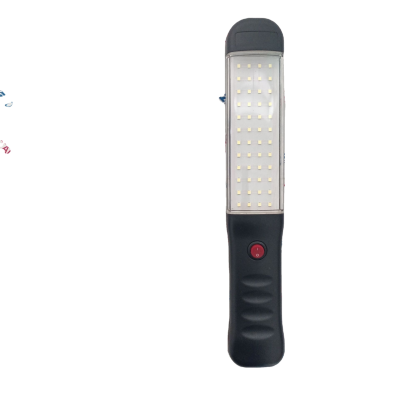


LED Spotlight LED Light Bar Work Light (TK1124WSB) LED Work Light LED Lighting
$2.00 - $8.00
MOQ: 2000 Pieces


Comprehensive Sourcing Guide
Strategic Sourcing Guide for Angled Amber LED Work Lights
The procurement of angled amber LED work lights requires a nuanced understanding of the intersection between optical performance, environmental durability, and regulatory compliance. In the B2B market, these components are critical for heavy machinery, agricultural equipment, and off-road vehicles where visibility in adverse conditions is paramount. The amber spectrum is specifically engineered to penetrate fog, dust, and rain more effectively than white light, making it a non-negotiable choice for specific operational environments. Buyers must navigate a complex landscape of technical specifications, material constraints, and certification requirements to ensure that the sourced products meet the rigorous demands of industrial and automotive applications. This guide outlines the essential factors for evaluating suppliers and selecting the right lighting solutions based on verified market data and industry standards.
Technical Specifications and Optical Performance
When sourcing angled amber LED work lights, the primary technical differentiator is the beam pattern and the specific emitting color. The market data indicates a strong prevalence of "Spot" beam patterns for these units, which concentrate light into a tight, long-distance beam ideal for illuminating specific targets in low-visibility scenarios. The emitting color is consistently observed as "Amber" or "White+Amber," providing flexibility for dual-function applications where a single unit might need to serve both warning and illumination purposes. The physical dimensions of these lights vary, with observed standard sizes including compact profiles like 10814056mm (WHD) and specific model dimensions such as 155x40x20mm.
The internal architecture of these lights is equally critical. The housing material is predominantly "Diecast Aluminum," chosen for its superior heat dissipation properties and structural integrity against impact. This is often paired with a "PC" (Polycarbonate) lens, which offers high impact resistance and optical clarity. The LED chips themselves are a key specification; observed data points to brands like "Epistar" and "CREE," which are recognized for their efficiency and longevity. The voltage type is almost universally "DC," with common operating voltages including 12V, aligning with standard automotive and heavy equipment electrical systems. Buyers should verify the specific power consumption, as observed models range significantly, with some units rated at 90 Watts, while others may vary based on the number of LEDs and the intended beam intensity.
Environmental Durability and Protection Ratings
The operational environment for angled amber work lights is often harsh, involving exposure to water, dust, vibration, and extreme temperatures. Consequently, the Ingress Protection (IP) rating is a non-negotiable metric for procurement. The observed data highlights an "IP 67" rating for several models, indicating that the unit is dust-tight and can withstand immersion in water up to 1 meter for 30 minutes. This level of waterproofing is essential for lights mounted on the exterior of vehicles or machinery that operate in wet conditions. The "Wateproof Rate" is frequently listed alongside the IP rating, reinforcing the product's resistance to moisture ingress.
Beyond water resistance, the physical construction must withstand vibration and impact. The use of "Diecast Aluminum Housing" provides a robust shell, while the "Steel" material mentioned in some contexts suggests reinforced mounting brackets or internal components. The "Resistance" attribute is explicitly noted as "Waterproof," but buyers must also consider the thermal management capabilities of the unit. With a "Life Time" observed as "Over 50000 Hours" and a "Lifespan" of "36months" in specific contexts, the thermal design of the heat sink is critical to maintaining performance over the product's life. The "Color Temperature" of "Pure White" or "Cool White" may appear in mixed units, but for amber-specific applications, the spectral output must be verified to ensure it meets the required visibility standards without color distortion.
Compliance, Certification, and Regulatory Standards
Navigating the regulatory landscape is a critical step in the sourcing process. Different markets have distinct certification requirements, and suppliers must provide verifiable documentation to prove compliance. The observed data lists several certifications, including "CREE," "VDE," "CE," and "CCC." It is important to distinguish between these: "CE" indicates conformity with health, safety, and environmental protection standards for products sold within the European Economic Area. "CCC" (China Compulsory Certification) is mandatory for products sold within China. "VDE" is a German certification body that often implies rigorous testing for electrical safety. "CREE" in the context of certification may refer to the use of CREE-branded LED chips, which are often associated with high quality, but buyers should verify if this is a chip brand or a specific product certification.
Buyers must also verify the "prod_standard" and packaging standards. Observed standards include specific dimensions like "4inch" or "12113.6cm," which may refer to the physical size or the packaging box dimensions. The "prod_packing" varies from "White Box" to "Carton" and specific bulk configurations like "40sets/CTN" or "50PCS/CTN 25kg." These packaging details are vital for logistics planning and cost estimation. Furthermore, the "prod_origin" is listed as "China" and "Guangdong," which are major manufacturing hubs. While this indicates the source, buyers should ensure that the supplier can provide the necessary export documentation and that the products comply with the import regulations of the destination country.
Cost Drivers and Pricing Dynamics
The pricing of angled amber LED work lights is influenced by a complex interplay of factors, including the quality of the LED chips, the complexity of the optical design, and the level of customization required. The observed price range in the market is substantial, spanning from $1.5 to $250 USD. This wide variance suggests that the market includes both low-cost, generic units and high-performance, branded solutions. The lower end of the spectrum likely corresponds to basic models with standard LED chips and minimal features, while the higher end includes units with premium chips like CREE, advanced heat sinking, and specialized beam patterns.
The Minimum Order Quantity (MOQ) is another significant cost driver. The observed MOQ range is from 2 to 2000 units. For buyers requiring small batches for prototyping or niche applications, the lower MOQ of 2 units offers flexibility, though the unit cost may be higher. Conversely, large-scale procurement can leverage the higher MOQs to negotiate better pricing, but it requires a commitment to volume. The "Selling Units" are often listed as "Single item," but bulk packaging like "4PCS/CTN 27kgs" indicates that pricing is often calculated per carton or per set. Buyers should also consider the "Unit Weight" of 131.8g, which impacts shipping costs, especially for international freight. The "Delivery Time" of 1-15 days suggests that lead times can be relatively short, but this may vary based on customization and order volume.
Supplier Evaluation and Customization Capabilities
Selecting the right supplier involves more than just comparing prices; it requires a deep dive into their capabilities for customization and their track record for quality. The market data indicates that "Customization" is "Available," and "OEM" (Original Equipment Manufacturer) support is explicitly mentioned. This means suppliers can accommodate specific branding needs, such as printing a buyer's logo on the product or packaging, provided the buyer supplies the necessary design files. The "Logo Customized" attribute confirms that branding is a standard service, allowing companies to maintain brand consistency across their fleet.
When evaluating suppliers, buyers should look for those who offer "customized support" that extends beyond simple branding. This includes the ability to tailor the beam pattern, adjust the voltage requirements, or modify the housing material to meet specific project needs. The "Application" field lists "Commercial" and "General," indicating versatility, but buyers should verify if the supplier has experience with specific industries like automotive, agriculture, or construction. The "Car Make" attribute, such as "Hyundai," suggests that some suppliers may have pre-existing designs or compatibility with specific vehicle models, which can streamline the integration process. However, buyers must ensure that any claimed compatibility is verified through technical testing rather than assumed.
Quality Control and Long-Term Procurement Considerations
Ensuring long-term reliability requires a robust quality control (QC) strategy. The "Warranty" period of "12 Months" is a standard offering, but buyers should negotiate terms that align with the expected "Life Time" of "Over 50000 Hours." A 12-month warranty may be insufficient for high-utilization applications, so buyers should inquire about extended warranty options or performance guarantees. The "Beam Pattern" of "Spot Beam" must be consistently maintained across all units in a batch to ensure uniform lighting performance.
For long-term procurement, buyers should establish a relationship with suppliers who can provide consistent quality over time. This includes verifying the "LED Type" (SMD) and "LED Chips Brand" (Epistar) to ensure that the components are sourced from reputable manufacturers. The "Voltage Type" consistency is also crucial; any deviation from the specified DC voltage can lead to premature failure. Buyers should also consider the "prod_packing" quality to ensure that the lights arrive without damage, especially given the "Unit Weight" and the potential for vibration during transit. Finally, buyers should request test results or third-party certification reports to validate the "IP Rating" and "Certification" claims before placing large orders. By focusing on these technical and operational details, buyers can mitigate risks and ensure a steady supply of high-quality angled amber LED work lights for their operations.
FAQs
What certifications are available for angled amber led work lights?
Available certifications include CREE, VDE, CE, and CCC depending on the model. Buyers should verify specific documentation for their target market, as CE applies to Europe and CCC is mandatory for China sales.
Can I customize the logo on angled amber led work lights?
Yes, customization is available including logo printing on the product or packaging. Suppliers offer OEM support if you provide the necessary design files for your brochure or branding requirements.
Which beam pattern is standard for angled amber led work lights?
The standard beam pattern is Spot, designed to concentrate light for long-distance visibility. Some models offer a White+Amber combination to serve dual functions for warning and illumination in adverse conditions.
How long is the warranty for angled amber led work lights?
The standard warranty period is 12 months for most models. Buyers should verify if extended warranty options are available, as the expected life time can exceed 50,000 hours with proper thermal management.
What is the minimum order quantity for angled amber led work lights?
The minimum order quantity ranges from 2 to 2000 units depending on the supplier and customization needs. Lower MOQs allow for prototyping, while larger volumes often secure better pricing and bulk packaging rates.
What materials are used for the housing of angled amber led work lights?
Housing is typically made of Diecast Aluminum paired with a PC lens for durability. Some units also feature Steel components for reinforced mounting, ensuring resistance against impact and harsh environmental conditions.
How fast can angled amber led work lights be delivered?
Delivery time typically ranges from 1 to 15 days after order confirmation. Actual lead times may vary based on order volume, customization requirements, and the specific shipping location from the factory in China.