Source Anodized Linear Guide Rail for Packaging, Medical, Automation
Compare 30 listings of Anodized Linear Guide Rail designed for packaging machinery, medical equipment, and industrial automation. Buyers can evaluate specifications like load capacity, precision grade, and corrosion resistance to find suitable components for their systems.
Key considerations
Products List


High-Performance Anti-Friction Linear Guide Rail for Precision Applications
$19.00 - $100.00
MOQ: 20 Meters


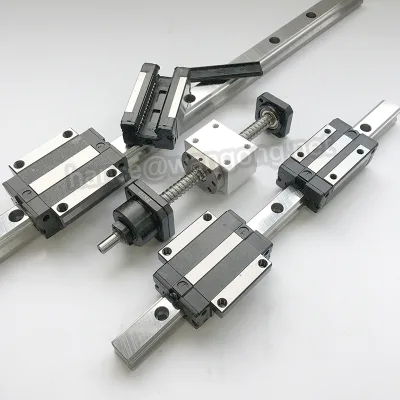


Comprehensive Sourcing Guide
Strategic Sourcing Framework for Anodized Linear Guide Rail Systems
Procuring high-performance linear guide rail systems requires a rigorous understanding of technical specifications, material integrity, and supply chain reliability. The core keyword "Anodized Linear Guide Rail" points to a specific subset of motion control components where surface treatment plays a critical role in longevity and performance. While the market offers a wide array of options, buyers must distinguish between generic rail systems and those engineered for specific environmental and load demands. This guide synthesizes observed product attributes and industry standards to provide a disciplined approach to sourcing, ensuring that procurement decisions are grounded in verifiable facts rather than marketing assertions.
Technical Specifications and Structural Integrity
The foundation of any linear guide rail system lies in its precise mechanical specifications. When evaluating products, buyers must scrutinize the profile type, dimensions, and structural configuration. Observed data indicates that linear guides are available in distinct profile types, including Solid Profile and T-Profile configurations. The choice between these depends heavily on the mounting requirements and the specific load distribution needs of the application. For instance, a T-Profile often facilitates easier integration into specific machinery frames, whereas a Solid Profile may offer superior rigidity for heavy-duty applications.
Dimensional accuracy is paramount. Specifications reveal that guide rails come in varying lengths, with observed ranges extending from 4 meters to 5 meters for standard stock items, while custom support rail lengths can span from 100mm to 4000mm. This variability allows for customization to fit specific machine envelopes. The guide width is another critical metric; a standard width of 25mm is frequently observed, corresponding to models such as the HGW25CA slider. This specific model designation suggests a standardized interface that may offer interchangeability with other major components, a feature noted as compatibility with Hiwin parts.
The internal structure of the rail system also dictates its performance. The product attributes highlight a "Slide Rail and Slide Block" structure, which is the fundamental mechanism for linear motion. The bearing type is identified as "Linear Motion," designed to facilitate smooth operation under heavy load conditions. Precision is a key differentiator, with products rated at "P Grade," indicating a specific tolerance level suitable for industrial automation. Furthermore, the mathematical model is described as "Linear," confirming the straight-line trajectory essential for accurate positioning in CNC and automated machinery.
Surface Treatment and Corrosion Resistance
The term "anodized" in the core keyword implies a specific surface treatment process, yet observed product data lists "Polished" as a common surface treatment for these components. This distinction requires careful verification by the buyer. While polished surfaces are standard for reducing friction and ensuring smooth operation, anodization is a distinct electrochemical process typically applied to aluminum to enhance corrosion resistance and durability. If the procurement requirement explicitly demands anodized rails, the buyer must verify that the supplier can provide this specific finish, as the standard offering may be polished stainless steel or treated steel.
Corrosion resistance is a non-negotiable attribute for many applications. The observed data explicitly confirms "High Corrosion Resistance" as a key property of the available products. This is further supported by the material specification, which lists "Stainless Steel" as a primary construction material. Stainless steel inherently offers superior resistance to oxidation and chemical attack compared to carbon steel, making it ideal for environments where moisture, food processing fluids, or cleaning agents are present. However, the presence of high corrosion resistance does not automatically guarantee an anodized finish; it may be achieved through the material selection alone. Buyers must clarify whether the "High Corrosion Resistance" is derived from the base material (Stainless Steel) or an additional coating process (Anodizing) to ensure the component meets the specific environmental constraints of their facility.
Compliance, Certification, and Quality Standards
In the B2B procurement of industrial automation components, compliance with international standards is a primary risk mitigation strategy. The observed product attributes list several critical certifications, including ISO 9001, CE, and RoHS. The presence of ISO 9001 indicates that the manufacturer adheres to a quality management system, ensuring consistent production processes. CE certification is essential for products entering the European market, signifying compliance with health, safety, and environmental protection standards. RoHS compliance ensures that the product does not contain restricted hazardous substances, which is increasingly important for electronics manufacturing and medical equipment applications.
Beyond general certifications, specific product standards are observed, such as the "HGH25CA block" and "HGR15" designations. These act as internal or industry-standard references for block and rail compatibility. When sourcing, buyers should verify that the supplier's documentation explicitly references these standards to ensure interchangeability. The "P Grade" precision rating mentioned earlier should also be cross-referenced against international standards like ISO 3408, which defines tolerances for linear motion guides. While the supplied data does not cite ISO 3408 directly, the existence of a "P Grade" rating implies adherence to a recognized precision hierarchy. Buyers must request test reports or certification documents that validate these claims, rather than relying solely on product descriptions.
Cost Drivers and Procurement Parameters
Understanding the cost structure of linear guide rails is essential for budgeting and supplier negotiation. The observed price range in the market spans from 1 to 1500 USD, a wide variance that reflects differences in material quality, precision grade, length, and customization. Several factors drive these costs. First, the material choice significantly impacts price; stainless steel components are generally more expensive than carbon steel alternatives due to raw material costs and processing complexity. Second, the level of customization available is a major cost variable. While standard products like the HGW25CA slider are likely available at lower price points, custom lengths, specific surface treatments, or tailored block designs will incur higher costs.
Minimum Order Quantity (MOQ) is another critical procurement parameter. The observed MOQ range is 1 to 100 units, offering flexibility for both prototyping and large-scale production. For buyers testing a new design, an MOQ of 1 allows for low-risk validation. However, for full production runs, negotiating a lower unit price based on higher volume is standard practice. Lead times also influence the total cost of ownership. The data indicates that sample delivery times can be immediate ("Have Stock"), which is advantageous for urgent project needs. However, for custom orders, lead times may extend, and buyers should factor this into their production schedules. The "18 Months" warranty period observed in the data suggests a manufacturer confident in their product longevity, which can reduce long-term maintenance costs.
Typical Applications and Performance Requirements
Linear guide rails are versatile components used across a diverse range of industries. The observed application list includes Packaging Machinery, Medical Equipment, Industrial Automation Equipment, Food Processing, and Electronics Manufacturing. Each of these sectors imposes unique demands on the guide rail system. In food processing, the high corrosion resistance and stainless steel construction are vital to meet hygiene standards and withstand frequent washing. For medical equipment, the "Smooth Operation" and "P Grade" precision are critical for the accuracy of diagnostic and therapeutic devices.
In industrial automation and electronics manufacturing, the focus shifts to speed and stability. The product attributes highlight "High Speed" and "Stable" performance as key advantages. The "Linear Motion Transmission" structure ensures efficient power transfer, while the "Ball Screw Motor" driven type indicates compatibility with high-precision positioning systems. The "Automatic Control" and "Monitoring" functions suggest that these rails are often integrated into closed-loop systems where real-time feedback is necessary for maintaining accuracy. The "Continuous" signal attribute further supports their use in applications requiring uninterrupted operation. Buyers must match the specific performance attributes of the rail to the operational demands of their machinery to avoid premature failure or performance bottlenecks.
Supplier Evaluation and Quality Control Protocols
Selecting the right supplier is as important as selecting the right product. The observed data points to a "Zhejiang" origin for some products, indicating a concentration of manufacturing in this region of China. While this provides insight into the supply chain geography, buyers should not limit their search to a single location. Instead, they should evaluate suppliers based on their ability to meet the specific technical and compliance requirements outlined in this guide. Key evaluation criteria include the availability of "After Sale Service" (noted as 24 Hours on Line), the robustness of the warranty (18 Months), and the transparency of their certification documentation.
Quality control should be a collaborative process between the buyer and the supplier. Buyers must verify the "Condition" of the product, which is listed as "New," ensuring that no refurbished or used items are inadvertently supplied. The "Customized" attribute suggests that suppliers are capable of tailoring products, but this requires a rigorous quality assurance process to ensure that custom modifications do not compromise the structural integrity or precision of the rail. Packaging is another often-overlooked aspect of quality control; the observed "PVC Bag, Wooden Box, Export Standard Packing" indicates a commitment to protecting the product during transit. Buyers should inspect the packaging upon receipt to ensure that the rails arrive without damage, which could affect their performance.
Long-Term Procurement and Maintenance Considerations
Sourcing linear guide rails is not a one-time transaction but part of a long-term maintenance strategy. The "Interchangeable" attribute, specifically the ability to interchange with Hiwin parts, is a significant advantage for long-term procurement. It ensures that replacement parts remain available even if the original supplier changes, reducing the risk of obsolescence. The "Standard Hgw" block and "HGH25CA block" standards further support this interoperability.
Buyers should also consider the total cost of ownership, which includes maintenance, downtime, and energy efficiency. The "Smooth Operation" and "High Speed" attributes contribute to energy efficiency by reducing friction and wear. The "18 Months" warranty provides a safety net against early failures, but buyers should also plan for regular maintenance schedules to ensure the "High Corrosion Resistance" and "Polished" surfaces remain effective over time. Finally, the "Automatic Machinery" installation attribute suggests that these rails are designed for integration into complex systems, requiring a supplier that can provide technical support for installation and troubleshooting. By focusing on these long-term factors, buyers can secure a reliable supply chain that supports the continued operation of their critical machinery.
FAQs
What certifications do these linear guide rails have?
These rails hold ISO 9001, CE, and RoHS certifications. The ISO 9001 standard ensures consistent quality management, while CE compliance is required for European markets. RoHS certification confirms the absence of restricted hazardous substances, making them safe for electronics and medical applications.
How long are the standard support rails available?
Standard support rails are available in lengths of 4 meters and 5 meters. Custom lengths can be manufactured to range from 100mm up to 4000mm. This flexibility allows buyers to select stock items or request specific dimensions to fit their machinery envelopes precisely.
Which materials provide high corrosion resistance for these guides?
Stainless steel is the primary material used to achieve high corrosion resistance. This material choice inherently protects against oxidation and chemical attacks, making the guides suitable for food processing and medical equipment. The polished surface treatment further enhances smooth operation and durability in harsh environments.
Can these linear guides be customized for specific needs?
Yes, customization is available for profile types, lengths, and block designs. Buyers can request specific configurations like T-Profile or Solid Profile depending on their mounting requirements. Custom orders may affect lead times and pricing, but the ability to tailor the product ensures a perfect fit for unique applications.
What is the warranty period for these linear motion guides?
The warranty period for these products is 18 months. This coverage demonstrates the manufacturer's confidence in the product's longevity and performance. Buyers should verify the specific terms with the supplier to ensure the warranty applies to their specific order and usage conditions.
How do these guides handle heavy load applications?
These guides are designed with a heavy load capacity and a P Grade precision rating. The slide rail and slide block structure, combined with linear motion bearings, ensures stable operation under significant stress. This makes them ideal for industrial automation and packaging machinery requiring robust performance.