Source Anodized Espresso Portafilter for cafes, homes, and bars
Find and compare 30 listings for Anodized Espresso Portafilter suitable for commercial cafes, home kitchens, and professional bars. Buyers can review specifications, certifications, and pricing to select the right hardware supplier.
Key considerations
Products List


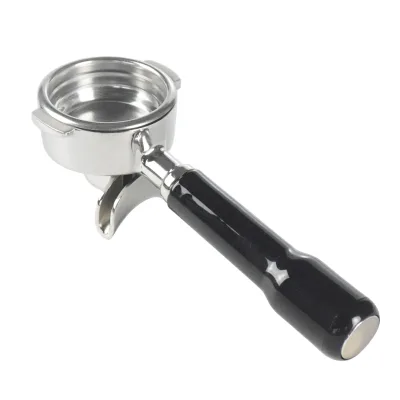
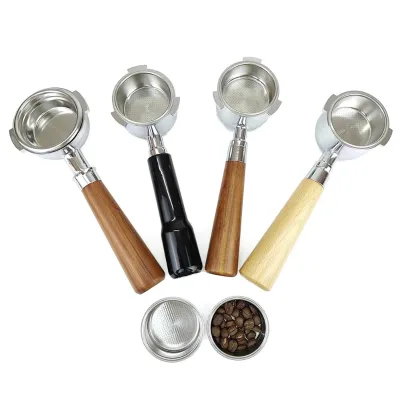
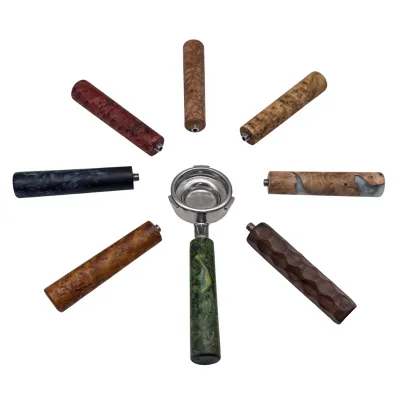
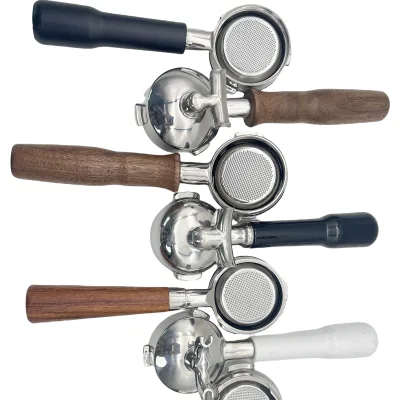
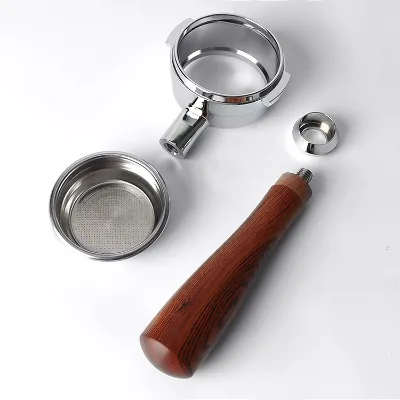


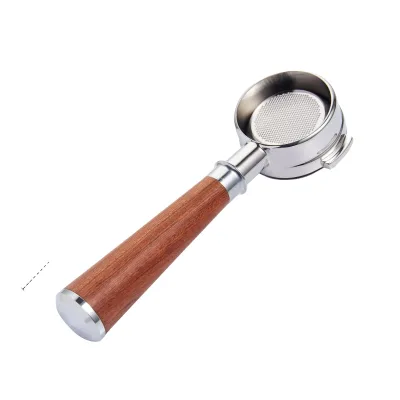
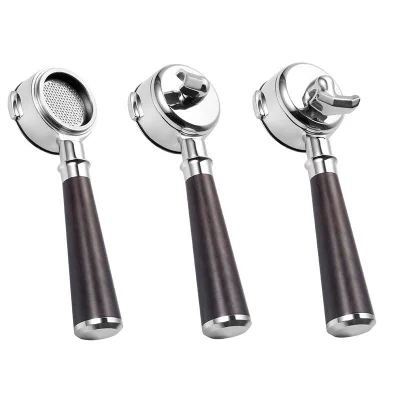
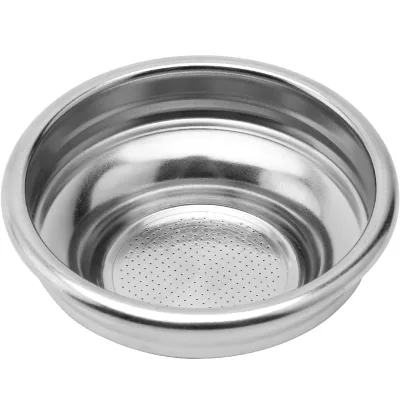
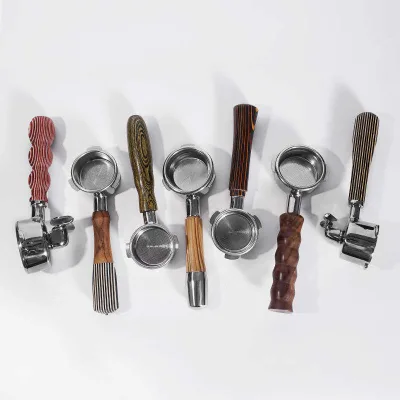
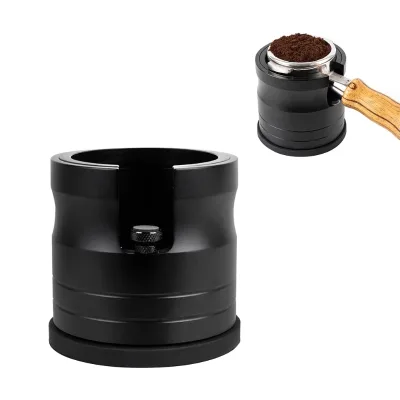
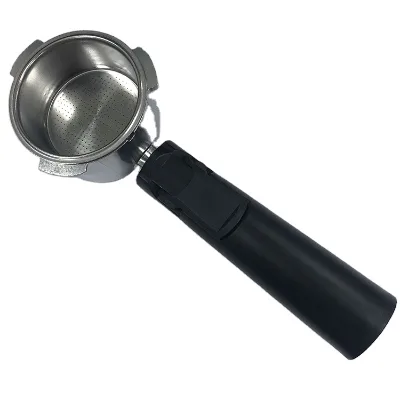

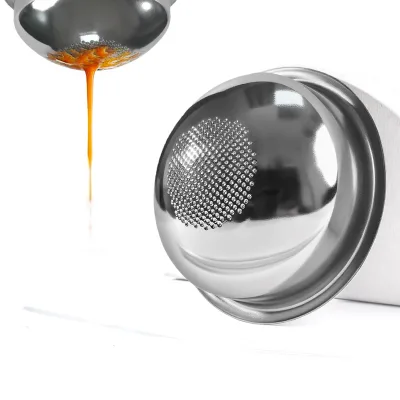
Stainless Steel Coffee Espresso Bottomless Wooden Handle Portafilter 58mm
$15.49 - $16.99
MOQ: 50 Pieces

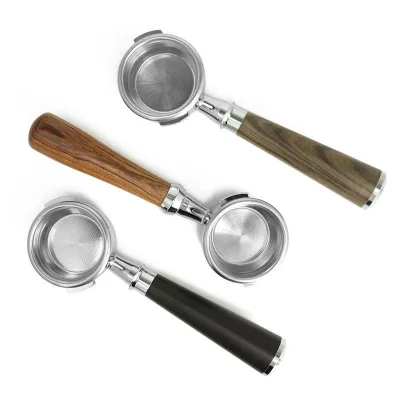
Coffee Espresso Portafilter with Wood Handle Stainless Steel Bottomless
$15.49 - $16.99
MOQ: 50 Pieces
Comprehensive Sourcing Guide
Strategic Sourcing Guide for Anodized Espresso Portafilters
Understanding the Product Category and Technical Baseline
When sourcing an Anodized Espresso Portafilter, buyers must first distinguish between the core mechanical component and the broader category of coffee brewing hardware. The term "anodized" typically refers to an electrochemical surface treatment applied to aluminum alloys to enhance corrosion resistance and durability. However, the supplied product data indicates a significant divergence in material composition for many listed items. Several entries explicitly list "Stainless Steel" as the primary material, while others reference "Coffee Pill" or "Coffee Powder" as processing materials, which suggests these listings may encompass cleaning tools or specific machine parts rather than the portafilter body itself.
For a genuine anodized aluminum portafilter, the buyer must verify that the base material is indeed an aluminum alloy capable of receiving an anodic oxide layer. The provided data highlights a machining tolerance of +/-0.01mm for certain stainless steel components and a general dimensions tolerance of Min +-0.02. These precision metrics are critical for the portafilter basket interface, ensuring a tight seal with the group head to maintain extraction pressure. If the product is fabricated via investment casting or lost wax casting, as noted in the process descriptions, the resulting surface roughness may vary. The observed surface roughness values range from Ra12.5 to Ra3.2. For a portafilter, a lower Ra value (smoother surface) is generally preferred to prevent coffee oil buildup and facilitate cleaning, making Ra3.2 a more desirable benchmark than Ra12.5 for high-volume commercial use.
Compliance, Certification, and Material Verification
Navigating the certification landscape is essential for B2B procurement, particularly when the product involves direct contact with food and beverages. The supplied facts reveal a wide spectrum of certifications, including RoHS, CE, GS, EMC, CB, LFGB, UL, and EMF. While RoHS (Restriction of Hazardous Substances) is a standard requirement for electronic components and general hardware, LFGB (German Food and Feed Code) and UL (Underwriters Laboratories) are more directly relevant to food safety and electrical safety for espresso machines.
Buyers must exercise caution when interpreting these certifications. The data lists "Coffee Maker Parts" and "Espresso Coffee Maker" alongside certifications like LFGB and UL. However, a portafilter is a mechanical part, not an electrical appliance. Therefore, while CE and RoHS are common for general hardware, the presence of UL or EMC on a portafilter listing might indicate the listing covers the entire machine or an electrical component rather than the manual handle or basket. The "Casting Method" listed as Thermal Gravity Casting or Gravity Casting implies a specific metallurgical process. Buyers should verify that the anodization process, if applied, does not compromise the structural integrity of the casting or introduce hazardous substances that would violate LFGB standards for food contact.
Furthermore, the standard "AISI" is mentioned in the context of stainless steel products. If the portafilter is stainless steel rather than anodized aluminum, the "anodized" keyword in the search query may be a misnomer for the specific listing. Stainless steel portafilters are often brushed or polished rather than anodized. The buyer must confirm whether the supplier offers true anodized aluminum or if the listing conflates different material types. The "Standard: CUSTOM" and "Standard: 1202530cm" entries suggest that many products are non-standardized or refer to packaging dimensions rather than industry standards like ISO or ASTM for the portafilter itself.
Cost Drivers and Manufacturing Economics
The cost structure for an espresso portafilter is heavily influenced by the manufacturing process, material selection, and customization level. The observed price range of 1.45 to 220 USD indicates a vast disparity, likely separating low-cost cleaning accessories or simple hardware from high-precision, branded, or custom-engineered portafilters. The "Max Manufacture Ability" of 100 Ton Each Month suggests that suppliers have significant capacity, which can drive down unit costs for large orders.
Customization is a primary cost driver. The data confirms that "Customization: Available" and "Make: as Your Drawing or Sample" are standard offerings. Custom portafilters require the creation of unique molds, especially for investment casting or gravity casting methods. This setup cost is amortized over the order quantity. The "MOQ: 100" for specific items suggests that while some suppliers accept small batches, others have a minimum threshold that impacts the unit price. For buyers seeking anodized finishes, the additional processing step of anodizing adds to the cost compared to raw or polished stainless steel.
The "Surface Preparation" methods, such as polishing or sand blasting, also affect pricing. Sand blasting is often used to prepare surfaces for coating, while polishing is a finishing step. If a buyer requires a specific surface roughness like Ra3.2, the additional machining or finishing time will increase the cost compared to a standard Ra12.5 finish. Additionally, the "Packing" requirements, ranging from "Poly Bag" to "Carton Box" and "ISO Standard" or "Standard Export Packing," add logistical costs. Buyers should evaluate whether the quoted price includes the necessary protective packaging for anodized surfaces, which can be prone to scratching if not handled correctly during shipping.
Typical Applications and Operational Context
The applications for these components vary from commercial high-volume environments to home use. The data explicitly mentions "Commercial, Home Use" and "Espresso Coffee Maker" as usage categories. In commercial settings, such as cafes or restaurants, the portafilter must withstand constant thermal cycling and mechanical stress. The "Working Principle: Hydrocone Type" suggests specific internal flow dynamics, which may be relevant for the basket design rather than the handle.
For commercial applications, durability is paramount. An anodized aluminum portafilter offers a lightweight alternative to heavy stainless steel, reducing barista fatigue during high-volume service. However, the anodized layer must be thick enough to resist abrasion from frequent tamping and cleaning. The "Product Name: Coffee Portafilter Cleaner" in the data suggests that some listings may be for cleaning tools rather than the portafilter itself. Buyers must ensure the product matches the intended application. If the goal is to source the actual brewing component, the "Application: Hardware" and "Style: American" tags provide context on the design aesthetic and functional requirements.
The "Capacity: 5-10 Cups" specification indicates that some products are designed for smaller batches or specific machine models. This is crucial for buyers sourcing replacement parts for older or niche espresso machines. A mismatch in capacity or diameter (noted as "56mm or Should Be Provide Drawing") can render the portafilter unusable. The "Dimensions Tolerance" of Min +-0.02 is a critical specification for ensuring the portafilter fits the machine's group head without leakage.
Supplier Evaluation and Production Capabilities
Evaluating suppliers requires a deep dive into their production capabilities and geographic origins. The data lists origins in Qingdao, Zhaoqing, and Guangdong, China. These regions are known for manufacturing hardware and coffee equipment. The "Process: Investment Casting" and "Lost Wax Casting" indicate that the suppliers possess advanced foundry capabilities. Investment casting is ideal for complex geometries, which is common in portafilter designs that integrate handles, baskets, and spouts.
Buyers should verify the supplier's ability to handle the "Customization" aspect. The "Make: as Your Drawing or Sample" attribute implies that the supplier can produce based on provided blueprints. This is essential for anodized portafilters, as the anodizing process requires specific surface preparation that may differ from standard casting. The "Molding Technics: Gravity Casting" suggests a specific method for filling molds, which affects the density and strength of the final product.
The "Certification_ISO9001: Machining Tolerance_CT6" entry is a notable data point. While ISO 9001 is a quality management standard, the specific mention of "Machining Tolerance_CT6" suggests a correlation between the supplier's quality system and their ability to meet tight tolerances. Buyers should request proof of ISO 9001 certification and verify if the supplier can consistently achieve the required machining tolerances for the portafilter interface. The "Standard: Customization" and "Standard: CUSTOM" entries highlight that many products are bespoke, requiring a close working relationship with the supplier to ensure the final product meets the buyer's specific technical requirements.
Quality Control and Long-Term Procurement Strategy
Quality control for anodized portafilters must address both the structural integrity of the casting and the quality of the surface finish. The "Surface Roughness" values of Ra12.5 and Ra3.2 serve as benchmarks. For anodized surfaces, a smoother finish (Ra3.2) is generally superior for preventing coffee residue accumulation. Buyers should implement a quality control protocol that includes visual inspection for anodizing defects, such as uneven coloring or peeling, and dimensional checks to ensure the diameter and tolerance specifications are met.
The "Product Packing" varies from "Carton Box" to "Poly Bag." For anodized components, protective packaging is vital to prevent scratching during transit. Buyers should specify "Standard Export Packing" or "ISO Standard" packing to ensure the product arrives in pristine condition. The "Lead Time" and "MOQ" are also critical for long-term procurement. With an MOQ of 100 and a production capacity of 100 tons per month, suppliers can handle large orders, but buyers must plan for lead times associated with custom molds and anodizing processes.
Long-term procurement considerations include the availability of replacement parts and the consistency of the anodizing process. Since the "Standard" is often "Custom," buyers should ensure that the supplier maintains the tooling and process parameters for future orders. The "Working Principle" and "Usage" data suggest that the product is designed for specific machine types. Buyers should verify compatibility with their existing fleet of espresso machines to avoid obsolescence. Finally, the "Material: Stainless Steel" vs. "Anodized" distinction must be clarified in the contract to ensure the buyer receives the exact material specification required for their application.
Comparative Analysis of Product Attributes
To assist in decision-making, the following table summarizes the key attributes observed in the supplied data, highlighting the variations buyers may encounter.
| Attribute | Observed Value / Range | Procurement Implication |
|---|---|---|
| Material | Stainless Steel, Coffee Pill, Coffee Powder | Verify if "Stainless Steel" is the actual base metal; "Coffee Pill" likely refers to cleaning tools. |
| Process | Investment Casting, Lost Wax Casting, Gravity Casting | Investment/Lost Wax allows complex shapes; Gravity Casting is common for aluminum. |
| Surface Roughness | Ra12.5, Ra3.2 | Ra3.2 is preferred for hygiene; Ra12.5 may require additional finishing. |
| Certification | RoHS, CE, LFGB, UL, ISO9001 | Verify LFGB/UL for food contact; RoHS for general compliance. |
| Tolerance | +/-0.01mm, Min +-0.02 | Critical for portafilter basket fit; ensure supplier can meet these tight limits. |
| Customization | Available, As Drawing/Sample | High flexibility but requires detailed drawings and mold setup costs. |
| Origin | Qingdao, Zhaoqing, Guangdong, China | Regional manufacturing hubs; verify logistics and export capabilities. |
| MOQ | 1, 100 | Range allows for small trials or bulk orders; confirm minimums for custom work. |
| Packing | Poly Bag, Carton Box, ISO Standard | Ensure protective packaging for anodized surfaces to prevent damage. |
This comparative view underscores the importance of precise specification. The wide range of attributes means that a single search term like "Anodized Espresso Portafilter" can yield results for cleaning tools, stainless steel parts, or custom aluminum components. Buyers must rigorously filter these results based on the specific technical requirements of their espresso machine and the desired material properties. By focusing on the verified tolerances, surface finishes, and certifications, buyers can navigate the complex landscape of B2B coffee equipment sourcing to secure high-quality, compliant, and durable portafilters.
FAQs
What certifications apply to anodized espresso portafilters?
Common certifications include RoHS, CE, GS, LFGB, UL, and EMC. While RoHS and CE are standard for hardware, LFGB and UL are critical for food contact and electrical safety. Buyers must verify which certifications apply specifically to the mechanical part versus the entire machine.
How is the surface roughness measured for these parts?
Observed surface roughness values range from Ra12.5 to Ra3.2. A lower Ra value like Ra3.2 is preferred to prevent coffee oil buildup and facilitate cleaning. Suppliers may use polishing or sand blasting to achieve these specific surface preparation standards.
Which materials are used for espresso portafilter components?
Materials listed include Stainless Steel and various processing materials like coffee powder or pills for cleaning tools. Some listings specify AISI standards for stainless steel, while others describe casting methods like investment or lost wax. Buyers must confirm the base material matches the anodized requirement.
Can suppliers provide custom dimensions for portafilters?
Yes, customization is available with options to make parts based on drawings or samples. Specifications often list diameters like 56mm or require drawing provision. Dimensions tolerance is typically Min +-0.02, ensuring a tight seal with the group head for proper extraction pressure.
What is the minimum order quantity for these items?
The observed MOQ range spans from 1 to 1000 units, with specific items listing an MOQ of 100. Some suppliers offer small batch options, while others require higher thresholds. Buyers should verify the specific MOQ before requesting quotes to ensure alignment with their procurement needs.
How does the manufacturing process affect the final product?
Processes include investment casting, lost wax casting, and gravity casting. These methods influence the structural integrity and surface finish of the component. Buyers should note that casting methods may require specific surface preparations like polishing or sand blasting to meet quality standards.
Where are these products typically manufactured?
Products originate from locations such as Qingdao, Zhaoqing, and Guangdong in China. These regions are known for hardware and coffee equipment manufacturing. Buyers should consider the geographic origin when evaluating logistics, lead times, and supplier capabilities for their specific sourcing strategy.