Source Anti-Slip Wear-Resistant Garage Floor Tiles for Home, Outdoor, Commercial
Find and compare 30 Anti-Slip Wear-Resistant Garage Floor Tiles designed for household, outdoor, and commercial use. Buyers can evaluate specifications including thickness, material options like PP and PVC, and load-bearing capacities to select the right interlocking blocks for their projects.
Key considerations
Products List


Premium Scratch-Resistant Waterproof Garage Floor Tiles for Durability
$5.30 - $9.30
MOQ: 500 Square Meters


Durable High-Traction PVC Interlocking Garage Floor Tiles for Safety
$0.50 - $1.20
MOQ: 4000 Square Meters




Comprehensive Sourcing Guide
Strategic Sourcing Guide for Anti-Slip Wear-Resistant Garage Floor Tiles
Understanding Core Technical Specifications and Material Variants
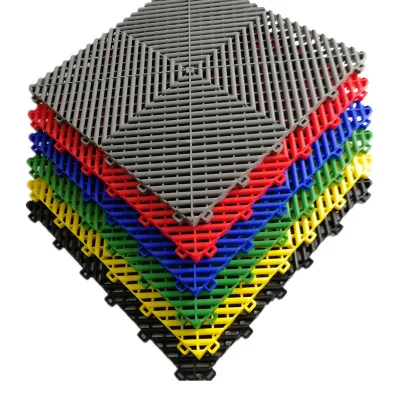
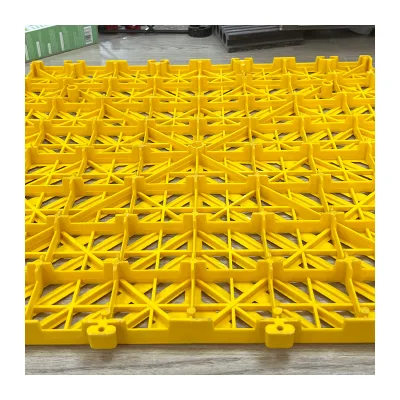
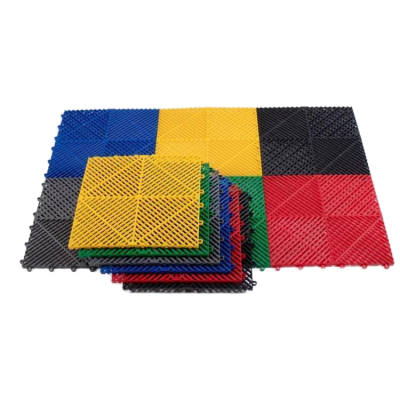
When sourcing anti-slip wear-resistant garage floor tiles, buyers must first navigate the diverse technical specifications available in the current market. The product landscape is not monolithic; it features distinct material compositions and dimensional standards that directly influence performance and application suitability. Based on observed market data, the primary material variants include Polypropylene (PP) and Polyvinyl Chloride (PVC). The PP-based tiles often present a puzzle pattern design, typically measuring 400mm by 400mm with a thickness of 20mm. These units are characterized by a block state and a modern style, often available in multi-color configurations. The weight for these specific units is observed around 380g per piece, though other variants in the same category may weigh up to 520g per piece or 400g depending on the specific model configuration.
In contrast, PVC-based options offer different physical properties. A notable variant features an orange peel texture with a thickness of 5mm and dimensions of 500mm by 500mm. The weight for this 5mm PVC tile is observed in the range of 1.37kg to 1.43kg per unit, which is significantly heavier than the standard interlocking blocks, likely due to the density of the material or the specific roll format. Another high-performance variant, often associated with garage floor applications, utilizes a 30mm thickness standard (400mm x 400mm x 30mm) and is identified by a diamond pattern. This thicker profile suggests a higher load-bearing capacity, with observed bearing specifications ranging from 3 to 4 tons for standard models up to 5 to 6 tons for heavy-duty variants.
The dimensional standards are critical for compatibility. While many tiles adhere to a 400mm x 400mm footprint, thickness varies significantly from 1.8cm (18mm) to 3.0cm (30mm). Some products are specified as 40cm x 40cm x 1.8cm, while others are 400mm x 400mm x 20mm. Buyers must verify that the selected model matches their subfloor requirements and intended load. The "1.8 Garage floor" model and the "2.0 Dragon Pattern" model represent specific designations within the market, indicating that pattern and thickness are often bundled into the model number. Understanding these exact specifications is the first step in ensuring the purchased tiles meet the functional demands of a garage environment.
Functional Performance and Application Suitability
The functional attributes of these floor tiles are the primary drivers for their selection in garage settings. The core keyword "anti-slip wear-resistant" is supported by a comprehensive list of observed properties. These tiles are engineered to be waterproof, moisture-proof, and rot-proof, making them ideal for environments where vehicles may track in water, snow, or oil. The surface treatment often involves simple color application, though some variants feature specific textures like the orange peel pattern to enhance grip. The puzzle pattern is a common design feature that facilitates interlocking, ensuring a stable surface that resists shifting under vehicle weight.
Beyond the basic anti-slip and wear-resistant claims, the observed product data highlights additional functional benefits. Many units are described as fireproof, soundproof, and providing thermal insulation. These attributes are particularly relevant for residential garages that serve as multi-purpose spaces or workshops. The ability to withstand moisture and rot is crucial for longevity, especially in climates with freezing temperatures where water infiltration could damage traditional flooring. The usage categories observed include Household, Outdoor, Commercial, and Sports applications, indicating a versatility that extends beyond simple vehicle parking. For instance, the high bearing capacity of 5 to 6 tons makes these tiles suitable for commercial garages housing heavier trucks or industrial vehicles, while the 3 to 4-ton capacity suffices for standard passenger vehicles in residential settings.
The assembly weight is another critical factor for logistics and installation. Some products list an assembled weight of 16kg or 20kg, which likely refers to the weight of a specific packaging unit or a defined area of installed tiles. This data point helps buyers estimate the total weight of the shipment and plan for handling equipment during installation. The "Packed in Carton" or "Customize" packing options suggest that suppliers are flexible regarding how the product is delivered, which can impact the ease of installation on-site. Buyers should ensure that the chosen functional profile aligns with the specific environmental stresses of their intended location, whether it is a damp basement, a sun-exposed outdoor patio, or a high-traffic commercial showroom.
Cost Drivers, MOQ, and Packaging Logistics
Procurement costs for anti-slip wear-resistant garage floor tiles are influenced by several variables, including material type, thickness, and order volume. The observed market price range spans from $0.50 to $39.90 USD. This wide disparity suggests that the unit price is heavily dependent on the specific model, thickness, and material composition. Thicker tiles, such as the 30mm variants, or those with specialized features like fireproofing and sound insulation, will likely command prices at the higher end of this spectrum. Conversely, thinner 5mm PVC rolls or standard 18mm blocks may fall toward the lower end.
Minimum Order Quantity (MOQ) is a significant cost driver. While some suppliers may offer low MOQs starting at 1 unit, the high-confidence data indicates a standard MOQ of 200 square meters for many bulk transactions. This threshold is typical for B2B procurement to ensure economic viability for the supplier. Buyers planning to purchase less than 200 square meters may face higher per-unit costs or may need to negotiate directly with suppliers who offer smaller lot sizes. The observed MOQ range extends up to 4000 units, suggesting that large-scale commercial projects can leverage significant volume discounts.
Packaging specifications play a vital role in logistics planning. Standard box dimensions observed include 42cm x 42cm x 60cm and 43.5cm x 43.5cm x 64cm. The packing density varies, with some boxes containing 33 pieces, while others are configured for roll formats where a 20-foot general purpose container can hold 6400 square meters, calculated as 16 rolls per pallet across 10 pallets. Understanding these packaging metrics is essential for calculating shipping costs and storage requirements. The "Packed in Carton" or "Customize" options allow buyers to tailor the packaging to their specific supply chain needs, potentially reducing damage during transit. Buyers should verify the exact packing configuration for their chosen model to ensure efficient container loading and minimize freight expenses.
Compliance, Certification, and Supplier Verification
In the B2B procurement of flooring materials, verifying compliance and supplier credibility is paramount. The supplied data indicates that products originate from China, with specific mentions of Hebei as a production hub. While specific certification names are not explicitly listed in the provided facts, buyers must actively verify that the products meet relevant international safety and quality standards. The observed "OEM Available: Yes" attribute suggests that many suppliers are capable of customizing products, which often requires a robust quality management system to maintain consistency across different batches.
Buyers should request documentation regarding the fireproof, waterproof, and wear-resistant claims. Although the data lists these as attributes, independent third-party test results are necessary to validate these performance claims. For instance, the "Warranty Years: 15" observation implies a manufacturer's confidence in the product's durability, but this warranty should be backed by clear terms and conditions. Buyers must also check for adherence to industry standards for garage flooring, such as load-bearing capacity tests and slip-resistance ratings (e.g., DIN 51130 or similar standards depending on the target market).
Supplier evaluation should extend beyond the product specifications to include their operational capabilities. The lead time of "15 Days After Receive 30% T/T Deposit" is a standard term observed in the data, but buyers should confirm if this timeline is consistent for their specific order volume. Customization availability is a key differentiator; suppliers offering OEM services should have a clear process for design approval and sample production. Buyers should also inquire about the supplier's history with similar projects, particularly in commercial or outdoor settings, to gauge their experience with large-scale installations. Verifying the supplier's location and logistics network is also crucial, as shipping from Hebei, China, to various global destinations involves specific transit times and customs requirements.
Quality Control and Long-Term Procurement Strategy
Implementing a rigorous quality control (QC) strategy is essential for ensuring that the received tiles meet the expected performance standards. Given the variation in observed weights (ranging from 380g to 520g per piece) and thicknesses (18mm to 30mm), buyers should establish clear acceptance criteria before production begins. A sampling plan should be implemented to check for dimensional accuracy, surface texture consistency, and interlocking mechanism integrity. The "Puzzle" pattern and "Diamond" pattern designs require precise molding to ensure a seamless fit; any deviation can lead to installation issues and reduced structural stability.
Long-term procurement considerations involve assessing the lifecycle costs of the flooring. While the initial price may be low, the 15-year warranty observed on some models suggests a long service life, which can offset initial investment costs. Buyers should evaluate the maintenance requirements of the chosen material. For example, PVC tiles with an orange peel texture may require different cleaning protocols compared to PP tiles with a simple color finish. The "Soundproof" and "Thermal Insulation" features add value by improving the comfort and energy efficiency of the space, which should be factored into the total cost of ownership analysis.
Furthermore, buyers should consider the scalability of their procurement. If the initial order is for a residential garage, the supplier should be capable of fulfilling larger orders for commercial expansion without compromising quality or lead times. The ability to customize packaging and product specifications (OEM) allows for future adaptability. Buyers should also maintain a relationship with the supplier to ensure consistent supply of replacement tiles in case of damage or expansion needs. Regular audits of the supplier's production line and quality assurance processes can help mitigate risks associated with long-term contracts. By focusing on these strategic elements, buyers can secure a reliable supply of high-quality anti-slip wear-resistant garage floor tiles that meet their operational and financial goals.
FAQs
What material options are available for these tiles?
The tiles are primarily available in Polypropylene (PP) and Polyvinyl Chloride (PVC) materials. PP variants often feature a puzzle pattern with 20mm thickness, while PVC options may include an orange peel texture with 5mm thickness.
How thick are the standard garage floor tiles?
Standard thicknesses range from 18mm to 30mm depending on the model. Common specifications include 1.8cm, 20mm, and 30mm profiles, with the 30mm diamond pattern offering higher load-bearing capacity for heavy vehicles.
Can these tiles support heavy vehicle loads?
Yes, the tiles are designed to support significant weight with bearing capacities ranging from 3 to 6 tons. Standard models handle 3 to 4 tons, while heavy-duty variants can support up to 5 to 6 tons.
What is the minimum order quantity for bulk purchases?
The standard minimum order quantity is 200 square meters for most bulk transactions. However, some suppliers may offer lower MOQs starting at 1 unit, while large commercial projects might require orders up to 4000 units.
How long does delivery take after placing an order?
The typical delivery time is 15 days after receiving a 30% T/T deposit. This lead time applies to standard orders, though customization or large volume requests may require additional processing time.
Are the tiles suitable for outdoor and commercial use?
Yes, the tiles are rated for household, outdoor, commercial, and sports applications. They feature waterproof, moisture-proof, and rot-proof properties to withstand various environmental conditions and high-traffic areas.
What packaging dimensions are used for shipping?
Standard box specifications include dimensions like 42x42x60cm or 43.5x43.5x64cm. Packaging options allow for 33 pieces per box or customized roll formats, with a 20-foot container holding up to 6400 square meters.