Source Anti Theft Self Alarm Bag Tag with Lanyard for Retail, Supermarket, and Warehouse
Compare 30 verified listings for the Anti Theft Self Alarm Bag Tag with Lanyard designed for retail, supermarkets, and warehouses. Buyers can evaluate detection distances, frequencies, and packaging options to find the right EAS accessories for their security needs.
Key considerations
Products List


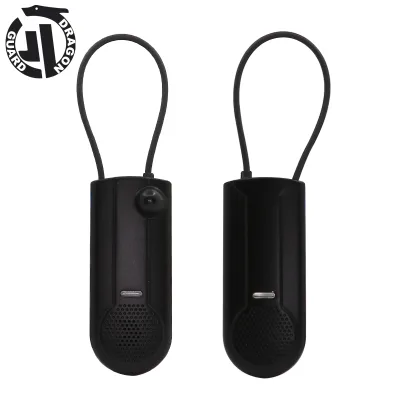
Dragon Guard At005 EAS Anti Theft RF/Am Self Alarm Bags Tag with Lanyard
$1.00 - $1.80
MOQ: 100 pieces

Dragon Guard Secure & Smart At004 EAS Anti Theft Self Alarm Tag for Bags
$1.50 - $2.00
MOQ: 100 pieces




Comprehensive Sourcing Guide
Strategic Sourcing Guide for Anti-Theft Self Alarm Bag Tags with Lanyard
Understanding the Product Category and Technical Architecture
The anti-theft self alarm bag tag with lanyard represents a specialized subset of Electronic Article Surveillance (EAS) hardware designed for high-value retail environments, particularly those managing loose merchandise like jewelry, electronics, or high-end garments. These devices function as a hybrid between a traditional hard tag and a secure packaging solution, integrating a locking mechanism directly onto a bag or a dedicated lanyard system. The core technical architecture relies on either Radio Frequency (RF) or Acusto Magnetic (AM) systems, which dictate the frequency of operation and the type of detection equipment required at the point of sale.
In the RF domain, these tags typically operate at frequencies such as 8.2 MHz, utilizing a detection signal that triggers an alarm when the tag passes through an active detection zone. Conversely, AM systems often function at 58 kHz, employing a detection signal that is distinct from RF and requires specific antenna configurations. The physical dimensions of these tags vary based on the specific model and application, with observed standard dimensions ranging from approximately 89mm by 37mm by 16.5mm for certain models to 85mm by 43mm by 26mm for others. The internal composition frequently involves ferrite cores or coils, which are critical for the magnetic properties required to trigger the alarm mechanism.
The locking mechanism is a pivotal technical feature, often categorized as either "Normal" or "Super" lock strength. This distinction is vital for retailers dealing with different risk profiles; a "Super" lock provides enhanced security against forced removal, while a "Normal" lock may suffice for lower-risk inventory. The material construction is predominantly ABS plastic, offering durability and resistance to impact, with color options typically available in black, white, or customized shades to match brand identity. The integration of a lanyard allows the tag to be attached to bag handles or product loops, ensuring the tag remains visible and secure until the point of sale, where it is deactivated or removed.
Compliance, Certification, and Regulatory Standards
When sourcing EAS tags, verifying compliance with international and regional certification standards is non-negotiable. The supply chain for these devices is subject to rigorous testing to ensure electromagnetic compatibility and safety. A comprehensive review of available products reveals a wide spectrum of certifications that buyers should look for to ensure market access and product safety. These include CE (Conformité Européenne), which indicates compliance with health, safety, and environmental protection standards for products sold within the European Economic Area. Additionally, ISO certifications are frequently cited, indicating adherence to international standards for quality management and operational efficiency.
For products entering the Chinese market, the CCC (China Compulsory Certification) mark is a mandatory requirement, signifying that the product meets specific safety and quality standards set by the Chinese government. In regions requiring specific road or industrial safety standards, certifications such as FCC (Federal Communications Commission) for electromagnetic interference, RoHS (Restriction of Hazardous Substances) for environmental safety, and DOT (Department of Transportation) or E-MARK for automotive-related applications may be relevant. More specialized standards like MUTCD (Manual on Uniform Traffic Control Devices), ASTM (American Society for Testing and Materials), AS/NZS (Australian/New Zealand Standards), GS (Geprüfte Sicherheit), BUREAU, and Intertek verification are also observed in high-specification listings.
Buyers must understand that not every listed product will possess every certification. The presence of a certification list should be treated as an observation of specific batch capabilities rather than a universal guarantee for all SKUs. When evaluating a supplier, the procurement team must request valid, up-to-date certification documents for the specific model number being purchased. This verification process ensures that the tags will not cause interference with other electronic devices and that the materials used are safe for consumer interaction. The absence of specific certifications, particularly CE or FCC, can lead to customs delays or legal liabilities in regulated markets.
Cost Drivers and Economic Factors in Procurement
The economic landscape of sourcing anti-theft tags is influenced by several key variables, including volume, customization, and technical complexity. The observed price range for these products in the market spans from 0 to 3.25 USD per unit, a wide variance that suggests significant differences in material quality, lock strength, and feature sets. The Minimum Order Quantity (MOQ) is another critical cost driver, with observed ranges extending from 50 units to 10,000 units. This flexibility allows small retailers to test the market with lower volumes, while large chains can leverage economies of scale to reduce unit costs.
Customization is a primary factor influencing the final price. Products offering customized colors, logos, or specific lanyard designs typically command a premium over standard black or white units. The complexity of the locking mechanism, such as the "Super" lock variant, may also impact the cost due to the precision engineering required. Furthermore, the packaging specifications play a role in logistics costs. Standard packing configurations often include 100 pieces per carton with a gross weight of 6 kilograms, though some models may have different densities, such as 200 pieces per carton with a weight of 11 kilograms.
Buyers should also consider the total cost of ownership, which includes the cost of the tags, the packaging, and the shipping logistics. The carton dimensions, typically around 38cm by 29cm by 25cm or similar variations, affect how many units can be shipped per container, directly impacting freight costs. While the unit price is a significant component, the ability to negotiate based on volume and the specific requirements of the supply chain (such as lead times and packaging customization) will ultimately determine the most cost-effective procurement strategy.
Typical Applications and Operational Use Cases
The versatility of the anti-theft self alarm bag tag with lanyard makes it suitable for a diverse range of retail environments. The primary application sectors identified include jewelry stores, garment stores, supermarkets, shopping arcades, warehouses, video stores, and bookstores. In jewelry stores, the high value of the merchandise necessitates the use of "Super" lock tags with lanyards to prevent theft and ensure the tag remains attached to the product until purchase. The self-alarm feature provides an immediate deterrent, as the tag triggers an alarm if removed without proper deactivation.
For garment stores and shopping arcades, these tags are often used on high-end clothing items or accessories where traditional tags might be easily removed or damaged. The lanyard design allows for secure attachment to bag handles or garment loops, ensuring the tag is visible to security personnel. Supermarkets utilize these tags for bulk items or high-value grocery products that require a more robust security measure than standard soft tags. The ability to customize the tag color and design allows retailers to integrate the security device into their overall branding strategy, making it less obtrusive while maintaining high security.
Warehouse environments also benefit from these tags, particularly for inventory tracking and loss prevention of high-value stock. The detection distance of these tags, typically ranging from 0.9 to 1.2 meters or 1.2 to 2.0 meters depending on the system design, ensures reliable detection at exit points. The compatibility with both RF and AM systems allows retailers to choose the technology that best fits their existing infrastructure. Whether in a video store or a bookstore, the tag's ability to be customized and its robust locking mechanism make it an ideal solution for protecting inventory across various retail verticals.
Supplier Evaluation and Quality Assurance Protocols
Selecting a reliable supplier for anti-theft tags requires a rigorous evaluation process that goes beyond price comparisons. Buyers should prioritize suppliers who demonstrate transparency in their manufacturing processes and provide clear documentation of their product specifications. The origin of the products, often noted as Jiangsu, China or generally China, should be verified to ensure that the manufacturing facility meets international quality standards. The presence of multiple certifications, such as CE, ISO, and FCC, indicates a supplier's commitment to compliance and quality control.
Quality assurance protocols should be established to verify the performance of the tags before mass production. Key areas of focus include the durability of the ABS material, the reliability of the locking mechanism, and the consistency of the detection signal. Buyers should request samples to test the detection distance and the effectiveness of the alarm system in real-world scenarios. The packing specifications, such as the 100 pieces per carton standard, should be verified to ensure that the packaging protects the tags during transit and facilitates easy handling at the retail location.
Supplier evaluation should also consider the flexibility of the customization options. A supplier that offers customized colors, logos, and lanyard designs demonstrates a higher level of service and adaptability to the buyer's specific needs. The ability to provide different lock strengths, such as "Normal" or "Super," allows the buyer to tailor the security level to the specific risk profile of their inventory. Finally, the supplier's track record in meeting delivery timelines and handling large order volumes should be assessed to ensure a smooth procurement process.
Long-Term Procurement Considerations and Inventory Management
Sourcing anti-theft tags is not a one-time transaction but a long-term partnership that requires careful planning and inventory management. Buyers should consider the scalability of the supplier's production capabilities to meet future demand. The observed MOQ range of 50 to 10,000 units suggests that suppliers can accommodate both small and large orders, but buyers must plan their inventory levels to avoid stockouts or overstocking. The lead time for production and shipping should be factored into the procurement schedule to ensure a continuous supply of security tags.
Inventory management strategies should include regular audits of the tag stock to ensure that the inventory levels align with sales volume and security needs. The customization aspect of the tags allows for brand consistency, but buyers must manage the complexity of maintaining multiple SKUs for different product lines. The compatibility of the tags with existing EAS systems is crucial; buyers should verify that the tags are compatible with their current detection equipment before placing large orders.
Long-term considerations also include the potential for technological upgrades. As EAS technology evolves, buyers should look for suppliers who can provide updates or new models that offer improved detection ranges, better locking mechanisms, or enhanced customization options. The ability to adapt to changing security requirements and retail trends will ensure that the procurement strategy remains effective over time. By maintaining a strategic relationship with a reliable supplier, buyers can ensure a steady supply of high-quality anti-theft tags that protect their inventory and support their business growth.
FAQs
What certifications are available for these tags?
Available certifications include CE, ISO, RoHS, FCC, and CCC depending on the specific model. Some high-specification units also carry DOT, E-MARK, and ASTM marks. Buyers must verify the exact certification list for the chosen model number before ordering.
Which lock strengths can be selected for these tags?
You can choose between Normal or Super lock strengths based on your security needs. Super locks provide enhanced protection against forced removal for high-value items. The specific lock type should be confirmed during the customization phase of your order.
How does the detection distance vary for these tags?
Detection distances typically range from 0.9 to 1.2 meters or 1.2 to 2.0 meters depending on the system design. RF systems and AM systems may exhibit different effective ranges. The actual distance depends on the specific model and the detection equipment used at the exit point.
Can I customize the color and packaging for these tags?
Yes, customization is available for colors like black, white, or custom shades. Packaging options include standard cartons or specific quantities like 100 or 200 pieces per carton. Customized lanyard designs and logos can also be arranged to match your brand identity.
What is the typical minimum order quantity for these tags?
The minimum order quantity ranges from 50 to 10,000 units depending on the supplier and product model. Lower MOQs allow small retailers to test the market while larger chains can leverage bulk pricing. Specific MOQ requirements must be confirmed with the supplier before finalizing the order.
Which retail environments are these tags suitable for?
These tags are designed for jewelry stores, garment stores, supermarkets, and shopping arcades. They are also effective in warehouses, video stores, and bookstores for inventory protection. The versatility allows them to secure various high-value items across different retail verticals.
What materials are used to construct these tags?
The primary material used is durable ABS plastic, often with ferrite cores or coils inside. This construction ensures resistance to impact and reliable alarm triggering. The internal components are critical for maintaining the magnetic properties required for the detection signal.