Source Anti-Theft Slim Ladies Wallet for Travel, Daily, and Work
Compare 30 verified listings for the Anti-Theft Slim Ladies Wallet featuring RFID blocking, PU or leather materials, and customizable logos. Buyers can evaluate prices, MOQs, and packing options from suppliers in Guangdong, China.
Key considerations
Products List


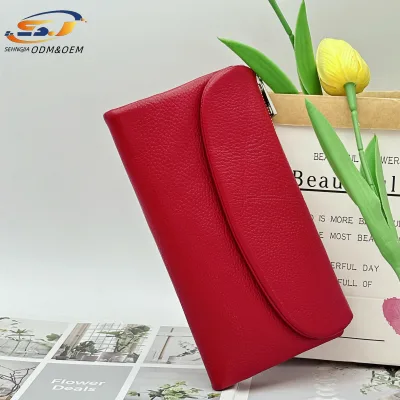
Multifunctional RFID Anti Theft Cowhide Card Holder Wallet for Ladies and Men
$2.98 - $3.88
MOQ: 500 Pieces






Comprehensive Sourcing Guide
Strategic Sourcing Guide for Anti-Stealth Slim Ladies Wallets
Defining Technical Specifications and Material Standards
When sourcing an anti-theft slim ladies wallet, the primary objective is to balance compact portability with robust security features. The market offers a diverse array of configurations, and buyers must first establish precise technical requirements before engaging with suppliers. A critical distinction in this category lies in the material composition. While some manufacturers utilize Polyurethane (PU) to achieve a specific softness and flexibility, others opt for genuine leather to provide a more premium tactile experience. The choice between these materials directly influences the final product's durability, aesthetic appeal, and cost structure. For instance, PU-based models often feature a "soft" hardness rating, making them easy to carry in tight pockets or small purses, whereas leather variants may present a "medium soft" or firmer structure depending on the tanning process.
The physical dimensions of the wallet are equally paramount. A "slim" designation implies a minimal profile, typically adhering to standard credit card sizes while adding security layers. Observed specifications in the sector include dimensions such as 9.67.41.8cm and 11.58.52.3cm. These measurements ensure the wallet remains unobtrusive while accommodating essential items. The internal structure is another vital technical parameter. High-quality slim wallets often incorporate a specific layout, such as 11 card slots, a dedicated compartment for a single banknote, and a coin bag. This organization is crucial for functionality. Furthermore, the closure mechanism must be secure; options range from zippers to magnetic snaps, with zipper closures generally offering superior protection against accidental opening and unauthorized access.
Water resistance is a frequently debated attribute in this category. While some products are explicitly marketed as waterproof, others are not, relying instead on the inherent water-repellent properties of the material or an internal lining. Buyers must verify this claim against their specific use cases. If the wallet is intended for outdoor activities or travel in wet climates, a waterproof specification is non-negotiable. Conversely, for urban daily use, a standard leather or PU construction may suffice. The weight of the unit is also a factor; typical units range from approximately 103 grams to 0.16 kilograms, a difference that can impact the overall comfort of carrying the item in a pocket or clutch.
Compliance, Certification, and Security Features
In the realm of anti-theft wallets, compliance with international standards and the presence of specific certifications are critical indicators of supplier reliability and product safety. The security aspect is often defined by the inclusion of RFID blocking technology. This feature is designed to prevent unauthorized scanning of credit cards and identification documents stored within the wallet. When evaluating potential suppliers, buyers should look for explicit mentions of "RFID Blocking" or "RFID" functionality. However, the mere presence of this claim requires verification through third-party testing or certification to ensure the blocking frequency covers the necessary spectrum (typically 13.56 MHz).
Beyond functional security, regulatory compliance is essential for global trade. Suppliers operating in this sector often adhere to various international standards. Common certifications observed in the industry include ISO, CE, BSCI, and SA8000. ISO certifications generally indicate adherence to quality management systems, ensuring consistent production processes. CE marking suggests compliance with European health, safety, and environmental protection standards. BSCI (Business Social Compliance Initiative) and SA8000 are social accountability standards that verify ethical labor practices, which is increasingly important for brands with corporate social responsibility mandates. Additionally, chemical safety is a growing concern. Standards such as REACH (Registration, Evaluation, Authorization, and Restriction of Chemicals) and AZO-free requirements are vital, particularly for products containing leather or synthetic materials that may come into prolonged contact with skin.
Buyers must also consider the "Customized" nature of many standards. While some products adhere to fixed standards like REACH, others may operate under a "Customized" standard framework where the buyer defines the specific safety or performance criteria. In such cases, the supplier must demonstrate the capability to meet bespoke requirements. It is imperative to request documentation proving that the RFID blocking layers meet specific frequency attenuation levels and that the materials used do not contain prohibited substances. Without these verifications, a product marketed as "anti-theft" may fail to provide the promised security, exposing the buyer to liability and brand reputation risks.
Cost Drivers and Pricing Dynamics
Understanding the cost structure of anti-theft slim ladies wallets is essential for effective budgeting and negotiation. The price range in the market is significant, observed to span from approximately $0.65 to $68.68 USD. This wide variance is driven by several key factors, including material quality, the complexity of the security features, and the level of customization. Basic PU wallets with standard RFID blocking and minimal packaging will naturally fall at the lower end of the spectrum. In contrast, wallets crafted from genuine leather, featuring advanced security layers, premium packaging (such as black gift boxes), and intricate detailing like embossing, will command higher prices.
The Minimum Order Quantity (MOQ) is another critical cost driver. Suppliers often have tiered pricing structures based on volume. Observed MOQs range from as low as 1 piece for sample orders to 600 pieces for bulk production, with common thresholds at 10 or 50 pieces. Higher MOQs typically result in a lower unit cost due to economies of scale in material procurement and production setup. However, buyers must balance the desire for lower unit costs against the financial risk of holding inventory. For startups or those testing a new market, suppliers with lower MOQs (e.g., 10 pieces) are preferable, even if the per-unit cost is slightly higher.
Packaging and logistics also contribute significantly to the final landed cost. Some suppliers offer simple PE bag packaging, while others provide retail-ready options like PP bags, OPP bags, non-woven bags, or even carton packaging with individual gift boxes. The choice of packaging affects both the perceived value of the product and the shipping weight. Additionally, the production location, often cited as Guangdong, China, influences labor costs and logistics efficiency. Buyers should also factor in the lead time, which typically ranges from 5 to 10 days after order confirmation. Rush orders or customizations may extend this timeline, potentially incurring expedited shipping fees. Payment terms, such as T/T, PayPal, Western Union, or Google Pay, also play a role in the financial transaction, with different terms potentially affecting cash flow and negotiation leverage.
Supplier Evaluation and Production Capabilities
Selecting the right supplier requires a rigorous evaluation of their production capabilities and operational transparency. A key indicator of a reliable supplier is the presence of a professional Quality Control (QC) team. Suppliers that emphasize strict QC processes are more likely to deliver consistent products that meet the specified technical and aesthetic requirements. Buyers should inquire about the specific stages of QC, such as raw material inspection, in-process checks, and final random sampling. The ability to provide a "Professional QC Team Strict" assurance is a strong positive signal.
Customization capabilities are another vital evaluation criterion. The market for slim ladies wallets is highly competitive, and differentiation often comes from branding and design. Suppliers that offer "Customized Logo" services and allow for "Customized" standards provide greater flexibility for buyers looking to build a unique brand identity. The technical processes used, such as "Handmade" techniques or specific printing processes like embossing, can add significant value to the product. Buyers should verify the supplier's capacity to handle these specialized processes without compromising quality or lead times.
The supplier's location and shipping methods are also important considerations. Most suppliers in this category are based in China, specifically in regions like Guangdong, which is a hub for leather and accessory manufacturing. This proximity to supply chains for leather, PU, and hardware components can reduce lead times and costs. Suppliers typically offer multiple shipping methods, including sea, air, and land freight. The choice of shipping method will depend on the urgency of the order and the budget constraints. For large bulk orders, sea freight is often the most cost-effective, while air freight may be necessary for smaller, time-sensitive orders. Buyers should also assess the supplier's responsiveness and communication channels to ensure a smooth procurement process.
Quality Control Protocols and Inspection Standards
Implementing a robust quality control protocol is essential to mitigate the risks associated with sourcing anti-theft wallets. The first step is to define clear acceptance criteria based on the technical specifications. This includes verifying the dimensions (e.g., 9.67.41.8cm), the weight (e.g., 103g or 0.16kg), and the functionality of the RFID blocking. Buyers should request sample testing to confirm that the wallet effectively blocks RFID signals and that the material meets the hardness and waterproof claims. For waterproof claims, a simple water resistance test can be conducted to ensure the wallet can withstand exposure to moisture without damage.
Inspection should also focus on the structural integrity of the wallet. The "11 Card Slots/ 1 Chang +1 Coin Bags" configuration must be accurately replicated, with no loose stitching or misaligned slots. The closure mechanism, whether a zipper or magnetic snap, should be tested for durability and smooth operation. The "Handmade" or "Technical" aspects of the production should be scrutinized to ensure that the craftsmanship meets the buyer's standards. Any defects in the leather or PU material, such as discoloration, scratches, or uneven coloring, should be rejected.
Furthermore, buyers should verify the packaging quality. Whether the product is packed in a PE bag, PP bag, or a retail box, the packaging must protect the wallet during transit and present it attractively to the end consumer. The "Individual Packing" support mentioned by some suppliers should be confirmed to ensure that each unit is properly protected. Finally, a pre-shipment inspection is recommended to catch any issues before the goods leave the factory. This inspection should cover a random sample of the batch to ensure consistency and adherence to all agreed-upon specifications.
Long-Term Procurement and Market Adaptation
Sourcing anti-theft slim ladies wallets is not a one-time transaction but a long-term partnership that requires ongoing management and adaptation. As market trends evolve, buyers must remain agile in their procurement strategies. The "Trend" and "Leisure" styles observed in the market suggest that consumer preferences are shifting towards versatile, fashion-forward designs. Buyers should monitor these trends and adjust their product specifications accordingly to maintain competitiveness. The "Candy Color" attribute indicates a demand for vibrant, playful designs, which may require suppliers to have a diverse color palette and the ability to quickly switch production lines.
Sustainability and ethical sourcing are becoming increasingly important in the global market. Certifications like BSCI and SA8000 are not just compliance checkboxes but indicators of a supplier's commitment to ethical practices. Buyers should prioritize suppliers who can demonstrate a continuous improvement in their social and environmental performance. This approach not only mitigates risk but also enhances the brand's reputation among conscious consumers.
Finally, maintaining a strong relationship with the supplier is crucial for long-term success. Open communication, regular feedback, and collaborative problem-solving can lead to better product quality and more favorable terms. Buyers should also consider the scalability of the supplier's operations. As demand grows, the supplier must be able to increase production capacity without compromising quality or lead times. By focusing on these long-term considerations, buyers can build a resilient supply chain that supports the growth and success of their anti-theft slim ladies wallet business.
FAQs
What materials are used for anti theft slim ladies wallets?
These wallets are typically made from PU or genuine leather. PU models often feature a soft hardness, while leather variants may offer a medium soft feel depending on the tanning process used by the manufacturer.
Can these wallets block RFID signals effectively?
Yes, many models include RFID blocking or RFID functionality to prevent unauthorized scanning. Buyers should verify this feature against specific frequency requirements to ensure the security layer meets their needs.
What is the typical lead time for these orders?
The standard lead time is 5 to 10 days after order confirmation. This timeline applies to most suppliers, though customizations or specific production runs may occasionally extend the delivery schedule slightly.
Which certifications do reliable suppliers usually hold?
Reliable suppliers often hold ISO, CE, BSCI, and SA8000 certifications. These standards indicate adherence to quality management systems and ethical labor practices, ensuring product safety and compliance with international trade regulations.
How are these wallets packaged for shipping?
Packaging varies from simple PE bags to retail boxes or non-woven bags. Some suppliers offer individual packing support with options like black gift boxes, while others use standard cartons for bulk shipments.
What is the minimum order quantity for these products?
The minimum order quantity ranges from 10 pieces to 50 pieces depending on the supplier. Some vendors accept orders as low as one piece for samples, while bulk production may require higher thresholds.
Are these wallets waterproof or water-resistant?
Waterproof capabilities vary by model, with some explicitly marked as waterproof and others not. Buyers must verify this attribute against their specific use cases, as not all leather or PU wallets offer full water resistance.