Find Antislip Tower Scaffolding Ladder for construction, maintenance, and events
Source 30 verified listings for Antislip Tower Scaffolding Ladder options suitable for building projects, maintenance tasks, and event setups. Compare steel and aluminum models with varying heights, load capacities, and mobile features to match your specific project requirements.
Key considerations
Products List


Scaffolding Style Ladder Building Construction Material Scaffold Stairs Step Ladders
$28.80 - $39.20
MOQ: 100 Pieces

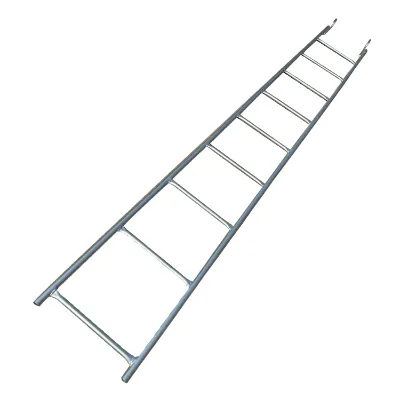
China Scaffolding Factory Scaffolding Ladder with Hook Stair Case 450*1800mm
$4.50 - $8.50
MOQ: 1000 Pieces


Ladders and Scaffolding Scaffold Ladder Scaffolding Step Stair Ladders
$28.00 - $35.00
MOQ: 1000 Pieces


Comprehensive Sourcing Guide
Strategic Sourcing Guide for Antislip Tower Scaffolding Ladder Solutions
Understanding the Technical Landscape of Tower Scaffolding
When sourcing antislip tower scaffolding ladders, buyers must first distinguish between the various structural configurations available in the global market. The core keyword often implies a specific type of mobile or fixed tower system designed for vertical access, yet the technical reality encompasses a wide spectrum of designs. Based on current market observations, the product category includes "Combined Scaffolding" and "Tower Scaffolding" as primary structural styles. These systems are frequently categorized by their supporting mode, which can range from "Projecting Scaffolding" to "Floor Type Scaffolding." Understanding these distinctions is critical because the "antislip" feature is not a universal attribute but rather a specific safety enhancement that must be verified against the intended application.
The material composition is another fundamental technical variable. The market presents options in "Steel," "Aluminum," and general "Metal" alloys. Steel variants often utilize grades such as Q195, Q235, or Q355B, which dictate the load-bearing capacity and corrosion resistance. Conversely, aluminum options, such as those with a thickness of 1.2mm, offer significant weight advantages for mobile applications. The "Main Material" designation of Q235 is a common specification for steel components, providing a baseline for structural integrity. Buyers should note that while some products are described as "Mobile" with a "Horizontal mobile Scaffolding" move method, others are "Fixed" or designed for "Attached Lifting Scaffolding." The "Erection Position" further refines the selection, with options available for "Internal Scaffolding" and "External Scaffolding" environments.
Compliance Verification and Certification Standards
Navigating the compliance landscape for scaffolding requires rigorous verification of certification documents. While the industry often references broad standards like EN 131, ISO 9001, or ISO 45001 as background knowledge, buyers must rely on the specific certificates provided by the supplier for concrete assurance. In the observed product data, specific certifications such as "SGS" and "En12810" are explicitly mentioned for certain steel-based models. These are not merely marketing terms but verifiable documents that should be requested during the inquiry phase.
The "prod_standard" field in product specifications often lists material grades like "Q195/Q235/Q355B" or generic descriptors like "steel." However, for antislip functionality, the verification of surface treatments and structural stability under load is paramount. The "Certificate" field serves as the primary evidence of compliance. Buyers should not assume that a product labeled as "Antislip" automatically meets international safety norms without seeing the specific test reports or certification marks. The presence of "SGS" indicates third-party validation, while "En12810" suggests adherence to specific European scaffolding standards. It is the buyer's responsibility to ensure that the supplier can produce valid, up-to-date certificates that match the specific model number, such as "BS206" or "BT209," rather than relying on general category claims.
Cost Drivers and Pricing Dynamics
The pricing structure for tower scaffolding ladders is highly variable, driven by material costs, manufacturing complexity, and customization levels. The observed price range in the market spans from $4.50 to $40,000 USD, a disparity that reflects the difference between simple ladders and complete, heavy-duty tower systems. Several factors influence where a specific product falls within this range. The primary driver is the material; aluminum scaffolding, while lighter and easier to transport, often commands a higher unit price than steel equivalents due to raw material costs. The "Thickness of Aluminum" at 1.2mm is a specific specification that impacts both weight and cost.
Customization is another significant cost factor. The "Customization: Available" attribute indicates that buyers can request modifications to standard models, which invariably increases the unit price and potentially the Minimum Order Quantity (MOQ). The observed MOQ range of 1 to 1000 units suggests that small-scale buyers can access individual units, while large projects may require bulk ordering to achieve favorable pricing. Packaging also plays a role in logistics costs; options range from "Steel Paleet" and "Container" to "1PCS/Carton" and "Bundles." A product packed in a "Container" may have higher shipping costs but better protection, whereas "Bundles" might be more cost-effective for large steel orders. The "prod_packing" method must be evaluated against the total landed cost, including freight and insurance.
Typical Applications and Functional Requirements
The application of antislip tower scaffolding ladders varies significantly based on the "Construction Properties" and "Structural Style." The data indicates that these products are primarily used for "Building Scaffold" purposes. The "Lapping Form" attribute, which includes "Double Scaffolding" and "Full Scaffolding," suggests different assembly methods for creating stable platforms. For instance, "Full Scaffolding" might be preferred for external work where maximum coverage is needed, while "Double Scaffolding" could be utilized for specific internal maintenance tasks.
The "Function" of the equipment is equally important. Some units are designed as "Telescopic Ladder" systems, offering versatility in height adjustment, while others are fixed towers. The "Pedal Number" of "7-Step Ladder" is a specific configuration suitable for medium-height access. The "Loading" capacity is a critical safety parameter; observed data mentions a loading limit of 150kg, which must be strictly adhered to during procurement planning. Additionally, the "Insulation" status is a vital consideration for electrical work. The observed "Non-Insulated" attribute serves as a warning that these specific models are not suitable for live electrical environments without additional protective measures. Buyers must match the "Move Method" to the job site; "Horizontal mobile Scaffolding" is ideal for indoor tasks requiring frequent repositioning, whereas "Attached Lifting Scaffolding" is suited for vertical construction projects.
Supplier Evaluation and Origin Verification
Evaluating suppliers requires a focus on origin and production capabilities. The "prod_origin" field highlights key manufacturing hubs, specifically "Shandong, China" and "Zhengjiang, China." These regions are known for their steel and aluminum processing industries. When selecting a supplier, buyers should verify the specific factory location to ensure it aligns with their logistics strategy and quality expectations. The "prod_model" codes, such as "B001PB," "BS206," "BT209," and "FSFL001," serve as unique identifiers for the specific product lines offered by these manufacturers.
A robust supplier evaluation should include a check on the "prod_packing" consistency. Whether the supplier uses "Steel Paleet," "Container," or "Strong Carton," the packaging must be sufficient to prevent damage during transit. The "Standard" of "different sizes" suggests that the supplier offers a modular approach, which is beneficial for custom projects. However, buyers must ensure that the supplier can consistently deliver the specific dimensions required, such as the "Fold Height" of 887843cm or the "Straight Height" of 30014591cm. The ability to provide accurate "Package Size" details, like 9080.545cm, is also a marker of a professional supplier who understands the logistics implications of their products.
Quality Control and Long-Term Procurement Strategy
Quality control in the scaffolding sector is non-negotiable due to the inherent risks associated with working at heights. The "Thickness of Aluminum" at 1.2mm is a specific quality metric that buyers should verify against the supplier's technical data sheet. Similarly, the "Standard" of "steel" or specific grades like Q235 must be confirmed through mill test reports. The "Certificate" of "SGS" provides a baseline for quality assurance, but buyers should also request detailed inspection reports for the specific batch being ordered.
Long-term procurement considerations involve the durability and maintenance requirements of the scaffolding. The "Material" choice directly impacts longevity; steel offers high strength but requires anti-corrosion treatment, while aluminum offers corrosion resistance but may have lower load limits depending on the alloy. The "Customization" availability allows for long-term adaptability, enabling buyers to modify the "Lapping Form" or "Move Method" as project needs evolve. Buyers should also consider the "Extension Length" of 416cm for telescopic models, ensuring that the extended height remains stable and safe. Finally, the "Loading" capacity of 150kg must be maintained throughout the product's lifecycle, requiring regular inspections to ensure no structural degradation has occurred.
Comparative Analysis of Key Product Attributes
To facilitate decision-making, the following table summarizes the key attributes observed in the market for antislip tower scaffolding ladders. This comparison highlights the diversity in specifications and helps buyers identify the most suitable option for their specific project requirements.
| Attribute Category | Observation A (Steel/Tower) | Observation B (Aluminum/Mobile) | Observation C (Ladder/Telescopic) |
|---|---|---|---|
| Material | Steel (Q235, Q195) | Aluminum (1.2mm thickness) | Metal / Aluminum |
| Structural Style | Tower Scaffolding | Multi-Pole Scaffolding | Telescopic Ladder |
| Move Method | Horizontal mobile / Attached Lifting | Horizontal mobile | N/A (Fixed/Telescopic) |
| Erection Position | Internal / External | Internal / External | Internal / External |
| Loading Capacity | Varies (Verify specific model) | 150kg | 150kg |
| Certification | SGS, En12810 | SGS, En12810 | Varies |
| Origin | Shandong, China | Zhengjiang, China | China |
| Packing | Steel Paleet / Container | Strong Carton | 1PCS/Carton |
| Key Dimensions | 4m Scaffolding | 1984616cm (Folded) | 416cm (Extension) |
This table illustrates that while the core function remains consistent, the execution varies widely. Buyers must carefully map their project needs to these attributes. For example, a project requiring high load capacity and external access might prioritize the Steel/Tower option, while a quick-access internal maintenance task might favor the Aluminum/Mobile variant. The "Standard" of "different sizes" and "steel" indicates that flexibility is a key market trait, but the specific "prod_model" must be selected to ensure all safety and performance criteria are met. By adhering to these evidence-based guidelines, buyers can navigate the complex scaffolding market with confidence, ensuring that the selected antislip tower scaffolding ladders meet the rigorous demands of modern construction and maintenance projects.
FAQs
What materials are used for antislip tower scaffolding ladders?
These ladders are primarily constructed from Steel or Aluminum. Steel variants often use grades like Q235 or Q195, while aluminum options typically feature a 1.2mm thickness for lightweight mobility.
Which certifications verify the safety of these scaffolding units?
Specific models carry SGS and En12810 certifications as documented evidence. Buyers must request these specific certificates for the exact model number rather than assuming general compliance with broader standards.
Can these scaffolding systems be customized for specific projects?
Yes, customization is available for various structural and dimensional requirements. This allows buyers to modify features like the lapping form or move method to suit internal or external erection positions.
What is the maximum loading capacity for these aluminum ladders?
The observed loading capacity for specific aluminum telescopic models is 150kg. This limit must be strictly adhered to during use to ensure structural integrity and worker safety at height.
Where are these scaffolding products typically manufactured?
Manufacturing origins include Shandong, China, and Zhengjiang, China. These regions are key hubs for steel and aluminum processing, offering diverse options for both fixed and mobile scaffolding configurations.
How are these units packed for international shipping?
Packaging options vary from Steel Paleet and Containers to Strong Cartons. The specific packing method depends on the product model, such as 1PCS/Carton for smaller ladders or Bundles for steel components.