Source Antistatic BOPP Warning Labels for Industrial, Lab measure tool, and Welding
Find and compare 30 listings for Antistatic BOPP Warning Labels suitable for industrial, lab measure tool, and welding applications. Buyers can evaluate materials like PET and PVC, customization options, and delivery times ranging from 7 to 10 days.
Key considerations
Products List


Custom Printed Warning Labels with Durable Waterproof Adhesive Material
$0.02 - $0.05
MOQ: 3000 Pieces


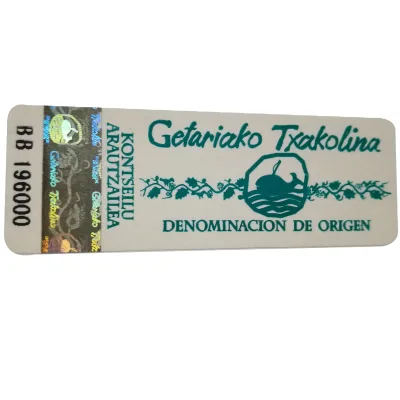



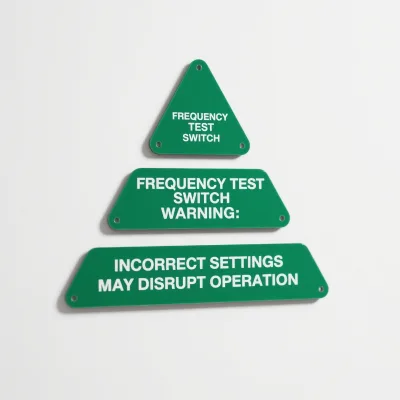


High Quality Scratch-Proof Chemical-Resistant Warning Labels for Power Equipment
$0.10 - $0.70
MOQ: 500 Pieces

Customized Heat-Resistant Oil-Proof Printed Equipment Warning Labels for Electronics
$0.10 - $0.70
MOQ: 500 Pieces

Comprehensive Sourcing Guide
Strategic Sourcing Guide for Antistatic BOPP Warning Labels
The procurement of antistatic BOPP (Biaxially Oriented Polypropylene) warning labels requires a disciplined approach that balances material science, regulatory compliance, and supply chain reliability. While the core keyword suggests a specific material and functional requirement, the actual market offers a diverse range of products where "antistatic" properties may be implied by material composition or specific application needs rather than explicitly guaranteed by every listing. Buyers must navigate a landscape where materials such as PET, PVC, and various alloys are often listed alongside warning label specifications. This guide provides a framework for evaluating suppliers and products based on verified facts, ensuring that procurement decisions are grounded in observable data rather than unverified marketing claims.
Material Composition and Technical Specifications
The foundation of any successful procurement for warning labels lies in understanding the substrate material. In the context of the available market data, materials such as PET, PVC, and Polyester are frequently cited. For antistatic applications, the choice of polymer is critical. The observed data indicates that Surface Materials often include Polyester PET, with specific mentions of PET as a primary material type. While the term "BOPP" is the core search keyword, the provided facts highlight PET and PVC as dominant materials in the listing pool. Buyers must verify if the specific supplier offers BOPP variants or if the antistatic properties are achieved through PET-based formulations, which are also noted as having high transparency or opacity depending on the finish.
Technical specifications for these labels often involve surface finishing processes. Lamination is a documented surface finishing method that can enhance durability and provide the necessary barrier properties for antistatic performance. The backing paper is another critical component; Glassine is explicitly mentioned as a backing option, which is standard for high-quality adhesive labels. The transparency of the label is a variable attribute, with listings showing both Opaque and transparent options. For warning labels, opacity is often preferred to ensure the text and symbols are clearly visible against various backgrounds. Buyers should confirm whether the specific model, such as those designated by codes like SL-003 or custom models, supports the required opacity and surface finish.
Compliance, Certification, and Regulatory Standards
Navigating the regulatory landscape is essential for industrial and pharmaceutical applications. The market data reveals that certifications such as ISO9001 and SGS are present in supplier profiles, indicating a baseline commitment to quality management systems. Additionally, Proposition 65 warning labels are explicitly referenced in model numbers, suggesting that suppliers are aware of California's strict chemical safety regulations. However, buyers must exercise caution. The presence of a model number containing "Proposition 65" does not automatically certify that the product itself is compliant with all relevant safety standards; it often refers to the type of label being sold.
When evaluating compliance, buyers should look for specific certifications rather than general claims. The observed data lists ISO SGS and ISO9001, SGS as distinct certifications. While RoHS and REACH are mentioned in background contexts, they are flagged as low-confidence and should not be assumed without direct verification from the supplier. For applications in the pharmaceutical, food, or cosmetic industries, the H.S Code 3919909000 is a relevant classification for adhesive tapes and labels, but it does not guarantee compliance with food safety or pharmaceutical-grade standards. Procurement teams must request specific test reports or certificates of analysis to confirm that the antistatic properties and the adhesive backing do not introduce contaminants, especially for applications involving food, beverages, or medical devices.
Cost Drivers and Pricing Structures
The pricing structure for warning labels is influenced by several variables, including material type, customization level, and order volume. The observed price range in the market spans from $0.01 to $1000, a wide variance that reflects the difference between standard off-the-shelf items and highly customized industrial solutions. The Minimum Order Quantity (MOQ) is a significant cost driver, with observed ranges extending from 1 to 50,000 units. Some suppliers accept small orders, while others enforce strict MOQs, such as 100 PCS, 3000 PCS, or 5000 PCS.
Cost is also driven by the complexity of the printing and finishing processes. Letterpress printing is a noted method, and the availability of customization in material, content, usage, and size adds to the cost. Suppliers requiring design files in specific formats like Ai, Psd, Pdf, or CDR may charge setup fees or have higher unit costs for small runs. The trade terms, which are often negotiated, and the payment terms (T/T, Paypal, West Union) also impact the final landed cost. Buyers should anticipate that antistatic properties, if achieved through specialized coatings or materials, will likely command a premium over standard adhesive labels. It is crucial to compare the total cost of ownership, including the MOQ requirements and lead times, rather than focusing solely on the unit price.
Typical Applications and Industry Use Cases
The versatility of warning labels is evident in the diverse applications listed. These products are utilized in industrial settings, for inspection purposes, and within machine environments. Specific mentions of "Lab measure tool" and "Measurement" suggest use in precision environments where static electricity could interfere with sensitive equipment or measurements. The pharmaceutical industry is a key sector, with labels explicitly designated for pharmaceutical use. Furthermore, the food, beverage, and cosmetic industries are prominent, with applications ranging from bottled beverages to packaging films.
The "Antistatic" feature is particularly valuable in environments where static discharge could damage electronic components or ignite flammable substances. The observed usage categories include "Custom Sticker," "Bottled Beverage," "Food," and "Packaging Film." For industries like agro-pesticide, the durability and chemical resistance of the label are paramount. The ability to customize the label's content and usage allows suppliers to tailor products for specific regulatory warnings or safety instructions. Buyers should match the label's material properties, such as the waterproof feature noted in the data, to the environmental conditions of the application site. For instance, outdoor industrial use may require the waterproof and lamination features observed in the product specifications.
Supplier Evaluation and Operational Capabilities
Selecting the right supplier involves assessing their operational capabilities and logistical readiness. The origin of the products is predominantly China, with specific mentions of Wuxi and Jiangsu as production locations. This geographic concentration can offer competitive pricing but requires careful vetting of logistics and communication. The delivery times observed are relatively short, with standard lead times of 7 days and a range of 7-10 days for production. This suggests that suppliers are capable of rapid turnaround, which is beneficial for urgent procurement needs.
The port of shipment is typically Shanghai or Ningbo, which are major logistics hubs. Buyers should verify the supplier's ability to handle export cartons, as "Export Carton" and "Carton" are listed as packing standards. The availability of design drawings in multiple formats (Ai, Psd, Pdf, CDR) indicates a level of technical support that can facilitate the customization process. When evaluating suppliers, buyers should prioritize those who clearly define their trade terms and payment methods. The acceptance of small orders is a positive indicator for flexibility, but buyers must balance this against the potential for higher unit costs. It is also essential to verify the supplier's capacity to handle the specific model numbers and custom requirements without compromising quality.
Quality Control and Long-Term Procurement Considerations
Ensuring consistent quality is paramount for warning labels, which often serve critical safety functions. The observed data includes standards such as "Sheet / Poll up" and "A4," which may refer to the format or size of the label sheets. However, these are not universal quality standards and should be verified against specific industry requirements. The feature of being "Anti-Counterfeit" is a notable attribute, suggesting that some suppliers offer security features that can be integrated into the label design. This is particularly relevant for high-value pharmaceutical or industrial products.
For long-term procurement, buyers should establish a robust quality control protocol. This includes verifying the consistency of the antistatic properties, the adhesion strength of the backing paper, and the durability of the printing. The use of lamination as a surface finishing process can enhance the longevity of the label, protecting it from wear and tear. Buyers should also consider the scalability of the supplier. With MOQs ranging from 100 to 5000 PCS, suppliers must be able to ramp up production to meet increasing demand without sacrificing quality. Establishing a relationship with a supplier who offers customization in material, content, and size can provide a competitive advantage, allowing for tailored solutions that evolve with the buyer's needs.
Conclusion
Sourcing Antistatic BOPP Warning Labels requires a meticulous approach that prioritizes verified facts over marketing assertions. By focusing on material specifications like PET and PVC, confirming certifications such as ISO9001 and SGS, and understanding the cost drivers associated with customization and MOQ, buyers can make informed decisions. The diverse applications across pharmaceutical, food, and industrial sectors highlight the need for labels that are not only functional but also compliant with strict regulatory standards. Through careful supplier evaluation and a commitment to quality control, procurement teams can secure a reliable supply chain that meets the demanding requirements of modern industrial and safety applications.
FAQs
What materials are used for antistatic warning labels?
Common materials include PET, PVC, and Polyester PET, though BOPP is the core search term. Buyers must verify if specific suppliers offer BOPP variants or if antistatic properties are achieved through PET-based formulations noted in the data.
Which certifications do these warning labels typically hold?
High-confidence certifications include ISO9001 and SGS, which indicate a baseline commitment to quality management. While RoHS and REACH are mentioned in background contexts, they are low-confidence and should not be assumed without direct verification from the supplier.
How long is the delivery time for these labels?
Standard lead times are typically 7 days, with a range of 7 to 10 days for production. This suggests suppliers are capable of rapid turnaround, which is beneficial for urgent procurement needs in industrial or pharmaceutical settings.
Can I order small quantities of these warning labels?
Some suppliers accept small orders, while others enforce strict Minimum Order Quantities such as 100, 3000, or 5000 pieces. Buyers must balance the need for flexibility against potential higher unit costs associated with smaller batch sizes.
What customization options are available for label content?
Customization is available for material, content, usage, and size, with design files accepted in formats like Ai, Psd, Pdf, and CDR. This allows suppliers to tailor products for specific regulatory warnings or safety instructions required by different industries.
Where are these warning labels manufactured and shipped from?
Products originate primarily from China, with specific production locations in Wuxi and Jiangsu. Shipments are typically processed through major logistics hubs such as Shanghai or Ningbo, facilitating efficient export for global buyers.