Source Antistatic 400tc Cotton Fitted Sheet for Hotels, Homes, Hospitals
Compare 30 listings for the Antistatic 400tc Cotton Fitted Sheet featuring woven or knitted techniques and customized sizes. Buyers can evaluate options with TPU waterproof linings, deep pocket depths, and varying material blends like polyester or cotton for home, hotel, and hospital use.
Key considerations
Products List




Comprehensive Sourcing Guide
Strategic Sourcing Guide for Antistatic 400TC Cotton Fitted Sheets
The global procurement landscape for textile components, specifically bed linens, demands a rigorous approach to balancing material integrity with functional performance. When targeting an "Antistatic 400tc Cotton Fitted Sheet," buyers must navigate a complex matrix of fiber blends, weave densities, and treatment processes. While the core keyword suggests a specific material composition and thread count, the actual market reality often involves variations in manufacturing techniques and material blends. This guide provides a structured framework for evaluating suppliers, verifying technical claims, and ensuring that the final product meets the stringent requirements of hospitality, healthcare, and residential sectors. The following analysis is grounded in observed product attributes and standard industry practices, avoiding unverified assertions while highlighting critical verification points for the procurement team.
Technical Specifications and Material Composition
The foundation of any successful procurement strategy lies in the precise definition of technical specifications. The term "400TC" refers to a thread count of 400, indicating a high-density weave that typically offers a balance of softness and durability. However, the material composition for this specific application requires careful scrutiny. In many commercial listings, the material is described as "100% Cotton," which aligns with the traditional expectation for high-end bedding. Yet, other observations in the market indicate a prevalence of "Polyester / Cotton" blends or even "100% Polyester" and "Microfiber Fabric" options.
For a product specifically marketed as "antistatic," the material choice is critical. Pure cotton is naturally breathable but can generate static electricity in low-humidity environments. To achieve the antistatic property, manufacturers often employ one of two methods: blending cotton with conductive fibers or applying a chemical treatment to the fabric surface. The observed data shows products with "100% POLYESTER" and "Microfiber Fabric" that claim features like "Waterproof" and "Anti Dust Mite." While these products serve different market segments, a buyer seeking a cotton-based solution must verify if the "antistatic" claim is derived from a specific fiber blend or a post-treatment process.
Furthermore, the weave structure significantly impacts the final feel and performance. The observed data lists "Woven" and "Knitted" as distinct technical methods. A 400TC sheet is almost exclusively a woven product, utilizing a sateen or percale weave to achieve the desired smoothness. The "Handmade" attribute observed in some listings suggests a niche, artisanal production line, which may offer superior quality control but at a higher cost and potentially longer lead time. Buyers must confirm that the supplier's production line utilizes industrial weaving looms capable of maintaining the 400TC density consistently across large batches, rather than relying on manual techniques that may introduce variability.
Compliance, Certification, and Safety Standards
In the B2B sector, particularly for products destined for hotels, hospitals, and high-end residential complexes, compliance is non-negotiable. The observed product attributes mention "European" and "US" standards, as well as "customized" standards. This indicates that the market operates under a framework where regional regulations dictate acceptable material safety and performance levels. For antistatic fabrics, the primary concern is often the electrical resistance of the material, which must be within a specific range to prevent static discharge without compromising safety.
Buyers should verify if the supplier holds recognized certifications such as OEKO-TEX or GOTS, which are frequently cited in the broader textile industry as markers of chemical safety and organic integrity. While the provided data lists these as "low-confidence background" items, their presence in the supply chain context suggests they are relevant benchmarks. A 400TC cotton sheet intended for hospital use must not only be antistatic but also free from harmful substances that could irritate sensitive skin or compromise sterile environments. The "Waterproof" feature observed in some listings, often achieved through a "TPU Membrane" lining, introduces additional chemical considerations. Buyers must ensure that the waterproofing agent does not interfere with the antistatic treatment or the breathability of the cotton fabric.
The "Standard" attribute in the data is listed as "customized" or "customzied size," which implies that many suppliers operate on a make-to-order basis. This flexibility is advantageous for customization but requires the buyer to explicitly define the compliance standards in the purchase order. If the target market is the European Union, the supplier must demonstrate adherence to REACH regulations. For the US market, compliance with flammability standards and chemical restrictions is essential. The absence of specific certification data in the general product list necessitates a proactive verification step where the buyer requests third-party test reports for every batch, rather than relying on the supplier's general reputation.
Cost Drivers and Pricing Dynamics
Understanding the cost structure of a 400TC cotton fitted sheet is vital for budgeting and negotiation. The observed price range in the market spans from $3 to $30.69 USD, a significant variance that reflects differences in material quality, production complexity, and order volume. The lower end of this spectrum likely corresponds to polyester blends, microfiber fabrics, or lower thread counts, while the higher end represents genuine 100% cotton with specialized treatments like antistatic coating and waterproofing.
The Minimum Order Quantity (MOQ) is a primary driver of unit cost. The data indicates an MOQ range from 1 to 1000 units, with specific listings showing MOQs of 500 PCS or 100 Sets. For a specialized product like an antistatic 400TC sheet, the MOQ is likely to be higher due to the setup costs for weaving and chemical treatment. Suppliers with lower MOQs may charge a premium per unit to cover the inefficiencies of small-batch production. Conversely, buyers placing orders near the 1000-unit threshold can expect more competitive pricing, provided the supplier has the capacity to handle the volume without compromising quality.
Additional cost factors include the "Customization" aspect. The data confirms that customization is "Available" for patterns, colors, and logos. Custom dyeing, especially for "Customized Colors," and the application of specific antistatic treatments add to the production cost. The "Product Name" listed as "100%Cotton" suggests that pure cotton variants are a distinct product category, likely commanding a higher price than blends. Buyers must also consider the packaging costs, as the data shows variations between "1 PC / Polybag" and "Carton" packing. Bulk carton packing is generally more cost-effective for shipping but may require a higher initial investment.
Typical Applications and Usage Scenarios
The versatility of the 400TC cotton fitted sheet allows it to serve a wide range of applications, from residential use to critical care environments. The observed "Usage" attributes include "Home," "Hotel," and "Hospital." This triad of applications highlights the need for a product that balances comfort, durability, and hygiene.
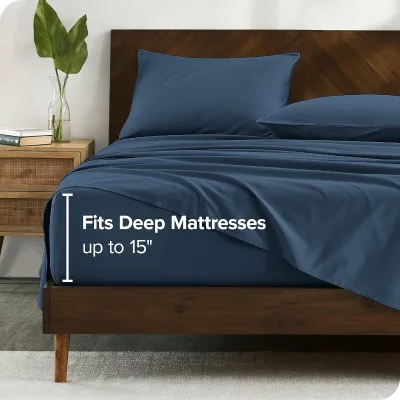
In the hospitality sector, hotels require linens that maintain their appearance after repeated industrial laundering. The "Waterproof" feature, often paired with "Anti Dust Mite" and "Anti-Pull" characteristics, is particularly valuable in this context. It protects the mattress from spills and stains while extending the lifespan of the bedding. The "Deep Pocket Depth" of 15-40cm observed in the data ensures a secure fit on various mattress types, a crucial factor for hotel operations where mattress thickness can vary.
For the healthcare sector, the "Hospital" usage designation underscores the importance of antistatic properties. Static electricity can be a nuisance in operating rooms or patient care areas, potentially interfering with sensitive medical equipment or causing discomfort to patients. The "Air-Permeable" and "Cooling Touch" features observed in some listings are also beneficial in hospital settings, where patient comfort and temperature regulation are paramount. The "Plain Dyed" and "Plain" style attributes suggest a preference for clean, sterile aesthetics in medical environments, though "Printed" patterns are available for residential or boutique hotel applications.
Supplier Evaluation and Verification Protocols
Selecting the right supplier is the most critical step in the procurement process. The data reveals a diverse supplier base with origins in "China" and "an Hui," indicating a concentration of manufacturing capabilities in specific regions. Buyers should evaluate suppliers based on their ability to meet the specific technical requirements of the 400TC antistatic sheet. Key evaluation criteria include the supplier's experience with cotton blends, their quality control processes, and their capacity for customization.
The "Customization" attribute being "Available" suggests that many suppliers are willing to adapt their products to buyer specifications. However, this flexibility must be balanced with the supplier's ability to maintain consistency. Buyers should request samples that demonstrate the antistatic performance, the thread count accuracy, and the durability of the weave. The "Technics" attribute, listing both "Handmade" and "Woven," indicates that buyers must clarify the production method to ensure it aligns with their quality expectations. Industrial weaving is generally preferred for large-scale orders to ensure uniformity.
Furthermore, the "Standard" attribute being "customized" or "customzied size" implies that the supplier is accustomed to working with specific client requirements. Buyers should verify the supplier's track record in meeting these custom standards. The "Product Model" codes (e.g., BS003, J051300) serve as unique identifiers for different product lines. Buyers should use these codes to track specific batches and ensure that the same model is produced consistently across orders.
Quality Control and Long-Term Procurement Considerations
Quality control (QC) is essential to mitigate the risks associated with the observed variations in material and finish. The "Feature" list includes "Waterproof," "Air-Permeable," "Anti Dust Mite," and "Anti-Pull," all of which require rigorous testing. Buyers should implement a QC protocol that includes pre-shipment inspections to verify the thread count, the integrity of the antistatic treatment, and the fit of the fitted sheet. The "Deep Pocket Depth" of 15-40cm must be measured to ensure the sheet fits the intended mattress dimensions securely.
Long-term procurement considerations involve building a sustainable relationship with the supplier. The "MOQ" of 500 PCS or 100 Sets suggests that buyers should plan for recurring orders to maintain cost efficiency. The "prod_packing" of "1 PC / Polybag" or "Carton" should be standardized to streamline logistics. Buyers should also consider the environmental impact of the materials and treatments used. While the data mentions "100% Cotton" and "Polyester / Cotton," the sustainability of the cotton source and the eco-friendliness of the antistatic treatment are important factors for modern procurement strategies.
The "Design" attribute, which includes "Accept Customized Bedding Set Designs," offers an opportunity for buyers to differentiate their product line. However, this customization must not compromise the core functionality of the sheet. The "Logo" acceptance feature allows for branding, which is valuable for hotels and hospitals looking to reinforce their identity. Buyers should ensure that the logo application does not interfere with the antistatic properties or the comfort of the fabric.
In conclusion, sourcing an Antistatic 400tc Cotton Fitted Sheet requires a meticulous approach that balances technical specifications, compliance, cost, and supplier reliability. By adhering to the verification protocols outlined above and leveraging the observed product attributes, buyers can secure high-quality linens that meet the demands of their specific applications. The market offers a wide range of options, but the key to success lies in rigorous due diligence and clear communication of requirements.
Comparative Analysis of Product Attributes
To facilitate decision-making, the following table summarizes the key attributes observed in the market for 400TC cotton and related fitted sheets. This comparison highlights the diversity in material, features, and standards that buyers must navigate.
| Attribute Category | Observed Options | Implications for Procurement |
|---|---|---|
| Material Composition | 100% Cotton, Polyester/Cotton, 100% Polyester, Microfiber | Pure cotton is preferred for breathability; blends may offer better durability or cost savings. |
| Thread Count | 400TC (Target) | High density requires industrial weaving; verify actual count in samples. |
| Antistatic Feature | Explicitly claimed in some listings | Verify via test reports; check if achieved via blend or chemical treatment. |
| Waterproofing | TPU Membrane, Waterproof Lining | Adds protection but may reduce breathability; test for comfort. |
| Weave Technique | Woven, Knitted, Handmade | Woven is standard for 400TC; handmade may vary in consistency. |
| Usage Sector | Home, Hotel, Hospital | Hospital use requires higher hygiene and antistatic standards. |
| Customization | Pattern, Color, Logo, Size | Essential for branding; verify lead times and MOQ impacts. |
| Origin | China, an Hui | Regional manufacturing hubs; verify logistics and lead times. |
| Packaging | Polybag, Carton | Carton is better for bulk shipping; polybag for single units. |
| Standard | European, US, Customized | Must align with target market regulations; request certification docs. |
This table serves as a quick reference for buyers to assess the alignment between their requirements and the available product attributes. It underscores the importance of verifying each attribute individually, as the market offers a wide spectrum of options that may not all meet the specific needs of an Antistatic 400tc Cotton Fitted Sheet. By systematically evaluating these factors, buyers can make informed decisions that ensure quality, compliance, and value.
FAQs
What materials are used for antistatic 400tc cotton fitted sheets?
Materials include 100% cotton, polyester cotton blends, and microfiber fabric. Buyers must verify the specific composition as listings vary between pure cotton and synthetic blends to achieve desired antistatic properties.
Can I customize the logo and color for these fitted sheets?
Yes, customization is available for logos, colors, and designs. Suppliers accept customized colors and logo printing, allowing buyers to tailor the product to specific branding or aesthetic requirements.
Which usage scenarios are suitable for these fitted sheets?
These sheets are suitable for home, hotel, and hospital environments. The product features like waterproof lining and anti-dust mite properties make them ideal for hospitality and healthcare sectors.
What is the typical minimum order quantity for these sheets?
Minimum order quantities range from 1 to 1000 units depending on the supplier. Specific listings show MOQs of 500 pieces or 100 sets, requiring buyers to confirm volume requirements before ordering.
How are these fitted sheets packaged for shipment?
Packaging options include one piece per polybag or carton packing. Buyers should specify their preferred packaging method, as carton packing is often used for bulk orders to streamline logistics.
What technical methods are used to manufacture these sheets?
Manufacturing techniques include woven, knitted, and handmade methods. Industrial weaving is common for consistent thread counts, while handmade options may offer unique artisanal qualities at a higher cost.
Are there specific size standards for these fitted sheets?
Standard sizes include Queen with deep pocket depths ranging from 15 to 40 cm. Customized sizes are also available, allowing buyers to fit specific mattress dimensions and requirements.