Source Antiskid Refrigerator Mats for Home Hotel Restaurant
Compare 30 listings of Antiskid Refrigerator Mats with varying thickness, hardness, and material options like SBR and PVC. Buyers can evaluate anti-slip patterns and custom colors for use in home, hotel, and restaurant settings.
Key considerations
Products List
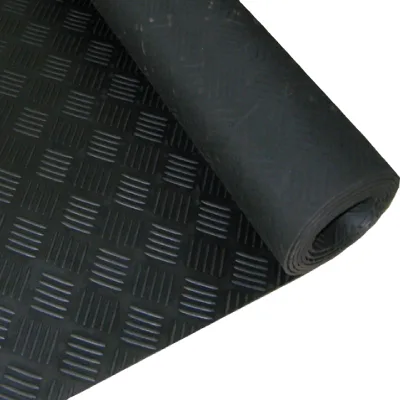
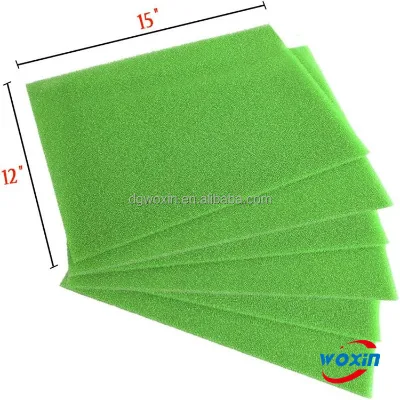
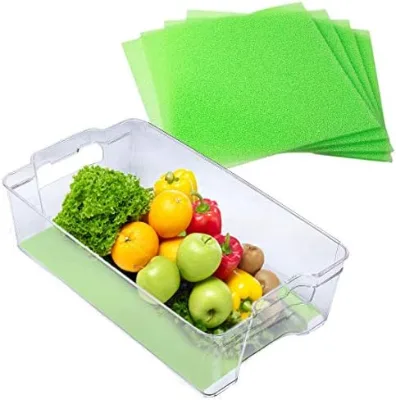
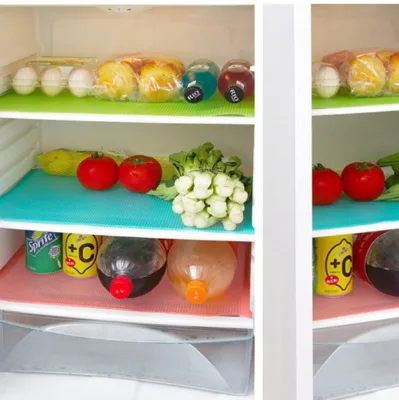







Comprehensive Sourcing Guide
Strategic Sourcing Guide for Antiskid Refrigerator Mats
Navigating the global market for Antiskid Refrigerator Mats requires a disciplined approach that balances material science, regulatory compliance, and supply chain reliability. Buyers entering this sector must distinguish between generic rubber flooring and specialized liners designed for food-grade environments. The following guide synthesizes available market data to provide a framework for evaluating suppliers, understanding product attributes, and mitigating procurement risks without relying on unverified claims or speculative market figures.
Technical Specifications and Material Composition
The foundation of a successful procurement strategy lies in a precise understanding of technical specifications. In the current market, Antiskid Refrigerator Mats are primarily manufactured from two distinct material bases: SBR (Styrene-Butadiene Rubber) and PVC (Polyvinyl Chloride). These materials dictate the physical performance of the final product. SBR-based mats often exhibit a specific gravity ranging from 1.05 to 1.8 g/cm³, offering a balance of durability and flexibility. Conversely, PVC variants are frequently selected for their ease of cleaning and specific texture profiles.
Thickness is a critical dimension that directly correlates with the mat's ability to provide cushioning and absorb impact. Observed product data indicates a thickness range spanning from 0.5 cm to 50 mm. For refrigerator applications, thinner profiles around 0.5 cm to 1 mm are common for liners that must fit snugly into drawer compartments, while thicker profiles up to 50 mm may be utilized for heavy-duty industrial flooring or anti-fatigue stations. The width of these mats is equally variable, with standard offerings ranging from 100 mm to 2000 mm, allowing for customization based on the specific dimensions of the refrigeration unit.
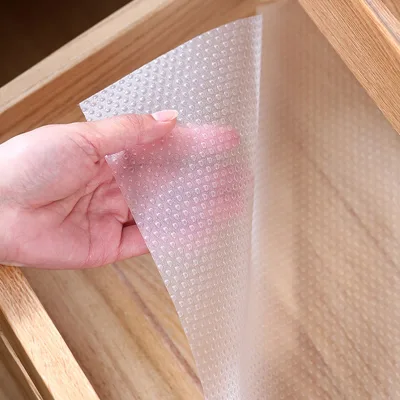
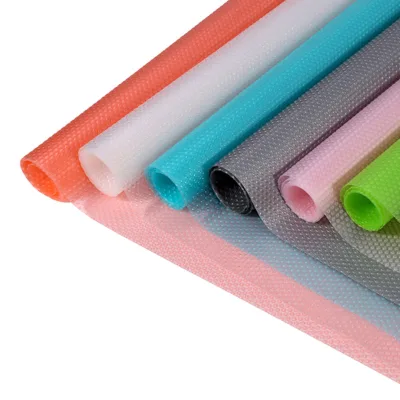
Surface texture plays a pivotal role in the "antiskid" functionality. Suppliers offer mats with anti-slip patterns, smooth finishes, or textured surfaces designed to maximize traction. The hardness of the material is another vital metric, with observed Shore hardness values ranging from 38° to 65° in some rubber variants, and 50° to 70° Shore in others. This variation allows buyers to select a mat that is soft enough to be comfortable underfoot yet hard enough to resist deformation under the weight of stored goods. Elongation properties typically fall between 200% and 300%, ensuring the material can stretch without tearing during installation or thermal expansion.
Compliance, Certification, and Safety Standards
When sourcing mats for food storage environments, compliance with safety and quality standards is non-negotiable. Buyers must verify that the manufacturing facility holds valid quality management certifications. A prominent standard observed in the supply chain is ISO9001:2000, which indicates a baseline commitment to quality control processes. However, the absence of specific machinery test reports or detailed material safety data sheets in some listings necessitates a proactive verification strategy.
Buyers should explicitly request documentation regarding food-grade compliance. While some products are marketed for use in homes, hotels, and restaurants, the specific regulatory status (such as FDA or EU food contact compliance) is not universally guaranteed by the general product description. It is essential to confirm that the SBR or PVC materials used do not leach harmful substances into food items stored above or near the mat. The "anti-mildew" feature mentioned in certain product titles suggests a treatment or material property designed to inhibit fungal growth, a critical attribute for humid refrigeration environments. However, buyers must treat such claims as observations requiring validation through independent testing rather than accepting them as absolute guarantees.
Furthermore, the origin of the product influences the regulatory landscape. Manufacturing locations in China, specifically in provinces like Shandong, Guangdong, and Zhejiang, represent significant portions of the global supply. Each region may have different local enforcement standards. Buyers should ensure that the supplier can provide certificates of origin and verify that the production process adheres to international safety standards relevant to the destination market.
Cost Drivers and Pricing Dynamics
The pricing of Antiskid Refrigerator Mats is influenced by a complex interplay of material costs, manufacturing complexity, and order volume. The observed price range in the market spans from $0.10 to $8.21 USD per unit. This wide disparity is not merely a function of brand but is heavily driven by the thickness, material type, and surface treatment of the mat. A thin, smooth PVC liner will naturally command a lower price point compared to a thick, patterned SBR mat with specialized anti-slip engineering.
Order volume is another primary cost driver. Minimum Order Quantities (MOQs) in this sector vary significantly, ranging from as low as 1 piece to as high as 3000 pieces. Suppliers offering low MOQs, such as 50 pieces or even single items, often cater to small businesses or prototyping needs but may charge a premium per unit due to the inefficiency of small-batch production. Conversely, larger orders typically unlock volume discounts, bringing the unit cost closer to the lower end of the observed spectrum.
Additional cost factors include packaging and logistics. The single package size varies, with examples ranging from 10x10x1 cm to 45x29x3 cm. These dimensions affect shipping volume and weight, which in turn impacts freight costs. The single gross weight of individual packages can range from 0.1 kg to 1.0 kg, and the total weight of a shipment will depend on the quantity ordered. Buyers must factor in these logistical costs when calculating the total landed cost, as a low unit price can be offset by high shipping expenses if the packaging is inefficient or the product density is high.
Typical Applications and Functional Requirements
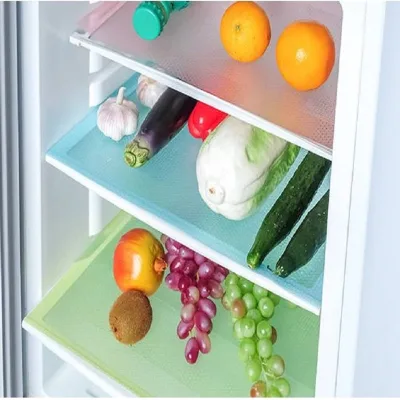
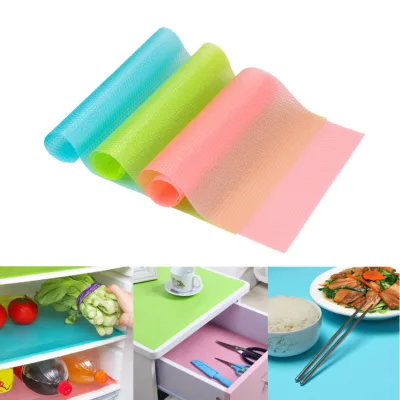
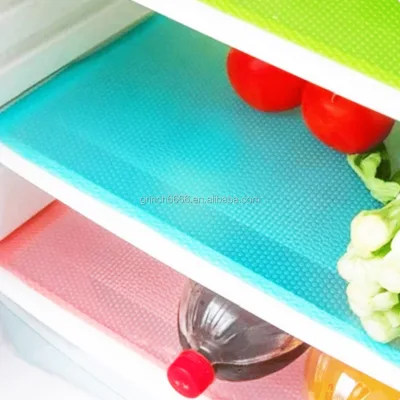
Antiskid Refrigerator Mats serve diverse applications across residential, commercial, and industrial sectors. In residential settings, these mats are used as liners for refrigerator drawers and shelves to prevent glassware and bottles from sliding and breaking. The "Daily" usage type and "Classic" design styles suggest a focus on aesthetic integration with home kitchens. For commercial environments such as hotels and restaurants, the requirements shift toward durability and hygiene. Mats in these settings must withstand high-traffic cleaning cycles and resist the accumulation of bacteria and mold.
The "Sustainable" and "Eco-Friendly" features highlighted in some product listings indicate a growing market segment focused on environmentally responsible materials. Buyers targeting green supply chains should investigate the recyclability of the SBR or PVC materials and the manufacturing processes used. Additionally, the "OEM/ODM" (Original Equipment Manufacturer/Original Design Manufacturer) capabilities of suppliers allow for customization of colors, sizes, and branding. This is particularly relevant for retail brands that wish to offer proprietary refrigerator accessories.
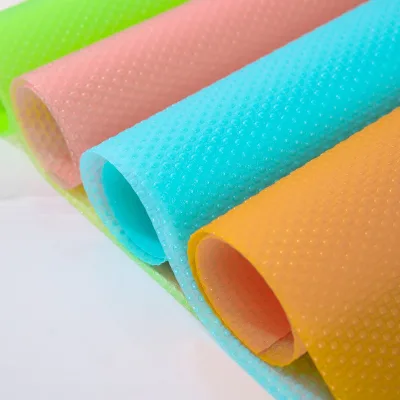
The versatility of these mats extends beyond the refrigerator interior. Some products are designed for general table decoration and accessories, serving as mats and pads in various settings. The ability to customize colors, with options including black, red, gray, green, yellow, blue, and orange, allows for branding opportunities and aesthetic coordination with kitchen decor. However, buyers must ensure that the chosen colorants are non-toxic and do not transfer onto food or food-contact surfaces.
Supplier Evaluation and Geographic Considerations
Evaluating suppliers requires a thorough analysis of their geographic location and operational capabilities. The primary manufacturing hubs for these products are located in Shandong, Guangdong, and Zhejiang provinces in China. Each region offers distinct advantages; Shandong is known for its industrial base, while Guangdong and Zhejiang are often associated with export-oriented manufacturing and diverse material processing.
When assessing a potential supplier, buyers should verify the "Place of Origin" listed on product pages. It is crucial to confirm that the supplier's actual factory location matches the stated origin, as this impacts shipping times and potential tariffs. Suppliers claiming to accept small orders may have different production capacities compared to those specializing in bulk manufacturing. The "Advantage: Accept Small Orders" attribute suggests flexibility, but buyers should verify the lead times associated with these small batches.
Brand recognition is another factor, though many products are listed under generic names like "rubber mat" or "refrigerator liner foam." Some suppliers may use specific brand names like "Woxin," but buyers should not rely solely on brand reputation without verifying the underlying quality controls. The availability of machinery test reports is often limited, with many listings stating "Not Available." This absence of third-party verification places the burden of quality assurance on the buyer to conduct their own due diligence or request samples for testing.
Quality Control and Long-Term Procurement Strategy
Implementing a robust quality control (QC) protocol is essential for maintaining product consistency. Given the variability in hardness, thickness, and tensile strength (observed between 3 MPa and 24 MPa), buyers should establish clear acceptance criteria before placing orders. Visual inspection for surface defects, such as uneven patterning or discoloration, should be the first step. For critical applications, tensile strength and elongation tests should be conducted on random samples to ensure the material meets the specified performance ranges.
Long-term procurement considerations involve building a relationship with suppliers who can maintain consistency over time. The "Warranty: Unavailable" status in many listings indicates that buyers must rely on the supplier's reputation and the quality of the initial sample rather than contractual guarantees. To mitigate this risk, buyers should start with small trial orders to validate the product's performance in real-world conditions. This approach allows for the assessment of the mat's resistance to mildew, its ability to maintain grip under wet conditions, and its durability over time.
Furthermore, buyers should monitor the supply chain for changes in material availability. Fluctuations in the cost of raw materials like SBR or PVC can impact pricing and lead times. Establishing a clear communication channel with the supplier regarding potential disruptions is vital. Finally, buyers should consider the end-of-life disposal of the mats. If "Eco-Friendly" claims are made, verifying the recyclability of the product at the end of its lifecycle can be a significant differentiator for brands committed to sustainability.
Conclusion
Sourcing Antiskid Refrigerator Mats requires a meticulous approach that prioritizes technical verification over marketing claims. By understanding the nuances of material composition, such as the differences between SBR and PVC, and carefully evaluating specifications like hardness and thickness, buyers can select products that meet their specific operational needs. The wide range of observed prices and MOQs necessitates a strategic approach to order volume to optimize costs. Ultimately, success in this market depends on rigorous supplier evaluation, proactive quality control, and a clear understanding of the regulatory landscape to ensure safety and compliance in food storage environments.
FAQs
What materials are used for Antiskid Refrigerator Mats?
These mats are primarily manufactured from SBR or PVC materials. SBR variants offer a specific gravity between 1.05 and 1.8 g/cm³, while PVC options provide ease of cleaning. Buyers should verify the specific material composition to ensure suitability for food storage environments.
Which thickness options are available for these mats?
Thickness ranges from 0.5 cm to 50 mm depending on the product type. Thinner profiles around 0.5 cm fit snugly into drawer compartments, while thicker options up to 50 mm suit heavy-duty applications. The specific thickness must match the intended refrigeration unit dimensions.
Can I find suppliers with ISO9001:2000 certification?
Yes, some manufacturers hold ISO9001:2000 certification for quality management. This standard indicates a baseline commitment to quality control processes. Buyers should request valid certification documents to verify the supplier's compliance status before placing orders.
How does the hardness of the mat affect performance?
Hardness typically ranges from 38° to 70° Shore depending on the specific variant. Softer mats provide comfort while harder ones resist deformation under weight. Selecting the correct Shore hardness ensures the mat balances traction with durability for the specific application.
What is the minimum order quantity for these mats?
Minimum order quantities vary from 1 piece up to 3000 pieces. Suppliers offering low MOQs like 50 pieces cater to small businesses but may charge higher unit prices. Buyers should confirm the specific MOQ with the vendor to align with their budget and volume needs.
Which surface textures are available for antiskid functionality?
Surface options include anti-slip patterns, smooth finishes, and textured profiles. These features maximize traction to prevent items from sliding. The choice of texture depends on the specific safety requirements and aesthetic preferences for the refrigerator interior.