Source Armored Patch Cord for Data Centers, Telecom, and Industrial
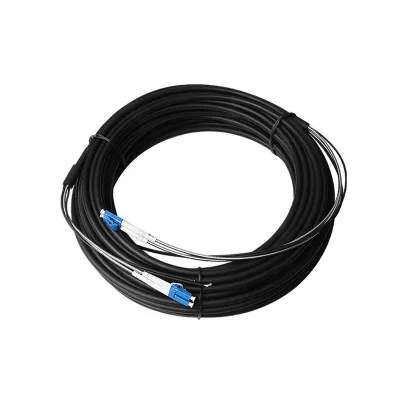
Compare 30 listings for Armored Patch Cord designed for single-mode and multi-mode applications. Buyers can evaluate specifications including connector types, insertion loss, and temperature ratings from verified suppliers in China.
Key considerations
Products List




Comprehensive Sourcing Guide
Strategic Sourcing Guide for Armored Patch Cord Procurement
The procurement of armored patch cords represents a critical decision point for infrastructure projects requiring robust fiber optic connectivity in high-stress environments. Unlike standard patch cords, armored variants are engineered to withstand significant mechanical stress, including crushing forces, rodent attacks, and physical abrasion, making them indispensable for outdoor deployments, industrial settings, and temporary high-traffic installations. This guide synthesizes available product attributes and industry standards to provide a disciplined framework for evaluating suppliers, verifying technical compliance, and managing long-term procurement risks. Buyers must approach this category with a rigorous focus on verifying specific construction details, as the "armored" designation implies a specific layering of materials that directly correlates to the product's durability and performance under load.
Technical Specifications and Construction Integrity
The foundational aspect of sourcing an Armored Patch Cord lies in understanding its physical and optical specifications. Based on observed product data, the transmission medium is predominantly single-mode, though multi-mode options exist in the broader market. The core configuration is typically single-core for standard applications, yet some listings indicate multicore capabilities, requiring buyers to explicitly confirm the core count for their specific network topology. The optical performance is a primary differentiator; high-quality units demonstrate an insertion loss of less than or equal to 0.3dB and a return loss of greater than or equal to 35dB. These metrics are non-negotiable for maintaining signal integrity over distance.
The physical construction involves specific jacket materials and diameters. Observed data lists jacket options including PVC, LSZH (Low Smoke Zero Halogen), and OFNR/OFNP ratings, which dictate fire safety compliance in building conduits. The cable diameter is a critical variable, with common outer diameters (OD) ranging from 0.9mm to 3.0mm, depending on the number of fibers and the thickness of the armor layer. The armor itself is often a metal tape or wire braid, designed to provide an allowed lateral pressure of approximately 100N/100mm and a tensile strength that must be carefully evaluated against installation requirements, with some specifications noting limits under 100N.
Connector types vary significantly, with SC, ST, FC, LC, MU, and E2000 being the standard interface options. The ferrule endface polishing is equally critical; the data highlights PC (Physical Contact) and UPC (Ultra Physical Contact) as standard, while APC (Angled Physical Contact) is available for applications requiring lower back reflection. The choice between APC and PC/UPC must align with the specific transceiver requirements of the network equipment. Furthermore, the fabrication process often involves welding for the armor integration, ensuring a seamless transition between the cable core and the protective outer layer.
Compliance, Certification, and Regulatory Standards
In the B2B procurement landscape, compliance is not merely a formality but a prerequisite for market access and liability protection. Buyers must verify that the supplied armored patch cords carry valid certifications from recognized bodies. The observed product data indicates that reputable suppliers often provide ISO, CE, GS, and RoHS certifications. The RoHS (Restriction of Hazardous Substances) directive is particularly vital, ensuring the absence of lead, mercury, and other hazardous materials in the cable construction. CE marking confirms conformity with health, safety, and environmental protection standards for products sold within the European Economic Area.
When evaluating a supplier, procurement teams should request current, verifiable certificates rather than relying on marketing claims. The "OEM" branding observed in listings suggests that many manufacturers operate as original equipment manufacturers, capable of customizing products to meet specific client branding or technical requirements. However, the presence of an OEM label does not automatically guarantee that the underlying manufacturing process adheres to the highest quality standards. Buyers must cross-reference the claimed certifications with the actual product batch documentation. Additionally, while some listings mention specific standards like "size" or "100pcs/carton," these are often internal packaging standards rather than international technical standards. Procurement teams should prioritize products that explicitly cite international standards such as IEC or TIA/EIA for fiber optic cabling performance.
Cost Drivers and Pricing Dynamics
The pricing structure for armored patch cords is influenced by a complex interplay of material costs, customization levels, and order volume. The observed price range in the market spans from $0.01 to $202.86, a variance that reflects differences in fiber type, connector quality, cable length, and armor composition. A unit priced at the lower end of this spectrum may be a basic single-mode patch cord with standard PVC jacketing and minimal armor, whereas a unit at the higher end likely features premium materials, such as stainless steel armor, LSZH jackets, and high-precision APC connectors.
Volume is a primary driver of cost efficiency. The minimum order quantity (MOQ) observed ranges from 1 to 10,000 units, with many suppliers setting a baseline MOQ of 10 pieces for standard configurations. However, for custom orders involving specific lengths, connector types, or branding, the MOQ may increase significantly. Buyers should anticipate that customization, such as specific cable lengths (e.g., 1.5m, 2m, 3m) or unique jacket colors, will incur a premium. The "OEM ODM: Acceptable" attribute indicates that suppliers are willing to engage in design and manufacturing partnerships, but this flexibility often comes with higher unit costs and longer lead times.
Typical Applications and Deployment Environments
Armored patch cords are specifically designed for environments where standard cables would fail. The primary application is in fiber distribution frames (ODF) and communication networks that traverse harsh conditions. The data explicitly lists "Fiber Distribution Frame" and "Communication" as key application areas. In industrial settings, these cables protect against rodent damage, which is a common cause of network failure in underground or outdoor conduits. The armor provides the necessary mechanical strength to resist crushing forces, making them suitable for deployment in areas with heavy foot traffic or where cables are exposed to potential impact.
The operating temperature range is another critical factor for application suitability. The observed specifications indicate an operating temperature range of -40°C to +75°C or +80°C, with storage temperatures extending up to +85°C. This wide thermal tolerance allows the cables to be deployed in extreme climates, from arctic environments to tropical regions, without degradation of the optical performance. The ability to withstand repeated connection and disconnection cycles, with a specified connection time of over 1,000 times, further underscores their utility in dynamic network environments where frequent reconfiguration is necessary.
Supplier Evaluation and Verification Protocols
Selecting a reliable supplier for armored patch cords requires a multi-faceted evaluation strategy. The observed data points to suppliers originating from China, specifically regions like Zhejiang, which is a known hub for fiber optic manufacturing. While the location is a positive indicator of supply chain maturity, buyers must look beyond geography. The "OEM" status suggests that many suppliers are manufacturers, but verification is essential to ensure they are not merely trading companies.
Key evaluation criteria include the supplier's ability to provide detailed technical datasheets, their response to customization requests, and their track record for quality consistency. The "Customization: Available" attribute is a strong indicator of a flexible supplier, but buyers must assess the complexity of the customization process. For instance, changing the connector type or jacket material should not compromise the structural integrity of the armor. Additionally, the warranty period, observed as 12 months in some listings, serves as a benchmark for supplier confidence. Buyers should negotiate warranty terms that cover both material defects and performance failures, ensuring that the supplier stands behind their product.
Quality Control and Testing Requirements
Quality control (QC) is the linchpin of successful procurement for armored patch cords. Given the critical nature of fiber optic connections, buyers must insist on rigorous testing protocols. The observed insertion loss and return loss values serve as baseline performance metrics, but buyers should require third-party test reports to verify these claims. The "Repeatability" attribute, noting additional loss of less than 0.1dB and return loss changes of less than 5dB, highlights the importance of testing the cable's performance after multiple connection cycles.
Inspection should also cover physical attributes such as the jacket material, armor integrity, and connector polishing. The "New" condition attribute is a basic requirement, but buyers must ensure that the product has not been subjected to improper storage or handling that could degrade the fiber. The packaging standard, observed as "1PCS with One Polybag" or "Standard Carton," should be sufficient to protect the cables during transit. For large orders, buyers should consider implementing a pre-shipment inspection to verify that the received goods match the ordered specifications in terms of length, connector type, and certification labels.
Long-Term Procurement Considerations
Sourcing armored patch cords is not a one-time transaction but a long-term partnership that impacts network reliability. The "Warranty: 12 Months" and "Connection Times: >1000times" attributes suggest that these products are designed for durability, but long-term performance depends on proper installation and maintenance. Buyers should consider the total cost of ownership, which includes not only the initial purchase price but also the cost of potential downtime and replacement.
Future-proofing is another consideration. As network speeds increase, the demand for higher performance fiber optics will grow. Buyers should evaluate whether the current armored patch cords can support future upgrades or if they will need to be replaced as technology evolves. The "Optional" nature of core numbers and lengths offers flexibility, allowing buyers to adapt to changing network requirements without significant disruption. Finally, maintaining a relationship with a supplier who offers OEM/ODM services can provide a strategic advantage, enabling the customization of products to meet specific future needs and ensuring a consistent supply chain for critical infrastructure components.
FAQs
What certifications do armored patch cords typically have?
Armored patch cords typically carry ISO, CE, GS, and RoHS certifications. Buyers must verify these are valid for the specific batch, as OEM branding does not guarantee compliance without current documentation.
How long is the warranty period for these cables?
The warranty period is commonly 12 months for new armored patch cords. This coverage applies to material defects and performance failures, ensuring supplier confidence in the product durability.
Which connector types are available for single-mode cables?
Available connector types include SC, ST, FC, LC, MU, and E2000. The ferrule endface polishing can be PC, UPC, or APC, depending on the specific network transceiver requirements.
Can the cable length be customized to specific sizes?
Yes, cable lengths such as 1.5m, 2m, and 3m are optional and customizable. Customization may increase the unit cost and require a higher minimum order quantity than standard configurations.
What is the operating temperature range for these cords?
The operating temperature range is typically -40°C to +75°C or +80°C. Storage temperatures can extend up to +85°C, allowing deployment in extreme climates without performance degradation.
How many connection cycles can the cable withstand?
The cable can withstand more than 1000 connection cycles. Repeatability tests show additional loss of less than 0.1dB and return loss changes under 5dB after repeated use.
What is the minimum order quantity for standard items?
The minimum order quantity is often 10 pieces for standard configurations. Custom orders with specific lengths or branding may require a higher MOQ, potentially up to 10000 units.