Source Artificial Grass for Landscaping, Sports, and Recreation
Find 30 Artificial Grass options from Jiangsu suppliers. Compare specifications including height, material, and certification for landscaping, sports, and recreation needs.
Key considerations
Products List


Artificial Grass of 50mm Sports for Football Field Synthetic Grass
$2.50 - $10.00
MOQ: 500 Square Meters


Artificial Turf Artificial Synthetic Grass for Outdoor Indoor Home Decoration
$1.61 - $3.49
MOQ: 100 Pieces

Grass Backyard Artificial Grass Plastic Grass Lawn Backyard Lawn Turf
$1.50 - $3.00
MOQ: 1 Square Feet


Artificial Grasses for Sports & Landscape Indoor and Outdoor Uses
$2.50 - $4.50
MOQ: 500 Square Meters

Comprehensive Sourcing Guide
Strategic Sourcing Guide for Artificial Grass Procurement
The global demand for artificial turf has expanded significantly across residential, commercial, and institutional sectors. For procurement professionals, navigating this market requires a disciplined approach that prioritizes technical specifications, material integrity, and compliance verification over marketing narratives. The following guide outlines the critical factors for sourcing Artificial Grass, grounded in observed product attributes and industry standards. Buyers must distinguish between products designed for high-traffic sports applications and those intended for landscaping or recreational use, as the engineering requirements differ substantially.
Technical Specifications and Material Composition
The foundation of any Artificial Grass procurement strategy lies in understanding the physical and chemical properties of the product. The material composition is the primary determinant of performance, durability, and cost. Market observations indicate that polyethylene (PE) and polypropylene (PP) are the dominant materials used in yarn production. PE is frequently associated with a softer, more natural feel, making it a preferred choice for landscaping and recreational areas where tactile comfort is paramount. PP, while often more cost-effective, may offer different structural characteristics suitable for specific high-wear scenarios.
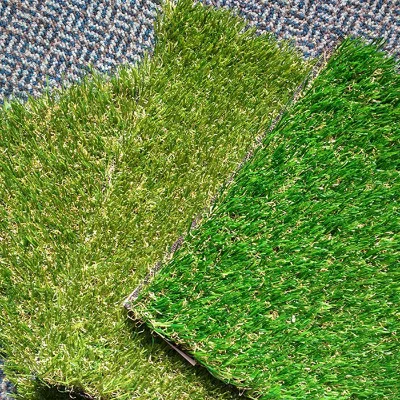
Height is a critical specification that varies based on the intended application. Observed product data reveals a range of pile heights, including 25mm, 30mm, 35mm, and 50mm. A height of 25mm is typically associated with compact, high-density installations, whereas 50mm variants are often found in sports applications requiring significant cushioning and ball roll characteristics. The yarn form is another essential technical variable. Buyers should verify whether the yarn is straight cut, curving, or curled. Straight cut yarns provide a uniform appearance, while curving and curling techniques are often employed to mimic the natural randomness of real grass and improve resilience under foot traffic.
The cross-profile of the yarn also influences performance. Flat type profiles are common and offer a stable surface, but the specific geometry must align with the base layer requirements. Row spacing is another precise metric; observed data points to spacings of 3/8 inch and 5/8 inch. Tighter row spacing generally correlates with higher density and a more luxurious feel, while wider spacing may be utilized in specific sports configurations to manage drainage or infill distribution. The density of the turf, measured in tufts per square meter, is a vital indicator of quality. High-density products, such as those rated at 16,800 tufts/sqm, offer superior durability and resistance to matting compared to lower-density alternatives.
Compliance, Certification, and Safety Standards
In the B2B procurement of Artificial Grass, compliance is non-negotiable. Buyers must verify that suppliers provide valid documentation for all critical certifications. The industry standard for safety and quality often includes certifications such as CE, SGS, and TUV. These marks indicate that the product has undergone rigorous testing for various parameters. Furthermore, specific safety tests are essential for products intended for children's play areas or sports facilities. Buyers should explicitly request test results for anti-fire properties, anti-UV stability, and chromium content. The presence of a "Chromium Test" certification is particularly important, as it ensures the absence of harmful heavy metals that could leach into the soil or pose health risks.
The warranty period is a strong indicator of a manufacturer's confidence in their product's longevity. Observed data suggests that reputable suppliers offer warranties ranging from 5 to 8 years. This range reflects the expected lifespan of the turf under normal usage conditions. However, a warranty is only as valuable as the terms and conditions attached to it. Procurement teams must scrutinize what constitutes a valid claim, including requirements for proper installation, infill maintenance, and exposure limits.
Additionally, the grade of the product should be verified. While some products are classified as "International Class," others may be designated as "National Class." International Class generally implies adherence to stricter global standards for material purity and performance consistency. Buyers should not assume that a product labeled as "National Class" meets the same rigorous benchmarks as those intended for export markets. The origin of the product, often listed as Jiangsu, China, provides context for the manufacturing ecosystem but does not guarantee quality on its own; it must be paired with the aforementioned certifications.
Cost Drivers and Pricing Dynamics
Understanding the cost structure of Artificial Grass is essential for budgeting and value analysis. The price range observed in the market spans from 1 to 20 USD, a wide variance that reflects differences in material quality, pile height, density, and complexity of the backing system. Several factors drive these costs. First, the material grade and type (PE vs. PP) are primary cost drivers. Higher-grade PE yarns typically command a premium price due to their superior UV resistance and softness. Second, the complexity of the ground cloth or backing system affects the price. Products featuring a "Complex" ground cloth or a specific "Grid" base structure often cost more than those with simpler asphalt or standard backing configurations.
The yarn length is another significant cost determinant. Products are categorized by yarn length as short, medium, or long. Longer yarns generally require more raw material and more complex manufacturing processes, leading to higher unit costs. Similarly, the height of the turf directly impacts the amount of material used per square meter. A 50mm turf will inherently cost more than a 25mm turf due to the increased volume of polymer required.
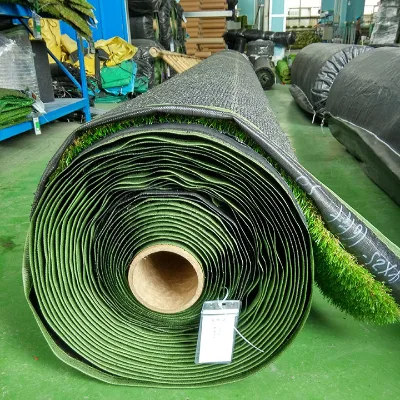
Packaging and logistics also influence the final landed cost. Most products are supplied "in Roll," with standard dimensions of 4m x 25m or 2m x 25m. The roll size affects shipping efficiency; larger rolls reduce the number of units per shipment but may require specialized handling. Buyers should also consider the Minimum Order Quantity (MOQ), which ranges from 1 to 1000 units. High MOQs can significantly reduce the per-unit cost but increase inventory holding risks. Conversely, low MOQs offer flexibility for small projects but may result in higher unit prices.
Typical Applications and Occasion Matching
Selecting the correct Artificial Grass for a specific application is crucial for long-term satisfaction. The market data categorizes products by their intended occasion: Sport, Recreation, and Landscaping. These categories are not interchangeable, and using a product outside its intended scope can lead to premature failure.
For sports applications, the requirements are stringent. Products designated "for Sport" often feature a "Particles" type, indicating the use of infill materials to provide shock absorption and stability. These turfs typically have a higher pile height (e.g., 50mm) and longer yarn lengths to accommodate athletic movement. The row spacing and density are optimized to ensure consistent ball roll and player safety. In contrast, products intended "for Recreation" or "Landscaping" prioritize aesthetic appeal and tactile comfort. These often feature a "Natural and Comfortable" feeling, with a "True" sensation that mimics real grass. The "Without Sand" type is common in landscaping to avoid the mess associated with sand infill, relying instead on the turf's inherent structure for stability.
The ground cloth type also dictates suitability. A "Grid" base is often preferred for sports due to its structural integrity, while a "Complex" ground cloth might be used for specialized landscaping projects requiring enhanced drainage or stability on uneven terrain. Buyers must match the product's "Main Grass" classification—whether it is Landscape Grass, Sport Grass, or a general Artificial Grass—to the project's primary function. Misalignment in this area can result in poor performance, such as excessive wear in sports zones or a lack of visual appeal in landscaping projects.
Supplier Evaluation and Quality Control
Evaluating a supplier requires a multi-faceted approach that goes beyond price comparisons. The first step is verifying the supplier's ability to provide consistent product attributes. Buyers should request samples that match the specific technical specifications of the target project, including yarn form, height, and material composition. It is essential to verify that the "Yarn Form" observed in the sample matches the ordered specification, as variations between "Straight Cut," "Curving," and "Curl" can significantly alter the visual and functional outcome.
Quality control protocols should be a central part of the supplier evaluation. Buyers must inquire about the testing procedures used to verify the "Anti-Fire," "Anti-UV," and "Chromium Test" certifications. A reliable supplier will have a documented history of passing these tests and should be able to provide recent test reports. The "Touch Feeling" of the grass, described as "Durable and True," should be assessed physically to ensure it meets the project's comfort requirements.
Furthermore, the supplier's production capacity and lead time capabilities are critical. While specific lead times are not provided in the data, the ability to fulfill orders within the observed MOQ range (1-1000) is a key indicator of flexibility. Buyers should also assess the supplier's experience with the specific "prod_model" numbers listed, such as SUNQ-HY00238 or SUNJ-HY00032, to ensure they have a track record of delivering these specific configurations. The origin of the product, consistently noted as Jiangsu, China, suggests a concentration of manufacturing expertise in this region, but buyers should still verify the specific factory's quality management systems.
Long-Term Procurement Considerations
Sourcing Artificial Grass is a long-term investment that requires consideration of maintenance, lifespan, and environmental impact. The warranty period of 5 to 8 years is a key metric for this assessment. However, the actual lifespan of the turf depends heavily on the maintenance regimen and the intensity of usage. Buyers should develop a maintenance plan that includes regular brushing to maintain the "Natural and Comfortable" feel and prevent matting, especially in high-traffic areas.
The environmental impact of the product is also a growing consideration. The "Anti-UV" certification ensures that the turf will not degrade rapidly under sunlight, reducing the frequency of replacement. The "Main Market" data indicates that these products are exported to Europe, Russia, Latin America, Africa, and Asia, suggesting that the manufacturing standards are adaptable to various climatic conditions. Buyers should verify that the product's UV resistance is suitable for the specific geographic location of the installation.
Finally, the procurement strategy should account for the "prod_packing" and "prod_standard" dimensions. Standard roll sizes of 4m x 25m or 2m x 25m facilitate efficient installation and minimize waste. However, for irregularly shaped projects, the ability to cut and join rolls without compromising the structural integrity of the "Base" (whether Asphalt Base or other types) is essential. Buyers should ensure that the supplier provides clear guidelines on installation and joining techniques to maximize the longevity of the investment. By focusing on these long-term factors, procurement teams can secure Artificial Grass solutions that deliver value and performance over the full lifecycle of the project.
FAQs
What certifications does the Artificial Grass have?
The Artificial Grass holds CE, SGS, TUV, Anti-Fire, Anti-UV, and Chromium Test certifications. These marks verify safety and quality standards for international export markets.
How long is the warranty period for this turf?
The warranty period ranges from 5 to 8 years depending on the specific model. This duration reflects the expected lifespan under normal usage conditions.
Which materials are used to make the yarn?
The yarn is manufactured using PP and PE materials. Polyethylene offers a softer feel, while polypropylene provides cost-effective structural stability.
Can I find grass with a height of 50mm?
Yes, products with a 50mm height are available for sports applications. This taller pile provides necessary cushioning and ball roll characteristics for athletic use.
What is the standard roll size for packaging?
The standard roll size is either 4 meters by 25 meters or 2 meters by 25 meters. These dimensions are designed to optimize shipping efficiency.
Which locations manufacture this Artificial Grass?
The products originate from Jiangsu, China. This region hosts a concentration of manufacturing expertise for these specific turf configurations.