Source ASME Stainless Steel Shelf Brackets for shelves, walls, and projects
Compare 30 listings of ASME Stainless Steel Shelf Brackets suitable for shelves, walls, and projects. Buyers can evaluate specifications, surface treatments, and delivery times from verified manufacturers in Guangdong, China.
Key considerations
Products List



Comprehensive Sourcing Guide
Strategic Sourcing Guide for ASME Stainless Steel Shelf Brackets
Understanding Technical Specifications and Material Integrity
When sourcing ASME Stainless Steel Shelf Brackets, the primary focus must be on the intersection of material composition and structural design. The supplied data indicates that while "Stainless Steel" is a listed material option, the broader category also includes Iron, Metal, and specific alloys like SPCC (Cold Rolled Carbon Steel). This variance is critical for buyers to understand before finalizing a purchase order. The term "ASME" in your search query typically refers to the American Society of Mechanical Engineers standards, which govern pressure vessels and piping, but in the context of shelf brackets, it often signals a requirement for high-precision fabrication tolerances and rigorous quality assurance similar to those industrial standards.
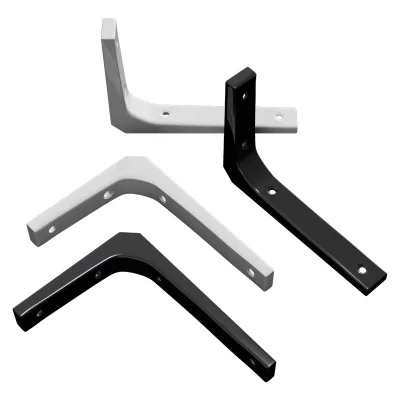
The physical attributes of the product are diverse. The supplied facts list a "Triangle stand" structure, which is a common design for maximizing load-bearing capacity with minimal material usage. However, other entries mention "Shelf Bracket" as a generic usage without specifying the geometry, suggesting that the market offers both triangular and L-shaped variants. The thickness of the material is a significant variable; while one data point specifies a range of "1--50mm," this is an exceptionally broad spectrum for a shelf bracket and likely refers to the manufacturing capability of the supplier rather than a standard product thickness. A typical shelf bracket usually falls within the 1mm to 5mm range for stainless steel. Buyers must verify the exact thickness specification against their load requirements, as the "Customized" nature of the product allows for a wide range of thicknesses.
Surface treatment is another critical technical specification. The data highlights "Powder Coated" as a primary finish, with specific mentions of "Black/white/brushed" and "Sand Blasted" options. The "Powder Coated Black" finish is noted as a specific selling point for certain models, while others offer "Colorful" options or finishes "as Per Your Request." For stainless steel applications, the surface treatment often serves a dual purpose: aesthetic customization and corrosion resistance enhancement. If the bracket is intended for a humid environment, a brushed or sandblasted finish followed by a high-quality powder coat is preferable to a bare metal finish. The "Tolerance" of 0.01mm is mentioned in the context of pressure welding, which suggests that high-precision suppliers can achieve tight dimensional accuracy, a vital factor for brackets that must fit into pre-drilled holes or specific shelving systems.
Compliance Verification and Certification Standards
Navigating the certification landscape is essential for B2B procurement, particularly when the search term includes "ASME." While the supplied facts list "ASME" under the "Standard" category alongside "JIS Code," "China GB Code," "EN," and "GB," it is important to distinguish between the supplier's capability to meet these standards and the actual certification held by the specific product batch. The data confirms that suppliers in this category often hold "ISO 9001," "ISO 9001 / GS," "Ts16949," and "SGS" certificates. These certifications indicate that the manufacturing facility has a quality management system in place, but they do not automatically guarantee that every shelf bracket produced meets ASME pressure vessel codes, which are generally not applicable to simple shelving hardware unless the bracket is part of a larger pressure-containing system.
Buyers must explicitly verify if the "ASME" reference in their request aligns with the supplier's actual capabilities. The provided text lists "Standard or nonstandard: Standard" and "Standard: ASME, JIS Code, China GB Code, EN, GB." This implies that the supplier claims adherence to these standards. However, the "Low-confidence background" section notes "ISO 9001:2015" as a background fact, suggesting that while the standard exists, specific compliance details for a particular order should be confirmed. For shelf brackets, the most relevant standards are often structural integrity and safety factors rather than pressure codes. The "GS" certification mentioned is a German safety mark, which is a strong indicator of product safety and compliance with European standards.
When evaluating a supplier, the buyer should request specific test reports or certificates of conformity that reference the exact standard number (e.g., ASME Section VIII for pressure vessels, or specific ASTM standards for stainless steel grades). The presence of "ISO 9001" and "SGS" in the data suggests a baseline of quality assurance, but the buyer should not assume that "ASME" compliance is automatic. The supplier's ability to produce "Customized" products means they can tailor the manufacturing process to meet specific standard requirements, but this must be defined in the technical agreement. The "Tolerance: 0.01mm" claim is a high-precision metric that should be backed by calibration records if the application requires such accuracy.
Cost Drivers and Pricing Variables
The pricing for ASME Stainless Steel Shelf Brackets is influenced by several dynamic factors, including material costs, customization levels, and order volume. The observed price range in the market is vast, spanning from $0.01 to $10,000 USD. This extreme range reflects the difference between a single unit of a standard bracket and a bulk order of custom-engineered, high-tolerance components. The "MOQ" (Minimum Order Quantity) is listed as 1000PCS in one instance, while the observed range extends up to 50,000 units. This indicates that unit pricing is highly sensitive to volume; smaller orders will carry a significantly higher per-unit cost due to setup and tooling expenses.
Material selection is a primary cost driver. The data lists "Stainless Steel," "Iron," and "SPCC" as available materials. Stainless steel, particularly grades like 304 or 316, is more expensive than iron or SPCC due to the cost of raw materials and the complexity of the forming process. If the buyer requires "ASME" compliance, they may be forced to use higher-grade stainless steel, which will increase the base cost. Furthermore, the "Surface Treatment" adds to the price. "Powder Coated" finishes are generally cost-effective, but "Sand Blasted" or specialized "Brushed" finishes require additional processing steps. The "Customized" nature of the product also introduces variable costs; designs based on "Samples or Drawings" require engineering time and potentially new tooling, which is often amortized over the order quantity.
Lead time is another factor that indirectly affects cost. The data shows delivery times ranging from "Within 60 Days" to "30--50 Days." Expedited shipping or shorter lead times may incur premium charges. The "Energy Source: Electric Arc" mentioned in the data points to the welding process used, which can impact energy costs and, consequently, the final price. Buyers should negotiate based on the total landed cost, including freight options like "Express, Sea Freight, Land Freight, Air Freight." Sea freight is typically the most economical for large volumes, while air freight is reserved for urgent, low-volume orders. The "Single gross weight" of 0.500 kg and "Single package size" of 10x10x10 cm are useful for calculating shipping logistics, but the actual shipping cost will depend on the total order volume and the density of the palletized goods.
Typical Applications and Usage Scenarios
The versatility of stainless steel shelf brackets is evident in the wide range of applications listed in the product data. The "Usage" field explicitly mentions "Shelf Bracket," "Air Conditioner Bracket," "TV Bracket," "Wall Bracket," and "Projector Bracket." This indicates that the same fundamental design principles can be adapted for various mounting scenarios. The "Triangle stand" structure is particularly suited for supporting heavy loads on walls or in industrial shelving systems, where the triangular geometry distributes weight efficiently.
The specific dimensions provided, such as "505020," "757520," "10010020," "12512520," and "15012520," suggest a modular approach to shelving. These dimensions likely correspond to the length of the bracket arm and the depth of the support. The inclusion of hardware like "4*16 self-tapping screws" and "rubber plug + screws" in the usage description highlights that the brackets are often sold as complete mounting kits. This is crucial for buyers who need a turnkey solution for installation. The "Colorful" and "Black/white/brushed" options allow these brackets to be used in both industrial environments, where durability is key, and commercial or residential settings, where aesthetics matter.
For "ASME" related applications, the brackets might be used in specialized industrial settings, such as chemical processing plants or food and beverage facilities, where corrosion resistance and structural integrity are paramount. The "Stainless Steel" material is ideal for these environments due to its resistance to rust and chemical degradation. The "Folded: Unfolded" attribute suggests that some designs may be collapsible for shipping or storage, which is beneficial for logistics but must be verified for stability during use. The "Simple Modern" style indicates a trend towards sleek, minimalist designs that can blend into modern office or retail spaces while maintaining the robustness required for heavy-duty applications.
Supplier Evaluation and Manufacturing Capabilities
Evaluating a supplier for ASME Stainless Steel Shelf Brackets requires a deep dive into their manufacturing capabilities and quality control processes. The data indicates that the "Place of Origin" is "Guangdong, China," a major manufacturing hub known for metal fabrication. The "Brand Name" "HDJL" is mentioned, but buyers should not rely on brand recognition alone; instead, they should focus on the supplier's technical specifications and certifications. The "Custom-Made: Acceptable" and "Design: to The Samples or Drawings" attributes show that the supplier is flexible and capable of handling bespoke orders, which is essential for specialized projects.
The "Manufacturing Arts" are listed as "Metal," and the "Process" includes "Powder Coated" and "Sand Blasted." The mention of "Type: Pressure Welding" and "Energy Source: Electric Arc" suggests that the supplier uses advanced welding techniques. For ASME-related requirements, the welding process is critical, as it affects the structural integrity of the bracket. Buyers should inquire about the welder's certifications and the inspection procedures used to ensure weld quality. The "Tolerance: 0.01mm" claim is a strong indicator of precision, but it should be verified through third-party inspection reports.
The "Certificate" list includes "ISO9001 / GS" and "ISO 9001, Ts16949; SGS." These certifications are strong indicators of a supplier's commitment to quality. However, the buyer must ensure that the specific product line they are purchasing is covered by these certifications. The "Standard" list includes "ASME, JIS Code, China GB Code, EN, GB," which suggests the supplier is familiar with international standards. The "Production Model" numbers like "03 112 xxxx" and "MMB1131" indicate a structured product catalog, but the "OEM" designation suggests that the supplier also offers private labeling and custom branding.
Quality Control and Long-Term Procurement Considerations
Ensuring long-term value in the procurement of shelf brackets involves rigorous quality control measures and a strategic approach to supplier relationships. The "Surface Treatment" options, such as "Powder Coated Black" and "Sand Blasted," must be consistent across the entire order to prevent premature failure or aesthetic degradation. The "Single package size" of 10x10x10 cm and "Pallet" packing suggest that the supplier uses standardized packaging, which helps in protecting the product during transit. However, buyers should verify the packaging quality, especially for stainless steel, which can be susceptible to scratching or corrosion if not properly protected.
The "Lead Time" of "30--50 Days" or "Within 60 Days" allows for planning, but buyers should account for potential delays, especially for custom orders. The "Customized" nature of the product means that any changes in design or material specifications can impact the timeline. Quality control should be implemented at multiple stages: raw material inspection, in-process monitoring, and final product testing. The "Tolerance: 0.01mm" requirement necessitates precise measurement tools and regular calibration. Buyers should consider requesting a pre-shipment inspection or engaging a third-party inspection agency to verify that the products meet the agreed-upon specifications.
Long-term procurement considerations also include the scalability of the supplier. The "MOQ" of 1000PCS suggests that the supplier is geared towards medium to large orders. For buyers with fluctuating demand, it is important to establish a relationship that allows for flexible ordering without compromising on quality. The "Shipping" options, including "Express, Sea Freight, Land Freight, Air Freight," provide flexibility in logistics, but the buyer should evaluate the reliability of the supplier's logistics partners. Finally, the "Design: to The Samples or Drawings" capability ensures that the supplier can adapt to future design changes, making them a valuable long-term partner for evolving project needs.
Final Procurement Recommendations
In conclusion, sourcing ASME Stainless Steel Shelf Brackets requires a balanced approach that considers technical specifications, compliance, cost, and supplier capabilities. The market offers a wide range of options, from standard iron brackets to high-precision stainless steel models with custom finishes. Buyers must carefully verify the material grade, surface treatment, and dimensional tolerances to ensure the brackets meet their specific application requirements. The presence of international certifications like ISO 9001 and SGS provides a baseline of quality, but the buyer must confirm that these certifications cover the specific product line and standards required, such as ASME.
The cost drivers, including material type, customization, and order volume, must be factored into the total cost of ownership. While the price range is broad, the unit cost will decrease with larger order volumes, making it essential to plan procurement cycles effectively. The diverse applications, from air conditioner mounts to TV brackets, highlight the versatility of these products, but the buyer must select the appropriate design and dimensions for their specific use case.
Finally, the supplier evaluation process should focus on manufacturing capabilities, quality control measures, and long-term reliability. The "Guangdong, China" origin is a significant factor, as it is a hub for metal fabrication, but the buyer must ensure that the supplier adheres to the highest standards of quality and safety. By following these guidelines, buyers can secure a reliable supply of high-quality shelf brackets that meet their technical and operational needs.
FAQs
What certifications do ASME Stainless Steel Shelf Brackets suppliers hold?
Suppliers typically hold ISO 9001, TS16949, SGS, and GS certifications. These documents verify quality management systems and safety compliance, ensuring the brackets meet rigorous industrial standards for structural integrity and material safety.
How long is the lead time for custom ASME Stainless Steel Shelf Brackets?
The standard delivery time ranges from 30 to 60 days after order confirmation. This timeline accounts for material sourcing, precision welding, surface treatment like powder coating, and final quality inspection before shipment.
Which surface treatments are available for ASME Stainless Steel Shelf Brackets?
Available finishes include powder coated black, white, brushed, and sand blasted options. These treatments enhance corrosion resistance and allow for aesthetic customization to match specific design requirements or environmental conditions.
Can I order ASME Stainless Steel Shelf Brackets with custom dimensions?
Yes, custom-made brackets are acceptable with dimensions tailored to samples or drawings. Buyers can specify thickness within a 1 to 50mm range and request specific structural designs like triangle stands or L-shapes.
What is the minimum order quantity for ASME Stainless Steel Shelf Brackets?
The minimum order quantity is typically 1000 pieces for standard orders. However, suppliers may accommodate smaller volumes up to 50000 units depending on the specific customization level and production capacity of the factory.
Which materials are used to manufacture ASME Stainless Steel Shelf Brackets?
Manufacturers use stainless steel, iron, SPCC, and various metal alloys. The specific material choice depends on the required load capacity, corrosion resistance, and cost constraints for the intended application or project.
How are ASME Stainless Steel Shelf Brackets packaged for shipping?
Brackets are packed in cartons, wooden cases, or on pallets for secure transport. Each single package measures approximately 10x10x10 cm with a gross weight of 0.5 kg, ensuring safe delivery via sea or air freight.