Source Automatic Alcohol Slush Making Machine for Juice, Slush, and Cold Drinks
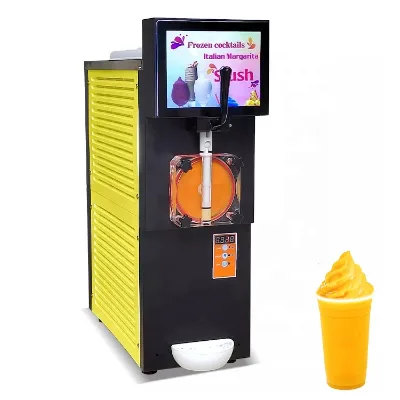
Compare 30 listings for the Automatic Alcohol Slush Making Machine to find options for fruit juice, fruit slush, and cold drink production. Buyers can review specifications like capacity, power, and temperature ranges to select the right equipment for their needs.
Key considerations
Products List


Commercial 3 Tank Cold Drink Slush Making Machine Cold Drink Slush Machine
$470.00 - $870.00
MOQ: 1 Pieces


-18 Celsius Degree Cocktails Milkshake Margarita Granita Slush Making Machine
$1198.00 - $1298.00
MOQ: 1 Pieces


Milk Ice Slush Frozen Drink Slushy Machine Frozen Fruit Slush Ice Cream Maker Machine
$1140.00 - $1298.00
MOQ: 1 sets


Commercial Slush Machine Industrial Slush Machine Frozen Drink Machine
$787.00 - $794.00
MOQ: 5 Pieces


Comprehensive Sourcing Guide
Strategic Sourcing Guide for Automatic Alcohol Slush Making Machines
The procurement of automatic alcohol slush making machines represents a specialized segment within the broader commercial beverage equipment market. Buyers entering this sector must navigate a landscape defined by specific technical requirements, varying degrees of automation, and distinct regulatory environments. The core objective is to secure equipment that delivers consistent frozen beverage quality while adhering to safety and operational standards. This guide synthesizes available product attributes and industry knowledge to provide a disciplined framework for evaluating potential suppliers and specifications.
Technical Specifications and Operational Parameters
When evaluating an Automatic Alcohol Slush Making Machine, the primary focus must be on the technical specifications that directly influence output quality and operational efficiency. The data indicates a range of models, such as the S-36, S-12, s-24, LM-212, and XJH-118PLUS, each presenting unique capacity and power profiles. A critical observation is the variance in capacity, with units ranging from 10L to 36L, and specific models like the LM-212 featuring a 20L slush tank and an 8L cooling cylinder. Buyers must verify that the selected capacity aligns with their anticipated volume, as the distinction between a 10L unit and a 36L unit significantly impacts throughput.
Power consumption is another pivotal specification. The observed range includes units rated at 1KW, 1.1KW, and 900W. While these figures suggest a generally efficient power draw, the actual energy cost will depend on the duty cycle and the specific refrigeration load. Furthermore, the voltage requirement is consistently noted as 220V, which is a standard for many commercial applications but requires verification against local grid standards to ensure compatibility without the need for expensive transformers.
The physical dimensions and weight are essential for logistics and floor planning. Dimensions such as 570580730mm and 400800800mm are observed, alongside weights ranging from 26kg to 75KG. These figures dictate the structural requirements of the installation site and the type of lifting equipment needed for delivery. The material composition is predominantly stainless steel, a standard choice for food-grade equipment due to its durability and resistance to corrosion. However, buyers should confirm the specific grade of stainless steel to ensure it meets local hygiene codes.
Compliance, Certification, and Safety Standards
In the realm of food and beverage machinery, compliance with international and local standards is non-negotiable. The available data highlights several certifications and standards, including ISO, CE, and ISOCE. The presence of ISO certification suggests adherence to quality management systems, while CE marking indicates compliance with European health, safety, and environmental protection standards. It is crucial for buyers to understand that the presence of a certification label on a product listing does not automatically guarantee that every unit in a batch meets the same rigorous criteria.
Refrigerant types are a significant compliance factor. The observed refrigerants include R134A and R410A/R290A. R290 (propane) is a natural refrigerant with a low global warming potential, but it is flammable, requiring specific safety protocols during installation and maintenance. R134A and R410A are more traditional synthetic refrigerants. Buyers must verify which refrigerant is used in the specific model they intend to purchase, as this impacts the type of service technician required and the environmental compliance of the installation.
Temperature control is another area where verification is necessary. The observed operating temperatures range from -2 to -3 degrees centigrade and -2 to -7 degrees centigrade. These ranges are suitable for slush production but may vary depending on the specific alcohol content of the mixture, as higher alcohol concentrations lower the freezing point. The equipment must be capable of maintaining these temperatures consistently to prevent the slush from melting or becoming too solid.
Cost Drivers and Pricing Dynamics
The pricing for automatic alcohol slush making machines is influenced by a complex interplay of factors, including capacity, automation level, and material quality. The observed price range spans from 339 to 3300 USD, a wide variance that reflects the diversity of the market. Lower-priced units, likely around the 339 USD mark, may correspond to smaller capacities or semi-automatic models, whereas the higher end of the spectrum likely represents fully automatic, high-capacity units with advanced features.
The Minimum Order Quantity (MOQ) is another cost driver, with observed ranges between 1 and 5 units. For small businesses or pilot projects, an MOQ of 1 is advantageous, allowing for single-unit procurement without significant inventory risk. However, for larger operations, negotiating an MOQ of 5 or more might unlock volume discounts. Buyers should also consider the packaging costs, as units are shipped in wooden boxes or fiber wooden boxes, which add to the overall landed cost but provide necessary protection during transit.
Lead times and shipping logistics are implicit cost factors. While specific lead times are not provided in the data, the origin locations such as Henan and Guangzhou in China suggest that international shipping will be a primary consideration. Buyers should budget for freight, insurance, and potential customs duties, which can significantly alter the final cost of ownership. The condition of the product is listed as "New," which is standard, but buyers should verify the warranty period, which is noted as 12 months in some cases, to understand the financial risk associated with potential repairs.
Typical Applications and Process Capabilities
The primary application for these machines is the production of frozen and chilled beverages, specifically ice cream, fruit juice, and fruit slush. The data explicitly mentions the usage for making fruit juice and fruit slush, indicating a versatility that extends beyond simple ice crushing. The process involves mild processing, which is essential for preserving the texture and flavor of the ingredients. The automatic grade varies, with some units described as semi-automatic and others as fully automatic, affecting the level of operator intervention required.
The ability to handle alcohol-based slush is a specific capability that requires careful attention to the machine's design. Alcohol lowers the freezing point of liquids, meaning the machine must be capable of reaching lower temperatures or maintaining a stable temperature over a longer period to achieve the desired slush consistency. The observed temperature ranges of -2 to -7 degrees centigrade are generally suitable for this purpose, but the specific formulation of the alcohol mixture will dictate the optimal operating settings.
Furthermore, the production of cold drinks and ice cream suggests that these machines are suitable for a variety of commercial settings, including bars, restaurants, and ice cream parlors. The capacity of the cooling cylinder, such as the 8L unit observed, determines the batch size and the frequency of refilling, which impacts the workflow in a busy establishment. Buyers should assess their peak demand periods to ensure the selected machine can maintain a steady supply of product without excessive downtime.
Supplier Evaluation and Quality Control
Evaluating suppliers for automatic alcohol slush making machines requires a rigorous approach to quality control and verification. The data indicates that customization is available for some models, while others are non-customized. Buyers seeking specific features, such as unique dimensions or specialized controls, should prioritize suppliers who offer customization options. However, it is important to note that customization may impact lead times and costs.
The origin of the products, specifically from regions like Henan and Guangzhou, provides insight into the manufacturing ecosystem. These regions are known for their industrial capabilities, but buyers should not assume uniform quality across all suppliers from these locations. Verification of the supplier's track record, customer reviews, and after-sales support is essential. The availability of an English manual is a positive indicator of a supplier's commitment to international markets, facilitating easier installation and maintenance.
Quality control should extend beyond the initial purchase. Buyers should inquire about the testing procedures used by the manufacturer to ensure that each unit meets the specified standards. The presence of certifications like ISO and CE is a good starting point, but buyers should request test reports or third-party verification to confirm that the refrigerant systems and electrical components meet safety requirements. Additionally, the warranty period, noted as 12 months for some units, should be clearly defined in the contract, including coverage for parts and labor.
Long-Term Procurement and Maintenance Considerations
Long-term procurement considerations for automatic alcohol slush making machines involve planning for maintenance, spare parts availability, and potential upgrades. The material composition, such as stainless steel, suggests a durable build, but regular cleaning and maintenance are necessary to prevent buildup and ensure food safety. The use of natural ingredients in the processing material highlights the importance of hygiene and the need for equipment that can be easily sanitized.
Buyers should also consider the lifecycle of the machine. The power source is electric, and the specific power ratings (1KW, 1.1KW, 900W) will influence energy costs over the life of the equipment. As energy prices fluctuate, selecting a more energy-efficient model could result in significant savings over time. Furthermore, the refrigerant type will impact the availability of service technicians and the cost of refrigerant refills. R290, being a natural refrigerant, may require specialized handling, which could affect long-term maintenance costs.
Finally, the packaging and shipping methods, such as wooden boxes or fiber wooden boxes, play a role in the longevity of the equipment during transit. Buyers should ensure that the packaging is robust enough to protect the machine from damage. Once installed, the machine should be positioned in a well-ventilated area to prevent overheating and ensure optimal performance. By carefully considering these long-term factors, buyers can make informed decisions that maximize the value and reliability of their investment in automatic alcohol slush making machines.
Comparative Analysis of Key Models
To assist in the decision-making process, the following table summarizes the key attributes of the observed models, facilitating a direct comparison of capacity, power, and dimensions.
| Model | Capacity | Power | Weight | Dimensions (mm) | Refrigerant | Origin |
|---|---|---|---|---|---|---|
| S-36 | 36L | 1.1KW | 75KG | Not Listed | R134A | China |
| S-12 | 10L/15L/20L | Not Listed | Not Listed | Not Listed | Not Listed | Henan |
| s-24 | 24L | 900W | 26KG | Not Listed | Not Listed | Not Listed |
| LM-212 | 20L (Tank) | Not Listed | Not Listed | 420450608 | R410A/R290A | Guangzhou |
| XJH-118PLUS | Not Listed | Not Listed | Not Listed | 400800800 | Not Listed | Not Listed |
This comparison highlights the diversity in the market, with the S-36 offering the highest capacity and the s-24 being the lightest and most power-efficient among the listed options. The LM-212 stands out with its specific tank and cylinder capacities and the use of R410A/R290A refrigerants. Buyers should use this data as a starting point for further inquiry, verifying the complete specifications for each model before making a final selection.
FAQs
What capacity options are available for automatic alcohol slush making machines?
Available capacities range from 10 liters to 36 liters depending on the specific model selected. Units like the S-36 offer 36 liters, while the LM-212 features a 20-liter slush tank paired with an 8-liter cooling cylinder for efficient batch processing.
Can these machines operate on standard 220V power sources?
Yes, the observed units are designed to operate on a standard 220V power source. This voltage requirement is consistent across models like the S-36 and S-12, ensuring compatibility with many commercial electrical grids without needing special transformers.
Which certifications do the automatic alcohol slush making machines hold?
The machines carry ISO and CE certifications to meet international safety and quality standards. Some listings also reference ISOCE, indicating adherence to specific manufacturing and operational protocols required for food and beverage equipment in various regions.
How much does an Automatic Alcohol Slush Making Machine cost?
Prices for these machines range from 339 USD to 3300 USD based on capacity and features. Lower costs typically correspond to smaller capacities or semi-automatic models, while higher prices reflect fully automatic units with advanced refrigeration systems.
What is the minimum order quantity for purchasing these machines?
The minimum order quantity varies between 1 and 5 units depending on the supplier and model. This flexibility allows small businesses to purchase single units for pilot projects while larger operations can negotiate volume orders for multiple machines.
Can I customize the specifications of the Automatic Alcohol Slush Making Machine?
Customization is available for some models, allowing buyers to request specific features or dimensions. However, other units are listed as non-customized, so buyers must verify the customization status of the specific model before placing an order.
What refrigerant types are used in these slush making machines?
The machines utilize refrigerants such as R134A and R410A/R290A for cooling operations. R290 is a natural refrigerant with low global warming potential, while R134A and R410A are traditional synthetic options requiring specific safety handling protocols.