Source Automatic Bottle Capping Machine for Drinks, Cosmetics, Oil
Find and compare 30 automatic bottle capping machines from verified suppliers. These units support filling and sealing for beverages, cosmetics, and oils with customizable voltage and capacity options.
Key considerations
Products List


Automatic Bottle Capping Machine, Cap Sealing Machine, Capper, Cap Sealer
$5000.00 - $20000.00
MOQ: 1 Pieces
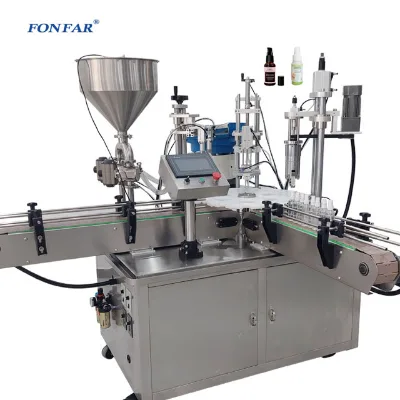


Bottle Capping Machine for Small Liquid Bottles (Cap Size Customizable)
$10735.00 - $14117.00
MOQ: 1 sets


Automatic Capping Machine for Round Bottles, Automatic Sealing & Capping Machine
$5900.00 - $6200.00
MOQ: 1 Pieces

Automatic Capping Machine & Press Capping Machine for Bottles & Cans
$30000.00 - $35000.00
MOQ: 1 Pieces
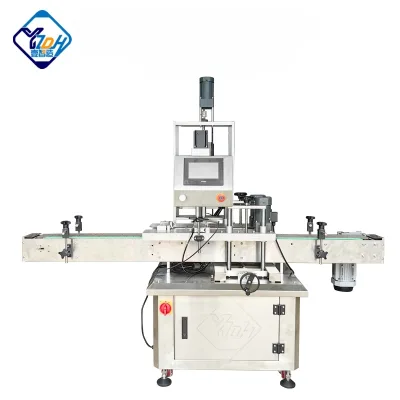

Bottle Capping Machine Automatic Sealing Cap Machine Capping Machine Wine
$11000.00 - $18500.00
MOQ: 1 Pieces


Comprehensive Sourcing Guide
Strategic Sourcing Guide for Automatic Bottle Capping Machines
Procuring an Automatic Bottle Capping Machine represents a critical investment in production efficiency, product integrity, and operational scalability. For buyers navigating the global marketplace, the decision extends beyond simple price comparison; it requires a rigorous understanding of technical specifications, compliance frameworks, and the specific mechanical attributes that align with diverse production lines. The following guide synthesizes observed market data and technical requirements to provide a disciplined approach to sourcing these essential packaging assets.
Technical Specifications and Mechanical Configuration
The core functionality of an Automatic Bottle Capping Machine is defined by its mechanical architecture and operational parameters. When evaluating potential units, buyers must first distinguish between the specific types of capping mechanisms available. Market observations indicate a prevalence of "Cap Sealing Machine" and "Bottle Capping Machine" configurations, often categorized under broader "Packaging Sealing Machine" classifications. The driven type for these systems is predominantly electric, ensuring consistent torque and speed control necessary for high-volume operations.
A critical technical differentiator is the structural layout of the machine. Data indicates that "Linear" structures are a common configuration, offering a streamlined workflow where bottles move in a single file through the capping station. This contrasts with rotary designs, though linear systems are often preferred for their ease of maintenance and adaptability to varying bottle sizes. The working stations on these machines typically range from 4 to 10, allowing for a balance between throughput and the complexity of the capping process.
Capacity is another paramount specification. Observed data points to a capacity of 2000 bottles per hour (b/H) for certain models, serving as a benchmark for medium-to-high volume production lines. However, buyers must verify this figure against their specific throughput requirements, as capacities can vary significantly based on bottle diameter and cap type. The power supply voltage is frequently standardized at AC 220V 50Hz, though customization options exist to accommodate different regional electrical standards.
The material composition of the machine is equally vital for longevity and hygiene. The "Key Materia" is often listed as SUS304 stainless steel, a grade chosen for its corrosion resistance and suitability for food and beverage applications. This material ensures that the machine can withstand frequent cleaning cycles and exposure to various liquids without degrading. Additionally, the "Automatic Grade" is confirmed as fully automatic, reducing the need for manual intervention and minimizing human error in the capping process.
Compliance, Certification, and Safety Standards
In the realm of industrial machinery, compliance with international standards is not merely a formality but a prerequisite for market access and operational safety. Buyers must verify that the machinery carries recognized certifications. The most frequently observed certifications in the supply chain for these units include CE and ISO standards. The CE mark indicates conformity with health, safety, and environmental protection standards for products sold within the European Economic Area, while ISO certifications, such as ISO9001:2000, attest to the manufacturer's quality management systems.
It is essential to note that while "CE" and "ISO" are common observations, the specific standard version (e.g., ISO9001:2000 versus newer iterations) may vary by supplier. Buyers should not assume that all listed products automatically satisfy every certification requirement without explicit verification. The "prod_standard" field often lists "Inhouse, ISO9001:2000, CE," suggesting a mix of internal quality protocols and external compliance.
Safety and operational standards also extend to the machine's physical dimensions and packaging. Standard dimensions observed in the market include configurations like 18008002200mm or 18007501700mm. These dimensions are critical for facility planning, ensuring the machine fits within the designated production floor space. Furthermore, the "prod_packing" is typically a "Wooden Case" or "Polyboard Case," designed to protect the machine during transit. This packaging must be robust enough to prevent damage, as the internal components, including the capping heads and drive mechanisms, are precision-engineered.
Cost Drivers and Pricing Variables
The pricing landscape for automatic bottle capping machines is highly variable, influenced by a complex matrix of factors including capacity, customization, and material quality. Observed listed prices in the market range from approximately 348 USD to 280,000 USD. This vast disparity underscores the importance of defining specific requirements before engaging with suppliers. The lower end of the price spectrum likely corresponds to entry-level or semi-automatic units, while the higher end reflects fully automated, high-capacity systems with advanced features and premium materials.
Several key drivers influence the final cost. First, the "Customization" attribute is a significant cost factor. Many suppliers offer "Customized" solutions, allowing buyers to tailor the machine to specific bottle shapes, cap types, or production speeds. Customization often involves additional engineering time and specialized tooling, which increases the unit price. Second, the "Automatic Grade" and the complexity of the "Filling Principle" (such as pressure-based systems) can drive costs up. Machines with multi-head filling valves and plunger dosing devices, for instance, command higher prices due to their precision and speed.
The Minimum Order Quantity (MOQ) also plays a role in cost dynamics. The observed MOQ range spans from 1 to 5000 units. For buyers seeking a single unit for pilot testing or small-scale production, a low MOQ is advantageous. However, for large-scale deployments, negotiating based on higher volumes may yield better pricing. Buyers should also consider the "Gurantee Time," which is typically listed as 1 Year. A longer warranty period or extended service agreements may be available as an add-on, impacting the total cost of ownership.
Typical Applications and Material Compatibility
The versatility of automatic bottle capping machines is evident in their wide range of applications. These machines are not limited to a single industry but are designed to handle a diverse array of products. The "Application" field lists "Drinks" as a primary use case, but the scope extends far beyond beverages. The machines are suitable for "Seasoning, Rice, Flour, Snack, Fish, Meat, Vegetable, Fruit, Tea, Dairy Products, Hair Care Products, Skin Care Products, Cosmetics, Oil, Cleaning, and Detergent."
This broad applicability is facilitated by the machine's ability to handle various "Packaging Material" types. While "Plastic" is a common material for the bottles themselves, the machines are also compatible with "Composite Materials" and "Flexible Container Sealing." The "Applicable Bottles" range is typically defined by volume, with observed specifications covering sizes from 330ml to 2L. This range allows the machine to accommodate standard beverage bottles, larger water jugs, and various cosmetic containers.
The "Usage" classification further clarifies the machine's role in the production line. It can be employed for "Inner Packing," where the capping process is integral to the primary packaging, or "Outpacking," where it serves as part of the secondary packaging workflow. The "Packaging Container Lifting Structure" is often pneumatic, ensuring gentle handling of bottles to prevent deformation or breakage during the capping process. This adaptability makes the Automatic Bottle Capping Machine a central component in modern, multi-product manufacturing facilities.
Supplier Evaluation and Origin Verification
When evaluating potential suppliers, buyers must scrutinize the origin and production capabilities of the manufacturer. The "prod_origin" field indicates that many suppliers are located in "Jiangsu China" or "Qingdao," regions known for their manufacturing clusters. These locations often host a concentration of machinery manufacturers with established supply chains and technical expertise. However, buyers should verify the specific location of the production facility to ensure it aligns with their logistical and quality expectations.
Supplier evaluation should also focus on the "Product Name" and "prod_model" consistency. Models such as "NEW CROWN," "FXZ-1," "zhangqi05," and "CHLR-25" represent specific product lines. Buyers should request detailed documentation for each model to understand its specific capabilities and limitations. The "Net Weight" of the machine, observed at 300kg for certain models, is another indicator of build quality and stability. Heavier machines often imply a more robust frame, which is essential for maintaining precision during high-speed operations.
Furthermore, the "Condition" of the machine is a critical factor. Most suppliers offer "New" units, but buyers must confirm the status of any refurbished or used equipment if that is part of their sourcing strategy. The "Feed Cylinder Structure," often described as "Single-Room Feeding," and the "Filling Valve Head" configuration, such as "Multi-Head," are technical details that should be verified against the supplier's technical datasheets. Ensuring that the supplier can provide a comprehensive technical manual and after-sales support is essential for long-term operational success.
Quality Control and Long-Term Procurement Considerations
Implementing a robust quality control (QC) strategy is essential when procuring automatic bottle capping machines. Buyers should establish clear acceptance criteria based on the machine's performance metrics, such as capping accuracy, speed consistency, and material compatibility. The "Gurantee Time" of 1 Year provides a baseline for warranty coverage, but buyers should also inquire about the availability of spare parts and the lead time for repairs.
Long-term procurement considerations extend beyond the initial purchase. The "Customization" options available allow for future scalability, enabling the machine to adapt to new product lines or packaging formats as the business grows. Buyers should also consider the "Power Supply Voltage" requirements, ensuring that the machine can be easily integrated into their existing electrical infrastructure or that necessary modifications are feasible.
Finally, the "Packaging" of the machine, typically in a "Wooden Case" or "Polyboard Case," must be evaluated for its ability to protect the equipment during shipping. Proper packaging ensures that the machine arrives in pristine condition, ready for installation. By focusing on these technical, compliance, and logistical factors, buyers can make informed decisions that align with their production goals and ensure a reliable return on investment. The market offers a wide array of options, from basic models to highly customized solutions, and a disciplined approach to sourcing will help navigate this complexity effectively.
FAQs
What certifications do automatic bottle capping machines typically have?
Most units carry CE and ISO certifications, such as ISO9001:2000. Buyers should verify specific standard versions as some listings include in-house protocols alongside international marks.
Which materials are used for the key components of these machines?
The key material is often SUS304 stainless steel for corrosion resistance. This ensures suitability for food and beverage applications while withstanding frequent cleaning cycles.
How is the capacity of an Automatic Bottle Capping Machine defined?
Capacity is measured in bottles per hour, with observed benchmarks reaching 2000 b/H. This figure varies based on bottle diameter and specific production line requirements.
Can these machines handle different bottle sizes and materials?
Yes, they accommodate bottles ranging from 330ml to 2L. The systems support plastic and composite materials with flexible container sealing capabilities for various product types.
What is the standard voltage supply for these electric machines?
The power supply voltage is frequently AC 220V 50Hz. Customization options exist to accommodate different regional electrical standards for specific buyer needs.
Which structural types are common for automatic bottle capping machines?
Linear structures are a common configuration for streamlined workflows. These systems typically feature 4 to 10 working stations to balance throughput with process complexity.
What is the typical warranty period for new automatic capping machines?
The guarantee time is typically listed as 1 Year. Buyers should inquire about extended service agreements or spare parts availability for long-term operational success.