Source CE Certified Cable Fault Tester for Network Diagnostics
Find and compare 30 CE Certified Cable Fault Tester options from verified Chinese manufacturers. Evaluate models like HYCF and CYGZ-711C for tracing, insulation testing, and network diagnostics to find the right tool for your procurement needs; compare the available evidence and request quotations based on your requirements.
Key considerations
Products List
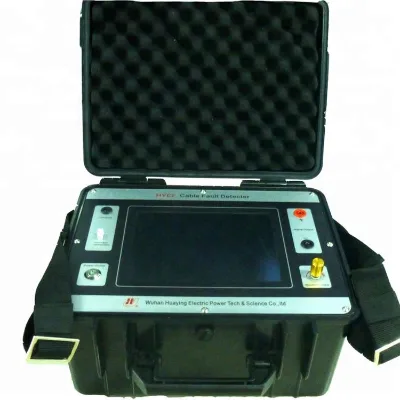


Network Cable Tester Cable Length Tester Wire Fault Detector Cable Fault Locator
$119.00 - $130.00
MOQ: 1 Pieces


Cable Fault Point Location Transmission Line Cable Fault Distance Tester
$1935.00 - $6694.00
MOQ: 1 Pieces

cable fault tester underground high voltage cable fault locator cable fault detection
$1500.00 - $2550.00
MOQ: 1 Pieces


Auto-Analysis Cable Fault Tester for Cable Short Circuit & Open Circuit Faults
$1000.00 - $5000.00
MOQ: 1 Sets


Comprehensive Sourcing Guide
CE Certified Cable Fault Tester Sourcing Guide
Procurement professionals seeking CE certified cable fault testers must first distinguish between general network continuity tools and specialized high-voltage fault locators. The observed market data reveals a diverse range of devices, from pocket-sized trackers with 9V battery power to industrial units rated at 3kVA with epoxy resin insulation. Buyers should verify that the specific model they select matches their intended application, whether it is tracing shielded network cables or locating faults in high-voltage infrastructure.
The supply chain for these devices often originates from manufacturing hubs in Hubei and Hebei provinces, with dispatch ports including Wuhan, Shanghai, and Shenzhen. While some listings indicate a supply ability of 200 rolls per month, others suggest single-item sales with customizable packaging options. It is critical to confirm that the supplier's stated origin and logistics capabilities align with your project timeline, as lead times and shipping methods vary significantly between different product configurations.
Product Scope and Observed Listing Signals
The product landscape includes distinct categories such as pocket-size cable trackers and advanced wire locators, each serving different diagnostic needs. Some units are designed for point testing with a detection depth of up to 3 meters, while others offer positioning accuracy within ±10mm for precise fault localization. Buyers must carefully review the product name and model number, such as HYCF or MS6818, to ensure the device supports the specific cable types and voltage levels required for their infrastructure.
Listing signals indicate that packaging varies from wooden cases to color boxes with wrapping film, reflecting the sensitivity of the internal electronics. The selling units are typically single items, yet customization is available for specific client requirements. Procurement teams should scrutinize the "Customized" attribute to understand if the supplier can adapt the device for unique operational environments, such as specific altitude limits or humidity tolerances, which are critical for field reliability.
Technical Specifications to Verify
Technical due diligence requires a rigorous check of power consumption and output capabilities, as these define the device's operational limits. Observed specifications range from low-power 5VA consumption units to high-capacity 3kVA models with output voltages reaching DC 0~50kV. Buyers must verify that the rated power and output current, such as the observed 60mA, are sufficient for the cable length and fault resistance they intend to test, ensuring the equipment will not fail under load.
Signal generation and detection parameters are equally vital for accurate troubleshooting. Devices may operate with an output signal of 125kHz and a test distance of up to 35km, though detection ranges can vary based on cable type, with some models detecting up to 20km for non-standard cables. It is essential to confirm the external voltage compatibility, such as the 12-400V AC range, and the fuse rating to prevent equipment damage during operation in varying power grid conditions.
Compliance and Safety Documentation
Compliance verification is paramount when sourcing electrical testing equipment, particularly regarding the CE certification observed in several listings. While some products list CE, FCC, and RoHS certifications, buyers must request valid test reports to confirm that the specific batch meets current European safety directives. Relying solely on a generic certification claim without supporting documentation can expose the procurement process to regulatory risks and potential liability issues.
Safety features such as insulation methods and failure point resistance must be clearly documented to ensure operator protection. The observed use of epoxy resin and oil insulation suggests robust protection against high-voltage exposure, with failure point insulation resistance ranging from 0 to 50mΩ. Procurement teams should demand detailed safety manuals that explain the operating temperature ranges, such as 0-40°C for work and -20 to 60°C for storage, to ensure the device remains safe and functional in diverse environmental conditions.
Cost Drivers and Commercial Terms
Cost structures for cable fault testers are heavily influenced by technical complexity, including voltage ratings and detection range capabilities. High-voltage models with 3kVA power and 50kV output naturally command higher prices than low-power battery-operated trackers. Buyers should expect price variations based on the inclusion of advanced features like precise positioning accuracy or specialized connectors, rather than assuming a uniform cost across all listed models.
Commercial terms often involve flexible packaging and customization options that can impact the final landed cost. While some suppliers offer standard wooden cases, others provide custom packaging solutions that may incur additional fees. The minimum order quantity is typically low, ranging from 1 to 10 units, allowing for small-scale procurement, but buyers must clarify if bulk discounts apply and how customization requests affect the production lead time and unit price.
Supplier Qualification and Quality Control
Supplier qualification should focus on verifying the consistency of their manufacturing processes and the reliability of their supply chain. With origins in Hubei and Hebei, suppliers may have varying levels of quality control maturity. Buyers should request evidence of their production capacity, such as the stated 200 rolls per month, and verify if they maintain consistent quality standards across different product lines, including both network cable testers and high-voltage fault locators.
Quality control protocols must address the specific environmental and operational stresses the device will face. The observed altitude limit of less than 2000m and humidity tolerance of 80% indicate that the device is designed for specific conditions. Procurement teams should ask suppliers for their internal testing procedures regarding these environmental limits and request sample test results to ensure the product will perform reliably in the intended field environment without premature failure.
Long-Term Procurement Checks
Establishing a long-term partnership requires a clear understanding of the supplier's after-sales support and maintenance capabilities. Buyers should inquire about the availability of spare parts, such as fuses or batteries, and the supplier's policy for repairing or replacing units that fail during the warranty period. A reliable supplier will provide a clear roadmap for technical support, ensuring that downtime is minimized when critical infrastructure testing is required.
Future-proofing the procurement strategy involves monitoring the supplier's ability to adapt to evolving industry standards and technological advancements. As cable technologies evolve, the testing equipment must remain compatible with new cable types and fault scenarios. Buyers should assess the supplier's commitment to product updates and their willingness to customize future models to meet emerging regulatory requirements or specific client needs, ensuring a sustainable supply relationship.
FAQs
How accurate is the cable fault tester at locating fault points?
The positioning accuracy is at or below plus or minus 10mm, allowing precise pinpointing of cable faults. Accuracy applies when the fault point insulation resistance falls within the supported 0 to 50 megohm range. For best results, confirm the fault resistance value before testing, and use the point test mode on formed cable sections to achieve the specified detection performance.
What detection distances can the tester cover on different cable sizes?
On 0.5mm2 cable the detecting distance is up to 3km, while other cable types can be tested at up to 20km. The test distance reaches 35km on supported models. Actual coverage depends on cable specification, fault type, and site conditions, so verify the cable cross-section and fault resistance before planning long-distance fault location work.
Which certifications does the cable fault tester carry?
The listed cable testing instruments carry CE certification, with some models also certified to FCC and RoHS. Certification coverage varies by model, so confirm the specific certificates for the model you intend to buy. CE marking supports procurement in markets requiring European conformity, and documentation can be requested from the supplier before ordering.
Can the tester be customized to match specific project requirements?
Yes, customization is available on the listed products. Options can include output voltage configuration, since models offer DC 0 to 50kV output with 60mA current, and packaging preferences such as wooden case packing. Discuss your cable type, voltage class, and testing distance with the supplier, as customization scope and any cost or lead time impact should be confirmed before ordering.
What output capability does the high-voltage fault detection unit provide?
The high-voltage unit provides DC output adjustable from 0 to 50kV with an output current of 60mA and rated power of 3kVA. Insulation is achieved with epoxy resin and oil. This output level supports breakdown testing and prelocation of high-resistance faults, but confirm the voltage requirements of your cable system to ensure compatibility before purchasing.
How is the cable fault tester packed and shipped from China?
Larger fault detection equipment is packed in a wooden box with wrapping film or a wooden case, while handheld trackers ship in a color box inside a carton. Dispatch ports include Wuhan, Shanghai, Shenzhen, and Xiamen, with origin in Hubei, China. Supply capacity is about 200 rolls per month, so confirm shipping arrangements and current stock before placing an order.