Source Electromagnetic Vibrating Sieve Shaker for Lab, School, and Industry
Find 30 Electromagnetic Vibrating Sieve Shaker models from Chinese manufacturers. Compare specifications like motor power, vibration amplitude, and layer capacity for lab and school applications. Review pricing and lead times to identify suitable suppliers for your sourcing needs; compare the available evidence and request quotations based on your requirements.
Key considerations
Products List


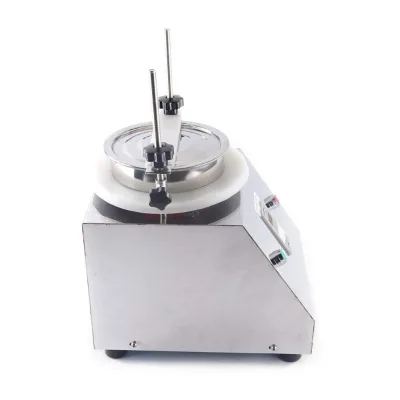

Electromagnetic Sieve Shaker Vibrating Separator Vibrating Sieve Machine
$16000.00 - $18000.00
MOQ: 1 Sets


High Frequency Vibrating Screen Electromagnetic Shaker Circular for Food Processing
$3000.00 - $18000.00
MOQ: 1 Pieces

High Precision Flour Screening Equipment Circular Vibrating Screen Sieve
$1400.00 - $2500.00
MOQ: 2 Pieces

Professional Granule Materials Sifting Equipment Circular Vibrating Screen
$1400.00 - $2500.00
MOQ: 2 Pieces

$1400.00 - $2500.00
MOQ: 1 Pieces
Comprehensive Sourcing Guide
Electromagnetic Vibrating Sieve Shaker Sourcing Guide
Buyers must first distinguish between mechanical oscillation and electromagnetic actuation when evaluating listings, as the latter offers precise control over vibration amplitude and frequency. The observed market data indicates models with specific oscillation rates around 221 times per minute and peak attack frequencies near 147 times per minute, which are critical for consistent particle separation. Procurement teams should verify whether the listed unit utilizes a dynamic load mechanism or an electronic load system, as this directly impacts the machine's ability to handle varying sample weights without performance degradation.
Understanding the physical footprint and power requirements is essential for facility planning before finalizing any purchase order. Listings frequently specify dimensions around 680 by 500 by 1090 millimeters and gross weights ranging from 100 to 500 kilograms, necessitating adequate floor space and structural support. Additionally, voltage compatibility is a primary decision point, with units appearing in both AC 380V and AC 220V configurations, requiring buyers to confirm their local electrical infrastructure can safely support the selected motor power, which typically ranges from 0.12 to 0.37 kilowatts.
Product Scope and Observed Listing Signals
The product scope for electromagnetic sieve shakers generally encompasses laboratory and educational applications where precise particle size analysis is required. Observed listings highlight configurations with up to seven layers, utilizing sieve diameters of 200, 300, or 400 millimeters to accommodate different sample volumes. Buyers should note that while some models offer customizable layer counts between one and nine, the standard configurations often feature specific tapping heights around 38 millimeters to ensure effective material movement across the mesh screen.
Listing signals also reveal significant variation in control interfaces and display technologies, ranging from manual controls to digital readouts for enhanced operational monitoring. The presence of OEM customization support suggests that suppliers can tailor specific attributes, yet buyers must carefully review whether the "customized" status applies to the entire unit or only specific components like the frame or control panel. It is vital to cross-reference the stated product name, such as "Hot Sell Laboratory Sieve Shaker" versus "7 Layer Vibrating Sieve Shaker," to ensure the specific model matches the intended analytical workflow.
Technical Specifications to Verify
Verification of the motor speed and vibration amplitude is paramount for ensuring the sieve shaker meets the required separation efficiency for specific materials. Technical data often cites motor speeds between 1400 and 1460 revolutions per minute, paired with vibration amplitudes ranging from 1 to 4 millimeters, which directly influence the screening throughput. Buyers must confirm that the listed vibration force, typically between 1.5 and 2.5 kilonewtons, aligns with the density and volume of the samples to be processed, preventing under-performance or mechanical stress on the unit.
The structural integrity and leveling requirements of the basement foundation are often overlooked but critical for maintaining consistent operation over time. Specifications indicate a maximum levelness tolerance of 0.6 millimeters per minute, which implies that the installation site must be exceptionally stable to prevent drift in the screening results. Additionally, the working voltage must be strictly matched to the facility's supply, as units designed for AC 220V may not function correctly on AC 380V systems without appropriate transformers or electrical modifications.
Compliance and Safety Documentation
Compliance documentation should explicitly confirm the presence of recognized international certifications such as ISO and CE, which are frequently cited in product attributes for these industrial machines. While some background data mentions ASTM C136, buyers should not assume this standard applies unless the supplier provides specific test reports validating the sieve shaker's performance against this material testing protocol. Procurement teams must request the full certification dossier to ensure the equipment meets the safety and quality mandates of their specific jurisdiction or industry sector.
Safety documentation must also address the electrical safety standards relevant to the operating voltage and motor power specifications. Buyers should verify that the control systems, whether manual or digital, include necessary safety interlocks and that the export wooden case packaging meets international shipping standards to prevent damage during transit. It is crucial to confirm that the warranty period, often listed as one year, covers both the motor and the electromagnetic components, ensuring that any failure in the core actuation system is addressed without additional cost to the buyer.
Cost Drivers and Commercial Terms
Cost drivers for electromagnetic sieve shakers are heavily influenced by the number of sieve layers, the precision of the control system, and the customization level required. Models with digital displays and higher motor power ratings, such as those approaching 0.37 kilowatts, typically command higher prices than basic manual units. Buyers should analyze the price range observed in the market, which spans from 1 to 45,050 USD, to understand how specific features like the 7-layer configuration or the 200-millimeter sieve diameter impact the final quotation.
Commercial terms regarding minimum order quantities and delivery timelines are equally critical for supply chain planning. Most listings indicate a minimum order quantity of just one piece, offering flexibility for small laboratories, while the delivery date is typically estimated between 10 and 15 days. Procurement teams must clarify whether the quoted price includes the export wooden case packaging and if the supplier offers OEM branding services, as these factors can significantly alter the total landed cost and the timeline for receiving the equipment.
Supplier Qualification and Quality Control
Supplier qualification should focus on verifying the place of origin and the specific manufacturing capabilities regarding the model numbers provided, such as STSJ-3A or WIN-LSS. Buyers must ensure the supplier has a proven track record in producing units with the specific oscillation journey of 25 millimeters and peak attack journeys of 8 millimeters, as these mechanical tolerances are essential for consistent sieving results. It is advisable to request evidence of the supplier's ability to maintain the specified gross weight and package dimensions, which reflect the robustness of their manufacturing process.
Quality control procedures must include a verification of the screen mesh range, which can vary from 1 to 1000 mesh, to ensure the supplier can provide the exact aperture sizes required for the application. Buyers should also confirm that the supplier adheres to the stated product standard dimensions, such as 700 by 530 by 1110 millimeters, to guarantee compatibility with existing laboratory setups. Establishing a clear communication channel for post-delivery support is essential, particularly given the complex nature of the electromagnetic components and the need for precise calibration.
Long-Term Procurement Checks
Long-term procurement checks should prioritize the availability of spare parts and the durability of the electromagnetic components under continuous operation. Buyers must inquire about the expected lifespan of the motor and the vibration mechanism, especially given the high-frequency operation where peak attack times reach 147 times per minute. Ensuring that the supplier can provide replacement parts for the screen mesh and the tapping mechanism is vital for maintaining operational continuity and minimizing downtime in critical laboratory environments.
Regular performance audits are necessary to verify that the unit continues to meet the specified levelness of the basement and vibration amplitude requirements over time. Buyers should establish a schedule for recalibrating the digital display and checking the motor speed to ensure it remains within the 1400 to 1460 r/min range. Additionally, maintaining a record of the warranty claims and service history will help in assessing the long-term reliability of the supplier and the specific model, ensuring that the investment remains viable for years of rigorous laboratory use.
FAQs
How many sieve layers can an Electromagnetic Vibrating Sieve Shaker hold?
Electromagnetic Vibrating Sieve Shaker models are available with 1 to 9 layers, so you can stack multiple test sieves for simultaneous particle size separation. The number of layers you choose depends on your material and grading requirements. More layers increase capacity per run, but check that the frame height and vibration force, typically 1.5 to 2.5 KN, suit your workload.
What sieve diameters are supported by electromagnetic vibrating sieve shakers?
Common supported sieve diameters are 200 mm, 300 mm, and 400 mm, with smaller frames accommodating dia 75 mm, 100 mm, and 200 mm sieves. Choose the diameter based on sample volume and required accuracy. Larger diameters handle bigger samples per run, while smaller diameters suit laboratory testing with limited material and space.
What mesh range can the Electromagnetic Vibrating Sieve Shaker handle?
These shakers support screen mesh from 1 to 1000 mesh, covering coarse separation through fine powder classification. For fine meshes, vibration amplitude matters, and listed models offer 1 to 4 mm. When selecting, match the mesh count to your particle size targets and confirm the machine's vibration force and motor power, typically 0.12 to 0.2 KW.
Can the Electromagnetic Vibrating Sieve Shaker be customized for specific requirements?
Yes, customization is available, and many suppliers offer OEM support alongside standard non-customized units. You can typically request adjustments to layer count, sieve diameter, voltage, and structure. Confirm customization scope, minimum order quantity, and any price impact with the supplier before ordering, since specifications vary between models and factories.
What voltage options does the Electromagnetic Vibrating Sieve Shaker support?
Listed models support voltages of 120 V, 220 V, and 230 V, with some configurations accepting AC380V or AC220V. Match the voltage to your facility power supply before ordering, and confirm the motor power, usually 0.12 or 0.2 KW. Suppliers can often configure the unit for regional electrical standards when you specify your requirement.
What warranty and certifications come with the Electromagnetic Vibrating Sieve Shaker?
Listed products carry ISO and CE certification and typically include a one-year warranty. The stainless steel construction suits laboratory and school applications. Verify the warranty coverage terms, what it includes, and whether parts or labor are covered. Also confirm certification documentation is provided with shipment, especially if your procurement process requires compliance records.
How is the Electromagnetic Vibrating Sieve Shaker packed and delivered?
Units are packed in export wooden cases to protect them during international shipping, and delivery is typically 10 to 15 days after order confirmation. Gross weight for comparable laboratory sieve shaker models reaches about 130 kg, so plan handling accordingly. Confirm the exact packing dimensions, delivery terms, and shipping method with your supplier at order time.