Source Lab Testing UV Radiometer for Quality Control
Source a Lab Testing UV Radiometer from 30 verified suppliers. Compare models like LS127C and UVV420 for spectral response, accuracy, and range. Evaluate options for semiconductor, medical, and industrial UV curing applications to find the right fit; compare the available evidence and request quotations based on your requirements.
Key considerations
Products List


UV Energy Meter for UV Curing System UV Light Intensity Tester UV Radiometer
$580.00 - $599.00
MOQ: 1 Pieces




Comprehensive Sourcing Guide
Lab Testing UV Radiometer Sourcing Guide
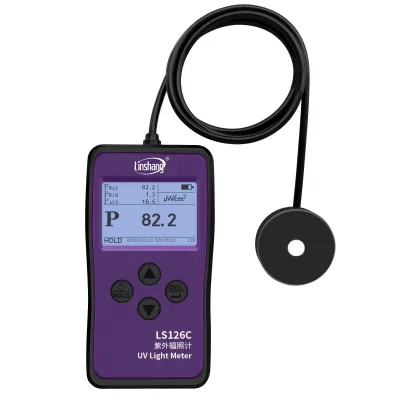
Procuring a Lab Testing UV Radiometer requires distinguishing between specific spectral bands, as the market offers distinct instruments for UVA, UVB, and UVC applications. Buyers must first identify whether their testing protocol demands a sensor with a peak response at 405nm for UVA365 applications or a 420nm peak for UVV420 scenarios. The available data indicates that models like the LS127C and LS126C offer Bluetooth transmission capabilities, which are critical for remote monitoring in large-scale laboratory environments where manual data logging is inefficient.
Selection also hinges on the required measuring range and resolution, as different experiments necessitate varying sensitivities. While some units provide a broad range up to 400 MW/Cm2, others are optimized for lower intensities with resolutions as fine as 0.1 µw/Cm2. Procurement teams should verify that the selected device matches the specific wavelength range of their light source, ensuring the detector covers the necessary spectrum, such as 370nm-470nm or 230nm-280nm, to avoid measurement errors that could compromise experimental integrity.
Product Scope and Observed Listing Signals
The current market listings for UV radiometers reveal a diverse product scope ranging from handheld meters to specialized sensors with integrated data logging. Observed listings indicate that manufacturers offer devices with varying display capabilities, including 3 3/4 LCD displays capable of maximum readings of 3999, which aids in reading precise values in low-light laboratory conditions. Buyers should note that some units feature four selectable measurement ranges, allowing for flexibility when testing samples with vastly different UV intensities without needing to switch instruments.
Commercial signals suggest that customization is widely available, enabling buyers to tailor devices for specific laboratory workflows. The presence of carrying cases and wooden packages in product descriptions highlights the need for robust protection during transport, a common requirement for sensitive optical equipment. Additionally, the availability of optional power value storage intervals, such as 1s, 10s, or 60s, indicates that modern instruments are designed to accommodate both rapid spot checks and long-term environmental monitoring studies.
Technical Specifications to Verify
When evaluating technical specifications, the detector wavelength range is the most critical parameter to validate against your laboratory's light source. Instruments like the UVV420 and UVA365 models specify distinct ranges, such as 370nm-470nm or 360nm-460nm, and buyers must ensure the sensor's spectral response aligns with the peak emission of the UV lamps being tested. A mismatch in these ranges can lead to significant inaccuracies, rendering the data useless for compliance or research purposes.
Accuracy and resolution specifications must also be scrutinized, as different models offer varying levels of precision. Some devices claim an accuracy of ±(8% R + 2dgts), while others specify ±10% or ±(8%Fs + 2dgt). Buyers should verify the resolution, which can range from 0.1 µw/Cm2 to broader increments, depending on the selected range. Confirming that the device can resolve the specific intensity levels required for your application is essential for maintaining the validity of your lab testing results.
Compliance and Safety Documentation
Compliance documentation is a non-negotiable aspect of sourcing laboratory equipment, particularly for instruments used in regulated environments. The observed product data confirms that many UV radiometers carry CE and ROHS certifications, indicating adherence to European safety and environmental standards. Procurement teams must request valid certification documents for every batch purchased to ensure that the devices meet the necessary regulatory requirements for operation within your facility.
Safety standards also extend to the physical construction and electrical specifications of the units. Some models are designed with specific power supply requirements, such as 10V~30V DC, and operating temperature ranges from -25°C to +60°C. Buyers should verify that the device's electrical safety features and environmental tolerances match the conditions of their laboratory. Ensuring that the equipment is certified under recognized standards like ISO or CE helps mitigate liability and ensures the instrument's reliability during critical testing procedures.
Cost Drivers and Commercial Terms
The cost of a UV radiometer is driven primarily by its technical complexity, including the quality of the detector, the precision of the electronics, and the inclusion of advanced features like Bluetooth connectivity. Devices with higher accuracy ratings, such as ±(8% R + 2dgts), or those offering multiple selectable ranges typically command higher prices than basic models. Buyers should expect a wide price variance, with observed listings ranging from $50 to $8000, reflecting the difference between simple sensors and comprehensive data-logging systems.
Commercial terms, including Minimum Order Quantity (MOQ) and packaging, also influence the total cost of ownership. The market shows an MOQ range of 1 to 5 units, offering flexibility for small labs or large procurement orders. Packaging varies from standard cartons to wooden boxes, which can impact shipping costs and the risk of damage during transit. Buyers should negotiate terms that account for these variables, ensuring that the final price includes necessary accessories like carrying cases and that the packaging is sufficient to protect the sensitive optical components.
Supplier Qualification and Quality Control
Supplier qualification requires a thorough review of their manufacturing capabilities and quality control processes. The product data indicates that many suppliers originate from China, and buyers should verify the supplier's ability to maintain consistent quality across batches. It is essential to confirm that the supplier adheres to the stated standards, such as CE and ROHS, and that they have a track record of delivering products that meet the specified accuracy and wavelength requirements.
Quality control checks should focus on the consistency of the detector's spectral response and the calibration of the measuring range. Buyers should request test reports or calibration certificates that demonstrate the device's performance against known standards. Additionally, verifying the warranty terms, which are typically one year, provides a safety net against manufacturing defects. Ensuring that the supplier offers reliable after-sales support is crucial for maintaining the long-term accuracy of the laboratory equipment.
Long-Term Procurement Checks
Long-term procurement success depends on establishing a relationship with suppliers who can provide consistent support and replacement parts. Buyers should verify the availability of spare detectors or calibration services, as the sensitivity of UV sensors can degrade over time. A reliable supplier will offer a clear path for recalibration or repair, ensuring that the laboratory's testing capabilities remain accurate and compliant with industry standards throughout the instrument's lifecycle.
Regular performance audits are also necessary to maintain the integrity of the data collected by these instruments. Buyers should implement a schedule for checking the accuracy of the radiometers against reference standards, especially if the devices are used in high-frequency testing environments. By maintaining a proactive approach to equipment management, laboratories can prevent data drift and ensure that their UV testing results remain valid and trustworthy for years to come.
FAQs
What is a Lab Testing UV Radiometer used for?
A Lab Testing UV Radiometer measures ultraviolet irradiance to verify lamp output, curing systems, sterilization equipment, and laboratory light sources. Listed instruments cover UVA, UVB, UVC, and visible-light bands, with models such as UVA365, UVV420, and LS125 offering selectable ranges. Buyers typically use them for quality control, calibration checks, and compliance testing where accurate UV power readings are required.
Which wavelength range should I choose for a UV radiometer?
Match the detector wavelength range to your light source. Listed options include 320–390 nm with peak around 365 nm for UVA, 360–460 nm peaking at 405 nm, 370–470 nm peaking at 420 nm, and 230–280 nm peaking at 254 nm for UVC germicidal lamps. Choosing the correct peak ensures measurement accuracy within the stated tolerance.
How accurate are the UV radiometers listed on this page?
Accuracy depends on the model. Listed specifications show ±(8% R + 2 digits) or ±(8% Fs + 2 dgt) for some units and ±10% measuring accuracy for others, with resolution down to 0.1 µW/cm². Always confirm the exact accuracy specification for your chosen model, since tolerances vary between radiometer types and measurement ranges.
What measuring ranges do these UV radiometers support?
Ranges vary by model. Some instruments offer four selectable ranges of 400 µW, 4000 µW, 40 mW, and 400 mW, while a UVC model measures 0–20000 µW/cm² and another covers 0–400 mW/cm². Multi-range designs let you measure weak laboratory lamps and high-power curing systems with one instrument, so review range options before ordering.
Can I get customization on a Lab Testing UV Radiometer order?
Yes, customization is listed as available for products on this page. Buyers can typically request adjustments to packaging, ranges, or accessories depending on the model, subject to supplier confirmation. Because requirements differ, contact the supplier with your target wavelength, range, and application details so they can confirm feasibility before you place a customized order.
What warranty and certifications come with these radiometers?
Listed products carry a one-year warranty, and CE certification is stated across the category, with some models also marked CE and ROHS and others ISO and CE. Certifications can differ by model, so verify the exact documents supplied with your order. Keep warranty terms and certification copies with your purchase records for laboratory audit purposes.
How is the radiometer packed and what minimum order applies?
Packing options listed include carrying case, carton, carton box, wooden box, and wooden package depending on the model, and observed minimum order quantities range from 1 to 5 units. Small MOQs make trial and evaluation orders practical for laboratories. Confirm the packing type and MOQ for your specific model with the supplier before checkout.