Source Automatic Industrial Sausage Stuffer for Commercial Kitchens
Find and compare 30 Automatic Industrial Sausage Stuffer models from verified Chinese manufacturers. Evaluate options ranging from 50W electric units to 1.5kw thermal processing machines, featuring stainless steel construction and adjustable quantitative ranges for efficient meat product preparation.
Key considerations
Products List


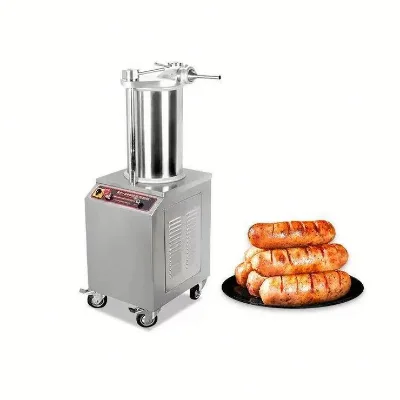


Sausage Automatic Pneumatic Stuffer Filling Machine Automatic Sausage Stuffer
$6000.00 - $22000.00
MOQ: 1 Pieces

High Speed Commercial Automatic Sausage Stuffer Ensures Meat Quality
$6000.00 - $10500.00
MOQ: 1 Pieces

Intelligent Control Commercial Pneumatic Quantitative Twisting Sausage Stuffer
$9000.00 - $13000.00
MOQ: 1 Pieces

Intelligent Commercial Sausage Stuffer for Large-Scale Meat Product Production
$8000.00 - $11000.00
MOQ: 1 Pieces

Automatic Sausage Stuffer/Industrial Sausage Filling Machine for Sale
$2200.00 - $4200.00
MOQ: 1 Pieces

TCA SUS304 Industrial Small Automatic Sausage Making Machine Automatic Sausage Stuffer
$3600.00 - $26000.00
MOQ: 1 Pieces

TCA CE Certified High Quality Industrial Electric Sausage Stuffer Sausage Making Machine Price
$3600.00 - $26000.00
MOQ: 1 Pieces


10L Industrial Sausage Making Machine Automatic Sausage Stuffer Electric Wfa7l
$118.00 - $128.00
MOQ: 100 Pieces

Industrial-Grade Sausage Stuffer Machine for Efficient Meat Processing Operations
$60.00 - $65.00
MOQ: 10 Pieces

Comprehensive Sourcing Guide
Automatic Industrial Sausage Stuffer Sourcing Guide
Procuring an Automatic Industrial Sausage Stuffer requires a careful balance between throughput capacity, product versatility, and operational efficiency. Buyers must navigate a market where machinery ranges from compact, manual-assist units to fully automated systems capable of high-volume production. The decision-making process hinges on understanding the specific mechanical requirements of your production line, including voltage compatibility, power consumption, and the physical footprint of the equipment. This guide provides evidence-based procurement strategies to help you select the right machinery while avoiding common pitfalls associated with mismatched specifications or inadequate supplier verification.
The following sections detail the critical evaluation criteria for sourcing these machines, focusing on technical verification, compliance documentation, cost analysis, and long-term operational reliability. By adhering to these structured procurement steps, buyers can ensure that the selected sausage stuffer aligns with their production goals, regulatory requirements, and budgetary constraints. The guidance below is derived from observed market data and standard industry practices for food processing equipment.
Product Scope and Observed Listing Signals
The market for automatic sausage stuffers exhibits a wide variance in product configurations, reflecting diverse production needs. Observed listings indicate a price range from approximately $60 to $26,000 USD, suggesting a spectrum from small-scale or semi-automatic units to large-scale industrial systems. This broad range necessitates a clear definition of your production volume and product type before engaging with suppliers. For instance, smaller units may be suitable for artisanal or low-volume production, while larger systems with higher hopper capacities and faster twisting speeds are required for mass production environments.
Key observed attributes highlight the importance of matching machine specifications to your specific operational requirements. For example, some models feature a twisting speed of 100 times per minute and a hopper capacity of 50 liters, indicating a focus on continuous, high-throughput operations. Other models may prioritize compactness and manual operation, with dimensions such as 310x310x650 mm and a weight of around 10.9 kg net. Buyers should carefully review these physical and operational parameters to ensure the machine fits their available floor space and meets their desired output rates.
Technical Specifications to Verify
Voltage and power requirements are critical technical factors that must be verified before purchase to ensure compatibility with your facility’s infrastructure. Observed data shows that machines may operate on either 220V or 380V power sources, with power ratings varying significantly from 50W to 1.5kW. Selecting the wrong voltage can lead to equipment failure or safety hazards, so buyers must confirm the electrical specifications of their site and match them accordingly. Additionally, the power source is typically electric, but the specific wattage will impact energy consumption and operational costs over time.
Mechanical specifications such as filling tube size, quantitative range, and automatic grade also play a crucial role in machine selection. The filling tube size is available in various diameters, including 10, 12, 14, 16, 19, 22, 25, 28, and 30 mm, allowing for versatility in sausage casing sizes. The quantitative range is often adjustable, typically spanning from 5g to 1000g, which provides flexibility in portion control. Buyers should verify whether the machine is fully automatic or requires manual intervention, as this affects labor requirements and production speed. Furthermore, the material of construction, often stainless steel, is essential for hygiene and durability in food processing environments.
Compliance and Safety Documentation
Certification and safety standards are non-negotiable aspects of sourcing food processing equipment. Buyers should request proof of relevant certifications, such as CCC or CE, which indicate compliance with regional safety and quality standards. These certifications ensure that the machine meets essential electrical and mechanical safety requirements, reducing the risk of accidents and ensuring regulatory compliance in your operating jurisdiction. Without proper certification, the machine may not be legally operable in certain markets, leading to potential fines or operational shutdowns.
Warranty and after-sales support are also critical components of the compliance and safety framework. A standard warranty period, such as one year, provides a safety net for initial operational issues and indicates the supplier’s confidence in their product. Buyers should verify the terms of the warranty, including what components are covered and the process for claiming repairs or replacements. Additionally, understanding the supplier’s support structure, including availability of spare parts and technical assistance, is vital for minimizing downtime and ensuring long-term operational reliability.
Cost Drivers and Commercial Terms
The total cost of ownership for an Automatic Industrial Sausage Stuffer extends beyond the initial purchase price. Factors such as packaging, shipping, and minimum order quantity (MOQ) significantly impact the overall cost. Observed MOQs range from 1 to 100 pieces, with some suppliers requiring bulk purchases of 10 or 50 units. Buyers should assess whether they can meet these MOQs or if they need to negotiate for smaller quantities, which may come at a higher per-unit cost. Additionally, packaging methods, such as wooden boxes or honeycomb boxes, affect shipping costs and protection during transit.
Dimensional and weight specifications also influence logistics costs. Machines with larger footprints, such as 1050x650x1500 mm, or heavier weights, such as 14 kg gross weight, will incur higher shipping and handling fees. Buyers should calculate the total landed cost, including freight, insurance, and customs duties, to accurately compare suppliers. Furthermore, the origin of the product, often China or specific regions like Zhejiang, can impact lead times and shipping reliability. Understanding these commercial terms helps in budgeting accurately and avoiding unexpected expenses.
Supplier Qualification and Quality Control
Supplier qualification is a critical step in ensuring the reliability and quality of the purchased equipment. Buyers should verify the supplier’s manufacturing capabilities, including their production facilities and quality control processes. Observations indicate that products are often described as "New" and made from stainless steel, which are positive indicators of quality. However, buyers should request detailed information about the manufacturing process, such as thermal processing, to ensure that the materials and construction meet industry standards for durability and hygiene.
Customization options are another important factor in supplier evaluation. Many suppliers offer customization services, allowing buyers to tailor the machine to their specific needs. This could include adjustments to the filling tube size, quantitative range, or overall dimensions. Buyers should assess the supplier’s flexibility and willingness to accommodate custom requests, as this can significantly enhance the machine’s suitability for their production line. Additionally, verifying the supplier’s reputation and track record through customer reviews or references can provide valuable insights into their reliability and service quality.
Long-Term Procurement Checks
Long-term procurement success depends on establishing a robust relationship with the supplier and implementing ongoing quality checks. Buyers should develop a maintenance schedule and ensure that spare parts are readily available to minimize downtime. The availability of replacement components, such as filling tubes and quantitative adjustment mechanisms, is crucial for sustaining operations. Buyers should also verify the supplier’s commitment to providing technical support and training, which can help in optimizing machine performance and extending its lifespan.
Regular audits and performance evaluations are essential for maintaining high standards of production. Buyers should monitor the machine’s performance over time, tracking metrics such as throughput, accuracy, and maintenance frequency. Any deviations from expected performance should be addressed promptly with the supplier to prevent further issues. Additionally, staying informed about industry advancements and technological improvements can help buyers make informed decisions about future upgrades or replacements. By proactively managing these aspects, buyers can ensure that their investment in an Automatic Industrial Sausage Stuffer continues to deliver value over the long term.
FAQs
What is the typical power consumption for automatic sausage stuffers?
Power requirements vary by model, with some units operating at 50W while others use 1.5kw. Most machines support 220V or 380V electric power sources. Buyers should verify the specific voltage and wattage for their intended production volume and electrical infrastructure compatibility before purchase.
Can automatic sausage stuffers be customized for specific needs?
Yes, customization is available for many automatic industrial sausage stuffers. Manufacturers offer tailored solutions to meet unique production requirements. Buyers can often specify dimensions, capacity, or functional adjustments to ensure the equipment integrates seamlessly into their existing processing lines and workflow.
What materials are used in constructing these sausage stuffing machines?
Stainless steel is the primary material used for construction, ensuring durability and hygiene. This material choice supports food safety standards and simplifies cleaning processes. The robust build quality helps maintain performance over time, making it suitable for continuous industrial sausage making operations.
What is the quantitative filling range for these automatic machines?
The quantitative range is typically adjustable from 5 to 1000g. This flexibility allows for precise portion control across various sausage sizes. Buyers can adjust settings to match specific product requirements, ensuring consistent weight distribution and reducing material waste during the stuffing process.
How many filling tubes are included with the standard equipment?
Regularly, three pieces of filling tubes are included with the machine. These tubes come in various sizes, such as 10, 12, 14, 16, 19, 22, 25, 28, and 30mm. This variety accommodates different casing diameters, providing versatility for diverse sausage production needs.
What certifications are commonly associated with these industrial sausage stuffers?
Common certifications include CCC and Ce, indicating compliance with specific safety and quality standards. These certifications assure buyers of the machine's adherence to regulatory requirements. Verifying these credentials is essential for ensuring the equipment meets local legal standards for industrial food processing machinery.