Source Automatic Loop Egg Washing Machine for Snack Factories
Find 30 automatic loop egg washing machines for snack food factories, bakeries, and beverage plants. Compare specs including capacity, power, and certification to select the right equipment for your production line.
Key considerations
Products List
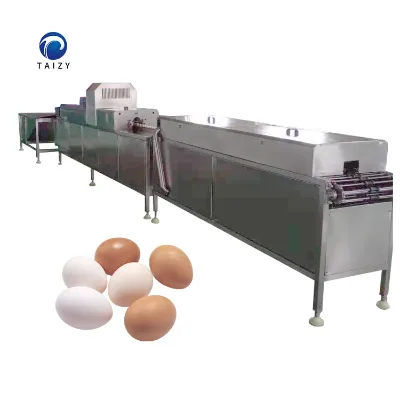


Double Row Egg Cleaner and Dryer Machine / Chicken Egg Washing Machine
$7635.00 - $9165.00
MOQ: 1 Sets

Industrial Egg Washing and Drying Machine / Egg Breaking Separator Machine
$8440.00 - $10130.00
MOQ: 1 Sets


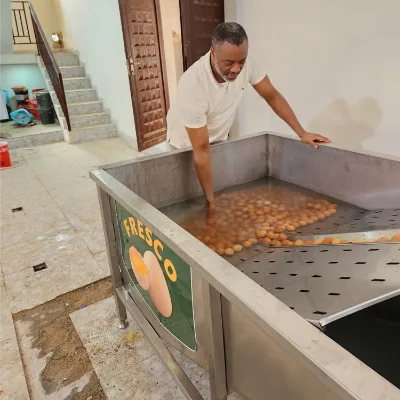
Duck Egg Washing Machine Egg Cleaner and Washing Machine Egg Cleaner Machine
$2099.00 - $2299.00
MOQ: 1 pieces


Stainless Steel Egg Cleaning and Drying Machine / Egg Washing Machine Price
$4289.00 - $5589.00
MOQ: 1 Sets

Labor Saving Washer / Washing Machine / Egg Washing Equipment / Egg Washer
$289.00 - $439.00
MOQ: 1 Sets


Comprehensive Sourcing Guide
Strategic Sourcing Guide for Automatic Loop Egg Washing Machines
Understanding Core Technical Specifications and Operational Capacity
When evaluating an Automatic Loop Egg Washing Machine, the primary objective is to align the equipment's mechanical capabilities with the specific throughput requirements of your production line. The market presents a diverse range of configurations, from semi-automatic units designed for smaller batches to fully automatic systems engineered for high-volume industrial processing. A critical observation in the current supply landscape is the variance in capacity ratings. Buyers must carefully distinguish between machines rated for 2,000 pieces per hour and those capable of handling up to 10,000 pieces per hour. This distinction often dictates the physical footprint and the complexity of the installation required.
The mechanical architecture of these machines typically relies on a gear-driven system as a core component. This ensures consistent movement of eggs through the washing, candling, and sorting stages. The processing workflow generally integrates washing and candling into a single continuous loop, which is essential for maintaining hygiene standards while maximizing efficiency. The material composition is a non-negotiable factor for food safety; the majority of reliable units in this category are constructed from Stainless Steel, with specific high-grade options like Stainless Steel 304 being available for applications requiring superior corrosion resistance.
Dimensions and physical constraints vary significantly based on the model and row configuration. Single-row units may occupy a footprint of approximately 6,000mm by 1,200mm by 1,500mm, whereas double-row configurations designed for higher throughput can extend to lengths of 8,500mm with similar height and width parameters. Buyers should verify the specific "prod_standard" dimensions against their facility's layout before ordering, as the physical space required for the machine, including maintenance access, is substantial. The weight of these units also ranges widely, from lighter models around 57kg to heavy-duty industrial units exceeding 1,300kg, necessitating appropriate floor reinforcement and logistics planning for delivery.
Compliance, Certification, and Regulatory Standards
In the food and beverage industry, regulatory compliance is paramount. When sourcing an Automatic Loop Egg Washing Machine, verifying that the equipment meets international safety and quality standards is a critical step. The presence of CE certification is a common indicator that the machinery adheres to European health, safety, and environmental protection standards. However, buyers must not assume that all listed products possess this certification without explicit verification from the supplier.
Beyond the CE mark, the machinery test report is a vital document that provides evidence of the machine's performance and safety under operational conditions. A high-confidence fact in the current market is that many suppliers provide these test reports, which should be reviewed to ensure the machine's electrical systems, mechanical safety guards, and hygiene protocols meet your local regulatory requirements. The warranty period is another key compliance indicator; a standard offering of one year suggests a baseline level of manufacturer confidence in the product's durability, though this should be clearly defined in the purchase agreement.
Electrical standards also vary by region. While some units are designed for 220V/380V 3-phase power supplies, others may operate on different voltage frequencies. It is essential to confirm that the machine's power source and frequency (e.g., 1400r/min motor speed) match the electrical infrastructure of your facility to avoid costly retrofits or operational failures. The power consumption of these machines can range from 0.75kw for smaller units to 20kw for large-scale double-row systems, impacting both the initial electrical setup and long-term operational costs.
Cost Drivers and Pricing Structure Analysis
The pricing of automatic loop egg washing machines is influenced by a complex interplay of factors, including capacity, automation level, material quality, and customization options. The observed price range in the market spans from $250 to $30,000, reflecting the vast difference between entry-level semi-automatic units and high-end fully automatic systems. This wide variance requires buyers to look beyond the sticker price and evaluate the total cost of ownership.
Material quality is a primary cost driver. Machines constructed from standard stainless steel will generally be more affordable than those utilizing Stainless Steel 304, which offers enhanced durability and resistance to harsh cleaning chemicals. Similarly, the automation grade significantly impacts cost. Fully automatic units with features like "High Efficiency and Easy Operation" command a premium over semi-automatic models. The inclusion of advanced features such as integrated candling, sorting, and packaging capabilities further increases the price point.
Customization is another significant factor. Many suppliers offer available customization options, allowing buyers to tailor the machine to specific egg sizes, production line layouts, or branding requirements. While this adds value, it also introduces variability in pricing and lead time. Buyers should also consider the packaging requirements; units shipped in fumigation-free wooden cases may incur additional costs compared to standard packaging, but they are often necessary for international shipping compliance.
Typical Applications and Industry Fit
The application fields for automatic loop egg washing machines are primarily concentrated in the food processing sector, specifically within snack food factories and bakeries. These facilities require high levels of hygiene and consistency in their raw material preparation. The machine's ability to wash and candle eggs simultaneously makes it an ideal solution for these environments, where egg quality directly impacts the final product's safety and appearance.
The "Applicable Industries" for these machines extend beyond just bakeries to include general food and beverage factories that utilize eggs as a primary ingredient. The high efficiency of these machines ensures that they can keep pace with the rapid production rates of modern industrial facilities. For instance, a facility producing snack foods that require pre-washed and candled eggs can benefit significantly from the 5,000 to 7,000 pieces per hour capacity of mid-range units.
Furthermore, the versatility of these machines allows them to be adapted for various egg types, including chicken, duck, and other poultry eggs. The "Suitable for: Eggs.etc" attribute indicates that the design is robust enough to handle different egg sizes and shell qualities without compromising the washing or candling process. This adaptability makes the equipment a valuable asset for facilities that may expand their product lines or source eggs from different suppliers.
Supplier Evaluation and Quality Assurance Protocols
Selecting the right supplier is as critical as selecting the right machine. Buyers should prioritize suppliers who provide comprehensive documentation, including machinery test reports and clear warranty terms. The "Condition: New" status is a standard expectation, but buyers must verify that the machine is genuinely new and not refurbished or reconditioned. The "Place of Origin" is another factor to consider; many high-volume units originate from China, with specific regions like Henan (Mainland) being notable hubs for this type of manufacturing.
Quality assurance should be a continuous process throughout the procurement cycle. Buyers should request detailed specifications regarding the "Automatic Grade" of the machine, ensuring it matches their operational needs. Whether the machine is semi-automatic or fully automatic, the "Process" should be described as "Mild Processing" to prevent damage to the eggshells during the washing and candling stages. The "Advantage" of high efficiency and easy operation should be validated through case studies or references from existing clients.
When evaluating suppliers, buyers should also consider the "Customization" capabilities. A supplier that offers flexible customization options is better equipped to meet the unique requirements of different production lines. Additionally, the "Selling Units" structure, typically listed as a single item, simplifies the procurement process, but buyers must ensure that all necessary accessories and spare parts are included in the initial order.
Long-Term Procurement Considerations and Maintenance
Long-term success with an Automatic Loop Egg Washing Machine depends on effective maintenance and support. The "Warranty: 1 Year" is a standard baseline, but buyers should inquire about the availability of extended warranty options and the cost of post-warranty support. The "Power Source" and "Frequency" of the machine should be monitored regularly to ensure optimal performance and energy efficiency.
The "Weight" and "Dimension" of the machine are not just initial concerns but also impact long-term maintenance. Heavy units, such as those weighing 1,300kg, require robust flooring and may need specialized equipment for maintenance tasks. The "Single package size" and "prod_packing" details are crucial for planning the logistics of installation and future disassembly if the facility layout changes.
Buyers should also consider the "Capacity" of the machine in the context of future growth. While a 5,000 pieces per hour unit may suffice for current needs, a facility planning to expand should consider a machine with a higher capacity, such as the 10,000 pieces per hour model, to avoid premature replacement. The "Row" configuration, whether single or double, also plays a role in scalability, as double-row units offer higher throughput but require more space and potentially higher energy consumption.
Comparative Analysis of Machine Configurations
To assist in decision-making, the following table compares key specifications of different machine configurations found in the market. This comparison highlights the trade-offs between capacity, power, and physical dimensions.
| Feature | Model HT-XD12 | Model HT-JQ1R | Model HT-JQ2R |
|---|---|---|---|
| Capacity | 2,000 pcs/h | 5,000 pcs/h | 10,000 pcs/h |
| Power | 0.75 kw | 2.1 kw | 20 kw |
| Weight | 57 kg | 600 kg | 1,300 kg |
| Row Configuration | Not Specified | Single Row | Double Row |
| Dimensions (LWH) | 1,200400600 mm | 5,7001,3001,400 mm | 8,5001,3001,450 mm |
| Voltage | Not Specified | 220v/380v 3 Phase | 220v/380v 3 Phase |
| Material | Stainless Steel | Stainless Steel | Stainless Steel 304 |
| MOQ | 1 SET | 1 SET | 1 SET |
This comparison illustrates that while the entry-level model offers a compact and energy-efficient solution, the larger models provide significantly higher throughput at the cost of increased power consumption and physical footprint. Buyers must balance these factors against their specific production goals and facility constraints.
Final Procurement Recommendations
In conclusion, sourcing an Automatic Loop Egg Washing Machine requires a meticulous approach that balances technical specifications, compliance requirements, and cost considerations. Buyers should prioritize machines that offer a clear path to high efficiency and easy operation, supported by robust certifications and comprehensive test reports. The decision should be guided by a thorough understanding of the facility's current and future capacity needs, ensuring that the selected machine can scale with the business.
By carefully evaluating the supplier's reputation, the machine's material quality, and the long-term maintenance requirements, buyers can secure a reliable asset that enhances their production line's hygiene and efficiency. The wide range of available options, from semi-automatic to fully automatic systems, provides flexibility for various industry applications, making it possible to find a solution that perfectly matches the unique demands of each food and beverage factory.
FAQs
What is the capacity range for automatic loop egg washing machines?
Capacity ranges from 2,000 to 10,000 pieces per hour depending on the model. Single-row units typically handle 5,000 pieces, while double-row systems can reach 10,000 pieces per hour for high-volume production lines.
Which certifications are available for these washing machines?
Many units come with CE certification to meet European safety standards. Buyers should verify specific machinery test reports to ensure compliance with local regulations before purchasing.
Can the machine be customized for specific production needs?
Yes, customization is available for various egg sizes and line layouts. Suppliers offer tailored solutions including specific dimensions and automation grades to fit unique facility requirements.
What is the typical warranty period for this equipment?
The standard warranty period is one year for most new machines. This covers manufacturing defects and ensures a baseline level of manufacturer confidence in the product's durability.
How much does an Automatic Loop Egg Washing Machine cost?
Prices range from 250 to 30,000 USD based on capacity and features. Entry-level semi-automatic units are cheaper, while fully automatic high-capacity systems command higher prices.
What material is used to construct these washing machines?
Machines are primarily constructed from stainless steel for food safety. Some high-grade models specifically utilize Stainless Steel 304 for superior corrosion resistance in harsh cleaning environments.