Source Automatic Lotion Tube Filling Machine for Drinks, Dairy, and Cosmetics
Compare 30 automatic lotion tube filling machines from verified Chinese manufacturers. These units support filling ranges from 3 to 250ml with speeds up to 80 pieces per minute for drinks, dairy products, and cosmetics.
Key considerations
Products List

Automatic Plastic Tube Filling Machine Laminated Tube Filling Machine
$12000.00 - $16000.00
MOQ: 1 Sets


Automatic Tube Filling Machine Sealing for Cosmetic Cream Toothpaste
$15000.00 - $18000.00
MOQ: 1 Sets

Cream/Lotion Plastic Tube Automatic Filling and Sealing Machine Packing Tube Filler
$18850.00 - $22567.00
MOQ: 1 Pieces


Aluminium Tube Filling Machine for Ointment Cosmetics Lotion Cream
$30000.00 - $32000.00
MOQ: 1 Pieces


Tube Packaging Filling Sealing Machine Filler and Sealer for Lotion Tube
$30000.00 - $32000.00
MOQ: 1 Pieces


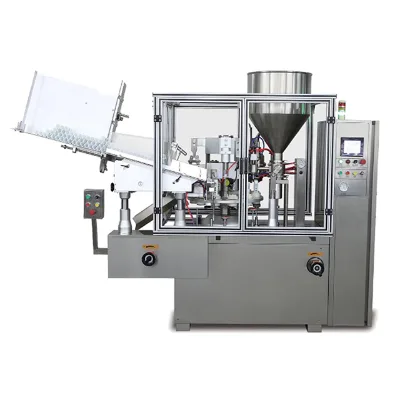


Comprehensive Sourcing Guide
Strategic Sourcing Guide for Automatic Lotion Tube Filling Machines
Understanding Core Technical Specifications and Variants
When sourcing an Automatic Lotion Tube Filling Machine, buyers must first distinguish between the specific mechanical architectures available in the current market. The product landscape reveals distinct configurations tailored to different production volumes and tube dimensions. One prevalent configuration is the rotary structure, often identified by model designations such as JN-60A. This variant typically features a single-head filling valve and utilizes a capacity cup dosing device. The filling principle for this rotary system relies on pressure mechanisms, operating at a speed range of 30 to 50 pieces per minute. The physical dimensions for this specific setup are standardized at 100012001800mm, with a tube length capacity ranging from 50 to 210mm and a tube diameter between 13 and 50mm. The filling range for this rotary unit is observed between 3 and 250ml, making it suitable for a broad spectrum of small to medium batch operations.
In contrast, linear structures offer a different operational profile, often associated with multi-head filling valves and multi-room feeding systems. Models such as the NF-80 or FM-TP-45A represent this category. These machines are designed for higher throughput, with observed maximum speeds reaching 80 pieces per minute. The linear configuration often employs a plunger dosing device and utilizes a chute pneumatic combination lifting structure for the packaging container. The physical footprint for these linear units is larger, with standard dimensions observed around 220012002080mm or 20-60pcs/min depending on the specific sub-model. The filling range for these linear systems is typically cited between 5 and 250ml. Buyers must carefully evaluate whether the rotary or linear architecture better suits their facility layout and production speed requirements.
A critical technical distinction lies in the material type and packaging container compatibility. While some units are explicitly configured for paste materials, others are optimized for liquid applications. The packaging material compatibility varies, with some machines designed for plastic tubes and others capable of handling composite materials. The voltage requirements are also a vital specification, with certain high-capacity units requiring a 3-phase power supply and a power rating of approximately 7kw. Understanding these technical divergences is essential before initiating the procurement process, as the wrong machine architecture can lead to significant operational bottlenecks.
Compliance, Certification, and Safety Standards
In the realm of industrial machinery, compliance and certification are paramount, yet specific certification statuses for individual listings must be verified directly with the supplier rather than assumed. The provided data indicates that the machines are manufactured in China, with origins noted in regions such as Zhejinang and Zhengzhou City. While the machines are described as meeting specific standard dimensions, buyers must verify that the electrical and mechanical components comply with the safety regulations of their destination country. For instance, the 3-phase voltage requirement necessitates that the factory's electrical infrastructure is compatible with the machine's power needs.
Regarding material safety, the construction of the machine is a key compliance factor. High-quality units often utilize SUS304 stainless steel as the main material, which is crucial for industries handling food, dairy, or cosmetic products where hygiene is non-negotiable. Buyers should request material certificates to confirm the grade of steel used in the contact parts of the machine. Furthermore, the control systems, often based on PLC (Programmable Logic Controller) technology, must adhere to relevant electromagnetic compatibility standards. While the product descriptions mention "New" condition and specific warranty periods, such as 12 months, these are commercial terms rather than regulatory certifications.
Buyers should also investigate the "After Sale Service" provisions, specifically the availability of engineers to service overseas. This is a critical compliance and operational safeguard. If a machine fails to meet local safety standards or requires calibration, the ability to have certified personnel on-site is vital. The absence of a specific certification label in the general description does not imply non-compliance, but it does place the burden of verification on the buyer. It is recommended to ask for a full list of CE, UL, or other regional safety certifications relevant to the machine's electrical and mechanical systems before finalizing the purchase.
Cost Drivers and Pricing Structure Analysis
The pricing for automatic lotion tube filling machines is influenced by a complex array of factors, resulting in a significant observed range in the market. The current data indicates a price spread from 3,500 to 86,000 USD. This wide variance is not arbitrary but is driven by the machine's structural complexity, speed capabilities, and material composition. The lower end of the price spectrum likely corresponds to simpler rotary models with single-head configurations and lower speed outputs, such as the 30-50 PCS/Min range. These units may have smaller footprints and fewer advanced automation features.
Conversely, the higher price points are associated with linear, multi-head systems capable of speeds up to 80 PCS/Min. These machines often feature more sophisticated PLC control systems, larger power requirements (e.g., 7kw), and more robust construction materials like SUS304 stainless steel. The cost is also driven by the customization options available. Since customization is listed as an available attribute, buyers who require specific modifications to the tube length, diameter, or filling range will incur additional costs. The standard models offer a baseline price, but any deviation from the standard specifications, such as custom tube dimensions or specialized dosing devices, will increase the final cost.
Another significant cost driver is the packaging and shipping logistics. The machines are typically packed in export wooden cases or wood boxes to ensure safe transit. The physical dimensions of the machines, ranging from roughly 1000mm to 2200mm in length, directly impact shipping volume and freight costs. Buyers should factor in the total landed cost, which includes the base machine price, customization fees, export packaging, and international freight. The minimum order quantity (MOQ) is observed to be low, ranging from 1 to 10 units, which allows for flexible procurement strategies but does not necessarily guarantee bulk discounts at the lower end of the price range.
Typical Applications and Material Compatibility
The versatility of automatic lotion tube filling machines makes them suitable for a diverse range of industries. The observed application list includes drinks, dairy products, hair care products, skin care products, cosmetics, oil, cleaning agents, and detergents. This broad applicability stems from the machine's ability to handle both paste and liquid material types. For the cosmetics and personal care sectors, the precision of the filling range (3-250ml) is critical for maintaining product consistency and minimizing waste. The ability to fill tubes of varying lengths (50-210mm) and diameters (13-50mm) allows manufacturers to produce different SKUs on the same line without extensive retooling.
In the food and beverage sector, the use of SUS304 stainless steel in the construction of contact parts is a primary requirement to ensure hygiene and prevent contamination. The pressure filling principle and the use of capacity cup or plunger dosing devices ensure accurate volume delivery, which is essential for regulatory compliance in food production. For the cleaning and detergent industries, the machines' ability to handle corrosive or viscous liquids is a key consideration. The choice between a rotary and linear structure may depend on the viscosity of the product; thicker pastes might require the specific mechanical advantages of a plunger system, while liquids might flow more efficiently through a capacity cup system.
Buyers must also consider the packaging material compatibility. While some machines are optimized for plastic tubes, others are designed for composite materials. This distinction is vital for brands that require specific barrier properties or aesthetic finishes for their packaging. The machine's ability to handle different packaging materials without compromising the seal integrity is a critical performance metric. The pneumatic lifting structures, whether single-room or chute pneumatic combination, must be compatible with the weight and rigidity of the chosen packaging to prevent damage during the filling and sealing process.
Supplier Evaluation and Operational Reliability
Evaluating a supplier for automatic lotion tube filling machines requires a focus on technical support, warranty terms, and the authenticity of the origin. The data indicates that suppliers are located in China, specifically in Zhejinang and Zhengzhou City. While these regions are known for manufacturing hubs, buyers should verify the specific factory capabilities and history. A key differentiator among suppliers is the "After Sale Service" provision. The availability of engineers to service overseas is a strong indicator of a supplier's commitment to long-term support. Buyers should inquire about the response time for service requests and the availability of spare parts.
The warranty period is another critical factor in supplier evaluation. A standard warranty of 12 months is observed in the market, but buyers should clarify what this warranty covers, including labor, parts, and shipping costs for repairs. The condition of the machines is listed as "New," but buyers should request evidence of the manufacturing date and any pre-shipment testing to ensure the machine is not a refurbished unit sold as new. The control system, often PLC-based, should be user-friendly and allow for easy programming of different filling parameters.
Suppliers that offer customization services demonstrate a higher level of technical capability. Buyers should assess the supplier's ability to adapt the machine to specific tube dimensions or filling ranges. The ability to modify the feed cylinder structure, such as switching between single-room and multi-room feeding, is a sign of a flexible manufacturing partner. Additionally, the packaging method, whether export wooden case or wood box, should be evaluated for its ability to protect the machine during transit. A supplier that invests in high-quality packaging is more likely to deliver a machine in pristine condition.
Quality Control and Long-Term Procurement Considerations
Implementing a robust quality control (QC) protocol is essential for ensuring the longevity and performance of the Automatic Lotion Tube Filling Machine. Before shipment, buyers should request detailed test results or video demonstrations of the machine running at its maximum speed. The observed speed ranges, from 30 to 80 PCS/Min, should be validated under actual load conditions to ensure the machine can maintain consistent performance. The filling accuracy, particularly for the 3-250ml range, must be verified to prevent overfilling or underfilling, which can lead to significant financial losses.
Long-term procurement considerations extend beyond the initial purchase price. Buyers should evaluate the availability of spare parts and the cost of maintenance. Machines with complex PLC systems and pneumatic components may require specialized parts that are not readily available in all regions. A supplier that maintains a stock of critical spare parts or has a local distributor network is preferable. The 12-month warranty should be viewed as a baseline, and buyers should consider purchasing extended warranty packages or service contracts to mitigate long-term risks.
Furthermore, the adaptability of the machine to future production needs is a crucial factor. As product lines evolve, the machine may need to handle different tube sizes or materials. The customization options available at the time of purchase can significantly impact the machine's future utility. Buyers should also consider the energy efficiency of the machine, particularly for units with 7kw power ratings. Optimizing energy consumption can lead to significant cost savings over the machine's lifespan. Finally, the training provided by the supplier for operators and maintenance staff is vital for maximizing the machine's efficiency and minimizing downtime. A comprehensive training program ensures that the machine is operated correctly and maintained according to the manufacturer's specifications.
Comparison of Key Machine Configurations
To assist buyers in making an informed decision, the following table compares the key specifications of the observed machine configurations. This comparison highlights the differences in structure, speed, and material handling capabilities.
| Feature | Rotary Configuration (e.g., JN-60A) | Linear Configuration (e.g., NF-80, FM-TP-45A) |
|---|---|---|
| Structure Type | Rotary | Linear |
| Filling Valve Head | Single-Head | Multi-Head |
| Feed Cylinder | Single-Room Feeding | Multi-Room Feeding |
| Dosing Device | Capacity Cup | Plunger |
| Speed Range | 30-50 PCS/Min | Up to 80 PCS/Min |
| Filling Range | 3-250ml | 5-250ml |
| Tube Length | 50-210mm | Variable (Check specific model) |
| Tube Diameter | 13-50mm | Variable (Check specific model) |
| Container Lifting | Pneumatic Lifting | Chute Pneumatic Combination |
| Material Type | Paste | Liquid |
| Packaging Material | Plastic | Composite Materials |
| Standard Dimensions | 100012001800mm | 220012002080mm |
| Power Requirement | Not Specified (Likely Lower) | 7kw (3-phase) |
This comparison underscores the importance of matching the machine's technical specifications to the buyer's specific production requirements. The rotary configuration offers a compact solution for moderate speeds, while the linear configuration provides higher throughput and flexibility for larger-scale operations. Buyers should use this data as a starting point for further technical discussions with potential suppliers.
FAQs
What is the filling range for these automatic machines?
The filling range typically spans from 3 to 250ml depending on the specific model configuration. Some units offer a slightly adjusted range of 5 to 250ml to accommodate different product viscosities and tube sizes.
Can these machines handle both paste and liquid materials?
Yes, the machines are designed to process both paste and liquid material types effectively. This versatility allows them to serve diverse industries including cosmetics, dairy, and cleaning products without requiring major hardware changes.
Which structure type offers higher production speed?
Linear structure machines generally offer higher production speeds, reaching up to 80 pieces per minute. In contrast, rotary structure models typically operate at a slower pace of 30 to 50 pieces per minute.
How is the machine powered and what voltage is required?
The machines are driven by electric power and often require a 3-phase voltage supply. High-capacity units may need a power rating of approximately 7kw to ensure consistent operation during filling cycles.
What customization options are available for tube dimensions?
Customization is available for tube length and diameter to fit specific production needs. Buyers can adjust the machine to handle tube lengths from 50 to 210mm and diameters ranging from 13 to 50mm.
Which suppliers provide engineers for overseas service?
Many suppliers offer after-sale service that includes engineers available to service overseas. This support ensures that technical issues can be resolved quickly regardless of the buyer's geographic location.
What is the standard warranty period for these machines?
The standard warranty period observed for these machines is 12 months. This coverage typically includes parts and labor, ensuring protection against manufacturing defects during the initial year of operation.