Source Backpack Brush Cutter for Grassland, Farm, and Garden
Explore 30 verified Backpack Brush Cutter options from Chongqing manufacturers. Buyers can compare engine types, cutting widths, and certifications like CE to find suitable models for grassland and farm maintenance tasks.
Key considerations
Products List
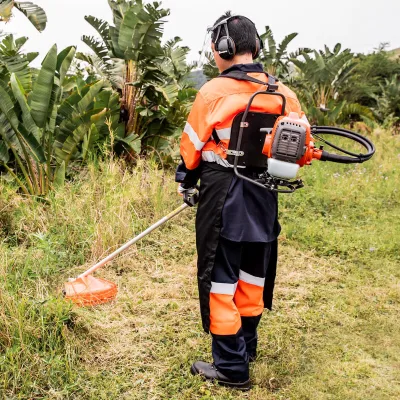


Backpack Shoulder 2 Stroke 4 Stroke Mutifuctional Blade Petrol Brush Cutter
$32.00 - $200.00
MOQ: 100 Pieces

Garden Tools 2 Stroke 52cc Gasoline Backpack Brush Cutter Grass Cutter
$37.60 - $42.70
MOQ: 200 Pieces


Comprehensive Sourcing Guide
Strategic Sourcing Guide for Backpack Brush Cutters
Understanding Technical Specifications and Performance Metrics
When sourcing backpack brush cutters, buyers must first establish a clear understanding of the technical parameters that define machine capability and suitability for specific tasks. The core of this equipment lies in its engine configuration and power delivery system. Based on observed market data, these units frequently utilize either two-stroke or four-stroke gasoline engines. The displacement of the engine is a critical determinant of cutting power, with observed models ranging from 30.5cc to 51.7cc. A 30.5cc engine typically delivers approximately 0.81kW of power at 6000 revolutions per minute, while larger displacement units, such as those around 52cc, can reach up to 1.4kW at 6500 revolutions per minute.
The drive type is another essential specification to verify. The majority of high-productivity units in this category operate on a remote walking drive system, which allows the operator to walk freely while the cutting head is suspended from the backpack harness. This configuration is distinct from push mowers and is designed for rough terrain. The cutting width is a primary factor in determining productivity; observed specifications indicate a cutting width of approximately 415mm for standard models. The shape of the shaft is typically straight, facilitating easier maneuvering in dense vegetation compared to curved shafts.
Material selection for the handle and shaft components also impacts durability. Aluminum is a commonly observed material for the handle, offering a balance between weight reduction and structural integrity. The overall weight of the unit is a significant ergonomic consideration; while the single gross weight of the package may be listed around 9kg, the operational weight of the machine itself can be significantly higher, with some observed data points indicating a total weight of up to 40kg, which likely includes the engine and fuel tank in a specific configuration. Buyers should verify the actual operational weight against the packaging weight to ensure the machine is manageable for the intended workforce.
| Specification Category | Observed Range / Common Value | Verification Requirement |
|---|---|---|
| Engine Type | 2-Stroke or 4-Stroke | Confirm stroke type for maintenance needs |
| Displacement | 30.5cc to 51.7cc | Match displacement to vegetation density |
| Engine Power | 0.81kW to 1.4kW | Verify RPM and power output consistency |
| Cutting Width | ~415mm | Confirm effective cutting swath |
| Drive Type | Remote Walking | Ensure compatibility with operator movement |
| Shaft Shape | Straight | Assess maneuverability requirements |
| Handle Material | Aluminum | Check for corrosion resistance and strength |
Compliance, Certification, and Regulatory Standards
Navigating the regulatory landscape is a non-negotiable aspect of sourcing industrial machinery. For backpack brush cutters intended for international markets, specific certifications serve as proof of compliance with safety and environmental standards. The observed market data highlights several key certifications, including CE, GS, and EMC. The CE marking indicates conformity with health, safety, and environmental protection standards for products sold within the European Economic Area. The GS mark (Geprüfte Sicherheit) is a German safety certification that is often recognized globally as a rigorous standard for product safety. Additionally, EMC (Electromagnetic Compatibility) certification ensures that the machine does not emit excessive electromagnetic interference that could affect other electronic devices.
Buyers must verify that the supplier provides a machinery test report. This document is crucial as it validates that the product has undergone specific testing procedures to ensure it meets the claimed standards. The presence of a test report suggests that the manufacturer has subjected the engine, cutting head, and structural components to stress tests. Furthermore, the standard power ratings and engine specifications listed in the product data should align with the claims made in the certification documents. For instance, if a model is advertised as a "CE GS Approved Gasoline Backpack Brush Cutter," the documentation must explicitly reference these approvals.
It is important to note that while certifications like CE and GS are observed in the data, the specific standards applied can vary by region. Buyers should not assume that a single certification covers all target markets. For example, the US market may require different safety standards, such as those from OSHA or ANSI, which are not explicitly mentioned in the provided data. Therefore, the procurement strategy must include a request for a full compliance dossier that details the specific standards met for the intended destination country. The absence of a machinery test report or a clear link between the product model and the certification number should be treated as a red flag, indicating potential non-compliance or counterfeit documentation.
Cost Drivers and Pricing Structure Analysis
The pricing of backpack brush cutters is influenced by a complex interplay of factors, including engine displacement, material quality, and the level of customization. The observed price range in the market spans from $0.50 to $200.00 USD. This wide variance suggests that the lower end of the spectrum may represent entry-level components, accessories, or heavily discounted promotional items, while the upper end likely reflects fully assembled, high-specification units with premium features. Buyers should be cautious of prices that seem disproportionately low, as they may indicate compromised quality or the sale of parts rather than complete machines.
A significant cost driver is the engine type and displacement. Units with 4-stroke engines often command a higher price than 2-stroke equivalents due to their fuel efficiency and lower emissions, although the latter are traditionally cheaper to manufacture. The inclusion of a float-type carburetor, as observed in the data, is a standard feature that affects the internal cost structure. Additionally, the finishing process plays a role; products noted as "Not Coated" may have a lower initial cost but could incur higher long-term maintenance expenses due to corrosion. Conversely, customized finishes or colors, which are listed as available options, will increase the unit price.
The Minimum Order Quantity (MOQ) is another critical factor in the total cost of ownership. The observed MOQ range is between 1 and 1000 units. Purchasing at the lower end of this range allows for flexibility and lower capital expenditure but results in a higher per-unit cost. Conversely, ordering at the higher end of the MOQ range can significantly reduce the per-unit price, making it a viable strategy for large-scale agricultural or landscaping operations. Buyers must also consider the packaging costs, as the product is typically shipped in a carton box or color box. Customized packaging, while adding to the initial cost, can be a valuable investment for branding and logistics efficiency.
Typical Applications and Operational Environments
Backpack brush cutters are designed for versatility, making them suitable for a wide array of applications beyond simple lawn maintenance. The primary application identified in the data is grass cutting, specifically in grassland environments. These machines are particularly effective in areas where traditional mowers cannot operate, such as steep slopes, dense thickets, or uneven terrain. The "Multi Function" attribute observed in the product data suggests that these units can be adapted for various tasks, including clearing weeds, trimming hedges, and managing overgrown vegetation in agricultural settings.
The "Remote Walking" drive type and the backpack configuration make these machines ideal for operators who need to cover large areas efficiently. The high productivity selling point is directly linked to the ability to clear vegetation rapidly without the need for constant repositioning of the machine. The cutting width of 415mm allows for a substantial swath, reducing the time required to clear a given area. However, the applicability is not unlimited; the data notes an applicable area of less than 500 square meters for certain configurations, which may refer to specific models or safety guidelines for continuous operation.
For commercial buyers, the distinction between "Grassland" and "Lawn" applications is important. While the machine can handle residential lawns, its robust design and higher power output make it better suited for professional landscaping, agricultural maintenance, and municipal park management. The ability to customize the product, including color and branding, allows companies to align the equipment with their corporate identity, which is a common requirement for large-scale contractors. The "Straight" shaft design further enhances its utility in tight spaces and around obstacles, making it a versatile tool for complex environments.
Supplier Evaluation and Business Model Verification
Selecting the right supplier is as critical as selecting the right machine. The data indicates that the business type for these products is "Manufacture and Exporter," which suggests that the suppliers have direct control over the production process. This vertical integration can be beneficial for buyers as it often leads to better quality control and more competitive pricing compared to trading companies. The location of origin is consistently listed as Chongqing, China, a region known for its manufacturing capabilities in machinery and tools.
When evaluating a potential supplier, buyers should verify the brand information. The observed data mentions "Kangton" and "OEM" (Original Equipment Manufacturer) as brand options. This indicates that suppliers are willing to offer both branded products and private-label manufacturing. For buyers seeking to build their own brand, the availability of OEM services is a key feature. However, buyers must ensure that the supplier has the capacity to meet their specific volume requirements and customization needs. The "Customization: Available" attribute confirms that modifications to the product, such as color, packaging, or specific component changes, are possible, but the extent of these modifications should be clearly defined in the contract.
The warranty period is another vital metric for supplier evaluation. The observed warranty is one year, which is a standard offering for this category of machinery. Buyers should clarify the terms of this warranty, including what is covered (e.g., engine, frame, cutting head) and the process for claiming repairs or replacements. A supplier that offers a machinery test report and holds certifications like CE and GS demonstrates a commitment to quality and compliance, which are strong indicators of a reliable business partner. Buyers should also inquire about the supplier's track record in exporting to their specific target market to ensure they understand the logistical and regulatory requirements of that region.
Quality Control and Long-Term Procurement Considerations
Ensuring the long-term reliability of backpack brush cutters requires a robust quality control strategy. The core components, particularly the engine, are the most critical parts of the machine. The data specifies that the engine is a core component, and the machinery test report is provided, which serves as a baseline for quality assurance. However, buyers should not rely solely on the provided report; they should implement their own inspection protocols upon receipt of the goods. This includes checking for physical defects, verifying the engine's performance under load, and ensuring that all safety features are functional.
The finishing process, noted as "Not Coated" in some instances, highlights a potential area for quality improvement. Uncoated metal parts are susceptible to rust and corrosion, especially in outdoor environments. Buyers should consider specifying a coated finish or applying protective treatments to extend the lifespan of the equipment. The "Single package size" of 35x32x44 cm and the "Single gross weight" of 9.000 kg provide logistical data that can be used to optimize shipping and storage. However, the discrepancy between the package weight and the operational weight (up to 40kg) suggests that the packaging weight may not include all components or that the 40kg figure refers to a different configuration. Clear communication with the supplier regarding weight and dimensions is essential for accurate logistics planning.
Long-term procurement considerations also involve the availability of spare parts and after-sales support. Since the engine is a core component, the availability of replacement parts such as carburetors, spark plugs, and cutting heads is crucial. The "Float Type" carburetor is a specific component that should be easily replaceable. Buyers should negotiate a service agreement with the supplier that guarantees the availability of spare parts for a defined period, typically at least five years. Additionally, the "Customization" options allow for future modifications, which can be a strategic advantage if the buyer's needs evolve. By focusing on these quality control and support aspects, buyers can ensure a sustainable and efficient procurement process for their Backpack Brush Cutter inventory.
FAQs
What engine types are available for backpack brush cutters?
These units typically utilize either 2-stroke or 4-stroke gasoline engines. The observed models range from 30.5cc to 51.7cc displacement, with power outputs between 0.81kW and 1.4kW depending on the specific configuration and stroke type selected.
Which certifications do these machines usually hold?
Common certifications include CE, GS, and EMC to ensure safety and electromagnetic compatibility. A machinery test report is also provided to validate that the engine and structural components have undergone specific stress testing procedures.
How much does a Backpack Brush Cutter weigh?
The operational weight of the machine itself can be up to 40kg, while the single gross weight of the package is approximately 9kg. Buyers should verify the actual operational weight against packaging weight to ensure manageability.
Can I customize the color and packaging of the unit?
Yes, customization is available for both color and packaging options like color boxes or custom requirements. This allows buyers to align the equipment with their corporate identity or specific logistical needs through OEM services.
What is the warranty period for these brush cutters?
The standard warranty period offered is one year for the machinery. Buyers should clarify the specific terms covered, such as the engine or frame, and the process for claiming repairs or replacements from the manufacturer.
Where are these backpack brush cutters manufactured?
The place of origin is consistently listed as Chongqing, China. This region is known for its manufacturing capabilities in machinery and tools, with suppliers often operating as both manufacturers and exporters.
What is the cutting width of the standard model?
The observed cutting width for standard models is approximately 415mm. This specification determines the effective cutting swath and directly impacts the productivity of the machine in grassland or dense vegetation environments.