Source Bamboo Serving Bowl Set for Salads, Pasta, and Fruit
Find 30 Bamboo Serving Bowl Set options from Chinese manufacturers. Compare customizable designs, eco-friendly materials, and bulk pricing for kitchenware sourcing needs. These products feature modern styles, various sizes, and custom logo options to meet diverse business requirements; compare the available evidence and request quotations based on your requirements.
Key considerations
Products List

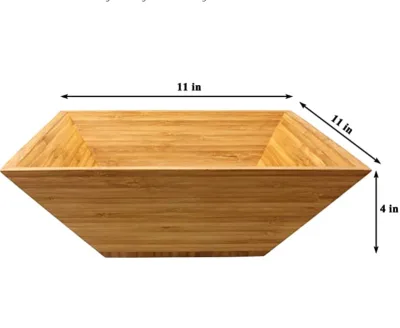
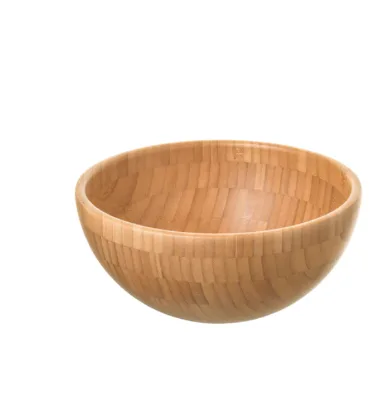
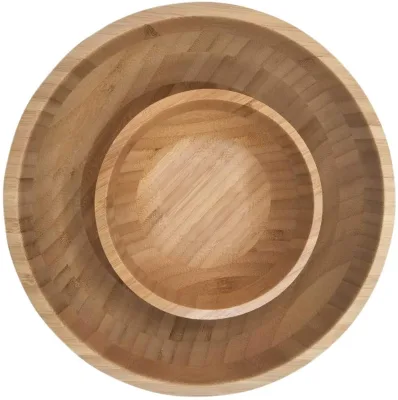
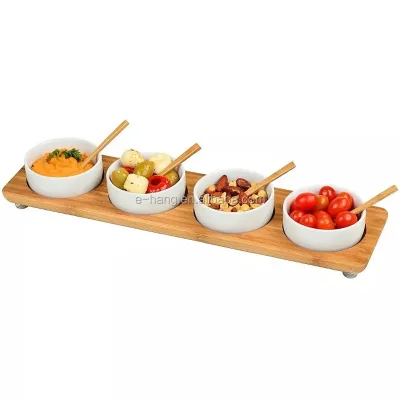




Comprehensive Sourcing Guide
Bamboo Serving Bowl Set Sourcing Guide
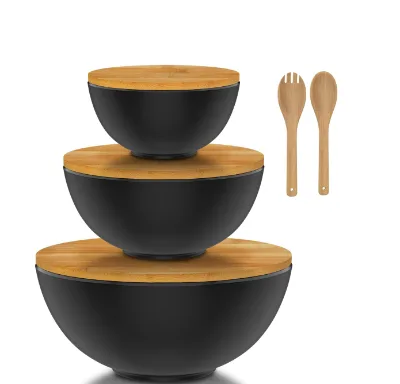
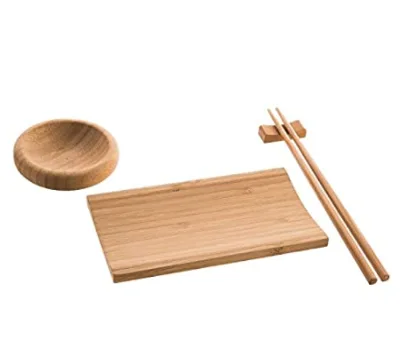
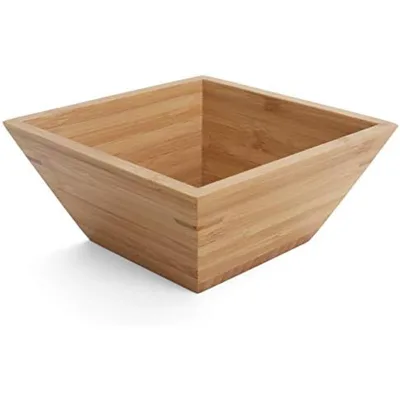
Procuring bamboo fiber bowl sets requires distinguishing between composite materials and solid wood constructions, as the supply chain offers distinct product categories with different performance profiles. The observed market data indicates a primary focus on bamboo fiber composites reinforced with bamboo lids, designed for general dining and salad applications, while a secondary segment features solid wood handicrafts with laser-engraved logos. Buyers must carefully align their specific usage scenarios, such as travel or party service, with the correct material composition to ensure durability and aesthetic consistency.
The commercial landscape for these items reveals a significant variance in minimum order quantities, ranging from small trial batches of 10 units to substantial wholesale commitments of 3000 units, with a common baseline of 500 pieces for standard customization. Pricing structures fluctuate widely based on the complexity of the design, the inclusion of custom packaging, and the specific size configuration, which typically spans from 15cm to 30cm diameters. Understanding these commercial thresholds is essential for budgeting, as the cost per unit often decreases with volume, but the initial investment for custom molds or branding can be substantial.
Product Scope and Observed Listing Signals
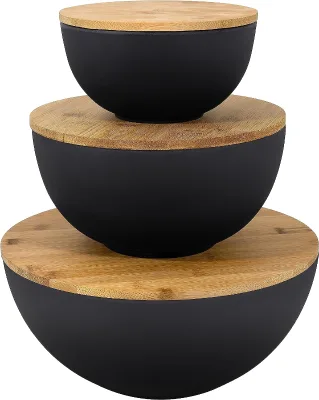
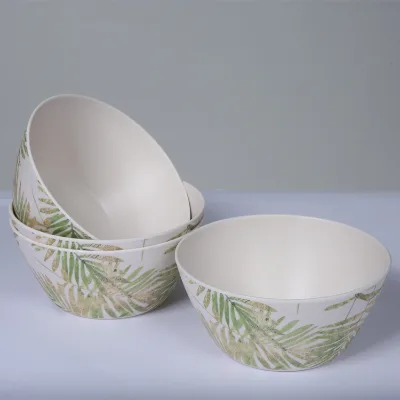
The core product offering centers on round bowls available in single or set configurations, often paired with matching lids for pasta or salad storage. Listings frequently highlight eco-friendly attributes and modern styling, with color options generally restricted to unicolor finishes like black or white, though some suppliers offer fully customized color requests. The physical dimensions are standardized into small, medium, and large sizes, with specific package dimensions observed around 34x34x12 cm for larger sets, ensuring efficient palletizing and carton shipping.
Distinct product signals include the availability of OEM and ODM services, allowing buyers to request custom logos via laser engraving or specific packaging formats such as brown or color boxes. While the primary material is identified as bamboo fiber combined with a bamboo lid, some listings explicitly categorize the item under wood handicrafts, suggesting a variation in manufacturing techniques that may affect the final texture and weight. Buyers should verify whether the "wood" designation refers to the lid material or the entire bowl structure, as this distinction impacts the product's classification and potential regulatory requirements.
Technical Specifications to Verify
Dimensional accuracy is a critical verification step, as the observed specifications list diameters exceeding 8 inches and single package sizes that vary significantly between 27.5 cm and 34 cm depending on the model number. The weight of individual units is also a key metric, with observed gross weights ranging from 1.7 kg to 2.0 kg per package, which directly influences freight costs and handling requirements. Procurement teams must confirm the exact model numbers, such as AWB15 or BB-1721, to ensure the ordered dimensions match the intended table setting or storage capacity.
Material composition verification is equally vital, as the listings present conflicting data points regarding the primary material, citing both "Bamboo Fiber + Bamboo Lid" and generic "Wood" classifications. Buyers must clarify the ratio of fiber to natural bamboo and the specific binding agents used, as these factors determine the bowl's resistance to heat and moisture. Additionally, the manufacturing process is noted as handmade or other, which implies potential variations in finish quality and requires strict quality control protocols to maintain consistency across large production runs.
Compliance and Safety Documentation
Food contact safety is the paramount compliance requirement for any serving bowl set, and the observed listings explicitly mention FDA and CIQ certifications as available credentials. These certifications indicate that the materials used meet specific safety standards for direct food contact, which is essential for products intended for salads, fruits, or pasta. Buyers should request current test reports and certificates of analysis to verify that the bamboo fiber composite and any adhesives used in the construction do not leach harmful substances under normal usage conditions.
Beyond food safety, environmental compliance is a significant consideration given the eco-friendly positioning of the products. The "Eco-Friendly" attribute suggests that the manufacturing process and material sourcing may adhere to specific sustainability standards, though the exact nature of these claims requires verification against recognized international environmental standards. Procurement teams should ensure that the supplier can provide documentation regarding the biodegradability of the materials and the ethical sourcing of the bamboo, particularly if the buyer's brand has strict sustainability mandates for its supply chain.
Cost Drivers and Commercial Terms
The total landed cost is heavily influenced by the customization level, as custom logos, specific packaging designs, and unique color requests add significant production overhead. The observed minimum order quantity of 500 pieces serves as a baseline for standard pricing, but buyers seeking smaller quantities or highly specialized designs may face higher unit costs or need to negotiate different commercial terms. Payment structures typically involve a 30% deposit followed by a 70% balance, which is standard for international trade but requires careful cash flow management for smaller buyers.
Logistics and packaging efficiency are additional cost drivers, with products shipped in cartons or on pallets and single package weights ranging from 1.7 to 2.0 kg. The choice between standard brown boxes and custom color boxes impacts both the unit price and the volume efficiency of shipping containers. Buyers should calculate the cost per cubic meter to optimize container loading, as the single package sizes of 27.5x27.5x18 cm and 34x34x12 cm will determine how many units fit per container, directly affecting the final freight cost per unit.
Supplier Qualification and Quality Control
Supplier qualification should focus on verifying the origin of the bamboo and the consistency of the handmade or other manufacturing processes. The observed data points to Fujian, China, as the primary place of origin, a region known for bamboo processing, but buyers must confirm the specific factory capabilities to ensure they can meet the required customization and volume demands. It is essential to audit the supplier's ability to handle the "Customized" and "Customizable" attributes without compromising the structural integrity of the bowls.
Quality control protocols must address the variability inherent in handmade products and the potential for inconsistencies in color and finish. Since the listings indicate "Customized Color" and "Unicolor" options, buyers should establish clear acceptance criteria for color matching and surface defects before mass production begins. Implementing a pre-shipment inspection that checks for structural integrity, logo placement accuracy, and packaging durability is crucial to prevent returns and maintain brand reputation in the competitive kitchenware market.
Long-Term Procurement Checks
Sustaining a successful supply relationship requires regular re-evaluation of the supplier's ability to maintain consistent quality and adhere to evolving compliance standards. Buyers should schedule periodic audits to verify that the FDA and CIQ certifications remain valid and that the material composition has not changed without notification. Continuous monitoring of the supply chain is necessary to ensure that the eco-friendly claims remain accurate and that the bamboo sourcing practices continue to meet sustainability expectations.
Strategic planning for future orders should account for the flexibility of the supplier regarding model numbers and design updates. As the market evolves, the ability to quickly adapt to new trends, such as different sizes or updated packaging solutions, will be a key differentiator. Buyers should maintain open communication channels to discuss potential design modifications and ensure that the supplier can scale production up or down efficiently to match fluctuating market demand without compromising on the core product attributes.
FAQs
What materials are used in the Bamboo Serving Bowl Set?
The bowls are crafted from bamboo fiber combined with a bamboo lid. This composition ensures durability and an eco-friendly profile. The material is distinct from pure wood, offering a modern aesthetic suitable for general kitchenware applications. The design supports customization for specific brand needs while maintaining structural integrity for daily use.
Can I customize the logo on the Bamboo Serving Bowl Set?
Yes, customized logos are acceptable and can be applied using laser technology. This allows for precise branding on the surface. The customization service supports OEM and ODM requests, enabling buyers to tailor the product to their specific market requirements. This feature is available for orders meeting the minimum quantity thresholds.
What is the minimum order quantity for the Bamboo Serving Bowl Set?
The standard minimum order quantity is 500 pieces. This threshold applies to most customization requests and bulk orders. Buyers should note that sample orders may have different terms, but production runs typically require this volume. This MOQ ensures efficient manufacturing and packaging processes for the specified dimensions and styles.
Are the bamboo serving bowls disposable or reusable?
These bowls are non-disposable and designed for reusable use. They are suitable for serving salads, fruits, or pasta. The sturdy construction from bamboo fiber and wood supports repeated washing and handling. This makes them ideal for both household use and commercial settings where durability and eco-friendly practices are prioritized.
What certifications do the bamboo serving bowl sets have?
The products hold FDA and CIQ certifications. These credentials verify compliance with food safety and quality standards. Buyers can rely on these certifications for importing into regulated markets. The manufacturing process adheres to these standards, ensuring the bamboo fiber and wood materials are safe for direct food contact and general kitchenware applications.
How are the bamboo serving bowl sets packaged for shipping?
The sets are packed in cartons or on pallets for secure transport. Customized packing options, such as brown boxes or color boxes, are available. The single package size varies by model, typically around 34x34x12 cm or 27.5x27.5x18 cm. This flexible packaging ensures protection during transit while allowing for brand-specific presentation upon arrival.