Source Bamboo Unisex Reading Glasses for Office, Travel, and Home Use
Compare 30 listings of Bamboo Unisex Reading Glasses featuring diverse frame materials, lens types, and customization options. Buyers can evaluate prices, MOQs, and certifications like CE and FDA across suppliers in China.
Key considerations
Products List


High Quality Folding Reading Glasses with Fashionable Style Passed FDA, CE,
$0.50 - $1.50
MOQ: 1200 Pieces


Round Framed Reading Glasses for Both Men and Women with Gradient Colour (WRP8100176)
$0.70 - $1.20
MOQ: 2400 Pieces

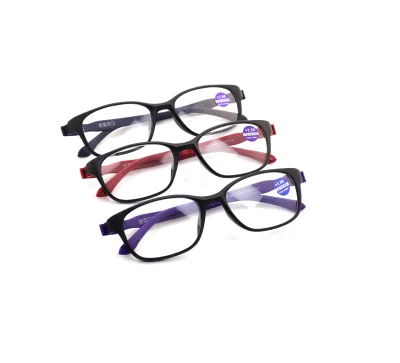
Universal Reading Glasses for Men and Women with Different Color Front Frames
$0.70 - $1.20
MOQ: 2400 Pieces


Comprehensive Sourcing Guide
Strategic Sourcing Guide for Bamboo Unisex Reading Glasses
The global market for sustainable eyewear has seen a significant shift toward eco-friendly materials, with bamboo emerging as a premium choice for manufacturers and retailers alike. For procurement professionals targeting Bamboo Unisex Reading Glasses, the sourcing landscape presents unique opportunities and specific challenges. This guide synthesizes available product data and industry standards to provide a structured approach for evaluating suppliers, verifying technical specifications, and ensuring compliance. The focus remains on objective analysis of material properties, manufacturing capabilities, and quality assurance protocols without relying on unverified marketing claims.
Material Composition and Frame Construction
The primary differentiator for bamboo reading glasses lies in the frame material itself. Unlike standard plastic or metal frames, bamboo offers a distinct aesthetic and a renewable profile. In the observed product data, specific models such as RP308027 and RP455027 explicitly list "Bamboo" or "Bamboo and Wooden" as the frame material. This indicates a specific supply chain requirement where raw bamboo is processed, treated, and assembled into frames. Buyers must verify that the bamboo is sourced from sustainable forests and treated to resist moisture and warping, as untreated bamboo can degrade in humid environments.
The construction style varies across the available inventory. Some listings describe the frame as "Full Rims/Frames," while others specify "Full Frame" or "Half Frame" constructions. For instance, model LS883788 is noted as a "Half Frame" with stainless steel components, whereas bamboo models often utilize a full rim design to maximize the structural integrity of the natural material. The combination of bamboo with other materials, such as metal or plastic, is also common to enhance durability. One observed specification lists "Metal and Plastic Frame" alongside bamboo attributes, suggesting a hybrid construction where bamboo is used for the front rims while metal or plastic is utilized for the temples or bridge.
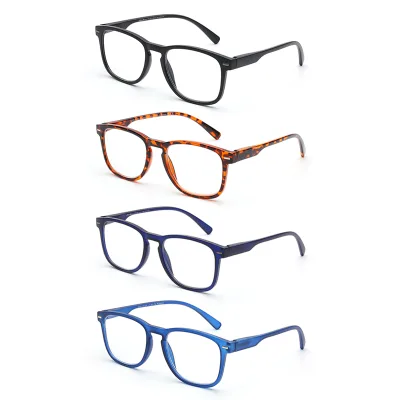
When evaluating frame color, the data indicates a range of options including "Black," "Silver," and customizable palettes like "Black/Silver/Red/Blue/Orange." While bamboo naturally presents a light, woody tone, many suppliers offer dyeing or coating processes to achieve these darker or vibrant finishes. Procurement teams should request physical samples to assess the quality of the finish, ensuring that the dye does not obscure the natural grain of the bamboo or peel over time.
Optical Specifications and Lens Technology
Reading glasses are defined by their optical function, which in the context of bamboo frames, often targets presbyopia. The product data confirms that these items are suitable for "General" use and specifically designed for "Man" or unisex demographics. The lens types observed include "Single-focal Lens" and "Multifocal Lens." This distinction is critical for buyers, as single-focal lenses provide a fixed magnification for near vision, while multifocal lenses offer a gradient of power for varying distances.
The available diopter ranges are a key technical specification for inventory planning. The data explicitly lists diopter options ranging from 1.00d to 4.00d in 0.50 increments (1.00d, 1.50d, 2.00d, 2.50d, 3.00d, 3.50d, 4.00d). This range covers the majority of adult presbyopic needs. Buyers must ensure that the supplier can consistently manufacture lenses across this entire spectrum without quality degradation. Additionally, the lens material is identified as "Plastic" in several entries, which is standard for reading glasses due to its lightweight nature and impact resistance.
Functional claims in the product data include "UV Protection" and "IR Protection." While these are listed as attributes, buyers should treat them as observations rather than guaranteed performance metrics without third-party verification. The lens level is sometimes cited as "CE/FDA/UV400," but this should be interpreted as a target standard rather than a universal fact for every unit. Verification of UV400 protection through independent testing is essential before finalizing large orders, as the level of protection can vary based on the specific lens coating applied.
Compliance, Certification, and Regulatory Standards
Navigating the regulatory landscape is paramount when importing eyewear. The supplied product facts highlight several standards that are frequently cited in the bamboo reading glasses category. These include "CE," "FDA," and "ISO EN 14889: 2003 standards." The presence of these standards in the data suggests that reputable suppliers in this niche aim to meet European and North American safety requirements.
CE marking indicates conformity with health, safety, and environmental protection standards for products sold within the European Economic Area. FDA compliance is relevant for products entering the United States market, ensuring that the materials used do not pose a toxicological risk. The specific standard "ISO EN 14889: 2003" relates to the safety requirements for optical instruments, covering aspects such as impact resistance and optical quality.
However, buyers must exercise caution. The data notes that certification status is sometimes listed as "Low-confidence background." This implies that while a supplier may claim compliance, the documentation may not be immediately verifiable. Procurement teams should not rely solely on the supplier's assertion. Instead, they must request valid, up-to-date test reports from accredited laboratories that specifically test the bamboo frame materials and the lens coatings for the claimed standards. The origin of the products is consistently listed as "China," with specific manufacturing hubs in "Wenzhou Zhejiang," "Xiamen," and general "Zhejiang" locations. These regions are known for eyewear manufacturing, but the specific factory's capability to maintain consistent certification across batches must be validated.
Cost Drivers and Minimum Order Quantities
Understanding the cost structure of bamboo reading glasses is essential for budgeting and margin analysis. The observed price range in the market data spans from $0.50 to $64.00 USD. This wide variance is likely driven by differences in material quality, frame complexity, lens type (single vs. multifocal), and the extent of customization. Lower-priced items may be basic single-focal models with standard plastic lenses, while higher-priced units could feature premium bamboo, multifocal lenses, and advanced UV/IR protection.
Minimum Order Quantity (MOQ) is another critical factor. The data shows an MOQ range from 1 to 2400 units. This flexibility is advantageous for buyers testing the market or those with specific customization needs. For instance, a specific model (RP455027) lists an MOQ of 12 pieces, which is accessible for small retailers or dropshippers. Conversely, larger orders may require higher volumes to achieve the lower end of the price spectrum.
Customization is a significant cost driver. The product data repeatedly mentions "Customization: Available" and "Logo: Customerized." Adding a custom logo, selecting specific frame colors, or altering the packaging (e.g., 1PCS/Polybag, 12PCS/Inner Box, 300PCS/Carton) will impact the unit cost. Buyers should clarify whether the MOQ applies to the base product or the customized version, as custom runs often have higher minimums. Payment terms observed include a "30% Deposit & Balance Before Shipment," which is a standard practice in B2B manufacturing but requires careful cash flow management.
Supplier Evaluation and Production Capabilities
Evaluating a supplier for bamboo eyewear requires a deep dive into their production capabilities and supply chain transparency. The origin data points to specific cities like Wenzhou and Xiamen, which are established manufacturing hubs. However, the specific factory name is not provided in the data, and buyers should not assume that all products listed under a generic keyword come from the same source.
Key evaluation criteria should include the supplier's ability to handle the specific material challenges of bamboo. Bamboo is a natural material that can vary in density and grain, requiring skilled craftsmanship to ensure uniformity. Suppliers should demonstrate experience with "Foldaway" styles, as seen in model RP455027, which adds mechanical complexity to the frame design. The ability to produce "Slim" styles (model 16R014P) or "Full Frame" designs (model RM72005) indicates versatility in their tooling and assembly lines.
Lead times are another critical metric. The data specifies a delivery time of "35-65 Days After Received Deposit." This range is substantial and reflects the time needed for sourcing sustainable bamboo, manufacturing, quality control, and shipping. Buyers must factor this into their inventory planning, especially if they are targeting seasonal sales. Shipping methods are listed as "by Air or by Sea," allowing for flexibility based on urgency and budget. Air freight is faster but more expensive, while sea freight is cost-effective for large volumes but requires longer lead times.
Quality Control and Long-Term Procurement Strategy
Quality control (QC) is non-negotiable when dealing with natural materials like bamboo. The packing specifications (1PC/Polybag, 12PCS/Inner Box, 300PCS/Carton) suggest a standardized approach to packaging, but the internal quality of the product must be verified. Buyers should implement a rigorous QC protocol that checks for structural integrity, specifically ensuring that the bamboo does not crack or split at stress points like the hinges or bridge.
For long-term procurement, consistency is key. The data indicates that some models are "Suitable for Face: Oval Face," suggesting that sizing and fit are considered in the design. However, buyers should verify that the sizing (e.g., "Size: M") is consistent across batches. Variations in bamboo thickness or lens alignment can affect the fit and comfort, leading to high return rates.
Developing a long-term relationship with a supplier involves more than just price negotiation. It requires establishing clear communication channels regarding customization, quality standards, and delivery schedules. The ability to customize logos and colors is a strategic advantage, but it must be managed carefully to avoid production errors. Buyers should request pre-production samples for every new customization to ensure the final product matches the design intent.
In conclusion, sourcing Bamboo Unisex Reading Glasses offers a compelling value proposition for buyers seeking sustainable, stylish, and functional eyewear. By focusing on verified material specifications, rigorous compliance checks, and realistic cost modeling, procurement professionals can navigate the complexities of this market effectively. The wide range of available models, from single-focal to multifocal, and the flexibility in customization and packaging provide ample opportunities for differentiation. However, success depends on a disciplined approach to supplier evaluation and quality assurance, ensuring that the natural beauty of bamboo is matched by the reliability of the final product.
FAQs
What frame materials are available for bamboo reading glasses?
Bamboo and wooden frames are available, often combined with metal or plastic components. Some models feature full rims while others use half-frame designs with stainless steel elements to enhance durability and structural integrity.
Which lens types and diopter ranges are offered for these glasses?
Single-focal and multifocal lenses are available with diopter options ranging from 1.00d to 4.00d. These plastic lenses provide UV and IR protection, catering to general presbyopic needs across various magnification levels.
Can I customize the logo and frame colors for bulk orders?
Yes, customization is available for both logos and frame colors including black, silver, red, blue, and orange. Buyers can request specific finishes, though the natural bamboo grain may be dyed or coated to achieve these vibrant shades.
What certifications do the bamboo reading glasses typically meet?
Products often meet CE, FDA, and ISO EN 14889: 2003 standards for safety and optical quality. Buyers should verify these certifications with valid test reports from accredited laboratories before finalizing large orders.
What is the typical lead time for delivery after deposit?
Delivery typically takes 35 to 65 days after receiving the deposit. This timeframe accounts for sourcing sustainable bamboo, manufacturing, quality control, and shipping via air or sea depending on urgency and volume.
How are the glasses packaged for shipment and what is the MOQ?
Items are packed as one piece per polybag, twelve per inner box, and three hundred per carton. Minimum order quantities vary from 12 pieces for specific models up to 2400 units for larger capacity runs.
Where are these bamboo reading glasses manufactured?
Manufacturing originates from China, specifically in hubs like Wenzhou, Zhejiang, and Xiamen. These locations are established centers for eyewear production, offering various frame styles and customization capabilities for international buyers.