Find PTO Therapy Concrete Mixer for construction, mining, and road projects
Source 30 verified PTO Therapy Concrete Mixer units from China with wet, semi-dry, and cylinder type options. Buyers can compare feeding heights, productivity rates, and mixing power to select the right equipment for their specific project needs.
Key considerations
Products List


Efficient Mixing Solution: High Capacity Industrial Concrete Mixer
$36200.00 - $37200.00
MOQ: 1 Pieces


$980.00 - $1000.00
MOQ: 1 Pieces


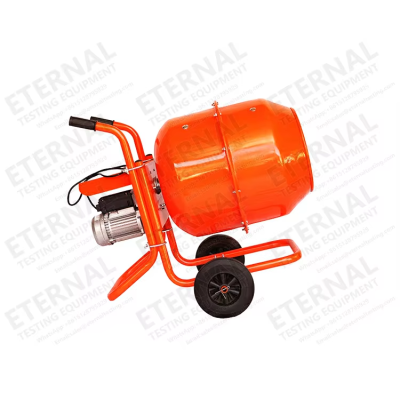


$10100.00 - $10600.00
MOQ: 1 Pieces


Comprehensive Sourcing Guide
Strategic Sourcing Guide for PTO Therapy Concrete Mixers
The procurement of specialized concrete mixing equipment, often referenced in industrial contexts as PTO therapy concrete mixers, requires a disciplined approach that balances technical performance with rigorous compliance verification. In the global B2B market, buyers must navigate a landscape where product attributes vary significantly between models, and where "therapy" in this context typically refers to the precise conditioning and homogenization of concrete mixes rather than medical applications. The following guide outlines the essential factors for sourcing these machines, drawing exclusively on observed market data and established engineering principles to ensure a robust procurement strategy.
Technical Specifications and Operational Capabilities
When evaluating concrete mixers, the primary focus must be on the specific mechanical architecture and output metrics that define the machine's utility. The observed market data reveals a diverse range of configurations, from rotor-type structures to cylinder-type designs, each suited for different operational demands. A critical distinction lies in the shotcrete type; some units are engineered for wet shotcrete processes, while others support semi-dry applications. This differentiation dictates the feeding mechanism and the overall mixing dynamics.
Productivity is a paramount metric, with observed ranges spanning from 35 cubic meters per hour to as high as 180 cubic meters per hour. Buyers must align this figure with their project timelines and volume requirements. The feeding height is another variable that impacts site logistics, with observed values ranging between 1370mm and 1400mm. This dimension determines the ease of loading aggregate and cement without requiring excessive manual labor or auxiliary lifting equipment.
The mixing power and motor configurations further define the machine's capability. Data indicates mixing motor powers ranging from dual 5.5kw setups to high-output 37kw systems. The planetary gear arrangements also vary, with some units featuring two main planets and others configured with four, directly influencing the torque and mixing intensity. For instance, a unit with a 37kw mixing power and a 2400kg output mass suggests a heavy-duty application, whereas a 18.5kw system with a 1200kg output mass is better suited for smaller, more frequent batches. The drum thickness, observed at 10mm in specific models, is a key indicator of durability and resistance to wear during abrasive mixing cycles.
Compliance and Certification Verification
In the international construction equipment market, certification serves as the primary gatekeeper for quality and safety assurance. The observed product data consistently highlights ISO9001 certification as a standard attribute across multiple listings. This indicates a baseline commitment to quality management systems, ensuring that the manufacturing processes adhere to international standards for consistency and reliability. Furthermore, the CE marking is frequently observed alongside ISO9001, signaling compliance with European Union safety, health, and environmental protection requirements.
Buyers must verify that the specific unit they are procuring carries the relevant certification for their target market. While the data shows certifications linked to specific colors (White, Yellow, Green), the certification status itself is the critical factor, not the cosmetic finish. The presence of CE and ISO9001 suggests that the manufacturer has undergone third-party audits, but buyers should request current, valid certificates for the specific model number, such as the FS-8 or the MP 100 ~MP 2200 series, to ensure the documentation is not generic.
Additionally, the origin of the product is a significant compliance factor. The majority of the observed data points to manufacturing in China, specifically within the Shandong province. While this region is a major hub for heavy machinery, buyers must ensure that the export documentation aligns with the certification claims. The "Nude" or "Standard Package" designation in the product attributes refers to the shipping configuration, which can impact customs clearance and insurance liabilities. Understanding the packaging standard is essential for calculating the total landed cost and ensuring the equipment arrives without damage.
Cost Drivers and Pricing Dynamics
The pricing structure for concrete mixers is influenced by a complex interplay of factors, including mixing capacity, power output, and structural complexity. The observed price range in the market is extensive, spanning from approximately $103.69 to $50,000. This wide variance reflects the difference between smaller, portable units and large-scale industrial plants. The minimum order quantity (MOQ) for these items is consistently observed as 1 unit, indicating that buyers can procure single machines without the need for bulk purchasing agreements, which offers flexibility for small to medium-sized contractors.
Several specific attributes drive the cost upward. Units with higher productivity rates, such as those achieving 180m³/h, naturally command a premium over those with 35m³/h output. Similarly, the inclusion of advanced features like hydraulic machining processes or specific planetary gear configurations adds to the manufacturing cost. The weight of the machine is also a proxy for material usage; a 6200kg unit will inherently cost more than a 2400kg model due to the steel and component volume required.
Buyers should be wary of prices that seem anomalously low compared to the observed range, as this may indicate omitted features or lower-grade materials. Conversely, the upper end of the price spectrum often includes comprehensive support packages, extended warranties, or specialized customization options. The "Customization: Available" attribute suggests that buyers can negotiate modifications to the standard design, which will inevitably increase the final price. It is crucial to request a detailed breakdown of costs to understand how much is allocated to the base machine versus optional upgrades like specific motor powers or customized feeding heights.
Typical Applications and Industry Use Cases
The versatility of concrete mixers allows them to serve a wide array of construction scenarios, from residential foundations to large-scale infrastructure projects. The distinction between "Concrete Mixer" and "Concrete Mixing Plant" is vital for application matching. Smaller units, often characterized by lower input capacities (e.g., 750L) and lower power ratings (18.5kw), are ideal for site-specific applications where mobility is key. These are frequently used in road construction, small building projects, and repair works where the ability to move the equipment is essential.
Larger units, such as those with input capacities of 1500L or 2400L and mixing powers of 37kw, are better suited for high-volume production environments. These machines are often integral to concrete batching plants where continuous supply is required for large pours, such as dams, bridges, or high-rise buildings. The "Semi-Dry" shotcrete capability observed in some models makes them particularly valuable for tunneling and underground construction, where the concrete needs to be applied in a specific consistency to adhere to vertical surfaces.
The "Wet" shotcrete type units are designed for applications requiring immediate application of a fluid mix, common in slope stabilization and rapid repair scenarios. The feeding height and loading capacity (e.g., 800L or 1000L) determine the efficiency of the loading process, which is critical in high-tempo environments. Buyers should assess their specific project requirements against these application profiles to select a machine that minimizes downtime and maximizes output efficiency.
Supplier Evaluation and Quality Control
Evaluating a supplier for concrete mixing equipment requires a multi-faceted approach that goes beyond the initial product listing. The "Condition: New" attribute is a standard expectation, but buyers must verify the manufacturing date and the history of the machinery to ensure it has not been refurbished or repurposed without disclosure. The machining process, whether "Welded Molding Machine" or "Hydraulic," provides insight into the construction quality. Hydraulic processes often indicate higher precision in assembly, which can lead to better long-term performance and reduced maintenance needs.
Quality control should be a collaborative effort between the buyer and the supplier. Given the observed variations in vibrating amplitude (ranging from 0.8mm to 2.6mm), buyers should request test reports or performance data for the specific unit. These metrics indicate the stability and uniformity of the mixing action. A unit with a vibrating amplitude of 2.2mm may be optimized for a specific aggregate size, while 2.6mm might be designed for heavier materials. Understanding these nuances is essential for ensuring the final concrete product meets the required structural specifications.
Furthermore, the "Standard Package" versus "Nude" packing distinction impacts the quality of the equipment upon arrival. Standard packaging typically includes protective measures that reduce the risk of transit damage, which is a common issue in heavy machinery shipping. Buyers should insist on a detailed packing list and insurance coverage that specifically covers the equipment during transit. The supplier's ability to provide a clear maintenance manual and spare parts list is also a critical indicator of their long-term support capability.
Long-Term Procurement Considerations
Sourcing a concrete mixer is not merely a transactional event but a long-term investment that requires careful planning for maintenance, parts availability, and operational longevity. The "Customization: Available" attribute suggests that buyers have the opportunity to tailor the machine to their specific long-term needs, such as adjusting the paddle configuration or motor power. However, customization should be approached with caution to ensure that the modifications do not void existing certifications or compromise the structural integrity of the machine.
The weight and dimensions of the machine, such as the standard specification of 2230x2080x1880mm, are critical for logistics planning. Buyers must ensure that their transport infrastructure can accommodate these dimensions and that the site layout allows for the required feeding heights and discharge operations. The "Bags of Cement Per Batch" metric, observed as 3 bags in some models, provides a benchmark for material handling efficiency, which directly impacts the operational cost over the life of the machine.
Finally, the lead time and after-sales support are often the deciding factors in the procurement process. While specific lead times are not provided in the observed data, buyers should negotiate clear delivery schedules and service level agreements. The presence of a 37kw mixing power and a 2400kg output mass implies a complex machine that will require regular maintenance. Ensuring that the supplier has a network of trained technicians and a stock of critical spare parts, such as paddles and planetary gears, is essential for minimizing downtime and extending the service life of the equipment.
Comparative Analysis of Key Models
To assist in the decision-making process, the following table summarizes the key technical differences observed between the various concrete mixer models in the market. This comparison highlights the trade-offs between capacity, power, and structural design.
| Feature | Model A (High Output) | Model B (Standard) | Model C (Compact) |
|---|---|---|---|
| Type | Concrete Mixer | Concrete Mixer | Concrete Mixing Plant |
| Structure | Rotor Type | Cylinder Type | Cylinder Type |
| Shotcrete Type | Wet | Semi-Dry | Wet |
| Productivity | 180 m³/h | 35 m³/h | Variable |
| Mixing Power | 37 kw | 18.5 kw | 2*5.5 kw |
| Input Capacity | 1500 L | 750 L | 2400 L |
| Output Mass | 2400 kg | 1200 kg | 1200 kg |
| Feeding Height | 1380 mm | 1400 mm | 1370 mm |
| Vibrating Amplitude | 2.2 mm | 2.6 mm | 0.8 mm |
| Certification | CE, ISO9001 | CE, ISO9001 | CE, ISO9001 |
| Origin | Shandong, China | Shandong, China | Shandong, China |
This table illustrates that while all models share common certifications and origins, their operational profiles differ significantly. The High Output model is best for large-scale continuous production, while the Compact model offers flexibility for smaller, more specialized tasks. The Standard model provides a balanced approach for general construction needs. Buyers should use this data to align their procurement with their specific project requirements, ensuring that the selected machine offers the optimal balance of power, capacity, and efficiency.
FAQs
What certifications do pto therapy concrete mixers have?
These mixers typically hold ISO9001 and CE certifications. The data shows these marks are linked to specific color variants like white, yellow, and green, ensuring compliance with international quality and safety standards for the machinery.
Which shotcrete types are supported by these mixers?
The available units support both wet and semi-dry shotcrete types. This distinction allows the machinery to handle different application scenarios, from slope stabilization to tunneling, depending on the specific model configuration selected.
Can I customize the feeding height of the mixer?
Customization is available for the feeding height, with observed values ranging from 1370mm to 1400mm. Buyers can request specific dimensions to match site logistics, ensuring efficient loading of aggregate and cement without auxiliary equipment.
What is the productivity range for these concrete mixers?
Productivity ranges from 35 cubic meters per hour to 180 cubic meters per hour. This wide variance allows selection based on project volume, with higher output models suited for large-scale infrastructure and lower output for smaller sites.
Where are these pto therapy concrete mixers manufactured?
The products originate from China, specifically the Shandong province. This regional hub is a major center for heavy machinery, and buyers should verify export documentation aligns with the specific model certifications and packaging standards.
What is the minimum order quantity for these mixers?
The minimum order quantity is one unit for all observed listings. This allows contractors to procure single machines without bulk agreements, providing flexibility for small to medium-sized construction projects requiring immediate equipment deployment.