Source Battery Container for Storage, Solar, and Offshore
Compare 30 Battery Container listings from verified Chinese manufacturers. Buyers can evaluate specifications like capacity, voltage, and certifications for storage, solar, and offshore applications.
Key considerations
Products List


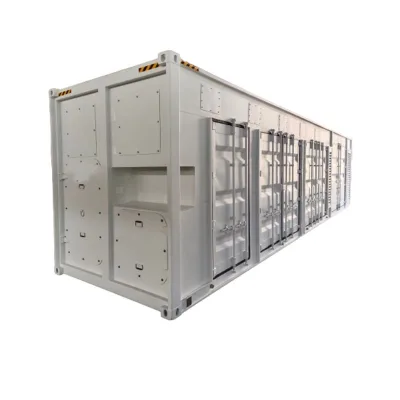
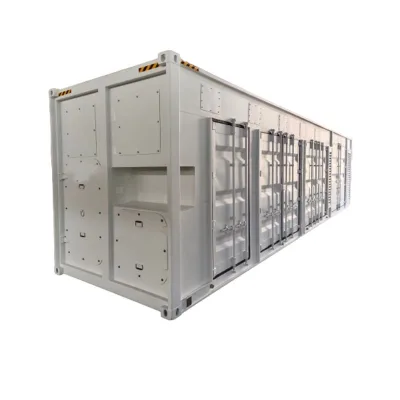


40FT Full Open Side Double Door Containers for 2mwh Battery Rack Storage System
$5000.00 - $8000.00
MOQ: 5000 Pieces


314ah LFP Cells 5mwh Battery Container with High Voltage Stability
$451350.00 - $541620.00
MOQ: 1 Pieces
Comprehensive Sourcing Guide
Strategic Sourcing Guide for Battery Container Solutions
Understanding the Product Landscape and Core Specifications
When sourcing battery containers, buyers must first distinguish between the physical infrastructure and the integrated energy storage systems housed within. The market presents a diverse array of configurations, ranging from standard shipping containers repurposed for storage to specialized units designed for high-voltage energy storage. The foundational specification for many of these units is the 40 feet length, which aligns with standard ISO container dimensions, ensuring compatibility with global logistics networks. However, specific customizations exist, such as units with a Frame Size of less than 20ft or specialized dimensions like 2991mm in length for specific modular applications.
The material composition is a critical first step in evaluation. The primary structural material observed in these units is Steel, often treated with hot-dip galvanization (HDG) to meet HDG offshore container standards, which is essential for durability in harsh environments. The physical volume of the internal space varies significantly; while some units offer a volume of 3mx2.4mx2.6m, others are designed with a nominal capacity of 5015kWh, indicating a much larger internal footprint for high-density energy storage. The opening type is frequently a Folding Door, which facilitates the installation of heavy battery racks and maintenance equipment.
Buyers should note that the prod_model varies widely, from generic "Storage Container" and "special container" designations to specific model identifiers like ZKSD-500-1044000-H-00. This model specificity often correlates with the internal electrical architecture, such as a ZKSD-1044kWh-500kW configuration. Understanding these model distinctions is vital before engaging with suppliers, as a generic storage container will not support the technical requirements of a high-voltage energy storage system without significant retrofitting.
Technical Architecture and Electrical Parameters
The technical specifications of a Battery Container extend far beyond the steel shell. For units designed as energy storage systems, the electrical parameters are the defining characteristics. The Battery Type is predominantly Lithium Ion or LiFePO4 Battery, chosen for their cycle life and safety profiles. A key metric for longevity is the Cycle Life, with observed specifications reaching up to 8000 Cycles, a figure that directly impacts the total cost of ownership and the return on investment for the project.
Voltage and power ratings are equally critical. Units may feature a Nominal Voltage of 768V, which requires careful integration with the broader grid infrastructure. The Rated Frequency is typically 50/60 Hz, ensuring compatibility with both European and North American power grids. The system often includes an Isolated Transformer as a standard inclusion, simplifying the installation process and ensuring electrical isolation for safety.
Thermal management and fire safety are paramount in Battery Container design. The Fire Safety mechanism in observed units utilizes Aerosol suppression systems, which are effective in suppressing fires without damaging sensitive electronic components. The Degree of Protection is rated at IP65, indicating that the container is dust-tight and protected against water jets from any direction, making it suitable for Outdoor Installation. The installation location can vary, supporting Ground, Carport, or Rooftop setups, provided the structural integrity of the site can support the Weight of the unit, which can reach 22t or 12ton depending on the configuration.
Communication and control are managed through a BMS Communication Interface that supports Ethernet, Can, and RS485 protocols. This ensures seamless integration with existing Building Management Systems (BMS) or Energy Management Systems (EMS). The Technical Support provided by suppliers should include complete professional guidance to navigate these complex interfaces.
Compliance, Certification, and Regulatory Standards
Navigating the regulatory landscape is a non-negotiable aspect of sourcing battery containers. The industry relies on a suite of international standards to ensure safety and interoperability. While specific certifications like CSC (Container Safety Convention) are standard for the physical container shell, the internal battery systems require a more rigorous set of approvals.
Buyers must verify that the supplier can provide documentation for ISO, CB, CE, TUV, Un38.3, and En50549 certifications. These certifications cover everything from the mechanical safety of the container to the electrical safety of the battery cells and the system's integration into the grid. The Un38.3 certification is particularly crucial for the transportation of lithium batteries, ensuring they can withstand the rigors of global shipping.
The following table outlines the typical certification and standard requirements for battery containers, distinguishing between the container shell and the internal energy system:
| Component | Key Standards & Certifications | Purpose |
|---|---|---|
| Container Shell | CSC, ISO Container, HDG Offshore | Structural integrity, safety during transport, corrosion resistance. |
| Battery Cells | Un38.3, IEC 62619, UL 1973 | Safety during transport, performance under stress, cell chemistry safety. |
| System Integration | CE, EN 50549, IEC 62933 | Grid compliance, electromagnetic compatibility, system safety. |
| Fire Safety | UL 9540, UL 2580 | Fire suppression efficacy, system response to thermal runaway. |
It is important to note that while some standards like IEC 62933 and UL 9540 are often cited in the industry, buyers must confirm that the specific unit they are purchasing holds these certifications rather than assuming they are standard for all models. The prod_standard for the container itself may be listed as ISO container or reefer container with refrigerated unit, but the internal battery system standards are distinct and must be verified separately.
Cost Drivers and Procurement Economics
The cost of a Battery Container is influenced by a complex interplay of factors, including the Gross Weight, Nominal Capacity, and the level of customization. The Gross Weight of 12ton or 22t directly impacts shipping costs, especially when calculating freight charges for FCL (Full Container Load) and LCL (Less than Container Load) shipments. The Nominal Capacity of 5015kWh or 1044kWh is a primary driver of the unit price, as higher capacity requires more battery cells, more complex thermal management, and larger power conversion systems.
Customization is a significant cost variable. The Customization option is available, allowing buyers to tailor the Color, internal layout, and specific electrical interfaces to their project needs. However, this flexibility often comes with a premium. The Producing Period is listed as >20 Days, which can affect the overall project timeline and cash flow. Buyers should also consider the Life Span of the unit, which is observed to be <25 Years, a factor that influences the long-term depreciation and replacement costs.
The prod_packing method also affects logistics costs. Units may arrive in Standardoriginal Packing, Nude, or as 2 Units Shipping in 20' Modular configurations. The choice of packing influences the ease of unloading and the risk of damage during transit. For high-value battery systems, the Container packing method ensures the unit is protected as a single, integrated asset, whereas Nude packing might require additional on-site assembly and protection measures.
Supplier Evaluation and Operational Capabilities
Selecting the right supplier requires a deep dive into their operational history and technical capabilities. A key indicator of reliability is the Experice (Experience) of the supplier, with >10 Years being a benchmark for established players in the industry. This experience often translates to a deeper understanding of the nuances in Battery Container design and a more robust supply chain.
The After-Sales Service is another critical factor. The availability of Yes for after-sales support indicates that the supplier is committed to the long-term performance of the unit. This should include access to spare parts, technical troubleshooting, and potential firmware updates. The Technical Support offered should be Complete Professional Technical Guidance, covering everything from initial site assessment to final commissioning.
Buyers should also evaluate the supplier's logistics network. The prod_prop.Departure locations include major Chinese ports such as Qingdao, Guangzhou, Xiamen, Shenzhen, Tianjin, and Ningbo. The prod_prop.Destination list covers a wide range of markets, including India, Taiwan, Finland, United States of America, Brazil, Peru, Mexico, The United Kingdom, France, Portugal, Italy, Norway, Russia, Thailand, Indonesia, and South Africa. This global reach suggests the supplier has experience handling complex international logistics and customs clearance procedures.
Quality Control and Inspection Protocols
Ensuring the quality of the Battery Container before shipment is essential to mitigate risks. The Standardoriginal Packing and Container packing methods should be inspected to ensure they meet the prod_packing specifications. For units with a Life Span of <25 Years, the quality of the Steel construction and the HDG coating must be verified to prevent premature corrosion.
The Fire Safety system, utilizing Aerosol suppression, should be tested and certified. The Degree of Protection of IP65 must be validated through independent testing to ensure the unit can withstand the environmental conditions of its intended installation site. The BMS Communication Interface should be tested for compatibility with the buyer's existing systems, ensuring that Ethernet, Can, and RS485 protocols function correctly.
Buyers should request a comprehensive inspection report that covers the Nominal Voltage of 768V, the Cycle Life of 8000 Cycles, and the Weight of the unit. These parameters should be verified against the supplier's datasheet to ensure that the delivered product matches the specifications. The Certification documents, including CSC, ISO, CB, CE, TUV, Un38.3, and En50549, should be reviewed to confirm that the unit meets all regulatory requirements for the destination country.
Long-Term Procurement and Lifecycle Management
Procuring a Battery Container is not a one-time transaction but the beginning of a long-term partnership. The Producing Period of >20 Days should be factored into the project timeline, and the After-Sales Service agreement should clearly define the scope of support. The Life Span of <25 Years suggests that the unit will require maintenance and eventual replacement, making the availability of spare parts and technical support crucial.
The Usage of the unit, whether for Storage or energy storage, dictates the maintenance schedule. Units with a Nominal Capacity of 5015kWh will likely require more frequent monitoring and maintenance than smaller units. The Install location, whether Ground, Carport, or Rooftop, will also influence the maintenance requirements, as different locations expose the unit to different environmental stresses.
Buyers should also consider the Customization options for future scalability. If the project requires expansion, the supplier should be able to provide additional units that are compatible with the existing system. The prod_model and prod_standard should be consistent across all units to ensure seamless integration. Finally, the Technical Support provided by the supplier should be ongoing, ensuring that the system remains optimized and safe throughout its operational life.
FAQs
What certifications are required for battery containers?
Battery containers require certifications such as ISO, CB, CE, TUV, Un38.3, and En50549. These approvals cover mechanical safety, electrical safety, and grid compliance. The container shell also typically holds CSC certification for transport safety.
How long is the production period for these units?
The producing period is typically greater than 20 days. This timeline accounts for manufacturing the steel structure, installing the battery systems, and completing necessary quality checks before shipment from Chinese ports.
Which battery types are commonly used in these containers?
The battery type is predominantly Lithium Ion or LiFePO4 Battery. These chemistries are selected for their high cycle life, reaching up to 8000 cycles, and their suitability for outdoor installation in various climates.
Can the container color be customized for specific projects?
Yes, the color is available for customization to meet project branding or safety requirements. This customization is part of the broader customization options available, though it may impact the production timeline and final pricing.
What is the nominal voltage of the battery system?
The nominal voltage is 768V. This high voltage rating requires careful integration with grid infrastructure and is supported by an included isolated transformer to ensure safe and efficient power conversion.
How is fire safety managed inside the container?
Fire safety is managed using an Aerosol suppression system. This method effectively suppresses fires without damaging sensitive electronic components, complementing the IP65 degree of protection for outdoor durability.