Source Bathroom Water Stop for Automobile, Machinery, and Doors
Find 25 verified suppliers offering Bathroom Water Stop solutions including EPDM, silicone, and PVC profiles. Compare customization options, hardness ratings, and weather resistance features for industrial and residential applications; compare the available evidence and request quotations based on your requirements.
Updated
Key considerations
Products List








Comprehensive Sourcing Guide
Bathroom Water Stop Sourcing Guide
Bathroom Water Stop products are a narrow but high-stakes category within rubber and silicone sealing profiles. Buyers source them for retrofit shower thresholds, wet-dry separation strips, and collapsible water dams that block water at floor level without permanent construction. Because the products sit in continuously wet environments, adhesion to tile or glass, recovery after foot traffic, and long-term aging behavior matter more than initial appearance. This guide structures a sourcing workflow for procurement teams evaluating listings, specifications, and suppliers.
The listings observed for this keyword cluster originate in Hebei, China, and include solid EPDM rubber profiles, silicone collapsible shower threshold dams, silicone water-retaining strips, and PVC wet-dry separation strips. Customization is broadly offered, with models such as "Bathroom Water Barrier" and brands like pulongte appearing alongside customizable model numbers and standards. Buyers should treat the category as mixed-material: the right product depends on whether the installation is permanent, semi-permanent, or removable.
Product Scope and Observed Listing Signals
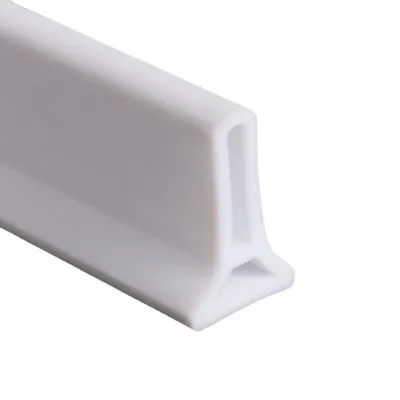
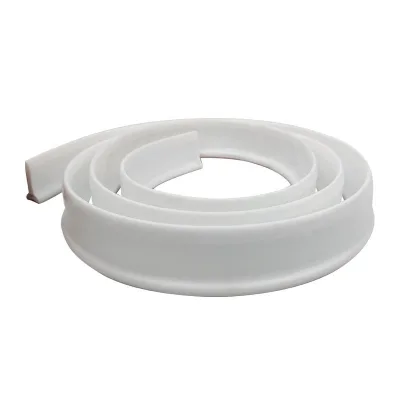
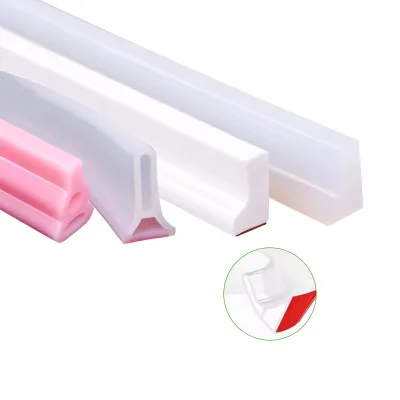
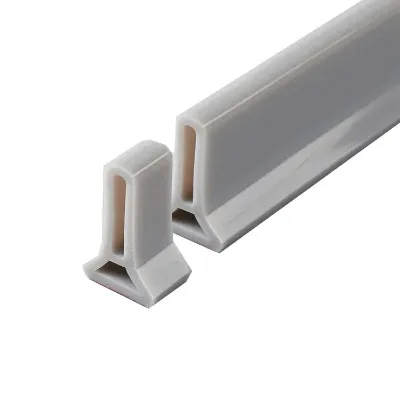
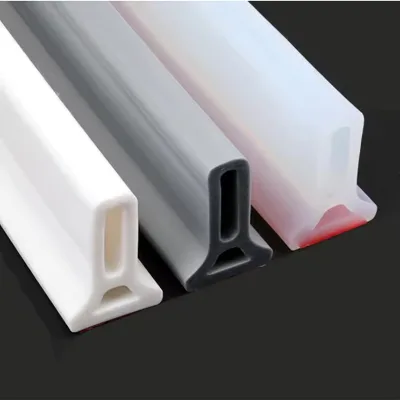
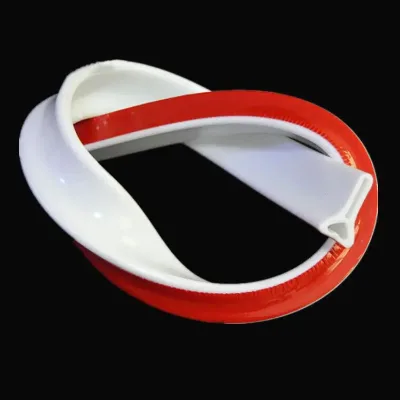
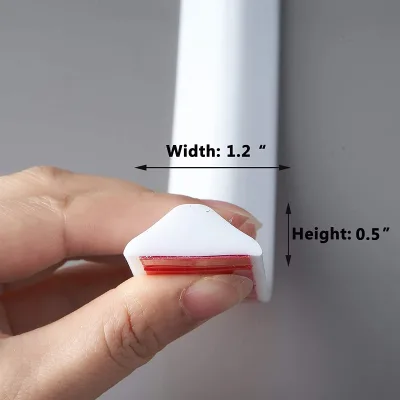
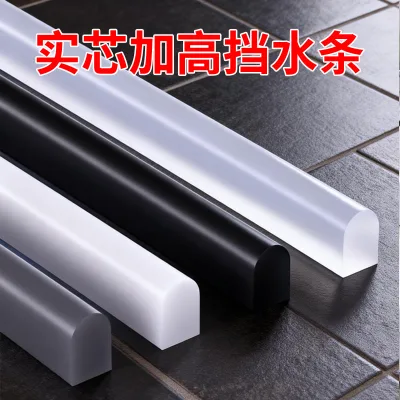
The observed product scope covers four distinct constructions. Round EPDM solid rubber profiles are extruded with a rectangular or round sectional shape, aimed at automobile, machinery, and door-and-window sealing but often repurposed for bathroom barrier use. Silicone collapsible shower threshold water dams are sold as single items in 55X55X25 cm packages with a 19.0 kg gross weight, indicating substantial, likely multi-piece or long-length shipments. Silicone water-retaining strips are listed at 2-meter lengths, 30mm*36mm dimensions, in white, brown, red, black, and grey. PVC wet-dry separation strips appear in compact 20X20X2 cm packages with opp-bag packaging.
Listing signals suggest a trade-oriented marketplace with low barriers to sampling: observed price points span roughly 0.1 to 20 USD and minimum order quantities range from 1 to 5000 units. Vulcanization is described as continuous, processing as extruded plus moulding and cutting, and packing as reels, plastic bags, cartons, or pallets, with customized packing available. Buyers should note that "water stopper" features, "easy to install," "safe and tidy," and "multi-purpose use" are seller descriptors, not verified performance data.
Technical Specifications to Verify
Hardness is the most consequential variable. The category lists 30~90 Shore A for hard rubber profiles and 60±5 Shore A for silicone dams, and buyers must confirm which range applies to their chosen material and application. A threshold dam that is too soft will collapse under foot traffic or wheelchairs; one that is too rigid will not compress flat and creates a trip hazard. Request hardness test reports on the actual production batch, not datasheet values, and specify tolerance in the purchase contract.
Dimensional and material verification should follow. Confirm cross-section against your drawing — color and size are offered "according to drawing," and custom shapes are available — but ask for a measured first-article inspection rather than relying on nominal dimensions like 30mm*36mm or 2-meter lengths. For material, distinguish explicitly between silicone rubber, hard rubber (EPDM), and PVC, since listings mix all three under this keyword. Verify the extrusion or continuous vulcanization process produces consistent cell-free solid sections, and confirm surface finish where the strip contacts skin or where appearance matters in visible bathrooms.
Compliance and Safety Documentation
Observed certificates include ISO9001 and TS16949, which speak to quality management in automotive-linked rubber production but do not by themselves address bathroom product safety. Buyers should ask which certificate actually covers the producing facility and whether it applies to the silicone and PVC bathroom lines, not only to rubber sealing profiles. Treat certification claims as items to verify with copies of valid certificates and scope statements.
Beyond management-system certification, request material safety documentation appropriate to a household wet environment. For silicone water dams, ask about skin-contact safety, odor, and any migration or toxicity testing the seller can evidence; for PVC strips, ask about plasticizer content and whether formulations meet the regulatory requirements of your destination market. Do not assume compliance from the listing. Where no test data is offered, commission third-party testing on samples before committing to volume, and document agreed material composition in the contract.
Cost Drivers and Commercial Terms
Price in this category is driven primarily by material choice, section size, and customization depth. Silicone typically commands a premium over PVC and hard rubber, and a 30mm*36mm custom section with continuous vulcanization costs more than a stock rectangular profile. Tooling and mold charges for moulding and cutting services, custom colors, and drawing-based sizing are recurring negotiation points. With observed listings spanning roughly 0.1 to 20 USD, buyers should normalize quotes to cost per meter or per piece at a defined section before comparing.
Commercial terms to nail down include minimum order quantity, which observed listings place anywhere from 1 to 5000, sample cost and credit policy, and packing specification. Packing is described as reels, plastic bags, cartons, and pallets, with customized packing and opp-bag-plus-carton variants listed; agree carton dimensions and gross weight — one observed SKU ships at 19.0 kg per single package — to forecast freight accurately. Confirm incoterms, payment structure, and whether price holds after tooling amortization for repeat orders.
Supplier Qualification and Quality Control
Qualify suppliers on evidence rather than listing claims. The observed cluster is concentrated in Hebei, China, including Qinghe, a region with a dense rubber-extrusion supplier base; this density favors competitive pricing but demands careful differentiation. Shortlist suppliers who can state their process — extrusion, continuous vulcanization, moulding, cutting — in specifics, provide ISO9001/TS16949 documentation, and name an OEM or customization workflow with drawing review. Prefer those who volunteer first-article samples and dimensional reports over those who only repeat feature keywords.
Build quality control into the order, not after it. Specify incoming inspection criteria for hardness (for example 60±5 Shore A where silicone dams are concerned), dimensional tolerance against your drawing, color matching across batches, and visual defects such as voids or surface marks from extrusion. Agree on an inspection stage — during production, pre-shipment, or both — and define acceptance sampling. For custom profiles, retain a sealed sample as the arbitration reference for every reorder, and require batch traceability on packing documentation.
Long-Term Procurement Checks
Long-term value in this category depends on aging performance and supply stability. Listings advertise weather resistance, UV resistance, aging resistance, and corrosion performance; these are material-level properties that should be validated with accelerated aging or real-world exposure data on your specific compound, since a flexible silicone dam and a hard rubber profile age differently in humid, soapy environments. Schedule periodic re-testing on production batches, especially after any material or tooling change, and monitor field feedback such as yellowing, hardening, or loss of collapse recovery.
Operationally, review supplier performance on the metrics that erode quietly: on-time delivery, batch-to-batch color and hardness drift, packing compliance against the agreed reels, bag, carton, or pallet format, and responsiveness on drawing-based reorders. Re-confirm certificates annually and verify that customization terms, model numbers, and standards documented as "customized" or "customizable" remain honored. Maintain at least one qualified alternate source for each product construction — silicone dam, EPDM profile, PVC strip — so a single Hebei-based supplier disruption does not halt your bathroom product line.
FAQs
What materials are commonly used for Bathroom Water Stop strips?
Bathroom Water Stop strips are commonly made from silicone, PVC, or rubber compounds such as EPDM, depending on the application. Silicone offers flexibility and water resistance for shower thresholds, while PVC suits wet and dry separation strips. Rubber profiles provide weather and aging resistance. Buyers should confirm material choice with suppliers based on installation location and exposure conditions.
Can Bathroom Water Stop strips be customized to specific sizes and shapes?
Yes, customization is available from many listed products, with color, size, model, and standard marked as customizable or according to drawing. Suppliers offer extrusion and moulding processes, plus cutting services, so custom shapes and lengths can be produced. Buyers should provide drawings or specifications, confirm hardness requirements such as 60±5 Shore A, and agree on packaging before ordering.
How is the hardness of a Bathroom Water Stop strip specified?
Hardness is specified on the Shore A scale, and listed products show ranges such as 30~90 Shore A for rubber profiles and 60±5 Shore A for silicone water dams. Hardness affects how well the strip compresses against floors and doors while maintaining a seal. Buyers should match hardness to the installation surface and expected foot traffic before confirming an order.
Which processing methods are used to produce Bathroom Water Stop profiles?
Extrusion is the main production method for continuous rubber and silicone profiles, with continuous vulcanization used to cure hard rubber strips. Moulding and cutting services are also offered for shaped water dams and finished lengths. These methods allow custom sectional shapes, including rectangle profiles, so buyers should confirm which process suits their drawing and required tolerances.
What packaging options are available when ordering water stop strips?
Listed packaging options include reels, plastic bags, cartons, and pallets, with customized packing available. Silicone water dams are packed in plastic bags plus cartons, some with OPP bags, and single package sizes are specified per item. Buyers ordering in volume should confirm carton dimensions, gross weight, and pallet arrangements with the supplier to plan shipping and warehousing efficiently.
How do I choose between silicone and rubber water stop strips for bathrooms?
Choose silicone for collapsible shower threshold dams and areas needing soft, flexible water blocking, while rubber or EPDM solid core strips suit doors, windows, and machinery requiring weather and UV resistance. Consider hardness, sectional shape, and color options, since products come in white, brown, red, black, and grey. Confirm corrosion resistance and aging performance for long-term bathroom use.