Source Betaine Beet Root Extract for Health Food and Beverages
Find 30 verified listings for Betaine Beet Root Extract suitable for health food, health care products, and animal feed. Buyers can compare specifications like extraction ratios, particle sizes, and certifications including ISO and Halal.
Key considerations
Products List




Comprehensive Sourcing Guide
Strategic Sourcing Guide for Betaine Beet Root Extract
Understanding Product Variants and Technical Specifications
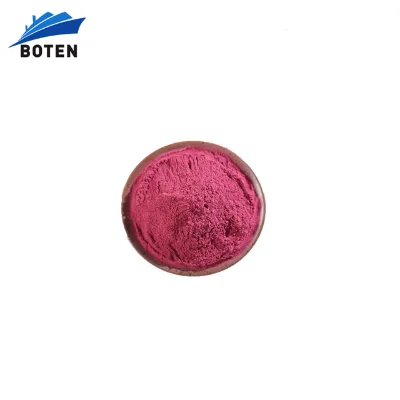
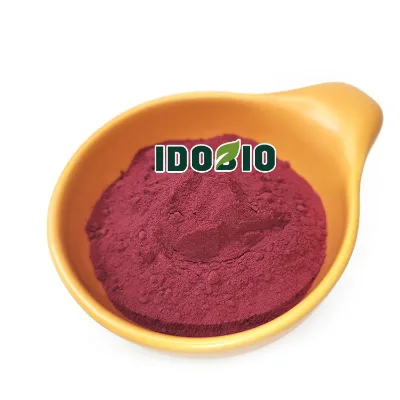
When sourcing Betaine Beet Root Extract, buyers must first distinguish between the natural botanical extract derived from Beta vulgaris L. and the synthetic or purified chemical form known as Betaine Hydrochloride (Betaine HCl). The supplied data indicates a clear divergence in product attributes that dictates the application and procurement strategy. The natural extract is characterized as a red or red-brown powder, often described as fine powder, with a specific particle size requirement of 80 mesh sieve. This form is derived from the root of the plant via liquid-solid extraction and is marketed primarily for health food and health care products. The main ingredient in this natural variant is Betaine, with specifications ranging from 10:1 to 20:1 concentration ratios.
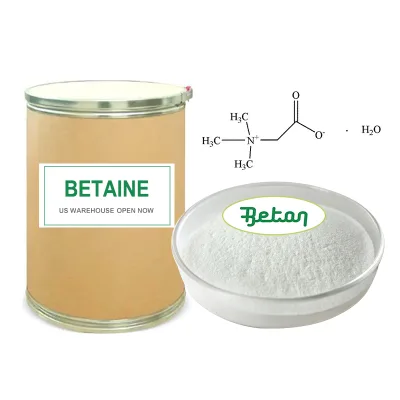
In contrast, the alternative form listed is Betaine HCl, which presents as white crystal grains or white powder. This variant is often associated with Feed Grade or specific chemical purity standards, with content levels reaching 98%. The specifications for this form include a standard of 98% Betaine HCl, distinct from the natural extract's standard of 1% to 60% Betaine content. The particle size for the natural extract is explicitly noted as 100% passing an 80 mesh sieve, a critical parameter for solubility and mixing in food applications. Buyers must verify whether their formulation requires the natural red powder for color and botanical integrity or the white crystalline form for high-purity supplementation or animal feed applications. The Latin name Beta Vulgaris L. confirms the botanical origin for the natural extract, while the "Red Beet Root Extract Natural Betaine" designation clarifies the source material.
Compliance, Certification, and Regulatory Verification
Navigating the regulatory landscape for betaine products requires rigorous verification of certifications, as the market contains both food-grade and feed-grade variants. The provided facts highlight that the natural beet root extract carries certifications including ISO9001, Halal, and Kosher. These are essential for products entering global markets where religious dietary laws and quality management systems are prerequisites. Furthermore, the data indicates that some suppliers offer HACCP, FDA, and ISO certifications, which are critical for food safety compliance in North American and international supply chains. Buyers must explicitly confirm which specific certification applies to the lot they are purchasing, as a product may hold ISO9001 for quality management but lack specific Halal or Kosher status for that particular batch.
The distinction between Food Grade and Feed Grade is paramount in compliance. The natural extract is listed as Food Grade, suitable for human consumption in health foods and care products. Conversely, the Betaine HCl variant is identified as Feed Grade with usage designated "for Animal." This classification is not merely a label but a regulatory boundary; using a feed-grade product in human food supplements would constitute a severe compliance violation. Additionally, the product is noted as GMO and Bse/Tse Free, a significant attribute for buyers targeting non-GMO markets. However, buyers should not assume this status applies universally without requesting current test reports. The testing method mentioned is HLPC (High-Performance Liquid Chromatography), which is the standard analytical technique for verifying betaine content and purity. Procurement teams must ensure that the supplier's test reports align with this methodology to validate the 1% to 60% or 98% content claims.
Cost Drivers and Pricing Structure Analysis
The pricing structure for Betaine Beet Root Extract is influenced by several observable factors, including the concentration ratio, purity level, and packaging format. The observed price range in the market spans from 1 to 900 USD, a wide variance that reflects the difference between raw bulk powder and highly purified, certified, or customized formulations. The Minimum Order Quantity (MOQ) ranges from 1 to 100 units, with specific data points indicating an MOQ of 1 Kg for certain listings. This flexibility allows small-scale buyers to test the product before committing to larger volumes, though the unit cost per kilogram will likely be higher for smaller orders.
Packaging plays a significant role in cost determination. The natural extract is commonly supplied in drums, bottles, vacuum-packed containers, or plastic containers, with a specific packing detail of 25kg per drum. The Betaine HCl variant is similarly packaged in 25kg or 50kg bags. The choice between a 25kg drum and a 50kg bag can impact shipping logistics and storage costs. Furthermore, the extraction type, listed as Liquid-Solid Extraction, involves specific processing costs that may be reflected in the final price compared to simpler mechanical grinding methods. Customization is available for some suppliers, which typically incurs additional costs but allows for tailored particle sizes or specific concentration ratios. Buyers should request detailed cost breakdowns that separate the raw material cost from processing, certification, and packaging fees to understand the true value proposition.
Typical Applications and Formulation Considerations
The application of Betaine Beet Root Extract is diverse, spanning health foods, health care products, and animal feed, depending on the grade and form. The natural red powder is specifically designated for Health Food and Health Care Products, leveraging its natural origin and red-brown color. This makes it suitable for functional beverages, capsules, and fortified foods where the botanical identity and color are assets. The "All Seasons" attribute suggests stability across various climatic conditions during storage and transport, which is beneficial for global distribution. The product is derived from artificial planting, which may offer consistency in supply but requires verification regarding agricultural practices if the buyer has strict sustainability criteria.
For the Betaine HCl variant, the application is explicitly stated as "for Animal," indicating its primary use in animal nutrition. This form, with its 98% content and white crystal grain appearance, is likely used to improve nitrogen balance or as a methyl donor in livestock feed. The distinction in application means that a buyer sourcing for human supplements must strictly avoid feed-grade products, even if the chemical name is similar. The 10:1 and 20:1 concentration ratios of the natural extract allow formulators to adjust dosage easily, while the 1% to 60% standard provides a range for different potency requirements. Buyers should also consider the "Customization: Available" attribute if they require specific blends or modified particle sizes for their specific manufacturing equipment.
Supplier Evaluation and Quality Control Protocols
Evaluating suppliers for Betaine Beet Root Extract requires a focus on origin, cultivation methods, and quality assurance processes. The place of origin is consistently listed as Zhejiang, China, a region known for its chemical and botanical processing industries. While this provides a geographic anchor, buyers must verify the specific facility's capabilities and history. The cultivation method is noted as artificial planting, which implies controlled growing conditions but necessitates a review of the supplier's agricultural protocols to ensure no unintended contaminants are introduced.
Quality control is anchored in the "HLPC" test method and the availability of samples. The fact that samples are available is a critical advantage for buyers, allowing them to verify the "Red Brown Powder" or "White Crystal Grain" appearance, the 80 mesh particle size, and the shelf life of two years (or 24 months for the HCl variant) before placing a bulk order. The shelf life is a fixed attribute, but buyers should confirm the storage conditions, which are specified as a "Cool Dry Place." This requirement is standard for hygroscopic powders but must be strictly adhered to by the buyer's logistics partners to maintain product integrity.
When evaluating suppliers, buyers should compare the certification lists. A supplier offering ISO9001, Halal, and Kosher simultaneously demonstrates a higher level of compliance maturity than one offering only ISO. The presence of HACCP and FDA certifications further strengthens the case for food-grade safety. However, buyers must treat these certifications as observations of the supplier's current status rather than guaranteed attributes for every transaction. Requesting a Certificate of Analysis (CoA) for the specific batch is essential to confirm that the betaine content matches the claimed 10:1, 20:1, or 98% standard.
Long-Term Procurement and Supply Chain Stability
Long-term procurement of Betaine Beet Root Extract involves managing inventory, lead times, and supply continuity. The packaging options, including drums and vacuum-packed containers, are designed to protect the product during long-term storage, but the "Cool Dry Place" requirement remains a constraint for warehouse management. The availability of customization suggests that suppliers are willing to adapt to changing market demands, which is a positive indicator for long-term partnerships. However, the "Single item" selling unit suggests that some suppliers may operate on a transactional basis rather than a contract manufacturing model.
Buyers should plan for the variability in the observed price range of 1-900 USD. While the lower end may represent bulk raw material, the higher end likely includes value-added services like specific certifications, custom packaging, or smaller MOQs. To mitigate risk, buyers should establish relationships with multiple suppliers to ensure continuity. The 25kg drum is the standard unit for bulk transport, and understanding the logistics of this unit size is crucial for cost-effective shipping. Additionally, the "GMO & Bse/Tse Free" attribute is a long-term differentiator; as regulatory scrutiny on animal-derived and genetically modified ingredients increases, maintaining a supply chain that guarantees these attributes will be a competitive advantage.
Comparative Analysis of Product Attributes
To facilitate decision-making, the following table summarizes the key differences between the natural beet root extract and the Betaine HCl variant based on the provided data. This comparison highlights the distinct procurement paths required for each product type.
| Attribute | Natural Beet Root Extract | Betaine HCl Variant |
|---|---|---|
| Product Name | Red beet root extract Natural Betaine | Betaine HCl |
| Appearance | Red powder / Red Brown Powder / Fine Powder | White Crystal Grain / White |
| Grade | Food Grade | Feed Grade |
| Main Ingredient | Betaine | Betaine HCl |
| Content Standard | 1% - 60% Betaine | 98% Betaine HCl |
| Concentration | 10:1, 20:1 | Not specified (High Purity) |
| Particle Size | 80 Mesh Sieve (100% Pass) | Not specified |
| Extraction Type | Liquid-Solid Extraction | Not specified |
| Application | Health Food, Health Care Products | Animal Feed |
| Certifications | ISO9001, Halal, Kosher | HACCP, FDA, ISO |
| Origin | Zhejiang, China | China |
| Shelf Life | Two Years | 24 Months |
| Packaging | Drum, Bottle, Vacuum Packed | 25kg/50kg Bag |
This table underscores the necessity of precise specification in procurement. Confusing these two products could lead to regulatory non-compliance, particularly regarding the Food Grade vs. Feed Grade distinction. Buyers must align their product requirements with the specific physical and chemical attributes listed above to ensure successful sourcing.
FAQs
What is the appearance of natural Betaine Beet Root Extract?
The natural extract appears as a red or red-brown fine powder. It is processed from the root of Beta Vulgaris L. and typically passes through an 80 mesh sieve for consistent particle size in food applications.
Which certifications are available for this product?
Suppliers often provide ISO9001, Halal, and Kosher certifications for the food-grade variant. Some listings also include HACCP, FDA, and ISO certifications to ensure compliance with international food safety standards.
How is the product stored to maintain quality?
Store the extract in a cool, dry place to preserve its integrity. The shelf life is typically two years or 24 months for the HCl variant, provided these specific storage conditions are strictly maintained.
Can buyers request customization for this extract?
Yes, customization is available for specific needs like particle size or concentration ratios. Buyers can choose between 10:1 or 20:1 specifications for the natural extract to suit their formulation requirements.
What is the minimum order quantity for this product?
The minimum order quantity starts at 1 kilogram for certain listings. This flexible MOQ allows buyers to test samples before committing to larger bulk orders in drums or bottles.
How is the betaine content standardized in the extract?
The standard content ranges from 1% to 60% betaine for the natural extract. High-purity variants like Betaine HCl reach 98% content, verified using High-Performance Liquid Chromatography test methods.
Where is the place of origin for this product?
The place of origin is consistently listed as Zhejiang, China. This region is known for botanical processing, and the product is derived from artificial planting methods.