Source Beveled Edge Tungsten Ring for Medical, Industrial, Electronics
Explore 30 listings for the Beveled Edge Tungsten Ring suitable for medical, industrial, and electronics applications. Buyers can compare specifications including density, purity, and surface finishes like polished or black across various manufacturers in China.
Key considerations
Products List

$68.00 - $100.00
MOQ: 1 Pieces

$75.00 - $150.00
MOQ: 1 Pieces

$75.00 - $150.00
MOQ: 1 Pieces


$50.00 - $100.00
MOQ: 1 kg


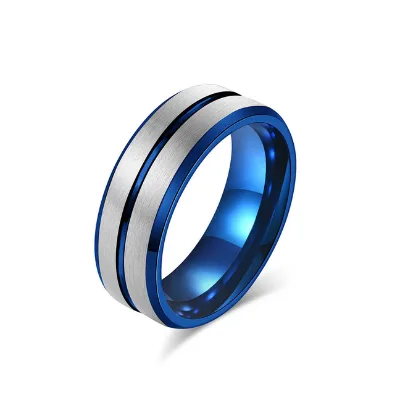


White Steel Carbide Cut Edge Rings All Kinds of Size with Factory Price
$20.00 - $300.00
MOQ: 1 Pieces


Comprehensive Sourcing Guide
Strategic Sourcing Guide for Beveled Edge Tungsten Rings
Understanding Product Variants and Material Composition
When sourcing a Beveled Edge Tungsten Ring, buyers must first navigate the complex landscape of material definitions and alloy compositions found in the current market. The core keyword implies a specific geometric finish, yet the underlying material can vary significantly between pure tungsten and tungsten-based alloys. In the observed product data, there is a distinct divergence in material classification. Some listings explicitly identify the material as "Alloy," while others specify "Non-alloy" or provide precise grade compositions such as "W80%, Cu20%." This variation is critical because a pure tungsten ring will possess different mechanical properties compared to a tungsten-nickel-iron alloy ring, which is often cited with a density range of 17g/cm³ to 18.65g/cm³.
The density of the material is a primary indicator of its authenticity and quality. High-density tungsten alloys are often marketed for their substantial feel, with some data points indicating a density of 19.1g/cc. However, buyers must verify if the "beveled edge" finish is applied to a solid tungsten core or a composite structure. The product attributes also highlight "Tungsten Steel Wire Ring" and "Tungsten Nickel Iron Alloy Ring" as specific models, suggesting that the term "tungsten ring" in a B2B context may encompass a broader category of heavy metal jewelry or industrial components. The "W-1" and "TC-1" model numbers observed in the data suggest that manufacturers utilize specific internal coding for different alloy mixes and processing methods.
Furthermore, the surface finish plays a pivotal role in the final appearance of the beveled edge. The observed data lists surface treatments ranging from "Polished and black" to "Chemical Cleaned/Polished" and "Machine Surface." A beveled edge requires precision machining to achieve the desired angle and smoothness. If the product is intended for industrial use, the "Sintered" or "Forging" conditions noted in the data become relevant. For jewelry applications, the "Polished" attribute is paramount to ensure the bevel reflects light correctly. Buyers should not assume that all beveled edge rings share the same surface treatment; the choice between a black oxide finish and a high-gloss polish will dictate the final aesthetic and potential application suitability.
Technical Specifications and Dimensional Standards
The technical specifications for beveled edge tungsten rings are highly variable, requiring buyers to define their requirements with precision before engaging suppliers. The observed data reveals a wide spectrum of dimensional capabilities. Some suppliers offer "Any" size, while others provide specific ranges such as "Dia2-100mm" or "Customizable" dimensions. This flexibility is essential for B2B procurement, as orders may range from small-scale jewelry components to larger industrial fittings. The shape is predominantly "Round," but "Square" shapes are also noted in the product attributes, indicating that the beveling process can be adapted to various cross-sections.
Standardization is another critical technical aspect. The data indicates compliance with "ASTM" and "GB" standards, alongside "ISO9001: 2000" for quality management systems. However, there is also a strong emphasis on customization, with standards listed as "according to your needs," "as your requirement/drawing," or "Customized." This suggests that while baseline standards exist, the majority of beveled edge tungsten rings are produced to specific client drawings. The "prod_standard" field often repeats "any shape" or "as your requirement," reinforcing the need for buyers to provide detailed engineering drawings or CAD files to ensure the bevel angle and edge radius meet their exact specifications.
The processing methods listed, such as "Electroplating," "Sintered," and "Forging," directly influence the dimensional stability and tolerance of the final product. For instance, sintered parts may require different machining allowances compared to forged components. The "prod_packing" details, ranging from "Wooden Box" to "Wooden Cases Inside with Foam Boards Protection," imply that the rings are delicate and require careful handling during transit, which is a consideration for logistics planning. Buyers must verify that the supplier's machining capabilities align with the required tolerance levels for the beveled edge, as a poorly executed bevel can compromise the structural integrity or aesthetic appeal of the ring.
Compliance, Certification, and Quality Assurance
Navigating the compliance and certification landscape for tungsten rings requires a careful review of the supplier's quality management systems and adherence to international standards. The observed data points to "ASTM" and "GB" as the primary material standards, while "ISO9001: 2000" is cited as a quality management standard. It is important to note that the presence of a standard name in a product listing does not automatically guarantee that every unit produced meets that standard without verification. Buyers should treat these certifications as indicators of the supplier's potential capability rather than a blanket guarantee of compliance for every batch.
The "Products Condition" field lists "Sintered" and "Forging" as available states, which are critical for verifying the manufacturing process. For applications in "Medical," "Industrial," "Electronics," or "Aviation," the purity of the tungsten is a key compliance factor. The data mentions a purity level of "99.95%," which is a specific claim that buyers should request third-party verification for. In sectors like aviation and medical devices, material traceability and purity are non-negotiable. Buyers must ensure that the supplier can provide mill test reports or certificates of analysis that confirm the alloy composition, such as the "W80%, Cu20%" or "Tungsten Nickel Iron" ratios, against the agreed-upon specifications.
Furthermore, the "Standard" field often includes "any shape" or "according to your needs," which can be ambiguous. Buyers should clarify whether the supplier adheres to specific industry standards for the bevel angle, edge radius, and surface roughness. For instance, if the ring is intended for use in a high-stress industrial environment, the supplier must demonstrate that the beveled edge does not introduce stress concentrations that could lead to failure. The "Chemical Cleaned/Polished" surface treatment also raises questions about environmental compliance and the disposal of chemical byproducts, which is a consideration for suppliers operating in regions with strict environmental regulations.
Cost Drivers and Pricing Variables
The pricing of beveled edge tungsten rings is influenced by a complex interplay of material costs, processing complexity, and order volume. The observed price range spans from $0.1 to $1000, a vast disparity that reflects the diversity of products, from simple decorative items to high-precision industrial components. The "MOQ" (Minimum Order Quantity) range of 1 to 500 units further illustrates that pricing is highly dependent on the scale of the order. Small orders, likely for prototyping or low-volume jewelry, will carry a higher unit cost due to the setup time and machine calibration required for custom beveling.
Material composition is a primary cost driver. Pure tungsten or high-purity alloys (e.g., 99.95%) generally command a premium over lower-grade alloys or composite materials. The density of the material, ranging from 17g/cm³ to 19.1g/cc, also affects the weight and, consequently, the cost per unit. Additionally, the complexity of the "beveled edge" geometry plays a significant role. A simple bevel is less expensive to machine than a complex, multi-angle bevel or a ring with a specific surface finish like "black" or "polished." The "Electroplating" process mentioned in the data adds another layer of cost, as it requires additional equipment, chemicals, and labor.
The "prod_packing" requirements, such as "Wooden Cases Inside with Foam Boards Protection," also contribute to the overall cost. Custom packaging is often necessary for high-value items to prevent damage during shipping, and this expense is typically passed on to the buyer. Furthermore, the "Location" of the supplier, specifically "Luoyang, Henan, China" or "Zhengzhou Shibo," can influence logistics costs and lead times. Buyers should factor in shipping, customs duties, and potential tariffs when calculating the total landed cost. The "OEM" (Original Equipment Manufacturer) capability listed in the data suggests that custom branding and design work will incur additional fees, which should be negotiated clearly before production begins.
Typical Applications and Industry Use Cases
Beveled edge tungsten rings serve a wide array of applications across multiple industries, driven by the material's unique properties of high density, hardness, and corrosion resistance. The observed data lists applications in "Medical," "Industrial," "Electronics," "Aviation," and "Chemical" sectors, indicating the versatility of the product. In the medical field, tungsten rings may be used as weights or components in imaging equipment, where high density is crucial. The "Industrial" application is broad, potentially covering machinery components, counterweights, or specialized fasteners that require the durability of tungsten alloys.
The "Electronics" sector utilizes tungsten for its thermal and electrical properties, making it suitable for heat sinks, connectors, or shielding components. The "Aviation" application is particularly demanding, requiring materials that can withstand extreme conditions while maintaining structural integrity. The "Chemical" industry may use tungsten rings for their resistance to corrosion in harsh environments. Additionally, the data mentions "Wedding" and "Decoration" applications, highlighting the dual nature of tungsten rings as both functional industrial parts and fashion accessories. The "Style: Fashion" and "Gender: Unisex" attributes suggest a significant market for jewelry, where the beveled edge adds a modern, sleek aesthetic.
The "Type" of product, such as "Tungsten Pipes" or "Prime Ring," further diversifies the application scope. While "Tungsten Pipes" are clearly industrial, "Prime Ring" and "Tungsten Steel Wire Ring" suggest a focus on jewelry or decorative items. The "Puzzle Game: Customized" and "Design: as Photo" attributes indicate that some suppliers offer highly customized designs for niche markets, such as promotional items or bespoke jewelry. Buyers must align their procurement strategy with the specific application requirements, ensuring that the chosen supplier has the expertise to meet the performance standards of the intended industry.
Supplier Evaluation and Quality Control Protocols
Evaluating suppliers for beveled edge tungsten rings requires a rigorous assessment of their manufacturing capabilities, quality control systems, and track record. The observed data highlights several key attributes that buyers should verify, including the "Brand" (e.g., "Zhengzhou Shibo"), "Location" (e.g., "Luoyang, Henan, China"), and "Standard" compliance. Buyers should request detailed information about the supplier's production facilities, specifically their ability to handle "Sintered" and "Forging" processes, as well as their capacity for "Electroplating" and "Polishing."
Quality control is paramount, especially for applications in "Medical" and "Aviation." Buyers should inquire about the supplier's inspection protocols, including in-process checks and final product testing. The "Surface" finish, whether "Polished," "Black," or "Chemical Cleaned," must be consistent and free from defects. The "prod_packing" method, such as "Wooden Box" or "Wooden Cases Inside with Foam Boards Protection," is also a critical indicator of the supplier's attention to detail and commitment to protecting the product during transit. Buyers should verify that the packaging is sufficient to prevent damage, especially for delicate beveled edges.
Furthermore, the "OEM" capability and "Customization" options should be evaluated to ensure the supplier can meet specific design requirements. The "prod_model" variations, such as "W-1," "TC-1," and "Tungsten Steel Wire Ring-003S," suggest that suppliers may have different product lines or capabilities. Buyers should request samples to verify the quality of the beveled edge and the overall finish before committing to a large order. The "Standard" compliance, including "ASTM," "GB," and "ISO9001: 2000," should be verified through documentation, and buyers should ensure that the supplier can provide certificates of conformity for each batch.
Long-Term Procurement and Supply Chain Considerations
Long-term procurement of beveled edge tungsten rings requires a strategic approach to supply chain management, focusing on reliability, scalability, and cost stability. The observed data indicates a wide range of "MOQ" values, from 1 to 500 units, which suggests that suppliers are flexible but may have different thresholds for pricing and lead times. Buyers should negotiate long-term contracts that lock in pricing and ensure consistent supply, especially for high-volume applications in "Industrial" or "Electronics" sectors.
The "Location" of the supplier, primarily in "Henan, China," offers logistical advantages but also introduces potential risks related to geopolitical factors and shipping delays. Buyers should develop contingency plans, such as maintaining safety stock or identifying alternative suppliers, to mitigate these risks. The "prod_packing" and "prod_origin" details should be reviewed to ensure that the supply chain is transparent and that the products are traceable from the factory to the end user.
Additionally, the "Standard" and "Specification" flexibility, such as "Any" size or "Customizable" dimensions, allows for long-term adaptability. Buyers should work with suppliers who can evolve their product offerings to meet changing market demands, such as new alloy compositions or surface treatments. The "OEM" capability ensures that the supplier can support branding and design changes over time, which is essential for maintaining a competitive edge in the market. By fostering a collaborative relationship with suppliers, buyers can ensure a stable and efficient supply chain for beveled edge tungsten rings.
Comparative Analysis of Product Attributes
To facilitate a clearer understanding of the diverse options available in the market, the following table summarizes the key product attributes observed in the data. This comparison highlights the variations in material, standard, and application that buyers must consider when selecting a supplier.
| Attribute Category | Observed Options | Key Considerations for Buyers |
|---|---|---|
| Material Type | Alloy, Non-alloy, W80% Cu20%, Tungsten Nickel Iron | Verify purity and alloy composition for specific application needs. |
| Density | 17g/cm³ - 18.65g/cm³, 19.1g/cc | Higher density often correlates with higher cost and specific industrial uses. |
| Surface Finish | Polished, Black, Chemical Cleaned, Machine Surface | Match finish to aesthetic or functional requirements (e.g., corrosion resistance). |
| Standard Compliance | ASTM, GB, ISO9001: 2000, Customized | Confirm specific standard adherence via documentation for regulated industries. |
| Shape | Round, Square, Any Shape | Ensure the supplier can machine the required geometry accurately. |
| Application | Medical, Industrial, Electronics, Aviation, Jewelry | Align supplier expertise with the intended end-use sector. |
| Packing | Wooden Box, Wooden Cases with Foam | Verify packaging adequacy for fragile beveled edges during transit. |
| Customization | OEM, Customized, As Photo, As Drawing | Confirm the supplier's ability to handle custom designs and branding. |
This comparative analysis underscores the importance of detailed specification in the procurement process. By carefully evaluating these attributes, buyers can make informed decisions that balance cost, quality, and performance requirements for their specific Beveled Edge Tungsten Ring needs.
FAQs
What customization options are available for beveled edge tungsten rings?
Customization is available for beveled edge tungsten rings to meet specific client needs. Buyers can request custom shapes, sizes, and surface finishes like polished or black. The product standard often follows the buyer's drawing or requirement rather than a fixed catalog item.
Which material standards apply to tungsten alloy rings?
Tungsten alloy rings typically comply with ASTM and GB standards. Some manufacturers also adhere to ISO9001: 2000 for quality management. The material may be classified as alloy or non-alloy, with specific grades like W80% Cu20% available for certain applications.
How is the density of tungsten rings determined?
The density of tungsten rings varies based on the specific alloy composition used. Observed data indicates densities ranging from 17g/cm3 to 18.65g/cm3 for nickel-iron alloys, while pure tungsten variants may reach 19.1g/cc. This variation depends on the manufacturing process and material purity.
Can buyers find tungsten rings with specific packaging requirements?
Yes, buyers can request specific packaging for tungsten rings to ensure safe transit. Options include wooden boxes or wooden cases with internal foam board protection. This packaging is designed to prevent damage during shipping, especially for high-value or delicate components.
What are the typical applications for beveled edge tungsten rings?
Beveled edge tungsten rings serve diverse applications including medical, industrial, electronics, and aviation sectors. They are also used in chemical environments and for wedding or decorative jewelry. The specific use case dictates the required purity, density, and surface finish of the ring.
Which surface finishes are offered for tungsten rings?
Multiple surface finishes are offered, including polished, black, and chemical cleaned options. Some products feature a combination of polished and black finishes. The choice of finish depends on the intended application, whether for industrial durability or fashion aesthetics.
How do MOQ and pricing vary for tungsten rings?
Minimum Order Quantities range from 1 to 500 units depending on the supplier and customization level. Pricing varies widely from 0.1 to 1000 USD based on material grade, density, and processing complexity. Custom orders with specific drawings or OEM branding typically incur higher costs.