Source Biochemical Reagent Lactate Dehydrogenase for Teaching, Industry, Agriculture
Compare 30 listings for biochemical reagent lactate dehydrogenase from verified Chinese suppliers. Buyers can evaluate enzyme activity, purity, packaging, and pricing for laboratory, teaching, and industrial applications.
Key considerations
Products List




Comprehensive Sourcing Guide
Strategic Sourcing Guide for Biochemical Reagent L-Lactate Dehydrogenase
Understanding Product Attributes and Technical Specifications
The procurement of L-Lactate Dehydrogenase (LDH) requires a precise understanding of its physical and biochemical characteristics, as these attributes directly influence storage, handling, and experimental efficacy. Based on current market observations, LDH is frequently categorized as a biochemical reagent intended for teaching, laboratory, and technical-grade practical use. The physical appearance of the product varies slightly by manufacturer but is predominantly observed as a white amorphous powder or a white liquid. Buyers must verify the specific form factor required for their workflow, as the physical state dictates the necessary packaging infrastructure.
The molecular profile of LDH is a critical specification for researchers. Observed data indicates a molecular weight of approximately 38 Kda, with isoelectric points typically ranging between 5.8 and 6.2. These values are essential for buffer preparation and electrophoresis applications. Enzyme activity is another pivotal metric; listings show activity levels ranging from 300u/Mg Protein to 400u/Mg Protein. Procurement teams must align these activity units with their specific assay requirements, as lower activity reagents may necessitate higher concentrations, potentially affecting reaction kinetics.
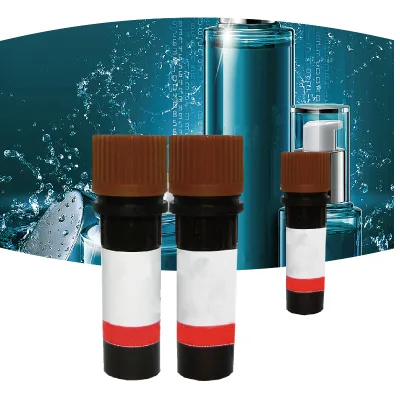
Storage conditions are non-negotiable for maintaining reagent integrity. While some specifications suggest storage in a dry and cool place, others explicitly require freezing at -20 degrees Celsius. This discrepancy highlights the importance of verifying the specific storage requirement for the batch being purchased. The shelf life is generally observed to be two years under proper conditions, but this is contingent upon adherence to the specified temperature and humidity controls. Packaging formats vary significantly, ranging from PE pipes for powder forms to plastic bottles for liquid variants, with single package sizes often standardized around 22x22x22 cm for shipping efficiency.
Compliance, Certification, and Regulatory Standards
Navigating the regulatory landscape for biochemical reagents involves verifying compliance with international standards and identifying specific product identifiers. A key identifier for LDH is the CAS No. 9001-60-9, which serves as a universal reference for chemical databases and safety data sheets. Additionally, the EINECS No. 232-617-8 is often cited for European compliance contexts. Buyers should ensure that the supplier provides documentation confirming these numbers match the specific lot being purchased to avoid regulatory discrepancies during customs clearance or institutional audits.
Quality standards in this sector are often expressed as purity percentages, with 99% being a common benchmark for refined biochemical reagents. However, the term "Technical Grade" or "Practical Use" suggests that the product may not meet the stringent purity levels required for high-end pharmaceutical synthesis, but rather for general laboratory and agricultural applications. It is crucial for buyers to distinguish between "Refined" quality and other grades to ensure the reagent meets the sensitivity requirements of their specific experiments.
Certification and testing methodologies are vital for risk mitigation. The MSDS (Material Safety Data Sheet) is frequently cited as the primary test method or documentation provided. Buyers must verify that the MSDS is current and aligns with the specific jurisdiction of their facility. Furthermore, the classification of the product as a "Biochemical Reagent" or "Medical Material & Accessory" (specifically Class II instruments in some contexts) determines the regulatory pathway for import and usage. If the reagent is intended for in vitro quantitative determination of lactate, the supplier must provide evidence that the product functions as claimed, though specific test results should be verified against the actual batch rather than assumed from general listings.
Cost Drivers and Pricing Dynamics
The pricing structure for L-Lactate Dehydrogenase is influenced by a complex interplay of factors, including enzyme activity, purity, packaging, and order volume. Market observations indicate a wide price range, from 1 USD to 1100 USD per unit. This variance is not arbitrary but correlates with the specific product model and activity units. For instance, models with higher enzyme activity (e.g., 400u/Mg Protein) or specific volume configurations (such as 60ml or 15ml) command different price points compared to standard powder forms.
Minimum Order Quantity (MOQ) is a significant cost driver. The observed MOQ range spans from 1 unit to 20,000 units, with specific listings showing an MOQ of 1 Kg for powder forms. Buyers with limited research budgets may find the lower end of the MOQ spectrum more accessible, while large-scale industrial or agricultural applications may benefit from bulk purchasing to reduce the per-unit cost. However, the high-end MOQ of 20,000 units suggests that some suppliers cater to massive industrial distributors, which may not be suitable for academic or small-to-medium laboratory procurement.
The origin of the product, specifically China, and the place of origin, such as Shaanxi, can influence logistics costs and lead times. While the supply base is robust, buyers should factor in shipping costs, which can vary based on the weight of the package (e.g., a single gross weight of 22.000 kg) and the dimensions of the single package. Additionally, the "Selling Units" being listed as "Single item" implies that pricing may be per bottle or per vial, requiring careful calculation of the total cost for the required volume of reagent.
Typical Applications and Usage Scenarios
L-Lactate Dehydrogenase serves a diverse array of applications, primarily centered around biological and chemical analysis. The primary usage is for the in vitro quantitative determination of lactate, making it indispensable in clinical diagnostics and metabolic studies. In an academic setting, it is frequently utilized as a teaching reagent and for general laboratory research, supporting experimental studies in biochemistry and physiology.
Beyond clinical and academic use, the reagent finds application in the agriculture and industry sectors. Its classification as a biochemical reagent suitable for practical use suggests it may be employed in agricultural testing or industrial fermentation processes where lactate levels are monitored. The product's function as a medical material and accessory further underscores its role in diagnostic procedures, where accurate quantification of lactate is critical for patient health assessments.
The specific usage also extends to cosmetic raw materials, indicating a potential market in the beauty and personal care industry for formulations requiring enzymatic activity or specific biochemical markers. Buyers must ensure that the reagent's intended use aligns with their specific application; a product labeled for "Teaching Reagents" may not have the same stability or purity profile as one designated for "Medical Materials." Understanding these nuances prevents the misuse of reagents in sensitive applications where higher precision is required.
Supplier Evaluation and Origin Verification
When evaluating suppliers for L-Lactate Dehydrogenase, the geographic origin is a primary consideration. The majority of available products originate from China, with specific mentions of Shaanxi as a production hub. While this region is known for chemical manufacturing, buyers should conduct due diligence to verify the supplier's reputation and operational history. The brand name "MeiYou" is one example of a manufacturer in this space, but reliance on a single brand is discouraged. Instead, buyers should assess multiple suppliers to ensure supply chain resilience.
Verification of the supplier's ability to meet specific product models is essential. Listings show distinct model numbers such as DR-356, YQEN0031, and YQEN0043, each with unique specifications regarding enzyme activity and standard units (e.g., 1ku, 5ku, 10ku). A competent supplier should be able to provide detailed technical sheets for each model number, confirming that the product matches the buyer's requirements. Additionally, the availability of customization is a key differentiator; suppliers offering customization can tailor packaging or concentration to specific client needs, adding value to the procurement process.
Buyers should also scrutinize the supplier's documentation practices. The presence of specific identifiers like CAS No. and EINECS No. in the product listing is a positive sign, but the supplier must be willing to provide these documents in a format compatible with the buyer's regulatory framework. The ability to provide a valid MSDS and proof of the 99% purity standard is non-negotiable for maintaining quality assurance.
Quality Control and Long-Term Procurement Considerations
Ensuring consistent quality in biochemical reagents requires a robust quality control (QC) strategy. The shelf life of two years is a standard benchmark, but this is only valid if the product is stored correctly. Buyers must implement a strict inventory management system that adheres to the specified storage conditions, whether it be a dry and cool place or a -20 degree Celsius freezer. Deviations from these conditions can lead to enzyme degradation, rendering the reagent ineffective.
Long-term procurement considerations involve establishing a reliable supply chain that can withstand fluctuations in demand. Given the wide range of MOQs, buyers should negotiate terms that allow for flexible ordering without compromising on price or quality. The availability of different packaging options, such as PE pipes and plastic bottles, offers opportunities to optimize storage and handling. For instance, larger quantities may be more cost-effective for long-term projects, while smaller units are better for short-term experiments or trials.
Finally, buyers should prioritize suppliers who offer clear and transparent communication regarding product attributes. The observation of varying properties, such as different isoelectric points or enzyme activities, underscores the need for precise specification matching. By maintaining a clear record of the product model, batch number, and test results, procurement teams can ensure traceability and accountability. This approach not only mitigates the risk of receiving substandard reagents but also facilitates smoother audits and regulatory compliance checks.
Comparative Analysis of Product Specifications
To facilitate informed decision-making, the following table summarizes the key specifications observed in the market for L-Lactate Dehydrogenase. This comparison highlights the variability in attributes that buyers must consider when selecting a supplier.
| Attribute | Observation 1 | Observation 2 | Observation 3 |
|---|---|---|---|
| Product Model | DR-356 | YQEN0031 | YQEN0043 |
| Appearance | White Amorphous Powder | White Liquid | White Liquid |
| Enzyme Activity | 300u/Mg Protein | 400u/Mg Protein | Not Specified |
| Isoelectric Point | 6.2 | 5.8 | Not Specified |
| Molecular Weight | 38 Kda | Not Specified | Not Specified |
| Purity/Standard | 99% | 1ku; 5ku; 10ku; 25ku | 1ku; 5ku; 10ku |
| Packaging | PE Pipe | Plastic Bottle | Plastic Bottle |
| Storage | Dry and Cool Place | Cool Dry Place | -20 |
| Origin | China | Shaanxi, China | China |
| MOQ | 1 Kg | 1 Kg | 1 Kg |
| CAS No. | 9001-60-9 | 9001-60-9 | 9001-60-9 |
This table illustrates that while core identifiers like CAS No. remain constant, physical and functional attributes vary significantly. Buyers must use this data to match their specific experimental needs with the correct product variant, ensuring that the enzyme activity, storage requirements, and packaging align with their operational capabilities.
FAQs
What is the standard purity level for this reagent?
The standard purity level is typically 99% for refined biochemical reagents. This specification applies to products classified as technical grade suitable for practical laboratory and agricultural use.
How should the product be stored to maintain quality?
Storage requirements vary by product model, with options including a dry and cool place or freezing at -20 degrees Celsius. Adhering to these conditions ensures the two-year shelf life is maintained effectively.
Which packaging formats are available for this enzyme?
Available packaging includes PE pipes for powder forms and plastic bottles for liquid variants. Single package dimensions are often standardized around 22x22x22 cm for efficient shipping and handling.
Can the product be customized for specific needs?
Customization is available for buyers requiring tailored specifications or packaging. This flexibility allows procurement teams to align the reagent with specific experimental or industrial workflow requirements.
What is the minimum order quantity for powder forms?
The minimum order quantity for powder forms is listed as 1 Kg. Buyers should verify specific MOQs as they can range from 1 unit up to 20,000 units depending on the supplier.
Where are the manufacturers of this reagent located?
Manufacturers are primarily located in China, with specific production hubs noted in Shaanxi. This origin influences logistics costs and lead times for international procurement.