Source Biodegradable Kraft Paper Window Bag for Shopping, Packing, and Gift
Find 30 listings for Biodegradable Kraft Paper Window Bag suitable for shopping, packing, and gift packaging. Compare specifications like size, color, and logo printing options from verified manufacturers in China.
Key considerations
Products List



Food Packaging Bags with Window Biodegradable Zipper Kraft Paper Paper
$0.03 - $0.04
MOQ: 10000 Pieces


Recyclable Brown Paper Bags with Window for Fresh Breads and Customizable Size
$0.01 - $0.40
MOQ: 30000 Pieces


Comprehensive Sourcing Guide
Strategic Sourcing Guide for Biodegradable Kraft Paper Window Bags
Navigating the global market for sustainable packaging requires a nuanced understanding of material properties, regulatory landscapes, and supplier capabilities. For buyers seeking biodegradable kraft paper window bags, the procurement process involves balancing environmental mandates with functional performance. The following guide synthesizes available market data to provide a structured approach for evaluating potential suppliers and defining product specifications. This analysis focuses on the intersection of material science, compliance verification, and operational logistics to ensure a robust sourcing strategy.
Defining Material Specifications and Functional Attributes
The foundation of any successful procurement for kraft paper window bags lies in the precise definition of material composition and physical attributes. The core material is identified as Kraft Paper, a robust option derived from wood pulp that offers high tensile strength. In the current market, this material is often paired with Art Paper or Paperboard to enhance print quality and structural rigidity. Buyers must verify that the "Paper Type" listed by suppliers aligns with the specific application, whether it requires the natural brown aesthetic of pure Kraft or the smooth, printable surface of Art Paper.
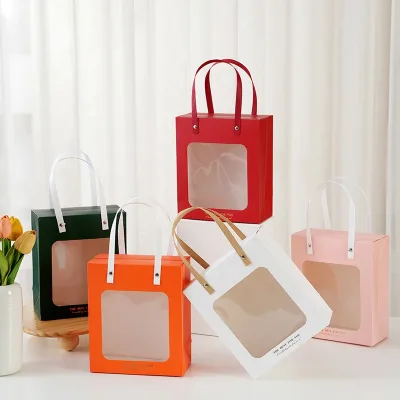
A critical functional attribute for this product category is the inclusion of a transparent window. This feature, often described as a "Transparent Window" or "Feature: with Transparent Window," allows for product visibility without compromising the biodegradable nature of the primary packaging. The window is typically integrated into the bag structure, which may be described as a "Composite Packaging Bag" in technical datasheets. This composite nature implies a lamination or bonding process that joins the paper substrate with a biodegradable film or plastic alternative.
Physical dimensions and load-bearing capacity are equally vital. Observed specifications indicate a weight limit of less than 5 kg, suggesting these bags are optimized for medium-weight retail items rather than heavy industrial goods. The shape of the bag can vary, with "Paper Packaging Bag" being a general descriptor, while specific models may feature "Self Erecting" capabilities or "Oval" geometries. Dimensions such as 14.5816.5cm or standardized sizes like 42*25CM are common, though "Customize as Requirement" is frequently available. Buyers should confirm the "Single volume" and "Single gross weight" to ensure compatibility with existing logistics and shelving systems.
Compliance Verification and Certification Standards
Environmental claims in the packaging industry require rigorous verification. While the product is marketed as "Biodegradable," buyers must demand evidence supporting this assertion. The market data indicates that suppliers may hold certifications from recognized bodies such as SGS and TUV. These certifications are essential for validating that the materials meet specific international standards for biodegradability and compostability.
Buyers should specifically inquire about compliance with standards like EN 13432, which is a European standard for packaging recoverable through composting and biodegradation. Although this standard is noted in background context, it represents a critical benchmark for European markets. Suppliers claiming compliance must provide valid test reports confirming that the product breaks down within a specific timeframe under industrial composting conditions. It is important to note that "FSC" certification is a relevant background consideration for paper sourcing, indicating responsible forest management, but its presence must be explicitly confirmed rather than assumed.
The "H.S. Code" for these products is typically 48173000, which classifies paper bags and containers. This classification is crucial for customs clearance and duty calculation. Additionally, the "Product Logistics Attributes" often list these items as "General Goods," but the presence of composite materials may trigger specific shipping regulations depending on the destination country. Buyers must verify that the "Certifications" listed on the supplier's profile are current and applicable to the specific batch of goods being ordered.
Cost Drivers and Pricing Structure Analysis
Understanding the cost structure of biodegradable kraft paper window bags is essential for budgeting and negotiation. The observed price range in the market spans from $0.01 to $3600, a wide variance that reflects differences in order volume, customization complexity, and material quality. The "Selling Units" are typically listed as "Single item," but the "MOQ" (Minimum Order Quantity) varies significantly, ranging from 50 pieces to 2 tons depending on the supplier's capacity and the specific product model.
Several factors drive the final unit cost. First, the "Customization" level is a primary cost driver. Options such as "Logo Printing" with custom logos, specific color requirements (e.g., White, Orange, Pink, Red, Green), and tailored dimensions increase production complexity and cost. The "Color Printing" capability, often customizable to requirements, adds value but also expense. Second, the "Making Process" involves composite packaging techniques, which may require specialized machinery and higher material costs compared to standard paper bags.
Payment terms also influence the financial planning of the procurement. Standard terms observed include "TT OR TRADE ASSURANCE," providing security for both parties. Buyers should be aware that "Sample" availability, such as "Stock Samples Is Free," can reduce initial risk but may not reflect the quality of mass-produced units. The "Lead Time" of 15-40 days or "Production Time 15-40 Days" must be factored into the total cost of ownership, as longer lead times may necessitate higher inventory holding costs or expedited shipping fees.
Typical Applications and Industrial Use Cases
The versatility of biodegradable kraft paper window bags makes them suitable for a diverse range of industrial applications. The "Usage" category encompasses "Shopping" and "Packing," indicating their primary role in retail environments. However, the "Application" field reveals a broader scope, including "Stationery Packaging," "Medical Packaging," "Gift Packaging," "Food Packaging," and "Cosmetic Packaging." This diversity suggests that the product can be adapted for various sectors, provided the material properties meet the specific hygiene and durability requirements of each industry.
For "Food Packaging," the "Waterproof Performance" is a critical attribute. While the product is described as "Waterproof," buyers must verify the extent of this performance, as paper-based materials generally have limitations regarding liquid exposure. The "Industrial Use" is further categorized as "Business&Shopping," reinforcing their utility in commercial retail settings. The "Shape" and "Box Type" (such as "Self Erecting Boxes") also play a role in application; for instance, self-erecting designs are ideal for high-speed packaging lines in gift or cosmetic industries.
The "Feature" of being "Biodegradable" is particularly relevant for brands targeting eco-conscious consumers. The "Logo" customization allows for branding that aligns with sustainability narratives. Whether used for "Party Accessories" or general "Shopping," the bag must maintain structural integrity while offering the aesthetic appeal of a natural material. Buyers should match the specific "Product Name" and "Model Number" (e.g., AC-1079, 0007-0088) to their specific use case to ensure the bag's dimensions and strength are appropriate.
Supplier Evaluation and Operational Logistics
Selecting the right supplier involves a comprehensive evaluation of their operational capabilities and logistical reliability. The "Place of Origin" is consistently listed as "Zhejiang, China," a major manufacturing hub for packaging products. This location suggests a mature supply chain with access to raw materials and specialized labor. However, buyers should verify the specific factory capabilities rather than relying solely on regional generalizations.
Key evaluation criteria include the supplier's ability to handle "OEM/ODM" requests. The "OEM/ODM: accept" attribute indicates flexibility in production, allowing buyers to customize the product to their unique brand needs. The "Customization: Available" status further supports this, but buyers must clarify the extent of customization, including the "Color Printing" options and the ability to create unique "Model" numbers.
Logistical considerations are paramount for international procurement. The "Typle of Shipping" options include "by Express, by Sea/Vessel, by Air, etc," offering flexibility based on urgency and budget. The "Packing" method, often described as "Carton" or "opp bag," affects the efficiency of loading and unloading. Buyers should confirm the "prod_packing" details to ensure the product arrives in optimal condition. Additionally, the "Lead Time" of 15-40 days requires careful planning to avoid stockouts. Suppliers offering "Sample" availability can help validate the production process before committing to large orders.
Quality Control and Long-Term Procurement Strategy
Establishing a robust quality control (QC) framework is essential for maintaining product consistency. The "Standard" for the product may be listed as "S, M, L" or specific dimensions like "42*25CM/Customized." Buyers should implement a QC protocol that verifies these standards against the actual delivered goods. This includes checking the "Hardness" (noted as "Medium Soft"), the "Weight Limit," and the integrity of the "Transparent Window."
Long-term procurement strategies should focus on building relationships with suppliers who demonstrate reliability in "Lead Time" and "Production Time." The variability in "MOQ" (from 50pcs to 2/Ton) allows for scalability, but buyers must ensure that the supplier can maintain quality as volumes increase. The "Feature" of biodegradability must be consistently maintained across batches, requiring regular re-verification of "Certifications" like SGS and TUV.
Furthermore, buyers should consider the "Product Logistics Attributes" and "H.S. Code" for long-term compliance. As regulations evolve, particularly regarding biodegradable materials, suppliers must be adaptable. The "Application" diversity suggests that a single supplier may not meet all needs; therefore, a diversified supplier base might be necessary. Finally, the "Payment Terms" and "Trade Assurance" options provide a safety net, but buyers should always conduct due diligence on the supplier's financial stability and reputation before entering into long-term contracts.
Summary of Key Product Parameters
To assist in the final decision-making process, the following table summarizes the critical parameters observed in the market for biodegradable kraft paper window bags. This comparison highlights the range of specifications available and the variables that buyers must address during the sourcing process.
| Parameter Category | Observed Attributes | Verification Requirement |
|---|---|---|
| Material | Kraft Paper, Art Paper, Paperboard | Confirm blend ratio and source |
| Dimensions | 14.5816.5cm, 42*25CM, Custom | Validate against shelving needs |
| Weight Limit | <5 kg | Ensure load capacity matches product |
| Features | Biodegradable, Waterproof, Transparent Window | Request test reports for claims |
| Certifications | SGS, TUV | Verify current validity and scope |
| MOQ | 50pcs - 2 Tons | Align with inventory strategy |
| Lead Time | 15-40 Days | Plan production schedule accordingly |
| Origin | Zhejiang, China | Confirm factory location and capacity |
| Customization | Logo, Color, Size, OEM/ODM | Define exact brand requirements |
By adhering to these guidelines and maintaining a rigorous approach to verification, buyers can successfully source high-quality biodegradable kraft paper window bags that meet both environmental goals and commercial requirements. The key lies in balancing the observed market data with specific, verified requirements for each unique procurement scenario.
FAQs
What certifications do biodegradable kraft paper window bags have?
These bags typically hold SGS and TUV certifications to verify biodegradability. Buyers should request current test reports to confirm compliance with standards like EN 13432 for industrial composting conditions.
Can I customize the logo and color on these paper bags?
Yes, custom logo printing and color options like white, orange, pink, red, and green are available. Suppliers accept OEM and ODM requests to tailor dimensions and printing to specific requirements.
What is the minimum order quantity for these packaging bags?
The minimum order quantity varies significantly, ranging from 50 pieces to 2 tons depending on the supplier. Buyers must check specific model requirements as some suppliers list different MOQs for single items versus bulk tonnage.
How long does production take for custom paper packaging orders?
Production time generally ranges from 15 to 40 days for custom orders. This lead time applies to the manufacturing process and should be factored into overall delivery planning alongside shipping methods.
Which materials are used to make these biodegradable window bags?
The bags are primarily made from Kraft Paper, Art Paper, or Paperboard. These materials are often combined in a composite packaging process to create a structure that includes a transparent window feature.
Where are these biodegradable paper bags manufactured?
The products originate from Zhejiang, China, a major manufacturing hub for packaging goods. Buyers should verify specific factory capabilities within this region rather than assuming general regional attributes.