Source Biodegradable Wooden Spoon for Coffee, Dining, and Catering
Compare 30 listings for Biodegradable Wooden Spoon options featuring eco-friendly bamboo and wood materials. Buyers can review certifications like CE and FDA, along with customizable sizes and packing details for bulk orders.
Key considerations
Products List


Eco Friendly 160mm Wood Disposable Biodegradable Table Knife Fork Spoon
$0.25 - $0.30
MOQ: 30000 piece


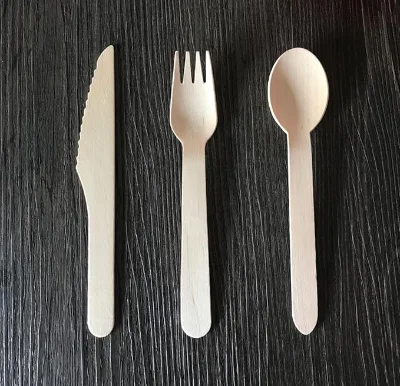


High Quality 95*15*1.3mm Disposable Ice Cream Spoon Wooden Spoons for Cooking
$0.01 - $0.02
MOQ: 50000 Pieces

Wooden Spoon Disposable Wooden Cutlery Forks Knives and Spoons 140mm 160mm
$0.01 - $0.02
MOQ: 50000 Pieces

Disposable Wooden Spoon Eco Friendly Mini Wooden Spoons Disposable Wooden Utensils
$0.01 - $0.02
MOQ: 50000 Pieces

Reusable Wood Spoon Disposable Birch Wooden Spoon for Snack Food Picks Eco Friendly
$0.01 - $0.02
MOQ: 50000 Pieces


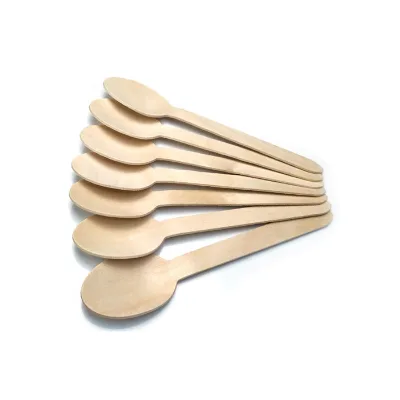

Eco-Friendly Biodegradable Forks Spoons Knife Disposable Cutlery Wooden
$0.01 - $0.04
MOQ: 10000 Pieces


Comprehensive Sourcing Guide
Sourcing Guide for Biodegradable Wooden Spoons
Understanding Product Specifications and Material Composition
When sourcing biodegradable wooden spoons, the primary focus must be on the raw material composition and the specific physical dimensions that define the product's utility. Based on the available market data, the core material for these items is consistently identified as Bamboo and Wood. This combination suggests a supply chain that leverages fast-growing bamboo for sustainability alongside traditional hardwoods or softwoods, depending on the specific manufacturer's formulation. Buyers should verify that the "Bamboo & Wood" designation is accurate for their specific order, as some listings distinguish between "Wood & Bamboo" or imply a single dominant material.
The physical specifications of these spoons vary significantly across different product models, which directly impacts their suitability for various food service applications. The observed product models include codes such as TC, TC07W, PB010445, PB120706, and GH042055. These alphanumeric identifiers often correspond to distinct dimensional standards. For instance, the standard length for certain models is listed as 140mm, while others are specified at 160mm. A third category of specifications indicates a range of 70mm to 95mm, likely corresponding to smaller, dessert, or baby spoons. Furthermore, detailed dimensional data for specific models reveals cross-sectional measurements, such as 140281.2mm or 160321.2mm. These precise measurements are critical for buyers to ensure the spoon fits standard packaging or specific food service requirements.
The weight of the spoons is another critical specification that influences shipping costs and perceived quality. Observed weights for these items range from 2.6g to 4.1g. A lighter spoon, such as one weighing 2.6g, may be preferred for cost-sensitive logistics or single-use scenarios where weight is a primary concern. Conversely, a heavier spoon at 4.1g might offer a more substantial feel, potentially reducing the likelihood of breakage during use. Buyers must cross-reference the model number with the specific weight and dimensions to ensure the product matches the intended application, whether it is for hot coffee, cold desserts, or general dining.
Compliance, Certification, and Regulatory Standards
In the B2B procurement of biodegradable cutlery, regulatory compliance is non-negotiable. The market data indicates that suppliers frequently provide a suite of certifications to validate the safety and environmental claims of their products. The most commonly observed certifications include CE/EU, FDA, LFGB, CIQ, and EEC. These certifications cover a broad spectrum of safety standards. The FDA (Food and Drug Administration) certification is essential for products intended for the North American market, ensuring the wood and bamboo materials do not leach harmful substances into food. Similarly, CE/EU compliance is mandatory for entry into the European Union, while LFGB (German Food and Feed Code) represents one of the strictest national standards for food contact materials in Europe.
The presence of CIQ (China Inspection and Quarantine) and EEC (European Economic Community) certifications further suggests that the supply chain is oriented toward international export standards. However, buyers must treat these certifications as observations of specific listings rather than universal guarantees for every product in the category. It is imperative to request current, valid certificates for the specific batch being ordered. The data also mentions "FSC" (Forest Stewardship Council) in a low-confidence background section; therefore, buyers should not assume FSC certification is standard unless explicitly confirmed by the supplier. Instead, the focus should remain on the high-confidence certifications like CE, FDA, and LFGB.
Beyond certifications, the "Standard" attribute in the product data often refers to dimensional tolerances or specific product models rather than safety standards. For example, values like 140mm, 160mm, and 110mm are listed under the "prod_standard" field. Buyers must clarify with suppliers whether these figures represent the maximum allowable tolerance or the exact nominal length. Additionally, the "Feature" attribute consistently highlights "Eco-Friendly" and "Biodegradable" as key selling points. While these are observed attributes, buyers should verify the specific biodegradation conditions (e.g., industrial composting vs. home composting) and the timeline for decomposition to ensure they align with their sustainability goals.
Cost Drivers and Pricing Dynamics
The pricing structure for biodegradable wooden spoons is influenced by a complex interplay of material costs, customization levels, and order volume. The observed price range in the market spans from $0.01 to $45.00 USD. This wide variance is not indicative of a single product type but rather reflects the difference between bulk raw materials and finished, customized, or premium-packaged sets. A unit price at the lower end of this spectrum typically corresponds to basic, non-customized, unicolor spoons sold in large quantities. In contrast, prices approaching the higher end may include custom branding, specific packaging configurations, or smaller batch sizes that incur higher per-unit processing costs.
Minimum Order Quantity (MOQ) is a significant cost driver in this sector. The data reveals an MOQ range from 1 unit to 100,000 units. Some suppliers list an MOQ of 50,000 pieces or 100,000 pieces, which is typical for standard, off-the-shelf items where economies of scale are required to keep unit costs low. Conversely, other listings show an MOQ of 10 cartons or even 5 cartons, suggesting flexibility for smaller buyers or those seeking customizations. The relationship between MOQ and price is inverse; as the order volume increases, the unit price generally decreases. Buyers must calculate the total landed cost, including freight, to determine the true cost per unit, especially when dealing with "Freight Collect" sample policies or high-volume shipments.
Packaging requirements also impact the final cost. The observed packing methods include "Carton Packing," "100PCS/Pack, 5000/Carton," and "100*100PCS/CTN." Customized packaging or specific carton configurations can add to the manufacturing cost. Furthermore, the "Customization" attribute is available, allowing for "Customized Logo Accepted." This service adds a layer of complexity to the production process, likely increasing the unit price and potentially raising the MOQ threshold. Buyers should weigh the marketing value of a custom logo against the increased procurement cost and minimum order requirements.
Typical Applications and Usage Scenarios
Biodegradable wooden spoons are versatile tools designed for a wide array of food service applications. The "Use" attribute in the product data explicitly identifies "Coffee" as a primary application, indicating that these spoons are suitable for stirring hot beverages. The "Type" attribute further categorizes the products as "Disposable Spoon" or "Disposable Cultery Set," suggesting they are intended for single-use scenarios where hygiene and convenience are paramount. The "Age" attribute lists "Adult" and "Everybody," confirming that these products are suitable for general consumer use across all age groups, though specific dimensions (like the 70-95mm range) might be more appropriate for children or specific dietary needs.
The "Folded" attribute is listed as "Unfolded," which implies that these are rigid, pre-formed spoons rather than collapsible or foldable items. This rigidity is essential for their function in stirring and serving. The "Color" attribute is noted as "Unicolor," suggesting that the natural wood or bamboo color is the standard finish, though customization options may allow for other finishes. The "Disposable" attribute reinforces the single-use nature of the product, making them ideal for takeout services, catering events, and food delivery platforms where washing and reusing cutlery is impractical.
The "Product Name" field, such as "Disposable Wooden Cutlery Set," indicates that these spoons are often sold as part of a broader set, potentially including forks or knives. This bundling strategy is common in the eco-friendly cutlery market, allowing businesses to offer a complete, sustainable dining solution. The "Feature" of being "Biodegradable" makes these spoons particularly attractive for businesses aiming to reduce their plastic footprint and comply with environmental regulations that ban single-use plastics.
Supplier Evaluation and Procurement Logistics
Evaluating suppliers for biodegradable wooden spoons requires a careful review of their operational capabilities and logistical terms. The "prod_origin" is consistently listed as "China," which is a major manufacturing hub for bamboo and wood products. Buyers should be aware that while this location offers competitive pricing, it also necessitates careful management of international shipping and import regulations. The "Delivery Time" is observed as "Within 35days," which serves as a benchmark for lead time expectations. However, this timeframe can vary based on order volume, customization requirements, and current supply chain conditions.
The "Samples" policy is another critical factor in supplier evaluation. The data indicates a "Freight Collect" policy for samples, meaning the buyer is responsible for the shipping costs of pre-production samples. This is a standard practice in the industry but should be factored into the initial budget. Buyers should request samples to verify the actual weight, dimensions, and finish quality against the listed specifications. For instance, verifying if a 140mm spoon is exactly 140mm or if it falls within a tolerance range is essential before committing to a large order.
When assessing suppliers, buyers should look for those who offer "Customization" services, as this indicates a higher level of manufacturing flexibility. The ability to accept "Customized Logo" and offer "Customized" or "Non-Customized" options allows buyers to tailor the product to their brand identity. However, buyers must also consider the "MOQ" constraints associated with customization. A supplier offering a low MOQ for standard items might require a significantly higher MOQ for custom-branded products. It is advisable to negotiate terms that balance the need for branding with the financial constraints of the order volume.
Quality Control and Long-Term Procurement Considerations
Maintaining quality in the procurement of biodegradable wooden spoons involves rigorous quality control measures and long-term strategic planning. The "prod_packing" specifications, such as "5000PCS/CTN" or "100*100PCS/CTN," highlight the importance of proper packaging to prevent damage during transit. Wooden products can be susceptible to moisture damage, breakage, or insect infestation if not packed correctly. Buyers should ensure that the packaging is robust enough to protect the spoons and that the carton quantities align with their storage and distribution capabilities.
Long-term procurement considerations include the stability of the supply chain and the consistency of the product quality. The "Feature" of being "Eco-Friendly" and "Biodegradable" is a dynamic market trend, and buyers should ensure that their suppliers can maintain this quality over time. Fluctuations in raw material availability, such as bamboo harvest cycles, can impact production consistency. Buyers should establish long-term contracts with suppliers who demonstrate a commitment to sustainable sourcing and consistent quality.
Furthermore, buyers should implement a quality control protocol that includes random sampling of incoming shipments. This process should verify the "Weight," "Standard" dimensions, and "Certification" validity. For example, checking if the weight of a spoon matches the specified 2.6g or 4.1g can indicate consistency in the manufacturing process. Additionally, verifying that the "Certification" documents (CE, FDA, LFGB) are current and applicable to the specific batch is crucial for regulatory compliance. By focusing on these detailed quality control aspects, buyers can mitigate risks and ensure a reliable supply of high-quality biodegradable wooden spoons for their operations.
FAQs
What certifications do biodegradable wooden spoons typically have?
Most listings include CE/EU, FDA, and LFGB certifications for food safety. Some products also carry CIQ and EEC marks to meet international export standards. Buyers should verify these certificates for specific batches before ordering.
How long is the delivery time for these wooden spoons?
The standard delivery time is within 35 days from the order date. This timeframe applies to production and shipping from China. Lead times may vary depending on order volume and customization requirements.
Can I get a custom logo on the wooden spoons?
Yes, custom logos are accepted for many Biodegradable Wooden Spoon models. This customization option is available alongside standard unicolor finishes. Buyers should expect potential changes to the minimum order quantity for branded items.
What are the standard dimensions for these disposable spoons?
Common lengths include 140mm, 160mm, and 110mm depending on the product model. Specific cross-sectional dimensions like 140*28*1.2mm are also available. Buyers must match the model number to the exact size needed for their application.
What is the minimum order quantity for these products?
Minimum order quantities range from 1 unit to 100,000 pieces depending on the supplier. Some standard items require 50,000 or 100,000 units, while others allow orders as low as 5 cartons. Customized orders often have higher MOQ thresholds.
Are these spoons suitable for serving coffee?
Yes, the product data explicitly lists coffee as a primary use case. These disposable wooden spoons are designed for hot beverages and general dining. They are also suitable for adults and children across various food service scenarios.
What material are these biodegradable spoons made from?
The primary materials are bamboo and wood, often listed as Bamboo & Wood or Wood & Bamboo. This combination ensures the product is eco-friendly and biodegradable. Buyers should confirm the specific material composition for their order.