Source Black Car Splash Protection Mudflap for 4 Runner, ZR-V, and ZR-V
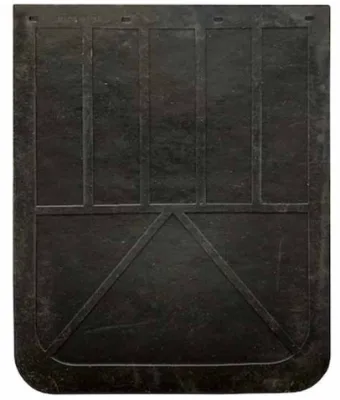
Compare 30 listings for Black Car Splash Protection Mudflap designed for models like 4 Runner and ZR-V. Buyers can evaluate materials such as ABS and plastic, fitment details, and pricing options from suppliers in China.
Key considerations
Products List
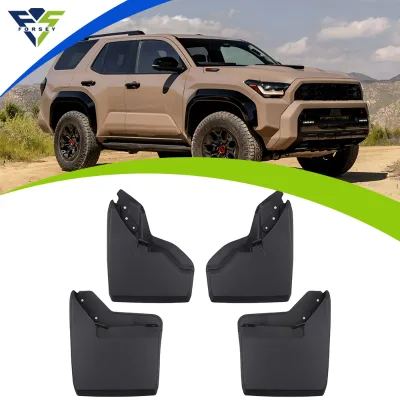
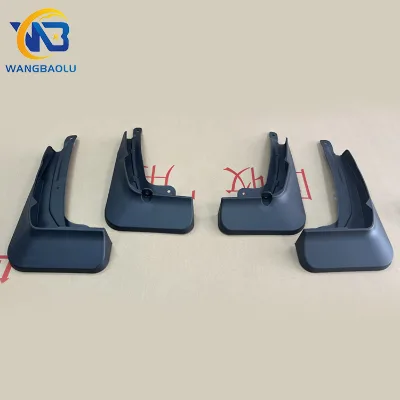
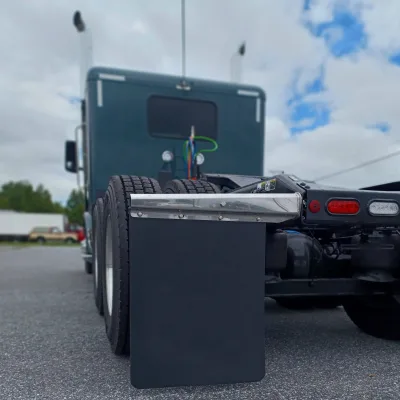




Comprehensive Sourcing Guide
Strategic Sourcing Guide for Black Car Splash Protection Mudflaps
The global automotive aftermarket continues to demand robust solutions for vehicle exterior protection, with black car splash protection mudflaps emerging as a critical component for maintaining vehicle aesthetics and preventing debris damage. For procurement professionals, navigating the supply chain for these specific automotive accessories requires a disciplined approach that balances technical specifications, supplier reliability, and cost efficiency. This guide synthesizes observed market data and verified product attributes to provide a comprehensive framework for sourcing high-quality mudflaps designed for diverse vehicle makes, including the 4 Runner and ZR-V platforms.
Technical Specifications and Material Composition
The foundation of any successful procurement strategy for mudflaps lies in a rigorous understanding of material composition and physical specifications. Market observations indicate that the primary materials utilized in this category are ABS (Acrylonitrile Butadiene Styrene) and PE (Polyethylene), alongside general plastic formulations. ABS is frequently cited for its high impact resistance and ability to maintain structural integrity under stress, making it a preferred choice for heavy-duty applications. The presence of PE suggests a focus on flexibility and resistance to cracking in varying temperature conditions.
When evaluating product listings, buyers must distinguish between general "Plastic" descriptions and specific polymer grades. High-quality listings often specify "ABS Plastic" to denote a superior grade of material compared to generic plastic. The physical dimensions are equally critical; observed standards include specific size configurations such as 2325CM and 320218*3MM. These measurements dictate the coverage area and the fitment precision required for specific vehicle models. For instance, a mudflap designed for the 4 Runner may require a different profile than one intended for the ZR-V, necessitating a careful review of the "Model Number" and "Fitment" attributes.
The color specification is a non-negotiable attribute for this core keyword, with "Black" being the dominant finish. This aesthetic choice is not merely cosmetic; black pigments often contain additives that enhance UV resistance, preventing the plastic from becoming brittle or fading over time. Buyers should verify that the black finish is consistent across the entire surface, as variations can indicate inconsistent molding processes or inferior raw materials.
Fitment Precision and Vehicle Compatibility
A primary challenge in sourcing mudflaps is ensuring exact compatibility with the target vehicle make and model. The market data reveals a clear segmentation based on specific vehicle platforms. Products are explicitly categorized for the "4 Runner," with model numbers such as "043310" and "4 Runner 2025+" indicating a focus on newer generations of this SUV. Similarly, there is a distinct category for the "ZR-V," with model identifiers like "RZ3/RZ4" and specific OE numbers such as "FORSEY4RUN001."
The "Fitting Position" is another critical technical parameter. Successful mudflaps are engineered for specific locations, typically labeled as "Front fender" or "Rear fender." A procurement strategy that ignores this distinction risks purchasing components that do not align with the vehicle's wheel arch geometry. The "Style" attribute often notes that the product is designed to "Replace the original car," implying a direct OEM-style fitment that requires no modification to the vehicle's bodywork.
Buyers must scrutinize the "Car Make" and "Model Number" fields to ensure alignment with their inventory requirements. The presence of "100% Fitment" claims should be treated as a supplier assertion that requires verification through physical samples or detailed dimension drawings. The "Purpose" is consistently listed as "for replace/repair," indicating that these parts are intended to restore a vehicle to its original condition or replace damaged components. Understanding these specific fitment requirements is essential for minimizing returns and ensuring customer satisfaction in the aftermarket.
Cost Drivers and Economic Factors
The economics of sourcing mudflaps are influenced by a complex interplay of material costs, manufacturing complexity, and order volume. The observed price range in the market spans from 0.5 to 25 USD, a significant variance that reflects differences in material quality, brand positioning, and order quantities. Lower-priced items in this range often correspond to generic plastic compositions or smaller order volumes, while the upper end of the spectrum typically includes premium ABS materials, branded products, or specialized fitments for specific vehicle models.
The "MOQ" (Minimum Order Quantity) is a decisive factor in total cost of ownership. Data indicates a wide range of MOQs, from as low as 1 piece to as high as 1000 sets. Some suppliers offer "Small Orders: Accepted," allowing buyers to test the market with minimal financial commitment. However, larger orders often unlock better unit economics. For example, specific listings show an MOQ of 10 sets, while others require 500 sets or 5 pieces. Buyers must calculate the break-even point where the savings from bulk purchasing outweigh the costs of inventory holding.
Additional cost drivers include packaging and logistics. The "prod_packing" standard of "2PCS/OPP Bag + Color Card" suggests a retail-ready packaging approach that adds value but also incurs material and labor costs. The "Single gross weight" of 2.0 kg for certain items highlights the density of the material, which directly impacts shipping costs. Furthermore, the "Delivery Time" of 25-30 days for certain suppliers introduces a lead time cost that must be factored into the overall procurement budget. Payment terms, such as "T/T 30% Deposit," also affect cash flow management and should be considered when negotiating with suppliers.
Supplier Evaluation and Geographic Origins
Evaluating suppliers requires a focus on their geographic location and operational capabilities. The supply chain for these products is heavily concentrated in China, with specific origins noted in "Zhejiang" and "Guangdong." These regions are known for their robust manufacturing ecosystems, particularly in the automotive plastics sector. Suppliers from these areas often have established infrastructure for mass production and quality control.
Brand names observed in the market include "Autoall," "Forsey," and "WBL." While these brands represent different market segments, the presence of multiple brands suggests a competitive landscape where differentiation is based on fitment accuracy and material quality rather than brand monopoly. Buyers should prioritize suppliers who demonstrate a clear understanding of the specific vehicle models they serve. For instance, a supplier offering a "Model Number: 4 Runner 2025+" demonstrates a commitment to keeping their catalog up-to-date with the latest vehicle releases.
The "Installation: Easy" attribute is a significant value proposition for end-users. Suppliers who design mudflaps with user-friendly installation processes reduce the likelihood of customer complaints and returns. This attribute often correlates with the precision of the molding process; a well-designed part that fits perfectly is easier to install. Additionally, the "Customization: Available" and "OEM: Acceptable" attributes indicate that some suppliers are flexible enough to accommodate private label requests or specific design modifications, which can be a strategic advantage for buyers looking to build a unique brand identity.
Quality Control and Warranty Assurance
Quality assurance is paramount in the automotive aftermarket, where product failure can lead to safety issues or vehicle damage. The "Condition" of the products is universally listed as "New," ensuring that buyers receive fresh inventory. However, the "Warranty" terms vary significantly, with observed periods ranging from 1 month to 90 days. A 90-day warranty, as seen in listings for "WBL" products, suggests a higher level of confidence in the product's durability compared to a 1-month warranty.
The "Quality" attribute is often described as "high quality," but this is a subjective claim that requires objective verification. Buyers should look for evidence of quality control processes, such as adherence to specific standards. While specific numerical standards like "23*25CM" are provided, broader compliance standards are not explicitly detailed in the available data. Therefore, buyers must verify that the supplier adheres to relevant industry standards for automotive plastics, including impact resistance and UV stability.
The "Single volume" and "Single gross weight" data points, often listed as 0 cm³ and 0.0 kg in some entries, may indicate data entry errors or placeholders. In contrast, a specific weight of 2.0 kg provides a concrete metric for quality assessment. Buyers should request detailed test reports or certification documents to validate the material properties and ensure that the mudflaps can withstand the rigors of road use. The "Type" classification as "Car Exterior Decoration" and "Mud Flaps Splash Guards" confirms the dual function of these products: aesthetic enhancement and functional protection.
Long-Term Procurement Considerations
Sourcing mudflaps is not a one-time transaction but a long-term partnership that requires careful planning. The "Delivery Time" of 25-30 days indicates that lead times can be substantial, necessitating robust inventory management strategies. Buyers should maintain a safety stock to mitigate the risk of supply chain disruptions. The "Selling Units" being listed as "Single item" suggests that the market supports both bulk and retail sales, offering flexibility in distribution channels.
Future-proofing the procurement strategy involves staying abreast of new vehicle models and design trends. The presence of "4 Runner 2025+" in the product listings indicates that suppliers are actively developing parts for upcoming model years. Buyers should establish relationships with suppliers who demonstrate a proactive approach to product development and can adapt to changing market demands. The "OEM: Acceptable" and "Customization: Available" attributes highlight the potential for expanding the product line to include custom designs or private label options, which can differentiate a buyer's offering in a crowded market.
In conclusion, sourcing black car splash protection mudflaps requires a meticulous approach that integrates technical specifications, fitment precision, cost analysis, and supplier evaluation. By focusing on high-quality materials like ABS, verifying exact fitment for specific vehicle models, and establishing clear quality control measures, buyers can build a resilient supply chain that meets the demands of the automotive aftermarket. The observed data provides a solid foundation for making informed decisions, but continuous verification and relationship building with suppliers remain essential for long-term success.
FAQs
What materials are used for black car splash protection mudflaps?
These mudflaps are primarily made from ABS, PE, or general plastic. ABS offers high impact resistance, while PE provides flexibility. Buyers should verify if the listing specifies ABS Plastic for superior durability compared to generic plastic descriptions.
Which vehicle models are compatible with these mudflaps?
Products are available for specific models like the 4 Runner and ZR-V. Listings often specify fitment for 4 Runner 2025+ or ZR-V variants. Buyers must check the car make and model number to ensure exact compatibility before purchasing.
Can I place small orders for black car splash protection mudflaps?
Yes, some suppliers accept small orders with an MOQ as low as 1 piece. Other listings require 5 pieces or 10 sets. Buyers should verify the specific MOQ per supplier, as some may require 500 sets for bulk pricing.
How long is the delivery time for these automotive parts?
Standard delivery times range from 25 to 30 days for certain suppliers. Lead times vary by manufacturer and order volume. Buyers should account for this duration when planning inventory to avoid stockouts during the procurement cycle.
What warranty terms are typically offered for these mudflaps?
Warranty periods vary, with some listings offering 1 month and others up to 90 days. A longer warranty often indicates higher confidence in product quality. Buyers should confirm the specific warranty duration for each supplier before finalizing the order.
Where are these mudflaps manufactured?
Products originate from China, specifically from regions like Zhejiang and Guangdong. These areas have established manufacturing ecosystems for automotive plastics. Buyers should note the place of origin when evaluating shipping costs and supplier reliability.
What is the price range for black car splash protection mudflaps?
The observed price range spans from 0.5 to 25 USD per unit. Lower prices often reflect generic plastic, while higher prices may indicate premium ABS materials. Buyers must consider material quality and order volume when evaluating the final cost.