Find Black Forged Aluminum Wheels for SUVs, Trucks, and Off-road
Source 30 listings for Black Forged Aluminum Wheels with sizes from 12 to 25 inches and certifications like ISO and TUV. Buyers can compare specifications, pricing, and customization options for various vehicle applications.
Key considerations
Products List


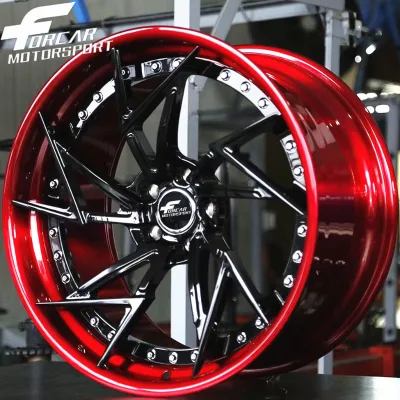


$185.00 - $190.00
MOQ: 1000 Pieces


Comprehensive Sourcing Guide
Strategic Sourcing Guide for Black Forged Aluminum Wheels
Understanding the Technical Architecture of Forged Aluminum Wheels
The procurement of Black Forged Aluminum Wheels requires a deep understanding of the specific manufacturing processes and material properties that distinguish them from cast alternatives. In the current market, the core keyword "Black Forged Aluminum Wheels" points to a segment where performance, weight reduction, and structural integrity are paramount. The supply data indicates that the primary material composition for these units is aluminum, with specific product attributes noting an aluminum content of approximately 45% in certain configurations, while others highlight alloy compositions ranging between 35% and 36%. This variance suggests that buyers must scrutinize the specific alloy grade and heat treatment processes, as the "forged" designation implies a high-pressure forming process that aligns the metal grain structure, resulting in superior strength-to-weight ratios compared to standard casting methods.
The finishing process is a critical differentiator for this product category. The observed data consistently lists "Black" as the primary finishing attribute, often achieved through powder coating or specialized painting processes that adhere to the high-strength forged substrate. The manufacturing methods identified in the market include casting, forging, and forming, indicating that a buyer must explicitly verify the "forged" claim, as some listings may conflate cast and forged terminologies. The drive wheel configurations vary, with observed data showing both 4WD and RWD (Rear Wheel Drive) applications, suggesting that the wheel design must be compatible with specific vehicle drivetrain requirements. Furthermore, the wheel rim specifications are diverse, with observed data indicating rim percentages of 71% and 60% in different product lines, which likely refers to the rim width or specific design proportions relative to the tire fitment.
Compliance, Certification, and Regulatory Standards
Navigating the regulatory landscape for automotive wheels is essential for ensuring that the purchased components meet safety and quality benchmarks. The supply data reveals a hierarchy of certifications that buyers should prioritize. The most frequently observed certifications include TUV, ISO, and DOT. Some product listings combine these into a comprehensive set: ISO, TUV, DOT, VIA, and CE. The presence of TUV certification is particularly significant as it often denotes rigorous testing for structural integrity and safety. ISO certification indicates adherence to international management system standards, while DOT compliance is mandatory for vehicles operating in North American markets.
When evaluating a supplier, buyers must verify the specific standards applied to the product. The data lists "aluminum alloy" as a general standard, but more specific dimensional standards are also present, such as "17"-24"" and "19"X6.75"". These ranges indicate that compliance is not a monolithic attribute but varies by wheel size and application. For heavy-duty applications, standards like "22.5x7.50" and "19.5x6.75" are observed, which are typical for commercial truck and trailer wheels. Buyers should request documentation proving that the specific batch of wheels they intend to purchase holds the relevant certifications for their target market. It is crucial to note that while "ISO,TUV,DOT,VIA,CE" is listed as a certification set for some items, this does not guarantee that every product in the "black forged aluminum" category possesses all these marks. Verification of the specific certificate for the exact model number is a mandatory step in the procurement process.
Cost Drivers and Pricing Dynamics
The pricing structure for Black Forged Aluminum Wheels is influenced by several variables, including material costs, manufacturing complexity, and customization levels. The observed price range in the market spans from 1 to 700 USD, a wide spectrum that reflects the diversity of product types, from small rim components to full wheel assemblies for heavy-duty vehicles. The lower end of this range likely corresponds to standard sizes or less complex designs, while the upper end reflects custom specifications, larger diameters, or specialized finishes.
Material costs play a significant role in the final price. The use of high-grade aluminum alloys, which are essential for forging, inherently increases the base cost compared to cast iron or lower-grade aluminum. The manufacturing method is another primary cost driver; the forging process is more energy-intensive and requires more expensive tooling than casting, which is reflected in the unit price. Additionally, the "Black" finishing process adds a layer of cost, particularly if it involves multi-stage painting or high-durability powder coating. Customization is a major factor in price escalation. The data confirms that customization is available for branding, dimensions, and finishes. Products with "Customizable" specifications for size (12-25"), brand, and finishing will command a premium over off-the-shelf inventory.
Minimum Order Quantity (MOQ) also impacts the effective cost per unit. The observed MOQ range is 1 to 1000 units. Buyers purchasing small quantities may face higher per-unit costs, while those committing to larger volumes can negotiate better pricing tiers. The packing method, whether "Carton," "Tray," or "Cardboard Box," can also influence logistics costs, which are often factored into the total landed cost. Buyers should analyze the total cost of ownership, including shipping and potential tariffs, rather than focusing solely on the listed unit price.
Typical Applications and Performance Specifications
The versatility of Black Forged Aluminum Wheels allows them to serve a wide array of applications, from high-performance passenger vehicles to heavy-duty commercial transport. The specification data highlights wheel hub diameters ranging from 16-20 inches up to 21-24 inches, indicating suitability for various vehicle classes. The size specifications further support this, with observed ranges of 18"-22" and 12-25" customizable options. This breadth of sizing suggests that these wheels are designed for both standard passenger cars and larger SUVs or light trucks.
The drive wheel attributes, specifically the mention of 4WD and RWD, confirm that these wheels are engineered for different traction requirements. In 4WD applications, the wheel must withstand higher torque loads and provide consistent performance across all four wheels. The "Three Section Variable Diameter Spoke" design observed in the data is a technical feature often associated with high-performance applications, offering a balance of aesthetic appeal and structural strength. This spoke design can reduce unsprung weight while maintaining rigidity, which is critical for handling and ride quality.
For commercial applications, the data points to specific models like "22.5x7.5" and "19.5x6.75 Blank Wheels," which are standard sizes for heavy trucks and trailers. The "140-10*50" standard mentioned in the context of these sizes refers to the bolt pattern and hub dimensions, which are critical for compatibility with commercial vehicle axles. Buyers must ensure that the wheel's hub diameter and bolt pattern match their vehicle's specifications precisely. The "High Quality" attribute observed in the data suggests that these wheels are intended for demanding environments where durability and safety are non-negotiable.
Supplier Evaluation and Production Capabilities
Selecting the right supplier is as critical as selecting the right product. The supply data indicates that the origin of these wheels is predominantly China, with specific mentions of "Made in China." While this provides a broad geographic context, buyers must look beyond the country of origin to evaluate the specific manufacturing capabilities of the supplier. The available manufacturing methods include casting, forging, and forming, and a reputable supplier should be able to demonstrate expertise in the forging process specifically, as this is the core of the product definition.
Buyers should request evidence of the supplier's production capacity and quality control systems. The presence of certifications like ISO and TUV is a positive indicator, but it is essential to verify that these certifications are current and applicable to the specific product line. The "Customizable" nature of the product, including branding and finishing, requires a supplier with flexible production lines and robust quality assurance protocols to ensure that custom orders meet the same high standards as standard inventory.
The packing specifications, ranging from "Carton" to "Standard Carton" or "a Tray or a Cardboard Box," provide insight into the supplier's attention to detail in logistics. Proper packaging is essential to prevent damage during transit, especially for finished wheels with delicate black coatings. Buyers should inquire about the supplier's experience with international shipping and their ability to handle the specific packaging requirements of their destination market.
Quality Control and Long-Term Procurement Considerations
Ensuring long-term success in sourcing Black Forged Aluminum Wheels requires a proactive approach to quality control and relationship management. The "High Quality" attribute observed in the data is a claim that must be validated through rigorous testing. Buyers should establish clear quality acceptance criteria based on the specific standards relevant to their application, such as impact resistance, fatigue life, and finish durability. The "Black" finishing should be tested for adhesion, corrosion resistance, and color consistency, as these are common failure points in wheel manufacturing.
Long-term procurement considerations include the availability of spare parts and the consistency of supply. The data shows various model numbers, such as "BT-DB-2010," "BT-14," and "BTC-19675," indicating a diverse product portfolio. Buyers should assess the supplier's ability to maintain consistent production of these models over time. The "Customizable" aspect of the product also implies a need for a stable supply chain that can handle design changes or volume fluctuations without compromising quality.
Furthermore, buyers should consider the lifecycle of the product. Forged aluminum wheels are designed for longevity, but the black finish may require maintenance or touch-ups over time. Suppliers who offer technical support and warranty coverage for their products can add significant value to the procurement process. Establishing a clear communication channel for quality issues and a defined process for handling non-conforming products is essential for maintaining a reliable supply chain. By focusing on these long-term factors, buyers can mitigate risks and ensure a steady supply of high-performance Black Forged Aluminum Wheels that meet their operational needs.
FAQs
What certifications do Black Forged Aluminum Wheels typically have?
These wheels often carry TUV, ISO, and DOT certifications. Some listings include additional marks like VIA and CE, but buyers must verify the specific certificate for the exact model number before purchase.
Which manufacturing methods are used for these aluminum wheels?
The available methods include casting, forging, and forming. Buyers should explicitly verify the forged claim, as some listings may conflate cast and forged terminologies despite the high strength of the forged substrate.
Can I customize the size and brand of these wheels?
Yes, customization is available for size, brand, and finishing. Specific sizes range from 12 to 25 inches, and buyers can request custom branding while noting that custom orders may command a premium price.
What is the typical price range for Black Forged Aluminum Wheels?
The observed price range spans from 1 to 700 USD. Lower prices likely correspond to standard sizes, while higher prices reflect custom specifications, larger diameters, or specialized finishes and manufacturing complexity.
Which wheel hub diameters are available for these products?
Available wheel hub diameters range from 16 to 20 inches and 21 to 24 inches. These dimensions indicate suitability for various vehicle classes, from standard passenger cars to larger SUVs and light trucks.
How are these wheels packaged for shipping?
Packaging options include cartons, trays, or cardboard boxes. Proper packaging is essential to prevent damage during transit, especially for finished wheels with delicate black coatings, and logistics costs are often factored into the total price.