Source Bovine Type II Collagen Powder for Skin, Joints, and Oral Use
Find 30 Bovine Type II Collagen Powder listings from China. Compare food-grade and undenatured options for skin care, joint repair, and oral supplements. Check specs, MOQs, and certifications to source reliable biological reagents and cosmetic ingredients; compare the available evidence and request quotations based on your requirements.
Key considerations
Products List




Comprehensive Sourcing Guide
Bovine Type II Collagen Powder Sourcing Guide
Procurement professionals must first distinguish between general bovine collagen and specific undenatured Type II variants, as the supplied data indicates distinct product models ranging from general food-grade powders to specialized biological diagnostic reagents. The observed listings reveal a wide spectrum of applications, from oral administration for joint health to specific uses in tablets and hard capsules, requiring buyers to verify the exact source material and processing method before placing orders.
Buyers should scrutinize the distinction between denatured and undenatured forms, noting that some listings explicitly claim derivation from chicken sternum cartilage while others specify bovine origins. This differentiation is critical because the biological activity and therapeutic efficacy vary significantly between these sources, and misidentifying the raw material can lead to procurement of products that fail to meet specific clinical or nutritional requirements for the intended end-user.
Product Scope and Observed Listing Signals
The market data presents a diverse array of product attributes, including variations in molecular weight ranging from 1000 to 2000 Daltons and different packaging formats such as 1kg bags or 25kg drums. These signals suggest that suppliers offer flexible solutions for both small-scale testing and bulk industrial manufacturing, with some listings highlighting specific certifications like FDA and GMP while others focus on OEM customization capabilities for branding.
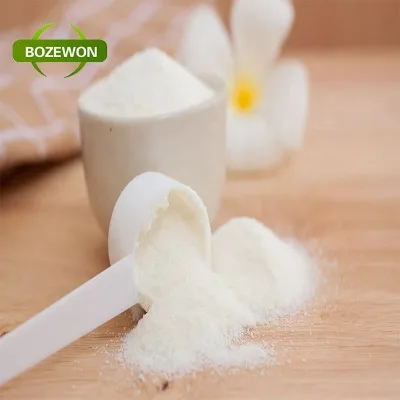
Buyers must carefully evaluate the listed appearance and quality descriptors, which consistently describe the product as a white powder with refined quality, yet the specific grade and intended use vary across the catalog. It is essential to confirm whether the product is suitable for adult consumption, elderly care, or pediatric use, as the suitability claims differ between listings and directly impact regulatory compliance in the target market.
Technical Specifications to Verify
Verification of the chemical formula and molecular weight is paramount, as the data shows conflicting entries where some products list specific formulas while others provide general nutrient compositions like amino acids. Buyers should demand precise documentation confirming the molecular weight range and the exact source of the collagen, ensuring that the product matches the required specifications for either food-grade applications or specialized biological diagnostic reagents.
The physical form and packaging standards require rigorous validation, as observed listings range from simple 1kg bags to complex double plastic container systems with aluminum protection. Procurement teams must confirm that the storage method aligns with normal temperature requirements and that the shelf life of two years is maintained under the specified logistics conditions, ensuring product integrity from the point of manufacture to the final point of use.
Compliance and Safety Documentation
Regulatory compliance is a primary concern, with observed listings citing certifications such as FDA, GMP, and CE, alongside specific GMP numbers that must be independently verified against official registries. Buyers should not rely solely on the presence of these labels but must request current, valid certificates that correspond to the specific batch and manufacturing facility to ensure adherence to international safety and quality standards.
Safety documentation must also address the specific usage modes, whether for oral administration or topical application, as the intended use dictates the required purity and contaminant limits. Procurement professionals need to ensure that the supplier provides comprehensive test reports verifying the absence of harmful residues and confirming that the product meets the stringent requirements for food-grade or pharmaceutical-grade materials in the destination country.
Cost Drivers and Commercial Terms
Pricing in this sector is influenced by the complexity of the extraction process, the molecular weight specifications, and the level of customization required, such as free logo printing or specific packaging configurations. The observed price range of 1 to 15,000 USD reflects the vast difference between small sample quantities and bulk industrial orders, necessitating a clear understanding of the total cost of ownership including shipping and handling fees.
Commercial terms must be negotiated with attention to the minimum order quantity, which varies from 1kg for samples to 1000kg for bulk transactions, and the specific payment structures offered by different suppliers. Buyers should clarify the lead times and express company options like FedEx or sea transportation, as these logistical factors significantly impact the overall cost and the ability to meet production schedules without incurring unexpected delays.
Supplier Qualification and Quality Control
Supplier qualification requires a deep dive into their manufacturing capabilities, specifically their ability to maintain the "Original Brand Manufacturing" status and provide consistent quality across different batches. The presence of a three-year quality guarantee period in some listings suggests a high level of confidence in product stability, but buyers must verify the terms of this guarantee and the specific conditions under which it applies.
Quality control protocols should be assessed through the supplier's adherence to GMP standards and their ability to provide traceability from the raw bovine material to the final packaged product. Procurement teams should request detailed quality assurance plans that outline testing procedures for molecular weight, purity, and microbial content to ensure that the final product consistently meets the rigorous standards required for human consumption or medical applications.
Long-Term Procurement Checks
Establishing a long-term partnership requires regular audits of the supplier's production lines and quality management systems to ensure ongoing compliance with evolving regulatory standards. Buyers should implement a schedule for periodic re-verification of certifications and test results, ensuring that the supplier maintains the high standards of refinement and purity observed in the initial product listings.
Continuous monitoring of supply chain stability is essential, particularly given the variability in lead times and the potential for changes in raw material availability. Procurement strategies should include contingency planning for supply disruptions and regular reviews of the supplier's ability to meet fluctuating demand, ensuring that the business can rely on a consistent supply of high-quality Bovine Type II Collagen Powder for its operations.
FAQs
What is the molecular weight of this Bovine Type II Collagen Powder?
The molecular weight ranges from 1000 to 2000 daltons. This specific range ensures optimal solubility and bioavailability for oral administration. It is suitable for formulating tablets, hard capsules, and granules. The refined quality supports effective integration into various dietary supplement structures for adult and elderly consumers.
Can I customize the packaging for bulk orders of Bovine Type II Collagen Powder?
Customization is available for bulk orders. Standard packing includes 1kg bags or 25kg drums with double plastic containers inside. You can also request OEM services with free logo printing. The outer cartons measure 55x97x25 cm. This flexibility supports diverse branding and logistical requirements for international buyers.
What certifications does this Bovine Type II Collagen Powder hold?
The product holds FDA, GMP, and CE certifications. The GMP number is GMP20140005. These credentials verify compliance with international quality and safety standards. The powder is food grade and refined. This ensures the material is safe for oral administration and suitable for high-quality dietary supplement manufacturing.
What is the minimum order quantity for Bovine Type II Collagen Powder?
The minimum order quantity is 1kg. This low MOQ allows buyers to test product quality before committing to larger volumes. Samples of 10g are also available for evaluation. The flexible ordering structure supports small businesses and large manufacturers alike in sourcing reliable raw materials efficiently.
How should I store Bovine Type II Collagen Powder to maintain quality?
Store the powder at normal temperature. The shelf life is two years when kept in proper conditions. Avoid exposure to moisture and direct sunlight. The double plastic container inside the drum provides additional protection. Proper storage ensures the amino acid composition remains stable and effective for your formulations.
Is this Bovine Type II Collagen Powder suitable for children?
Yes, the product is suitable for children, adults, and the elderly. It is refined and food grade. The powder serves as a natural amino acid resource. It supports joint health and skin care applications. The safe formulation makes it versatile for various demographic groups requiring nutritional supplementation.