Source Natural Coconut Shell Button for Garments, Shoes, Bags
Compare 30 listings for Natural Coconut Shell Button options suitable for jackets, shoes, bags, hats, and toys. Buyers can review customization, sizes, and material details from verified suppliers in China to find sustainable solutions; compare the available evidence and request quotations based on your requirements.
Key considerations
Products List


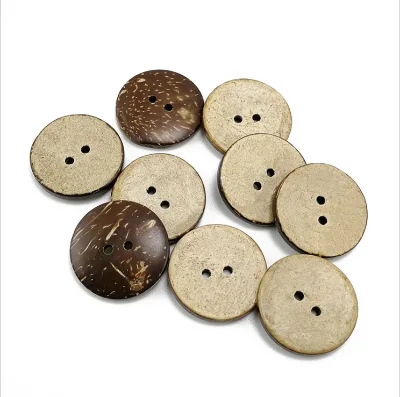

Natural Coconut Shell Buttons 2 Holes Button for Clothes Coat Wooden Buttons
$0.03 - $0.36
MOQ: 1000 Pieces


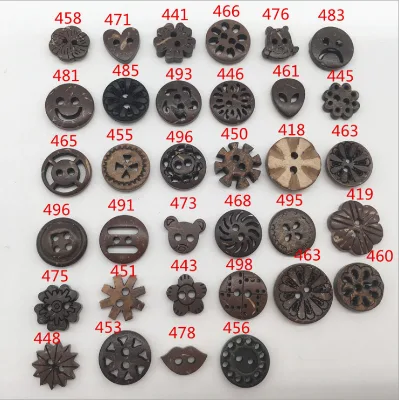
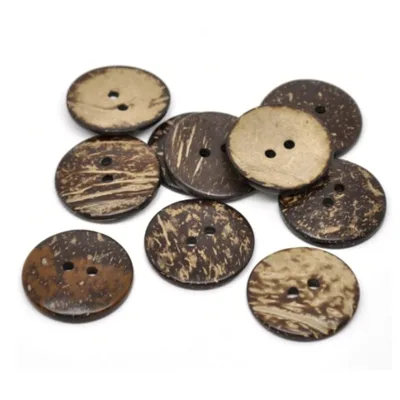
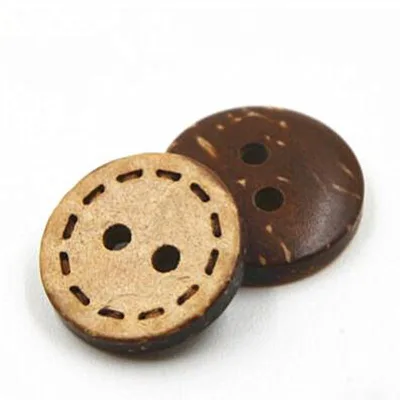
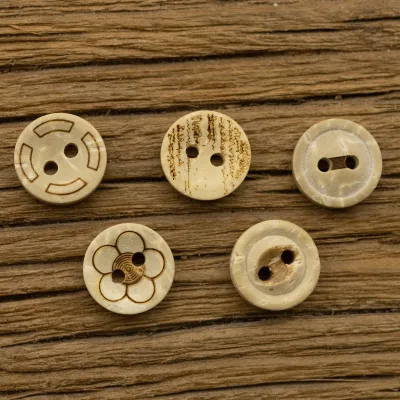


Button Natural Coconut Button for High Quality Garment Clothes Accessories
$0.05 - $0.25
MOQ: 5000 Pieces

Classical Two Hole Round Shape Natural Button Coconut Button for Shirts
$0.01 - $0.02
MOQ: 10000 Pieces

Four Hole Different Size of Natural Button Coconut Button for Clothing
$0.01 - $0.04
MOQ: 10000 Pieces

Comprehensive Sourcing Guide
Natural Coconut Shell Button Sourcing Guide
Natural coconut shell buttons occupy a distinctive position in garment accessories: they combine a renewable raw material with the warm, variegated grain that fashion buyers seek for vintage and eco-oriented collections. Because the material is an agricultural byproduct rather than a manufactured polymer, sourcing discipline matters more than with standard plastic trims. Listings in this category span simple 2-hole and 4-hole flat buttons to covered designs and customized-logo orders, so buyers must match product type to end use before comparing offers.
This guide is written for apparel brands, trim buyers, and sewing-accessory distributors evaluating natural coconut shell buttons on wholesale product pages. It explains what the observed listings actually signal, which specifications to confirm before sampling, what documentation to request for compliance, how cost and commercial terms typically behave, and which qualification and long-term checks keep a coconut-button program stable across repeat orders. Every recommendation is anchored to attributes visible on the supplied product pages.
Product Scope and Observed Listing Signals
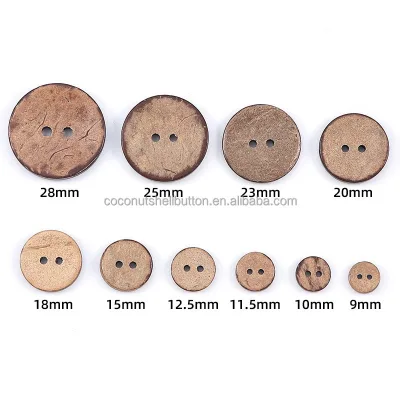
The observed listings describe round, flat buttons made from shell material, sold under model designations such as NCBT-8, N008, N009, N010, c-5, c-6, and YM-CB-006 and YM-CB-009. Stated sizes range from 12L–40L on one listing and 9mm to 50mm on another, with some sellers offering 20mm or fully customized sizing. Stated applications include jackets, sweaters, trousers, hats, bags, shoes, toys, and general decoration, which tells buyers these are garment and accessory trims rather than specialty hardware. Element descriptors include both Fashion and Vintage, signaling styling intent across market segments.
Commercial signals also differ meaningfully between listings. Observed prices run from roughly USD 0.01 to 0.36 per piece, and observed minimum order quantities range from 1,000 to 10,000 pieces — a wide spread that reflects whether a seller stocks commodity sizes or produces to order. One listing states stock availability while another states "Not Stock," and packing is described as carton on some pages and custom on others. Customization is explicitly available on the observed listings, including customized logos, so buyers should treat each page as an individual offer rather than assuming category-wide uniformity.
Technical Specifications to Verify
Size and hole configuration are the first checks. The listings show both 2-hole and 4-hole constructions, with one seller specifying a flat 2-holes button and another a 4-hole type — confirm which your sewing operation requires, since hole count affects machine settings and stitch appearance. Size notation should also be clarified: some listings use ligne (12L–40L) while others use millimeters (9mm–50mm), so convert carefully and confirm tolerance before approving a sample. Shape is listed as round on the observed pages, but edge profiles, thickness, and doming are not stated and should be confirmed on physical samples.
Material and finish details need equal attention. All observed listings describe shell material, with one specifying coconut specifically, and technics listed as "Covered" on at least one page — clarify whether the button is raw polished shell, dyed, waxed, or fabric-covered. Color handling varies across listings: some offer color matching, others monocolor only, and dyeing changes both cost and wash behavior. Ask whether stated features — machine wash, dry-clean capability, and dry-cleaning compatibility — were validated through testing or offered as design intent, and request sample buttons to run through your own garment care process.
Compliance and Safety Documentation
Buyers should request material declarations identifying the shell source and any finishing chemicals applied during polishing, dyeing, or coating. Because coconut shell buttons attach to garments intended for skin contact, ask suppliers for chemical test reports covering the dyes and surface treatments used — do not assume compliance from listing keywords. If your customer base requires restricted-substance screening, specify the test scope yourself in the purchase contract rather than relying on generic "sustainable" claims, which appear on the observed pages as a feature attribute but are not a substitute for documented results.
Small-part safety is a separate consideration. The listings include toys among stated applications, so if buttons will be used on children's products, verify attachment strength and small-part behavior against the safety rules applicable in your destination market — the supplier's product page will not confirm this for you. Request documentation of where production occurs; the observed listings state China as origin, with at least one specifying Zhejiang. Finally, ask whether the "Sustainable" feature claim is supported by any traceability information about the shell material, and record what evidence is actually provided before repeating any environmental claim to your own customers.
Cost Drivers and Commercial Terms
Observed unit pricing of USD 0.01 to 0.36 reflects the main cost levers in this category. Size drives material consumption — a 40L button uses substantially more shell than a 12L one. Finishing adds cost: color matching, dyeing, polishing grades, and covered construction each move price upward relative to natural-finish monocolor buttons. Customized logos typically require tooling or engraving setup, so ask whether logo charges are amortized into unit price or billed separately, and whether they repeat on reorders or recur each season.
Minimum order quantities observed range from 1,000 to 10,000 pieces, and stock status materially affects both MOQ and delivery. Stocked listings in commodity sizes generally accept lower quantities, while "Not Stock" made-to-order items — including custom sizes and logo work — sit toward the higher end. One listing supports a 7-day sample order lead time; confirm whether that applies only to samples or extends to production. Packing is stated as carton on some pages and custom on others, so specify inner-box counts, labeling, and carton marking in writing, since loose bulk packing can drive sorting labor at your garment factory.
Supplier Qualification and Quality Control
Qualify suppliers on their ability to control the natural variability inherent in shell material. Request samples spanning multiple production batches, not a single curated set, and grade them for thickness consistency, hole alignment, cracking, and color variance across the lot. Ask each candidate how they sort and grade raw shell discs before drilling, and whether they can hold a color-matching standard across seasons. Suppliers offering both stocked commodity buttons and made-to-order customization should be evaluated separately for each product type, since the production processes differ.
Agree on an inspection protocol before the first production order. Define acceptable limits for diameter tolerance, thickness, hole diameter, and visual defects, and state whether inspection follows AQL sampling or 100% sorting for premium lines. For logo or covered buttons, approve a signed physical seal sample and retain it as the arbitration reference for every reorder. Confirm packing counts per carton and run carton-level count verification on receipt, since undercounts are a common trim-side loss. Record which listed features — machine wash, dry-clean, adjustability claims — the supplier will stand behind contractually.
Long-Term Procurement Checks
Build repeat-order stability into your supplier relationship from the outset. Because several observed listings state "Not Stock," custom coconut buttons are produced to order, so confirm realistic production lead times for each season's volumes and lock capacity early for peak garment production windows. Verify that model numbers — such as N008, N009, N010, or YM-CB series — remain stable across reorders, and require written confirmation whenever a supplier changes shell source, dye lot, or finishing process, since natural material shifts can alter color and hardness between seasons.
Maintain a documented specification sheet for every approved button: material, size in both ligne and millimeters, hole count and placement, finish, color standard, packing configuration, and the agreed test or inspection basis. Re-verify compliance documentation periodically rather than assuming a one-time approval holds indefinitely, especially when destination-market rules for children's products apply. Track field performance — button breakage, hole pull-through, color fade after laundering — through feedback from your garment factories, and review supplier performance annually against defect rates, on-time delivery, and responsiveness on replacement orders before extending volume commitments.
FAQs
What sizes are available for natural coconut shell buttons?
Natural coconut shell buttons are commonly offered in sizes from 12L to 40L, with some listings covering 9mm to 50mm diameters. Many suppliers also accept custom sizes, so buyers outside the standard range can request a specific diameter. Confirm the ligne size, hole configuration, and thickness with the supplier before ordering, since size availability can vary by model and production batch.
Can coconut shell buttons be customized with a logo or specific color?
Yes, customization is generally available, including customized logos, color matching, and custom packaging. Suppliers typically engrave, print, or dye the shell surface depending on the design. Minimum order quantities usually apply for custom work, and sample orders can often be arranged within about seven days. Provide artwork and color references early so the supplier can confirm feasibility before production begins.
How should coconut shell buttons be cared for during garment washing?
Many coconut shell buttons are listed as suitable for machine washing and dry cleaning, and some are marketed as dry-clean friendly. Natural shell can lighten or darken with repeated exposure to water and heat, so test a sample through your full wash cycle. Wash garments inside out, avoid prolonged soaking, and verify color fastness on dyed or coated buttons before bulk production.
What minimum order quantities apply to natural coconut shell buttons?
Observed minimum order quantities for coconut shell buttons generally range from 1,000 to 10,000 pieces, depending on the model, size, and level of customization. Stock items may carry lower thresholds than made-to-order designs, while custom logos or colors typically require higher volumes. Always confirm the MOQ for your exact specification, as it can differ between standard and customized button listings.
Which button styles are common for natural coconut shell buttons?
Common styles include 4-hole, 2-hole, and flat buttons, with round shapes being standard for shell material. Sizes span 12L to 40L, and some models are adjustable while others are fixed. Applications include jackets, sweaters, trousers, shoes, hats, bags, and toys. Choose the hole type and thickness based on the fabric weight and sewing equipment used in your production line.
Can I get samples before placing a bulk order for coconut buttons?
Yes, many listings support a seven-day sample order lead time, allowing you to evaluate size, color, finish, and hole placement before committing. Note that some products are not held in stock, so sample production may follow the same customization path as bulk orders. Request samples in your target size, such as 20mm, and test them under real garment conditions before approving production.
Where are natural coconut shell buttons typically produced and shipped from?
Natural coconut shell buttons listed on this page originate in China, with some suppliers located in Zhejiang province. Carton packing is a common default, and custom packaging is often available on request. Shipping terms, freight costs, and delivery schedules vary by supplier and destination, so confirm origin details, packing format, and logistics arrangements directly with each vendor before ordering.
What are the typical uses of coconut shell buttons in garments and accessories?
Coconut shell buttons are used as decoration and functional closures on jackets, sweaters, trousers, shoes, hats, bags, bats, and toys. Their natural texture suits vintage and fashion elements, and color matching or monocolor finishes broaden styling options. Because they are natural shell products, slight variations in grain and tone between buttons are normal and are generally considered part of their appeal.