Source Brake Steel Shipping Container Caster for logistics
Find 30 Brake Steel Shipping Container Caster options with customizable models and load capacities ranging from 1 to 8 tons. Buyers can compare specifications including wheel materials, bearing types, and surface treatments to select the right equipment for ISO shipping containers.
Key considerations
Products List

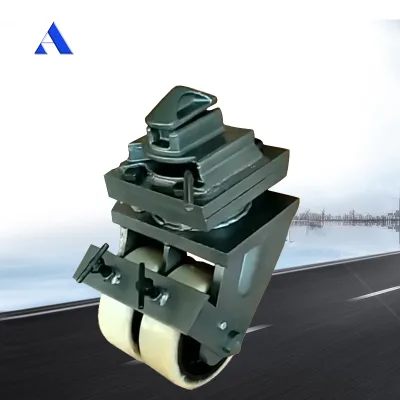
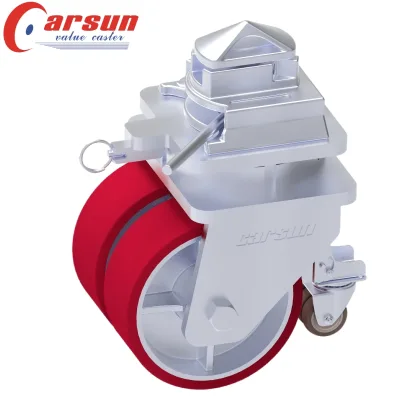
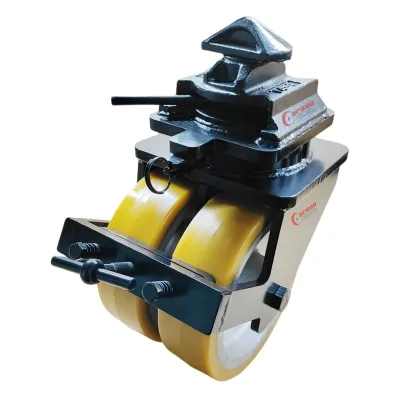
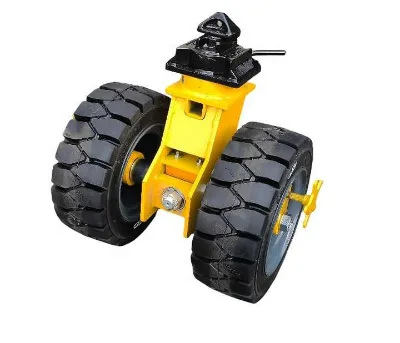
Stardrawing Sea Container Caster Wheel ISO Shipping Container Casters
$100.00 - $1000.00
MOQ: 4 Pieces


Shipping Container Casters 3000 Kg Container Wheel Caster with Twist Lock
$100.00 - $110.00
MOQ: 10 units





Comprehensive Sourcing Guide
Strategic Sourcing Guide for Brake Steel Shipping Container Casters
Understanding Technical Specifications and Material Composition
When sourcing brake steel shipping container casters, the primary objective is to identify components that meet the rigorous demands of heavy-duty logistics and ISO container handling. The core of this product category relies on a specific combination of materials and mechanical features. The wheel material is predominantly Polyurethane (PU), selected for its durability and resistance to abrasion in industrial environments. The wheel core is constructed from Cast Iron, providing the necessary structural integrity to support significant loads without deformation. The fork material is consistently Steel, ensuring that the mounting assembly can withstand the torsional stresses associated with container movement.
The braking mechanism is a critical differentiator in this category. Products in this segment are frequently listed with a "With Brake" attribute, indicating the inclusion of a locking mechanism to secure the container in place during loading, unloading, or storage operations. The bearing type is specified as Ball Bearing, which is essential for maintaining smooth rotation under heavy loads while minimizing friction. The wheel size varies, with common specifications including 4-inch, 6-inch, and 8-inch diameters. Specific models often cite a diameter of 8 inches as a standard configuration for heavy applications. The tread width is another variable; while some data sheets reference a width of 3 inches, buyers must verify the exact tread width against the specific data sheet for their application, as this affects stability and floor contact.
The surface treatment for the steel components is typically Zinc Plated, offering a baseline level of corrosion resistance suitable for warehouse and port environments. The color of the casters is often available in Black, Yellow, or Red, which can be relevant for safety coding or aesthetic consistency within a facility. The mounting height is a precise specification, often cited as 270mm, which dictates the clearance and compatibility with existing container chassis or lifting equipment. The side plate thickness is another critical dimension, frequently noted as 10mm, while the foot plate thickness may be specified at 14mm. These dimensional constraints are vital for ensuring the caster fits within the designated mounting points of a shipping container or its supporting structure.
Compliance, Certification, and Standard Verification
In the realm of industrial procurement, verifying compliance with international standards is non-negotiable. The supplied data indicates that manufacturers in this sector often hold certifications such as TS16949 and ISO9001:2000. These certifications suggest that the production processes adhere to specific quality management systems and automotive industry standards, which are highly relevant for components used in logistics and transport. However, buyers must treat these certifications as observations of the supplier's capabilities rather than automatic guarantees for every individual unit. The specific standard for the product itself is often listed as "Reference Below Data Sheet" or "Customized As Requested," meaning the exact technical standard (such as load ratings or safety factors) must be confirmed on a per-order basis.
The origin of these products is primarily China, with specific manufacturing hubs noted in Fujian. While the country of origin is a known fact, the specific standards applied during manufacturing can vary. Buyers should not assume that a product labeled with ISO9001 automatically meets every local safety regulation in their destination country. The certification status must be validated through the supplier's documentation for the specific batch being purchased. Furthermore, the product standard is often described as "Customized," implying that the final product may deviate from a generic standard to meet specific client requirements. This necessitates a rigorous review of the technical data sheet to ensure that the "Customized" standard aligns with the operational safety requirements of the buyer's facility.
It is also important to note that while some background knowledge might suggest standards like ISO 1161, the supplied facts do not explicitly confirm this standard for the product. Therefore, procurement teams should verify the applicable standards directly with the supplier rather than relying on general industry assumptions. The warranty period is typically listed as 1 Year, which serves as a baseline for the manufacturer's confidence in the product's durability, but this should be cross-referenced with the specific terms of the purchase agreement.
Cost Drivers and Pricing Dynamics
The pricing for brake steel shipping container casters exhibits a wide range, observed between $0.70 and $3,500 USD. This vast disparity is not indicative of a single product type but rather reflects the diversity of configurations, load capacities, and customization levels available in the market. The lower end of the price spectrum likely corresponds to smaller, standard configurations with minimal customization, while the upper end represents heavy-duty, fully customized units with high load capacities and specialized features.
Several factors drive the cost of these casters. The primary driver is the Load Capacity, which ranges from 1 Ton to 8 Ton in the observed data. A caster designed to handle 8 tons will inherently cost more than one rated for 1 ton due to the increased material usage (thicker steel forks, larger cast iron cores) and more robust bearing assemblies. The customization level is another significant cost factor. Options such as OEM (Original Equipment Manufacturer) and ODM (Original Design Manufacturer) support allow for tailored designs, which increase the unit price compared to off-the-shelf models. The specific model number, such as LHCW005, LHCW010, or LHCW011, often correlates with these capacity and feature differences.
Packaging also influences the final cost. Products are shipped in various formats, including Wooden Cases, Paper Boxes, or Pallets. A Wooden Case offers superior protection for heavy casters but adds to the shipping weight and cost. The selling units are typically listed as Single Item, but bulk orders may alter the per-unit economics. The Single Gross Weight is noted as 30.000kg for certain configurations, which directly impacts freight charges. Buyers must consider the total landed cost, including packaging and shipping, rather than focusing solely on the unit price. The MOQ (Minimum Order Quantity) ranges from 1 to 1000 units, meaning that smaller buyers may face higher per-unit costs due to the lack of economies of scale, while larger orders can negotiate better pricing tiers.
Typical Applications and Operational Requirements
The primary application for these casters is explicitly identified as ISO Shipping Container handling. This defines the operational environment, which involves moving heavy, standardized containers in ports, rail yards, and storage facilities. The "Container Twist Lock" feature is a critical specification, available with or without, depending on the specific model. This feature allows the caster to interface directly with the twist locks of a shipping container, facilitating secure lifting and positioning. The "Flat Free" style attribute suggests that some models are designed to prevent punctures, a valuable feature in environments where debris or sharp objects might damage standard pneumatic wheels, although the material composition here points to solid PU and Cast Iron rather than pneumatic tires.
The versatility of these casters extends beyond just shipping containers. The "Rotating Wheel" type indicates 360-degree swivel capability, essential for maneuvering in tight spaces. The "Style" and "Color" options allow for customization to match facility safety protocols or branding. The load capacity options (1 Ton through 8 Ton) ensure that the casters can be matched to the specific weight of the container and its contents. For instance, a 3-ton capacity caster might be used for smaller containers or specific equipment, while 8-ton models are reserved for heavy industrial applications. The mounting height of 270mm and side plate thickness of 10mm are designed to integrate seamlessly with standard container chassis and lifting equipment.
Supplier Evaluation and Customization Capabilities
Evaluating a supplier for brake steel shipping container casters requires a focus on their ability to provide customization and support. The data confirms that "Customization" is available, with specific support for OEM and ODM services. This means suppliers can modify the design, materials, or dimensions to meet unique client needs. The "prod_model" is often listed as "customization," indicating that the model number itself may change based on the client's specifications. Buyers should verify the supplier's capacity to handle these custom requests, including their engineering capabilities and lead time for non-standard orders.
The supplier's location is primarily in China, with Fujian being a noted origin. This geographic concentration suggests a mature supply chain for these specific components. However, buyers should not rely solely on the location but must assess the supplier's track record for quality and reliability. The "Lead Time" is listed as "Negotiable," which is a critical factor for procurement planning. Buyers must clarify the lead time for both standard and customized orders, as customization can significantly extend the production schedule. The "Warranty" of 1 Year is a standard offering, but the terms of this warranty, including coverage for wear and tear or manufacturing defects, should be clearly defined in the contract.
When evaluating suppliers, buyers should also consider the "Package" options. Whether the supplier offers Pallet or Wooden Case packaging can impact the safety of the goods during transit. The "Selling Units" being Single Item suggests flexibility in ordering, but buyers should inquire about volume discounts. The "Capacity" of the supplier, ranging from 1-5 Ton in some contexts, should be matched against the buyer's volume requirements to ensure the supplier can meet demand without delays.
Quality Control and Long-Term Procurement Considerations
Quality control is paramount when sourcing industrial casters. The presence of certifications like TS16949 and ISO9001:2000 indicates a commitment to quality management, but buyers must implement their own verification processes. This includes requesting test reports for load capacity, braking performance, and bearing durability. The "Side Plate Thickness" and "Foot Plate Thickness" are critical dimensions that must be verified through physical inspection or third-party testing to ensure they meet the specified 10mm and 14mm requirements. Deviations in these dimensions can lead to premature failure under load.
Long-term procurement considerations involve the lifecycle of the product. The "Warranty" of 1 Year provides a baseline, but buyers should plan for maintenance and replacement. The "Material" composition, including Nylon, Rubber, Steel, and Cast Iron, suggests a robust product, but the interaction between these materials in the field should be monitored. The "Surface Treatment" of Zinc Plated offers corrosion resistance, but in harsh environments, additional protection or more frequent inspections may be necessary. The "Tread Width" and "Wheel Size" affect the wear rate of the wheel; wider treads and larger diameters generally offer longer service life but may require more space.
Buyers should also consider the "prod_packing" options for long-term storage. Wooden Cases and Paper Boxes offer different levels of protection, and the choice should align with the storage environment. The "Single Gross Weight" of 30.000kg highlights the need for proper handling equipment and storage infrastructure. Finally, the "Lead Time" being negotiable means that buyers should build buffer time into their supply chain planning, especially for customized orders. By maintaining a proactive approach to quality control and supplier relationship management, buyers can ensure a steady supply of reliable brake steel shipping container casters for their operations.
Comparative Analysis of Key Specifications
To facilitate decision-making, the following table summarizes the key specifications observed in the market for brake steel shipping container casters. This comparison highlights the variability in attributes that buyers must evaluate.
| Specification Category | Observed Values / Options | Critical Verification Point |
|---|---|---|
| Wheel Material | PU (Polyurethane) | Verify hardness and abrasion resistance for specific floor types. |
| Wheel Core | Cast Iron | Confirm structural integrity for high-load applications. |
| Fork Material | Steel | Check for zinc plating thickness and corrosion resistance. |
| Brake Type | With Brake | Test locking mechanism under load to ensure security. |
| Bearing Type | Ball Bearing | Verify smooth rotation and load rating under dynamic conditions. |
| Wheel Size | 4", 6", 8" (Diameter) | Match size to container chassis clearance and floor space. |
| Load Capacity | 1 Ton to 8 Ton | Ensure capacity exceeds maximum container weight + safety margin. |
| Mounting Height | 270mm | Verify compatibility with existing lifting equipment and chassis. |
| Side Plate Thickness | 10mm | Measure to ensure structural rigidity and fit. |
| Foot Plate Thickness | 14mm | Confirm thickness for bolt strength and stability. |
| Certification | TS16949, ISO9001:2000 | Request valid certificates and verify scope of coverage. |
| Customization | OEM, ODM, Custom Model | Define specific requirements clearly in the purchase order. |
| Origin | China (Fujian) | Consider logistics lead times and import regulations. |
| Warranty | 1 Year | Review terms for coverage of manufacturing defects vs. wear. |
This table serves as a checklist for buyers to ensure that all critical parameters are addressed during the sourcing process. By systematically verifying each point against the supplier's data sheet and physical samples, buyers can mitigate risks and secure high-quality casters that meet their operational needs.
FAQs
What certifications do brake steel shipping container casters have?
These casters typically hold TS16949 and ISO9001:2000 certifications. Buyers must verify these documents for specific batches as standards may vary by order.
Which wheel materials are used for these heavy-duty casters?
The wheels are primarily made of Polyurethane with a Cast Iron core. Some variations also incorporate Nylon, Rubber, and Steel components for specific applications.
Can these casters be customized for specific container requirements?
Yes, customization is available including OEM and ODM support. Buyers should request specific data sheets as the standard may be customized as requested.
What is the typical load capacity range for these casters?
Load capacities range from 1 Ton up to 8 Ton depending on the model. Select the correct capacity based on the specific container weight and operational needs.
How long is the lead time for ordering these casters?
The lead time is negotiable and depends on the order volume and customization level. Buyers must confirm the specific schedule with the supplier before placing an order.
What packaging options are available for shipping these casters?
Products are shipped in Wooden Cases, Paper Boxes, or on Pallets. The specific packaging method is selected to ensure safe transport of the heavy components.
Which bearing type ensures smooth rotation under heavy loads?
Ball bearings are used to ensure smooth rotation and minimize friction. This design supports the high load capacities required for ISO shipping container handling.