Source Breathable Mesh Water Shoes for swimming, hiking, and beach activities
Find 30 listings of Breathable Mesh Water Shoes with varying features like waterproofing, insole materials, and sizes. Buyers can compare specifications from Chinese manufacturers to select the right footwear for outdoor sports and summer use.
Key considerations
Products List


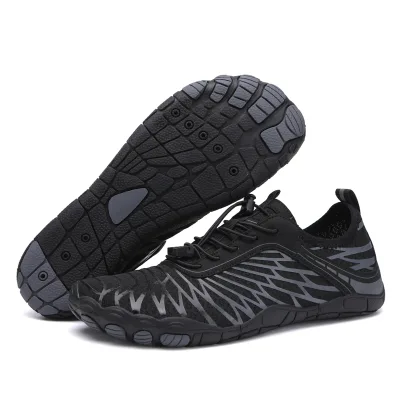


Wholesale Breathable Lightweight Water Shoes, Beach Shoes, Outdoor Aqua Shoes
$3.90 - $40.00
MOQ: 1 Pairs


Comprehensive Sourcing Guide
Strategic Sourcing Guide for Breathable Mesh Water Shoes
Understanding Product Specifications and Material Composition
When sourcing Breathable Mesh Water Shoes, the primary objective is to identify products that balance hydro-dynamic performance with thermal regulation. The core attribute of these footwear items is their construction, which typically integrates mesh fabrics to facilitate rapid water drainage and air circulation. Based on observed market data, the insole materials vary significantly between rubber and EVA (Ethylene-Vinyl Acetate), each offering distinct benefits for the end-user. Rubber insoles provide durability and a firm grip, whereas EVA insoles offer superior cushioning and lightweight properties, which are critical for extended wear during aquatic activities.
The upper material composition is equally vital. The supply chain data indicates a prevalence of fabric-based uppers, often combined with rubber or EVA for structural integrity. Some models utilize a specific blend of PU (Polyurethane) and fabric, while others rely on a Fabric+Rubber combination. The presence of mesh lining, specifically noted in certain product lines, enhances the breathability factor, ensuring that the foot remains cool even in high-temperature environments. Buyers must verify the specific material ratios, as a "breathable" claim does not guarantee the same level of airflow across all fabric types. The toe shape is predominantly round, a design choice that accommodates various foot widths and prevents constriction when the shoe is wet. Furthermore, the opening depth is generally low, facilitating easy entry and exit, which is a standard requirement for water shoes intended for quick transitions between land and water.
Functional Attributes and Design Features
The functional design of Breathable Mesh Water Shoes extends beyond mere material selection; it encompasses specific features engineered for safety and comfort. A critical attribute observed in the market is the anti-slip pattern on the outsole. This feature is non-negotiable for water shoes, as wet surfaces present significant slip hazards. The anti-skid design ensures traction on slippery rocks, pool decks, and boat surfaces. Additionally, the waterproof status of these products varies. While some listings explicitly state "Waterproof," others are marked as "Not Waterproof." This distinction is crucial for procurement strategy. "Not Waterproof" models are typically designed for maximum breathability and quick drying, making them ideal for river running or beach activities where water entry is expected. Conversely, "Waterproof" variants may be intended for specific cold-water scenarios or protection against splashes while maintaining a dry interior.
Seasonality plays a significant role in the selection process. The majority of these products are categorized for Summer use, leveraging their breathable nature to combat heat. However, some listings indicate a broader seasonal applicability, covering Spring, Summer, Autumn, and Winter. This suggests that certain models may feature thicker linings or insulated materials suitable for colder water temperatures, provided the breathability is maintained. The gender classification is predominantly unisex, allowing for a streamlined inventory management approach for retailers. The closure patterns also vary, with options ranging from elastic bands to Velcro straps. Elastic bands offer a slip-on convenience, while Velcro allows for adjustable fit, which is essential for securing the shoe during vigorous activity. The production method is noted as either hand-made or machine-made, with a significant portion of the market offering non-handmade options, which generally implies higher consistency and lower cost per unit for bulk orders.
Technical Standards and Size Compatibility
Standardization in footwear sizing is a complex area that requires careful verification during the sourcing process. The data reveals a fragmented landscape of size standards across different product models. For instance, specific models like JF-4016 are listed with a size range of 39-50, while others such as JF-4015 cover 36-46. Other models, including JF-4018, JF-4020, JF-4014, and JF-4002, exhibit varying ranges from 34-49 down to 39-46. This variance indicates that there is no single universal standard for these water shoes. Buyers must explicitly confirm the size chart for each specific model number to ensure compatibility with their target demographic.
The material standards also vary by model. Some products are standardized by EVA, while others are defined by Rubber+Fabric or PU+Fabric compositions. The origin of these products is consistently identified as China, which is a major hub for footwear manufacturing. When evaluating technical specifications, buyers should look for the specific product model numbers (e.g., STL-AS-026, STL-AS073, STL-AS031, STL-AS009, STL-AS070A) as unique identifiers. These model numbers often correlate with specific material blends and size ranges. It is imperative to request the technical data sheet for each model to understand the exact dimensions and weight, as these factors influence shipping costs and the final retail price. The lack of a unified standard means that a "size 40" in one model may differ in length or width from a "size 40" in another, necessitating strict quality control during the sampling phase.
Cost Drivers and Pricing Dynamics
The pricing structure for Breathable Mesh Water Shoes is influenced by several key factors, including material composition, production complexity, and order volume. The observed price range in the market spans from $1.85 to $1500 USD. This wide disparity suggests that the market includes both basic, mass-produced units and high-end, specialized footwear. The lower end of the spectrum likely corresponds to simple fabric and rubber constructions with minimal customization, while the higher end may involve advanced materials, specialized branding, or complex manufacturing processes.
Minimum Order Quantity (MOQ) is another significant cost driver. The data indicates an MOQ range from 1 to 1500 pairs. Some suppliers offer low MOQs, such as 100 pairs or even single units, which is beneficial for startups or buyers testing the market. However, higher volume orders often require MOQs of 500 pairs or more. The relationship between price and MOQ is inverse; as the order quantity increases, the unit price typically decreases. Buyers should also consider the packaging requirements, which range from simple polybags to more elaborate shoe boxes. The choice of packaging can impact the final landed cost, especially if the packaging is customized or if the box adds significant weight and volume to the shipment. Additionally, the lead time, which is observed to be around 15 days for certain models, can affect the overall cost if expedited shipping is required to meet market demands.
Supplier Evaluation and Operational Considerations
Evaluating suppliers for Breathable Mesh Water Shoes requires a focus on operational reliability and transparency. The supply chain data points to a specific set of attributes that buyers should verify. The origin is consistently China, and the FOB port is listed as Xiamen, which is a major shipping hub. Buyers should confirm the specific port of loading for each order to ensure accurate logistics planning. The lead time is a critical metric; while some models have a 15-day lead time, others may vary. It is essential to establish a clear timeline for production and delivery to avoid stockouts.
The customization capabilities of the supplier are another vital consideration. The data confirms that customization is available, allowing buyers to tailor products to their brand requirements. This could include custom logos, color variations, or specific material blends. However, customization often comes with a higher MOQ and a longer lead time. Buyers should assess the supplier's capacity to handle custom orders without compromising quality. The hand-made status of the product is also a factor; while some products are hand-made, others are machine-made. Hand-made products may offer superior craftsmanship but come at a higher cost and potentially longer production time. Buyers must weigh the benefits of hand-made quality against the efficiency of machine production based on their brand positioning and budget constraints.
Quality Control and Long-Term Procurement Strategy
Implementing a robust quality control (QC) strategy is essential for maintaining product integrity in the Breathable Mesh Water Shoes category. Given the variation in materials and standards, buyers should conduct rigorous sampling before placing bulk orders. The QC process should verify the anti-slip performance, the durability of the insole material (rubber vs. EVA), and the breathability of the mesh lining. Testing should include water resistance checks, traction tests on wet surfaces, and durability assessments of the stitching and bonding.
For long-term procurement, buyers should focus on building relationships with suppliers who demonstrate consistency in their product standards. The variability in size standards and material compositions requires a proactive approach to specification management. Buyers should maintain a detailed database of product models, their corresponding size ranges, and material specifications to ensure continuity in their product lines. Additionally, the seasonal nature of these products means that inventory planning must align with demand cycles. While many products are marketed for summer, the availability of year-round options allows for extended sales periods. Buyers should consider the flexibility of their suppliers to adjust production volumes based on seasonal fluctuations.
| Feature Category | Observed Variations | Sourcing Verification Requirement |
|---|---|---|
| Insole Material | Rubber, EVA | Verify cushioning and durability specs per model. |
| Waterproof Status | Waterproof, Not Waterproof | Confirm intended use case (protection vs. drainage). |
| Size Standards | 34-49, 36-46, 39-50, etc. | Request specific size chart for each model number. |
| MOQ | 1, 100, 500, 1500 pairs | Align order volume with budget and storage capacity. |
| Production Method | Hand Made, Not Handmade | Assess cost vs. quality trade-off for brand positioning. |
| Lead Time | 15 days (observed) | Confirm current production capacity and delivery schedule. |
Conclusion and Procurement Best Practices
Sourcing Breathable Mesh Water Shoes requires a nuanced understanding of the diverse product landscape. The market offers a wide array of options ranging from basic fabric models to complex, multi-material designs. Buyers must navigate the variations in material standards, size compatibility, and functional attributes to select the right products for their specific needs. By focusing on technical specifications, verifying supplier capabilities, and implementing strict quality control measures, buyers can mitigate risks and ensure a successful procurement outcome. The key to long-term success lies in maintaining clear communication with suppliers, understanding the nuances of each product model, and adapting procurement strategies to align with market demands and seasonal trends.
FAQs
What insole materials are available for Breathable Mesh Water Shoes?
Available insole materials include rubber and EVA. Rubber provides durability and firm grip, while EVA offers superior cushioning and lightweight properties for extended aquatic wear.
Can these water shoes be customized for specific branding needs?
Yes, customization is available for these products. Buyers can tailor specific attributes to meet brand requirements, though this may influence minimum order quantities and production timelines.
Which size ranges are standard for the JF-4016 model?
The JF-4016 model standard size range is 39-50. Buyers must verify specific size charts for each model number as standards vary significantly across the product line.
How does the waterproof status vary among different models?
Waterproof status varies, with some models listed as waterproof and others as not waterproof. Not waterproof designs prioritize breathability and quick drying, while waterproof variants offer splash protection.
What is the typical lead time for production of these shoes?
The observed lead time for certain models is 15 days. Buyers should confirm current production capacity and delivery schedules as timelines can vary based on order volume and customization.
Which closing patterns are commonly used for these water shoes?
Common closing patterns include elastic bands and Velcro straps. Elastic bands offer slip-on convenience, while Velcro allows for an adjustable fit essential for securing the shoe during activity.