Source Breathable Muslim Hijab for Outdoor Activities, Daily Wear, and Fashion Trends
Compare 13 Breathable Muslim Hijab options featuring digital print, eco-friendly dyeing, and silky soft hand-feel. Buyers can evaluate models like HY250606105-2 and YX-6187 with sizes ranging from 85x180cm to 180x70cm for various applications.
Key considerations
Products List


Muslim Women Breathable Hijabs Modal Hijab Scarf Soft Lightweight Modal Hijab
$4.90 - $5.20
MOQ: 50 Pieces



Comprehensive Sourcing Guide
Strategic Sourcing Guide for Breathable Muslim Hijab Procurement
Understanding Product Specifications and Material Variability
When sourcing breathable Muslim hijabs, the primary objective is to balance comfort, modesty, and durability. The market presents a diverse array of specifications that buyers must navigate carefully. Based on current market observations, the core material composition often centers on silk or silk-blend fabrics, which are prized for their natural breathability and luxurious hand-feel. The tactile experience is a critical differentiator; high-quality options are frequently described as "silky soft," ensuring the fabric does not irritate the skin during extended wear.
Dimensional consistency is another vital technical parameter. While standard scarf dimensions vary, specific product models in the current supply chain often adhere to precise measurements such as 180cm by 70cm or 85cm by 180cm. These variations dictate the draping style and the amount of fabric available for wrapping. Buyers must verify the exact length and width requirements for their target demographic, as a "long" style is distinct from standard square or rectangular cuts. Furthermore, the product model numbers, such as HY250606105-2 or YX-6187, serve as unique identifiers for specific design iterations, allowing for precise reordering and quality tracking.
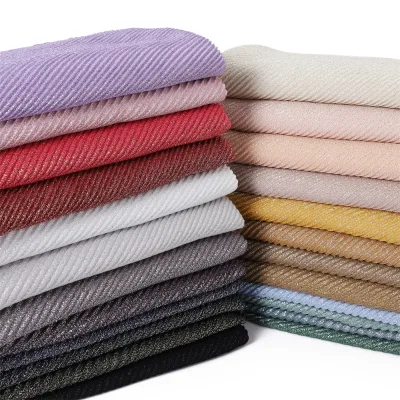
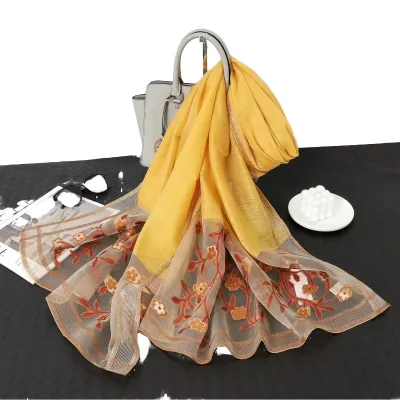
The color palette available in the market is extensive, ranging from "fashion trends" to specific solid shades like skin color, light purple, burgundy, black, navy blue, silver gray, and white. Some listings indicate multiple color options, while others specify exact SKU-based color codes tied to height requirements, such as "175cm and above." This suggests that sizing may be correlated with specific colorways or fabric batches. The pattern types observed include floral designs and customized options, alongside "others" which may encompass geometric or abstract prints. The ability to customize patterns is a significant advantage for brands seeking unique identity markers.
Technical Attributes and Production Processes
The manufacturing process significantly influences the final quality and breathability of the hijab. A key observation in the current supply landscape is the adoption of eco-friendly dyeing processes. This approach not only reduces environmental impact but often results in colorfastness that is superior to traditional chemical dyes, ensuring the vibrant colors do not bleed during washing. The washing process also incorporates environmental protection additives, which helps maintain the fabric's integrity and softness over time.
Printing methods are another critical technical aspect. The market supports a variety of techniques, including digital print, screen print, and heat transfer print. Digital printing is particularly relevant for complex floral patterns and customized designs, offering high precision and color accuracy. Screen printing remains a robust option for bold, solid colors, while heat transfer is often used for specific graphic applications. The choice of printing method affects the "hand-feel" of the fabric; some methods may leave a stiffer residue, whereas others preserve the silky soft texture essential for comfort.
Compliance with safety standards is embedded in the production workflow. Many suppliers implement needle detection systems to ensure no metal fragments remain in the finished product, a crucial safety feature for garments worn close to the face and neck. The application of these products is primarily for outdoor activities, suggesting that the fabric must withstand varying weather conditions while maintaining its structural integrity. The "anti-bacterial" feature observed in some listings adds a layer of hygiene, making the product suitable for daily wear in diverse environments.
Cost Drivers and Pricing Dynamics
The pricing structure for breathable Muslim hijabs is influenced by several factors, including material quality, production complexity, and order volume. The observed price range in the market spans from 1.6 to 5.2 USD per unit. This variance reflects differences in material sourcing, such as the distinction between pure silk and silk blends, as well as the intricacy of the printing and dyeing processes. Higher-end products with custom designs and specialized eco-friendly treatments naturally command a premium within this range.
Minimum Order Quantity (MOQ) is a significant cost driver for buyers. The market typically requires an MOQ between 50 and 1000 units. Smaller orders near the 50-unit threshold may incur a higher per-unit cost due to the fixed overheads of setup and production runs. Conversely, larger orders approaching the 1000-unit mark often benefit from economies of scale, potentially lowering the unit price. Buyers must balance their inventory needs with cash flow constraints to optimize the total cost of ownership.
Packaging and logistics also contribute to the overall cost. Standard packaging often involves individual polybags (1PCS Per Polybag) or OPP bags, with specific dimensions such as 20x30x1cm for compact storage. However, larger single packages can reach dimensions of 300x100x50 cm, which significantly impacts shipping costs and storage requirements. The single gross weight of items, observed at 10.0 kg for certain bulk packages, further influences freight calculations. Buyers should request detailed packaging specifications to accurately estimate landed costs.
Supplier Evaluation and Origin Verification
Identifying reliable suppliers requires a thorough vetting process focused on origin and operational transparency. The majority of the products in this category originate from Zhejiang, China, a region known for its robust textile manufacturing capabilities. The designation "Made in China" is a common origin marker, but buyers should seek suppliers who can provide more granular location details to ensure supply chain stability.
When evaluating potential partners, buyers should verify the supplier's capacity to meet specific production standards. The presence of needle detection systems and eco-friendly processes indicates a commitment to quality and safety. It is essential to confirm that the supplier can consistently deliver products that meet the "silky soft" hand-feel and "anti-bacterial" feature claims through independent testing or third-party verification.
The brand name "YX" appears in the product listings, suggesting established manufacturers with defined product lines. However, buyers should not rely solely on brand recognition. Instead, they should assess the supplier's ability to handle customization requests, such as specific pattern types or color combinations. The availability of "fashion trends" and "customized" options indicates a flexible production line, but the supplier must demonstrate the technical capability to execute these changes without compromising quality.
Quality Control and Compliance Standards
Quality control is paramount in the textile industry, particularly for products worn directly against the skin. Buyers must establish clear acceptance criteria based on the observed product attributes. The "Needle detection: Yes" attribute is a non-negotiable safety standard that should be verified through on-site audits or third-party inspection reports. This ensures that the final product is free from metal contaminants that could pose a risk to the wearer.
Compliance with environmental standards is increasingly important for global buyers. The use of "Eco-Friendly Dye" and "Environmental Protection Additive" in the washing process suggests a move towards sustainable manufacturing. Buyers should request documentation proving the efficacy of these processes, such as certifications for low chemical usage or biodegradability. While specific certification names are not provided in the general data, the presence of these processes indicates a supplier's alignment with modern environmental expectations.
Dimensional accuracy is another critical quality metric. The standard dimensions of 180x70cm or 85x180cm must be strictly maintained. Deviations in length or width can affect the drape and coverage of the hijab, leading to customer dissatisfaction. Buyers should implement a sampling protocol to verify that the production run matches the specified model standards. Additionally, the "Anti-Bacterial" feature requires validation through appropriate testing methods to ensure the claim is substantiated.
Typical Applications and Market Segmentation
The primary application for these breathable hijabs is for outdoor activities, indicating a need for durability and comfort in varying weather conditions. The "Adult" and "Women" department classifications confirm the target demographic. The "Autumn" season specification suggests that these products are optimized for cooler weather, yet the breathable nature of the silk material ensures they remain comfortable in transitional seasons.
The variety of color options, including specific shades like skin color, light purple, and navy blue, caters to diverse fashion preferences. The "Floral" pattern type appeals to buyers seeking traditional or nature-inspired designs, while "Customized" options allow for brand-specific differentiation. The "Long" style of length is particularly suitable for modesty requirements, providing ample coverage for various wrapping styles.
Buyers should consider the "Single item" selling unit structure, which simplifies inventory management for retailers. However, the large single package size of 300x100x50 cm for certain models may require specialized storage solutions. Understanding the specific application context helps in selecting the right product mix, balancing fashion trends with functional requirements like breathability and anti-bacterial properties.
Long-Term Procurement Considerations
Sourcing breathable Muslim hijabs is a long-term strategic decision that requires careful planning regarding lead times and supply chain resilience. The observed delivery time of 7 to 15 working days is a critical factor for inventory planning. Buyers must account for this lead time when forecasting demand, especially during peak seasons or promotional periods.
The ability to customize patterns and colors is a key differentiator for long-term partnerships. Suppliers who offer "Customized" pattern types and "Multiple Color Options" enable buyers to adapt to changing fashion trends without significant retooling costs. This flexibility is essential for maintaining a competitive edge in the fast-moving apparel market.
Finally, buyers should prioritize suppliers who demonstrate a commitment to quality and sustainability. The combination of eco-friendly processes, needle detection, and high-quality materials like silk indicates a supplier capable of delivering premium products. By focusing on these attributes, buyers can build a reliable supply chain that meets the evolving needs of the market while maintaining high standards of safety and comfort. Continuous communication and regular quality audits will ensure that the procurement strategy remains aligned with business goals and customer expectations.
FAQs
What printing methods are available for breathable muslim hijabs?
Digital Print, Screen Print, and Heat Transfer Print are available methods. These techniques support both floral patterns and customized designs while maintaining the silky soft hand-feel required for comfort.
How are the dimensions of these hijabs specified?
Standard dimensions include 180 by 70cm and 85 by 180cm models. Buyers should verify the exact length and width against model numbers like HY250606105-2 or YX-6187 to ensure proper draping.
Can I find breathable muslim hijabs with eco-friendly production?
Yes, products utilize Eco-Friendly Dye and Environmental Protection Additive washing processes. These methods ensure colorfastness and fabric integrity while reducing environmental impact during manufacturing.
What is the typical delivery time for these orders?
The delivery time ranges from 7 to 15 working days. This lead time applies to orders originating from Zhejiang, China, and should be factored into inventory planning for peak seasons.
Which safety standards are applied to these garments?
Needle detection is implemented to ensure no metal fragments remain in the finished product. This safety feature is critical for garments worn close to the face and neck.
What are the minimum order quantities for sourcing?
Minimum Order Quantities typically range between 50 and 1000 units. Smaller orders near 50 units may have higher per-unit costs compared to larger orders that benefit from economies of scale.
How are the hijabs packaged for shipping?
Items are packed in OPP bags or polybags with dimensions like 20 by 30 by 1cm. Some bulk packages may reach 300 by 100 by 50 cm, impacting storage and freight calculations.