Source breathable non-slip walking sneakers for running, hiking, and daily use
Explore 30 listings of breathable non-slip walking sneakers designed for comfort and safety. Buyers can compare features like anti-slip patterns, breathable materials, and sizing options to find suitable footwear for various activities.
Key considerations
Products List


PU/Fabric Upper Versatile Adventure Sneakers for Durability Breathability
$11.20 - $12.99
MOQ: 1 Pairs


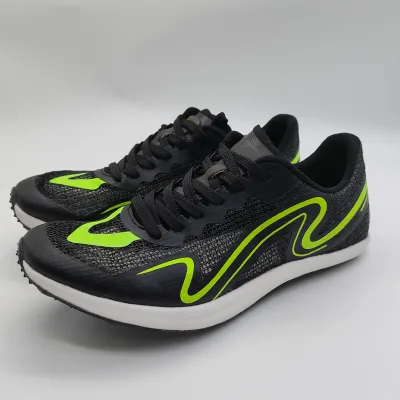


Durable Hiking Shoes and Shock-Absorbing Running Sneakers for Outdoor Adventures
$10.80 - $18.50
MOQ: 500 Pieces

Sports Walking Sneakers for Men with Shock Absorption and Durable Outsole
$5.00 - $15.00
MOQ: 500 Pieces

Customized Running Shoes and Breathable Men's Climbing Sneaker for Gym Workouts
$10.80 - $18.50
MOQ: 500 Pieces
Comprehensive Sourcing Guide
Strategic Sourcing Guide for Breathable Non-Slip Walking Sneakers
Understanding Product Attributes and Technical Specifications
When sourcing breathable non-slip walking sneakers, buyers must first distinguish between the specific technical attributes that define the product category. The core requirement involves a balance of airflow and traction, which is often achieved through specific material combinations. In the current market, upper materials frequently cited include PU and Mesh. Mesh is particularly critical for the "breathable" claim, as its porous structure facilitates air circulation, reducing heat buildup during extended wear. Conversely, PU offers structural durability and water resistance, though it may vary in breathability depending on the weave density.
The lining material is another pivotal specification. Observations indicate that Cotton Fabric and Mesh are common choices. Cotton provides a soft, comfortable interface against the skin, while Mesh linings further enhance ventilation. For the sole assembly, the outsole material is almost universally Rubber. This material is essential for the "non-slip" or "anti-slip" function, providing the necessary friction coefficient against various surfaces. The midsole often utilizes EVA (Ethylene-Vinyl Acetate) to offer shock absorption, a feature frequently highlighted as "Air Cushion" in product descriptions. This combination of EVA midsoles and rubber outsoles creates a stable platform for walking and light running activities.
The design of the upper closure also impacts functionality. Lace-up patterns are standard, allowing for a customizable fit that secures the foot during movement. Some variations may feature elastic bands for ease of entry, though lace-up systems generally offer superior adjustability for different foot shapes. The heel height is typically flat, which is optimal for walking as it maintains a natural gait and reduces strain on the Achilles tendon. Seasonal versatility is a key selling point; products are often marketed for all four seasons (Winter, Summer, Spring, Autumn), though specific listings may highlight Winter or Summer suitability based on insulation or ventilation needs.
Compliance Verification and Certification Standards
Navigating the compliance landscape for footwear requires careful verification of standards, as not all products automatically meet international safety benchmarks. While specific certification statuses cannot be assumed for every listing, buyers should be aware of the relevant standards that govern safety and performance in the footwear industry. These include ASTM F2413-18 for impact resistance, ISO 20345:2011 for safety footwear, and ISO 20347:2022 for occupational footwear. Additionally, ASTM F2913-19 addresses slip resistance.
It is crucial to understand that the presence of these standards in a supplier's documentation does not guarantee that a specific batch of sneakers has been tested and certified. Buyers must request specific test reports for the exact model they intend to purchase. The product data indicates that some items are designed for specific uses such as "Racing Jumping Running" or "Sports Active," which may imply different performance thresholds than general walking sneakers. For instance, a shoe marketed as a "Professional Running Spike Shoe" will have different traction and weight requirements compared to a general "Walking Sneaker."
When evaluating compliance, buyers should verify if the supplier has the capability to produce goods that meet these standards. The origin of the products is frequently listed as Fujian, China, or generally China. While this region is a major manufacturing hub, it does not inherently confer compliance. The buyer must explicitly ask for third-party laboratory test results that confirm the anti-slip properties and material safety. Relying on generic claims of "Anti-slip Pattern" without supporting data is risky. The verification process should include checking for the specific standard numbers mentioned above and ensuring the test dates are current.
Cost Drivers and Pricing Dynamics
The pricing of breathable non-slip walking sneakers is influenced by several dynamic factors, primarily material quality, order volume, and customization requirements. The observed price range in the market spans from approximately $3.00 to $43.99 USD. This wide disparity suggests significant variation in product quality, brand positioning, and the complexity of the manufacturing process. Lower-priced items often utilize basic PU and Mesh combinations with standard rubber outsoles, while higher-priced options may feature advanced EVA formulations, premium cotton linings, or specialized anti-microbial treatments.
Order volume is a critical cost driver. The Minimum Order Quantity (MOQ) varies drastically, ranging from a single pair to 5,000 pairs. A buyer requesting a sample or a very small batch (e.g., 12 pairs) will likely face a higher unit cost compared to a bulk order of 800 pairs or more. The data indicates that some suppliers offer an MOQ of 800 pairs for specific models, while others are flexible enough to accept orders as low as one pair. This flexibility allows buyers to test the market with minimal financial risk but at a premium per unit.
Customization is another significant factor affecting cost. The availability of OEM (Original Equipment Manufacturer) and ODM (Original Design Manufacturer) services is confirmed for many suppliers. Customizing the color palette, which includes options like Black, White, Blue, Pink, Gold, Red, Yellow, Brown, Silver, Grey, Orange, Purple, Beige, and Green, adds to the production complexity and cost. Similarly, custom branding or specific model numbers (e.g., "AJ" or "sneaker") requires setup fees and potentially longer lead times. The single package size and gross weight (e.g., 45x50x60 cm and 3.0 kg) also influence logistics costs, which should be factored into the total landed cost calculation.
Typical Applications and Usage Scenarios
Breathable non-slip walking sneakers serve a diverse range of applications, extending beyond simple daily walking. The product attributes highlight usage in "Racing Jumping Running," indicating that many of these sneakers are versatile enough for athletic activities. However, the core keyword focuses on walking, which implies a need for comfort and stability over long periods. The "Sports Active" style and "Flat" heel height make them suitable for gym workouts, light jogging, and general outdoor activities.
The seasonal versatility of these shoes allows them to be used year-round. Listings often specify suitability for Winter, Summer, Spring, and Autumn. However, buyers should note that specific models may have conflicting attributes, such as being labeled "Waterproof" or "Not Waterproof." For winter applications, a waterproof or insulated lining (like Cotton Fabric) might be preferred, whereas summer use demands maximum breathability through Mesh linings and uppers. The "Anti-microbial" feature is particularly relevant for high-usage scenarios where foot hygiene is a concern, such as in healthcare or service industries.
The "Anti-slip Pattern" on the outsole is designed for various surfaces, making these shoes suitable for environments where traction is critical. This includes wet floors, uneven terrain, or industrial settings. The "Shock absorption" provided by the Air Cushion or EVA midsole is essential for reducing fatigue during prolonged standing or walking. Therefore, these sneakers are not just fashion items but functional tools for professionals who spend significant time on their feet.
Supplier Evaluation and Sourcing Strategy
Selecting the right supplier requires a rigorous evaluation process that goes beyond price comparisons. Buyers should prioritize suppliers who offer OEM/ODM support, as this indicates a level of manufacturing flexibility and quality control. The ability to customize the product, including color and branding, is a strong indicator of a supplier's capability to meet specific buyer requirements. The location of the supplier, often in Fujian, China, is a common hub for footwear manufacturing, but buyers should verify the specific factory's capacity and reputation.
Lead times and delivery capabilities are also critical. Some suppliers advertise a delivery time of "About Three Days," which is exceptionally fast and may apply only to samples or specific stock items. For bulk orders, lead times will likely be longer. Buyers must clarify the distinction between sample delivery and production lead times. The "Single package size" and "Single gross weight" provided in the data help in estimating shipping costs and logistics planning.
When evaluating suppliers, buyers should request samples to physically verify the "Breathable" and "Non-slip" claims. The ability to take a sample is explicitly mentioned as a service, which is a positive sign. Buyers should inspect the sample for the quality of the stitching, the durability of the rubber outsole, and the comfort of the EVA midsole. Additionally, checking the supplier's response to compliance inquiries is vital. A reliable supplier will be transparent about their testing capabilities and willing to provide documentation for the standards mentioned earlier.
Quality Control and Long-Term Procurement Considerations
Ensuring consistent quality is paramount in long-term procurement. Buyers should establish clear quality control protocols that align with the product specifications. This includes verifying the consistency of the upper material (PU vs. Mesh), the lining material (Cotton vs. Mesh), and the outsole rubber compound. The "Resilient" and "Breathable" features must be maintained across all units in a production run. Regular inspections should focus on the integrity of the "Lace-up" or "Elastic Band" closure systems, as these are common points of failure.
For long-term relationships, buyers should consider the scalability of the supplier. The wide range of MOQs (1 to 5,000 pairs) suggests that suppliers can accommodate both small and large orders. However, buyers should negotiate terms that allow for flexibility in order sizes as market demand fluctuates. The availability of multiple color options (Black, White, Blue, etc.) allows for product differentiation and inventory management strategies.
Finally, buyers must remain vigilant about the potential for conflicting product attributes. For example, a shoe listed as "Waterproof" may not be the best choice for a "Breathable" summer application. Buyers should carefully cross-reference the specifications of each model to ensure they match the intended use case. By maintaining a disciplined approach to specification verification, compliance checks, and supplier evaluation, buyers can successfully source high-quality breathable non-slip walking sneakers that meet their specific operational needs.
FAQs
What customization options are available for these sneakers?
Customization is available for these sneakers through OEM and ODM services. Buyers can request specific colors from the listed palette and may customize branding, though lead times and minimum order quantities will vary based on the extent of the changes requested.
How many pairs must I order to meet the minimum requirement?
The minimum order quantity varies significantly depending on the specific product listing. Some options allow for a single pair or twelve pairs, while other models require a bulk order of 800 pairs or up to 5000 pairs to proceed with production.
Can I take a sample before placing a bulk order?
Yes, you can take a sample before committing to a large order. This allows you to verify the breathable mesh upper, anti-slip rubber outsole, and comfort features like the EVA midsole before finalizing the procurement of the full batch.
What materials are used for the upper and lining?
The upper materials typically include PU and Mesh to ensure breathability and durability. Lining options vary between Cotton Fabric for comfort and Mesh for enhanced ventilation, depending on the specific model and seasonal requirements such as winter or summer use.
Which certifications apply to these footwear products?
Relevant standards include ASTM F2413-18 for impact resistance and ISO 20345:2011 for safety footwear. Buyers must request specific test reports for the exact model, as generic claims do not guarantee that every batch meets these international safety benchmarks.
How long does delivery take for these shoes?
Delivery times vary, with some suppliers offering about three days for samples or specific stock items. Bulk production lead times will be longer and depend on the order volume, customization needs, and the specific factory capacity in Fujian, China.
What is the price range for these walking sneakers?
The observed price range spans from 3 to 43.99 USD per pair. Lower prices often correspond to basic MOQs and standard materials, while higher prices reflect advanced features, customization, or smaller order volumes that incur a premium per unit.