Find breathable quick-dry badminton socks for tennis, sports, and training
Source 30 options for breathable quick-dry badminton socks designed for athletic performance. Buyers can compare features like embroidery, anti-slip silicone dots, and custom packaging from manufacturers in China with MOQs starting at 100 pairs.
Key considerations
Products List


Sports Socks for Women Pink Towel Bottom Tennis Anti Slip Badminton Socks
$1.40 - $1.89
MOQ: 100 Pairs
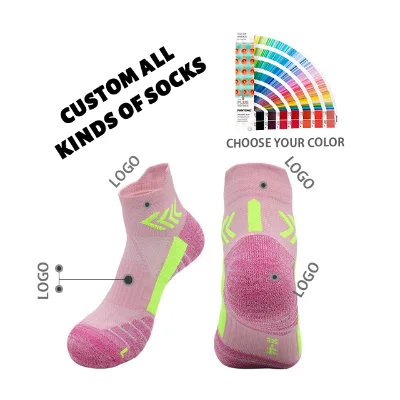


Women's Athletic Tennis Badminton Socks Breathable Sports Tennis Crew Sock
$0.20 - $1.50
MOQ: 200 Pairs

Custom Logo White Athletic Beach Tennis Socks Crew Striped Sport Badminton Socks
$0.50 - $2.00
MOQ: 200 Pairs

Custom Outdoor Soccer Socks Performance Sports Socks for Table Tennis and Badminton
$0.20 - $1.50
MOQ: 200 Pairs


Comprehensive Sourcing Guide
Strategic Sourcing Guide for Breathable Quick-Dry Badminton Socks
Understanding the Technical Profile of Performance Socks
When sourcing breathable quick-dry badminton socks, buyers must first align their technical requirements with the specific manufacturing capabilities observed in the current market. The core product category is defined by a combination of athletic function and specific material engineering. Based on available product data, the primary functional attributes include antibacterial properties and sweat-absorbent capabilities, which are critical for high-intensity court sports like badminton. The "quick-dry" requirement is intrinsically linked to the material composition, with Nylon identified as a key component in the supply chain. This synthetic fiber choice supports the necessary moisture management and durability required for athletic performance.
The physical specifications for these socks vary significantly across different models, ranging from crew lengths to specific sizing standards like Medium. Buyers should note that while some listings specify "Thick" construction, others may offer varying thickness profiles depending on the intended cushioning level. The production models observed include identifiers such as X101, 269, X98, and 25CARA193, indicating a diverse range of SKUs available from manufacturers. The needle count, a critical metric for fabric density and stitch quality, is reported in ranges of 144n, 168n, and 200n. A higher needle count generally correlates with a finer, smoother fabric surface, which can enhance the breathability and comfort of the sock during rapid lateral movements typical in badminton.
Furthermore, the design and customization options are extensive. The market supports ODM/OEM design models, allowing brands to create unique visual identities. Craftsmanship techniques observed include embroidery, jacquard weaving, heat transfer, and 3D digital printing. These methods allow for the integration of geometric patterns and customized logos, which are often requested by teams and brands. The presence of anti-slip silicone dots is a specific feature noted in the craftsmanship list, providing essential grip for foot stability inside the shoe. Additionally, processes such as DIP dye and tie-dye offer aesthetic variety, while overlock stitching and ironing & setting ensure the structural integrity and professional finish of the final product.
Compliance, Standards, and Verification Protocols
In the realm of B2B procurement, verifying compliance and standards is as vital as evaluating the physical product. The supplied data indicates that the production standard is "Made to order" or "custom," suggesting that many manufacturers operate on a flexible basis rather than adhering to a rigid, pre-existing mass-production standard for every SKU. While one background reference mentions ISO 9001:2000, this is categorized as low-confidence background information and should not be treated as a guaranteed certification for any specific supplier without direct verification. Buyers must treat such claims as observations to be confirmed rather than established facts.
When evaluating a potential supplier for badminton socks, the primary verification step involves confirming the origin and the specific standards applied to the batch. The place of origin is listed as China, with a specific focus on the Zhejiang region. This geographic concentration implies a mature supply chain, but it also necessitates rigorous due diligence regarding local factory certifications. Buyers should request current audit reports rather than relying on historical or generic claims. The "Made to order" nature of the products means that quality control standards must be defined explicitly in the purchase agreement, as the default state is customization rather than adherence to a universal pre-set standard.
Compliance checks should also extend to the materials used. Since Nylon is a confirmed material, buyers should inquire about the source of the polymer and whether it meets specific environmental or safety standards relevant to their target market. For instance, if the socks are intended for export to the European Union or North America, specific chemical restrictions (such as REACH or CPSIA) may apply, even if not explicitly listed in the general product attributes. The absence of explicit certification data in the provided facts underscores the need for buyers to demand third-party test reports for every production run, particularly for antibacterial claims and dye-fastness, which are critical for athletic wear.
Cost Drivers and Pricing Dynamics
The cost structure for breathable quick-dry badminton socks is influenced by a complex interplay of material costs, customization levels, and order volume. The observed price range in the market spans from $0.20 to $9.90 USD per unit. This wide variance is not arbitrary; it reflects the significant differences in production complexity, material quality, and the extent of customization. The lower end of the price spectrum likely corresponds to standard designs with minimal branding, basic packaging, and lower needle counts. Conversely, the higher price points are associated with advanced craftsmanship such as 3D digital printing, complex jacquard patterns, and the inclusion of specialized features like anti-slip silicone dots.
Order volume is a primary driver of unit cost. The Minimum Order Quantity (MOQ) observed ranges from 1 pair to 600 pairs, with a specific high-confidence fact noting an MOQ of 100 pairs for certain models. This flexibility allows buyers to test the market with small batches or commit to larger volumes for better economies of scale. However, the "Made to order" standard implies that setup costs for customization, such as creating new molds for heat transfer or programming new patterns for jacquard machines, are often amortized over the order quantity. Therefore, smaller orders may carry a higher effective unit cost due to these fixed setup expenses.
Additional cost factors include the specific packaging requirements. While standard packaging like OPP bags is available, the market also supports custom packaging solutions. The choice between standard and custom packaging can impact the final landed cost, especially if the custom packaging involves complex design elements or specific branding materials. Furthermore, the lead time for production, observed at 15-25 days, and the sample time of 5-7 days, must be factored into the total cost of ownership. Rush orders or expedited shipping to meet tight deadlines will inevitably increase the overall procurement cost. Buyers should negotiate these variables carefully, understanding that the base price is only one component of the total investment.
Typical Applications and Performance Requirements
The primary application for these socks is clearly defined as sport athletic wear, with specific mentions of tennis and badminton. Badminton, in particular, demands socks that can withstand rapid changes in direction, intense jumping, and prolonged periods of activity. The "breathable" and "quick-dry" attributes are not merely marketing terms but functional necessities for this sport. The sweat-absorbent function is critical to prevent blisters and maintain foot hygiene during matches. The antibacterial property further supports hygiene, reducing odor buildup during extended wear.
The technical specifications support these applications through specific design choices. The "Thick" specification suggests enhanced cushioning, which is beneficial for absorbing the impact of jumps and landings common in badminton. The anti-slip silicone dots provide traction, preventing the foot from sliding inside the shoe, which is a common cause of injury in court sports. The variety of sizes, including Medium, and the availability of crew lengths ensure a proper fit, which is essential for performance. The geometric patterns and customized logos allow teams and brands to maintain a unified aesthetic, which is often a requirement for competitive teams.
Beyond professional sports, these socks are suitable for general athletic training and recreational use. The versatility of the product, with options for different seasons (Spring is noted) and various craft techniques, makes it adaptable to different market segments. The ability to customize the package and the product itself allows suppliers to cater to niche markets, such as corporate team building events or promotional giveaways. The "Make To Order" supply type ensures that the product can be tailored to specific event requirements, such as specific color schemes or logo placements for a tournament.
Supplier Evaluation and Selection Criteria
Selecting the right supplier for badminton socks requires a multi-faceted evaluation process that goes beyond price comparison. Buyers should prioritize suppliers who demonstrate a clear understanding of the "Made to order" model and can provide transparent communication regarding their production capabilities. The presence of specific craftsmanship techniques like embroidery, jacquard, and 3D digital printing indicates a supplier's technical proficiency. A supplier capable of handling high needle counts (up to 200n) is likely to produce higher quality fabric with better breathability and durability.
The location of the supplier is another critical factor. With the origin listed as Zhejiang, China, buyers should verify the proximity of the factory to logistics hubs, as this can impact shipping times and costs. The specific mention of Zhejiang suggests a concentration of textile expertise in that region, but buyers must still verify the individual factory's capacity and reputation. Supplier evaluation should also include a review of their sample process. The observed sample time of 5-7 days is a benchmark; suppliers who can consistently meet or beat this timeline demonstrate operational efficiency.
Furthermore, the ability to handle customization is a key differentiator. Suppliers offering ODM/OEM services, custom packaging, and customized logos are better equipped to meet the unique needs of B2B buyers. Buyers should assess the supplier's flexibility in handling different MOQs, ranging from 1 pair to 600 pairs, to ensure they can accommodate both pilot runs and large-scale orders. The supplier's willingness to provide detailed product specifications, including material composition and craftsmanship details, is a strong indicator of their professionalism and reliability.
Quality Control and Long-Term Procurement Strategy
Implementing a robust quality control (QC) strategy is essential for maintaining product consistency in the custom sock market. Given the "Made to order" nature of the products, QC protocols must be established before production begins. Buyers should define clear acceptance criteria for key attributes such as stitch density, color fastness, and the integrity of the anti-slip silicone dots. Regular in-process inspections and final random inspections (AQL standards) are recommended to catch defects early. The specific craftsmanship techniques, such as overlock stitching and heat transfer, require specific inspection points to ensure they meet the required standards.
Long-term procurement considerations involve building a sustainable relationship with suppliers who can scale with the buyer's growth. The ability to maintain consistent quality across different production runs is crucial. Buyers should establish a feedback loop with the supplier to address any recurring issues and continuously improve the product. The flexibility of the supply chain, evidenced by the wide range of MOQs and customization options, allows buyers to adapt to changing market demands. However, this flexibility must be balanced with the need for stability in lead times and pricing.
To mitigate risks, buyers should diversify their supplier base rather than relying on a single source. This approach ensures continuity of supply in case of disruptions. Additionally, buyers should invest in building a deep understanding of the product specifications, such as the difference between 144n and 200n needle counts, to make informed decisions. By focusing on technical specifications, compliance verification, and supplier reliability, buyers can secure a steady supply of high-quality breathable quick-dry badminton socks that meet the demands of their customers.
Comparative Analysis of Product Attributes
To facilitate decision-making, the following table summarizes the key attributes observed in the market for breathable quick-dry badminton socks. This comparison highlights the variability in specifications and helps buyers identify the features that align with their specific needs.
| Attribute Category | Observed Options | Relevance to Badminton |
|---|---|---|
| Material | Nylon | High moisture-wicking, quick-dry capability |
| Function | Antibacterial, Sweat-absorbent, Non-slip | Hygiene, comfort, foot stability |
| Craftsmanship | Embroidery, Jacquard, 3D Digital Printing, Anti-Slip Silicone DOT | Customization, grip, aesthetic appeal |
| Thickness | Thick | Cushioning for impact absorption |
| Needle Count | 144n, 168n, 200n | Fabric density, breathability, durability |
| MOQ | 1 - 600 Pairs (100 Pairs common) | Flexibility for testing vs. bulk orders |
| Lead Time | 15-25 Days (Production) | Planning for inventory and events |
| Sample Time | 5-7 Days | Speed of prototyping and approval |
| Origin | China (Zhejiang) | Supply chain concentration |
This table serves as a reference for buyers to compare potential products against their specific requirements. It underscores the importance of verifying each attribute individually, as the market offers a wide spectrum of options. By carefully selecting the combination of material, craftsmanship, and specifications, buyers can source socks that perfectly balance performance, cost, and customization needs for the badminton market.
FAQs
What customization options are available for badminton socks?
Customization is available for these socks, including ODM/OEM design models and customized logos. Buyers can select from various craftsmanship techniques like embroidery, jacquard, and 3D digital printing to create unique designs. Custom packaging is also supported to meet specific branding needs.
How long does it take to receive samples for these socks?
Sample time is typically 5 to 7 days for production. This duration allows manufacturers to prepare specific models like X101 or 269 with the requested customization. Buyers should plan their procurement timeline accordingly to ensure samples arrive before finalizing large orders.
What is the minimum order quantity for purchasing these socks?
The minimum order quantity ranges from 1 to 600 pairs depending on the supplier and specific model. Some listings specify an MOQ of 100 pairs for certain batches. Flexible MOQs allow buyers to test the market with small runs or commit to larger volumes for better pricing.
Which materials are used to make these breathable athletic socks?
Nylon is a confirmed material used in the production of these socks. This synthetic fiber supports moisture management and durability required for athletic performance. The material choice contributes to the sweat-absorbent and quick-dry capabilities essential for badminton and tennis activities.
Can I find socks with anti-slip features for court sports?
Yes, anti-slip silicone dots are a specific feature noted in the craftsmanship list. These dots provide essential grip for foot stability inside the shoe during rapid lateral movements. This feature is particularly beneficial for badminton and tennis players requiring enhanced traction.
What is the typical delivery time for bulk orders of these socks?
The delivery date for bulk orders is generally 15 to 25 days. This lead time covers the production process from customization to final packaging. Buyers should account for this duration when planning inventory replenishment or event timelines.
Where are these badminton socks primarily manufactured?
The place of origin is listed as China, with a specific focus on the Zhejiang region. This geographic concentration implies a mature supply chain for textile manufacturing. Buyers should verify specific factory certifications in this region during the sourcing process.