Find BYD Sealion EVs for Fleet, Personal, and Commercial Use
Explore 30 BYD Sealion listings to compare specifications, pricing, and configurations. This guide helps buyers evaluate pure electric and hybrid options for various operational needs and market requirements, ensuring informed decisions for fleet expansion or personal acquisition; compare the available evidence and request quotations based on your requirements.
Key considerations
Products List
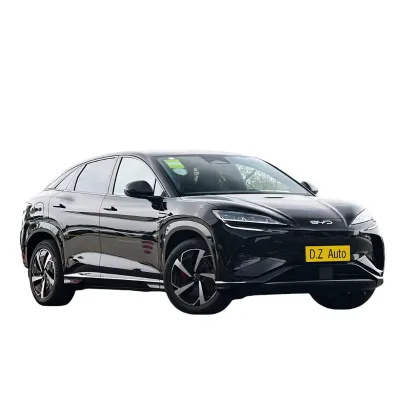


Multifunctional Leather Seats Byd China Electric Vehicle Car Sealion
$28535.00 - $32556.00
MOQ: 1 Pieces

Byd Sealion 07EV Electric Car Provides Smooth Acceleration and Quiet Operation
$28535.00 - $32556.00
MOQ: 1 Pieces

Byd Sealion 07EV Electric Car Delivers Long Range and Fast Charging Capability
$28535.00 - $32556.00
MOQ: 1 Pieces


Byd Sealion 06 Byd Electric Car Electric Vehicle China Auto Car Byd Song Yuan
$14500.00 - $15000.00
MOQ: 1 unit
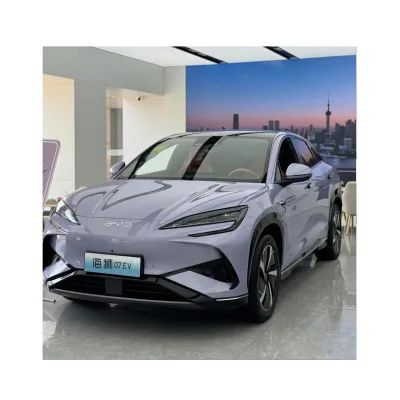

$16550.00
MOQ: 1 Pieces


Byd Sealion 06 Electric SUV New Launch Plus Version New Energy Vehicle
$24800.00 - $26000.00
MOQ: 1 unit

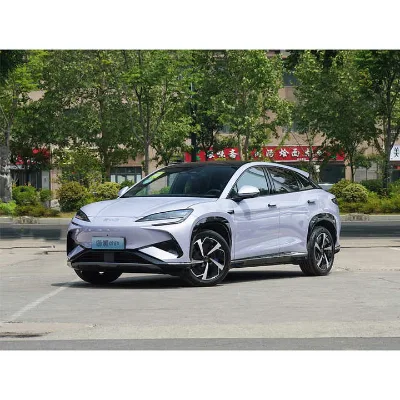


Left Hand Drive Byd Sealion 06 EV Electric SUV China Vehicle Exporter
$19400.00 - $19600.00
MOQ: 1 Pieces

Byd Sealion 06 Dm-I 5 Seater Medium Plug-in Hybrid SUV New Energy Vehicle
$18953.00 - $19053.00
MOQ: 1 Pieces
Comprehensive Sourcing Guide
BYD Sealion Sourcing Guide
The BYD Sealion 07 represents a significant entry in the new energy vehicle market, specifically targeting the mid-to-large SUV segment with a focus on pure electric and plug-in hybrid powertrains. Procurement teams must recognize that listings often conflate the Sealion 07 EV with the Sealion 06 sedan, requiring careful verification of the product name and body style to ensure the correct vehicle architecture is being sourced. The observed data indicates a primary focus on the Sealion 07EV, which features a distinct SUV body style with a wheelbase of 2930mm and a curb weight ranging from 2155kg to 2500kg depending on the specific configuration and battery pack.
Buyers should prioritize verifying the energy type and drive configuration, as the supply chain currently offers both Rear-Wheel Drive (RWD) and Front-Wheel Drive (FWD) variants alongside Dual-Motor setups. The product attributes highlight a Pure Electric range of 550km to 610km for the EV models, powered by Lithium Iron Phosphate batteries supplied by brands such as Fudi. When evaluating potential inventory, it is critical to distinguish between the closed-body SUV configurations and any open-body variants that may appear in mixed listings, ensuring the procurement aligns with the intended commercial or fleet application.
Product Scope and Observed Listing Signals
The current market listings for BYD Sealion vehicles display a wide variance in pricing, ranging from approximately $6.80 to over $33,000, which suggests a mix of complete vehicles, partial kits, or potentially mislabeled components. This extreme price dispersion necessitates a rigorous review of the "Selling Units" and "Single Package Size" to confirm whether the transaction involves a fully assembled vehicle or a specific component set. The observed single package dimensions of 450x190x250 cm and a gross weight of 2500kg strongly indicate that the primary listings refer to complete vehicle units rather than individual parts, despite the lower price points that may appear in the data.
Procurement strategies must account for the diversity in exterior colors and customization options, which include Blue, Purple, Snow White, Atlantis Grey, and Sea Green. The availability of customization suggests that buyers can request specific color finishes or interior configurations, but this requires clear communication with the supplier to avoid receiving a standard stock unit. Additionally, the presence of both "New" and "Brand New" condition tags confirms that the market is dominated by fresh inventory, yet buyers must verify the "Condition" field against physical inspection reports to ensure no cosmetic damage occurred during transit from the Henan, China origin point.
Technical Specifications to Verify
Technical due diligence must center on the precise dimensions and powertrain specifications, as the data presents conflicting or varied measurements for length, width, and height across different listings. While one specification lists the vehicle dimensions as 4385x1800x1650mm, another standard reference cites 4830x1925x1620mm, creating a critical ambiguity that must be resolved before finalizing any order. Buyers should explicitly request the exact chassis dimensions and wheelbase measurements for the specific batch they intend to purchase, as these figures directly impact logistics planning, parking requirements, and compatibility with existing infrastructure.
The powertrain and battery specifications are equally critical, with observed outputs ranging from 150 HP to 218 HP and battery capacities supporting ranges of 550km to 610km. Verification of the battery cell brand, specifically the Fudi Lithium Iron Phosphate cells, is essential for assessing long-term durability and thermal stability. Furthermore, the braking system is listed as electromagnetic, and the transmission is a single-speed EV transmission, which simplifies maintenance but requires specific diagnostic tools. Buyers must confirm the steering position is Left-Hand Drive (LHD) and verify the gear type is automatic to ensure the vehicle meets local regulatory and operational standards.
Compliance and Safety Documentation
Compliance verification is paramount when sourcing electric vehicles from China, particularly regarding emissions and safety standards. The product data explicitly states "Zero Tailpipe Emissions" for the EV models and "Ultra-Low Emissions" for the Plug-in Hybrid (DM-i) variants, which aligns with global environmental regulations. However, buyers must obtain official certification documents proving that the specific vehicle batch meets the destination country's safety standards, as the provided text does not list specific international certifications like ECE or FMVSS. The absence of explicit certification data in the listing requires the buyer to demand third-party test reports before shipment.
Safety documentation must also cover the structural integrity and load-bearing capabilities of the vehicle. The observed maximum roof load is listed as 75kg, a figure that must be validated against the vehicle's actual structural design to ensure it meets the intended usage requirements. Additionally, the braking system's electromagnetic nature requires specific safety protocols and maintenance schedules that differ from traditional hydraulic systems. Buyers should request detailed safety manuals and emergency response guides that address high-voltage battery safety, ensuring that local service teams are adequately trained to handle the specific electrical architecture of the BYD Sealion.
Cost Drivers and Commercial Terms
The commercial landscape for BYD Sealion vehicles is influenced by significant cost drivers, including the raw material costs of Lithium Iron Phosphate batteries and the logistics of shipping large, heavy units. The observed MOQ range of 1 to 10 units suggests flexibility for small fleet operators, but the wide price range indicates that unit costs may fluctuate based on order volume and specific configuration requests. Buyers should negotiate based on the total landed cost, factoring in the single gross weight of 2500kg and the substantial package dimensions, which will significantly impact freight charges and insurance premiums.
Payment terms and customization fees are additional variables that can affect the final commercial agreement. The availability of customization options implies that any non-standard requests, such as specific exterior colors or interior trims, may incur additional charges beyond the base vehicle price. It is crucial to clarify whether the listed price includes the "in Nude" packing method or if protective packaging is an extra cost. Buyers must also verify the lead time for customized orders, as the production of specific battery configurations or color finishes may extend the delivery schedule beyond standard stock availability.
Supplier Qualification and Quality Control
Supplier qualification for BYD Sealion vehicles requires a thorough vetting process to ensure the entity is an authorized distributor or a verified manufacturer representative. Given the high value of the assets and the complexity of the technology, buyers should verify the supplier's business license and their specific authorization to sell BYD products in the target market. The origin is listed as Henan, China, so buyers must confirm the specific factory location and production capacity to ensure the supplier can meet volume demands without compromising quality control standards.
Quality control protocols must be established to address the potential discrepancies observed in the product specifications, such as the varying dimensions and weight figures. Buyers should implement a pre-shipment inspection protocol that verifies the actual vehicle dimensions, battery health, and software version against the agreed-upon specifications. This is particularly important given the mix of RWD and FWD models in the listings, as the wrong configuration could render the vehicle unsuitable for the intended application. A third-party inspection agency should be engaged to validate the physical condition and technical performance of the units before they leave the Henan facility.
Long-Term Procurement Checks
Long-term procurement success depends on establishing a robust after-sales support framework that covers battery maintenance, software updates, and spare parts availability. The Lithium Iron Phosphate battery technology used in the Sealion 07 offers a long lifespan, but buyers must secure a service agreement that guarantees access to replacement cells and diagnostic tools. The single-speed transmission and electromagnetic braking system require specialized knowledge, so the supplier must provide comprehensive training for local maintenance teams to ensure the fleet remains operational and safe over its lifecycle.
Buyers should also monitor the evolution of the BYD Sealion product line, as the market data shows multiple model names and variations, including the Sealion 06 sedan and the Sealion 07 SUV. This indicates a rapidly evolving product portfolio, and procurement strategies must be flexible enough to accommodate future model updates or technology shifts. Establishing a long-term partnership with the supplier will facilitate access to the latest firmware updates and safety recalls, ensuring that the fleet remains compliant with changing regulations and maintains its resale value in the secondary market.
FAQs
What is the battery type for the BYD Sea Lion 07?
The vehicle uses a Lithium Iron Phosphate Battery with cells from Fudi. This chemistry offers high safety and long cycle life. The pure electric range reaches 550km or 610km depending on the specific configuration selected by the buyer.
Which drive types are available for this BYD model?
Available drive configurations include both Rear-Wheel Drive and Front-Wheel Drive options. The transmission is a single-speed EV unit designed for efficiency. Buyers can select the steering position as left-hand drive for specific regional requirements.
How large is the center control screen in this car?
The center control screen measures exactly 10.25 inches diagonally. A separate LCD dashboard displays information on a 4.2-inch screen. These digital interfaces support the vehicle's pure electric operation and connectivity features like Bluetooth keys.
Can I customize the exterior color of the BYD Sea Lion?
Customization is available for this vehicle model to meet specific buyer needs. Standard exterior colors include options like Blue, Purple, Snow White, and Atlantis Grey. The body style is an SUV with a closed body type for passenger comfort.
What are the dimensions of the BYD Sealion 07 EV?
The vehicle length is 4385mm with a width of 1800mm and height of 1650mm. The wheelbase measures 2930mm for stable handling. Ground clearance is 140mm, and the single gross weight is approximately 2500kg for shipping calculations.
Where is the BYD Sea Lion 07 manufactured?
The place of origin for this vehicle is Henan, China. The product origin is listed generally as China. This location influences the supply chain and logistics for international buyers seeking new energy vehicles from this specific manufacturing region.