Source High Roof Electric Mini Bus for Airport and Resort Use
Source the High Roof Electric Mini Bus for airport transfers, resort shuttles, and urban tours. Compare 30 listings featuring Catl batteries, automatic transmissions, and varying ranges from 235km to 300km. Find suitable models with LHD or RHD configurations and ISO certifications.
Key considerations
Products List


Rhd China High Quality Electric Bus High Roof Electric Mini Cargo Van Best Quality Hot Selling
$18500.00 - $19000.00
MOQ: 1 Pieces

Rhd New Energy Electric Mini Bus High Range Electric City Bus From China
$23000.00 - $23500.00
MOQ: 1 Pieces


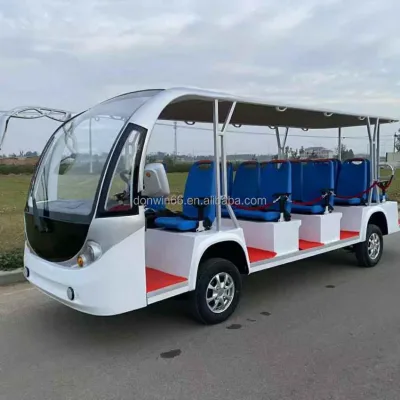


Electric Mini Bus for 23 Passengers - Open Air Sightseeing Experience
$11840.00 - $13540.00
MOQ: 1 Pieces


Comprehensive Sourcing Guide
High Roof Electric Mini Bus Sourcing Guide
Procuring a High Roof Electric Mini Bus requires distinguishing between standard and elevated roof configurations, as the latter often accommodates taller cargo or standing passengers. Buyers must verify that the listed vehicle dimensions match the specific "high roof" requirement, noting observed standard lengths around 5300 mm and heights up to 2260 mm in the current market data. This distinction is critical for ensuring the vehicle fits intended operational routes and garage clearances without modification.
The observed product range includes models with varying battery capacities, such as 50.23 kWh and 83.58 kWh units, which directly influence the driving range and payload efficiency. Sourcing teams should prioritize listings that explicitly state the roof height and internal volume, as generic descriptions may obscure the actual cargo box size of 326015451625 mm found in some units. Confirming these physical attributes prevents mismatches between the vehicle's design and the specific logistical needs of the buyer.
Product Scope and Observed Listing Signals
Market listings for these vehicles frequently display a wide price spectrum, ranging from approximately 3,099 USD to 165,600 USD, reflecting differences in battery size, motor power, and brand positioning. Buyers should treat these figures as indicative of the broader market rather than a fixed price point for a specific configuration. The minimum order quantity is consistently observed as one unit, allowing for flexible procurement strategies without the burden of large initial inventory commitments.
Listing signals often highlight customization availability, suggesting that buyers can tailor features like seating capacity or steering position to their specific operational requirements. Some units are listed with a driving range of up to 300 km, while others specify 245 km, indicating that range claims vary significantly by model and battery configuration. Procurement teams must cross-reference these claims with the specific motor power ratings, which typically fall between 50 and 80 kW, to ensure the vehicle meets performance expectations.
Technical Specifications to Verify
Technical verification must begin with the wheelbase and overall dimensions, as observed data shows variations such as 2890 mm wheelbases and standard lengths of 5300 mm or 5330 mm. Buyers should confirm the exact external dimensions, including the height, to ensure the high roof design meets clearance requirements for tunnels and parking structures. The total mass is often listed around 3490 kg, which dictates the permissible payload and must be reconciled with the vehicle's intended load capacity of up to 10 tons in some heavy-duty configurations.
Battery and motor performance are critical technical parameters that define the vehicle's operational viability. The market data indicates battery capacities ranging from 50.23 kWh to 83.58 kWh, with driving ranges reported between 235 km and 300 km depending on the specific model and load conditions. Buyers must verify the motor power output and transmission type, noting that automatic transmissions are standard, to ensure the vehicle can handle the required speed profiles, which are observed up to 100 km/h in certain models.
Compliance and Safety Documentation
Compliance verification requires checking for specific certifications such as CCC, which is a mandatory standard for vehicles manufactured in China. Buyers should request proof of these certifications to ensure the vehicle meets local regulatory requirements for road use and safety. The presence of ISO tire certifications and specific tire designs, such as tubeless types, further indicates adherence to safety standards, but these must be validated against the specific model's documentation before purchase.
Safety documentation also includes warranty terms and condition reports, which are essential for managing long-term operational risks. The observed warranty period for the whole electric bus is typically 12 months, a standard term that buyers should confirm in the final contract. Additionally, verifying the vehicle condition as "New" and ensuring that the battery type, such as Lithium Iron Phosphate, is clearly documented helps mitigate risks associated with battery degradation and performance failures.
Cost Drivers and Commercial Terms
The primary cost drivers for high roof electric mini buses include battery capacity, motor power, and the specific configuration of the cargo box or seating area. Larger batteries, such as the 83.58 kWh units, naturally command higher prices compared to the 50.23 kWh options, directly impacting the total cost of ownership. Buyers should analyze the trade-off between initial purchase price and long-term energy efficiency, considering the observed fuel consumption claims of "low fuel consumption" for electric models.
Commercial terms often involve specific packing and shipping arrangements, with options ranging from nude packing to full container installation. The observed shipping methods include sea transport, which influences lead times and logistics costs. Buyers must clarify whether the price includes full installation or if the vehicle arrives as a bare chassis, as this significantly affects the final delivery cost and the timeline required to make the vehicle operational.
Supplier Qualification and Quality Control
Supplier qualification should focus on the manufacturing origin, with observed production locations in Jiangsu and Shandong, China, indicating established industrial hubs for electric vehicle manufacturing. Buyers must verify the supplier's ability to provide consistent quality control, especially given the variation in observed specifications like wheelbase and battery capacity across different models. Ensuring the supplier has a track record of meeting the 12-month warranty terms is crucial for maintaining operational continuity.
Quality control processes must include rigorous testing of the battery system and motor performance to ensure they match the advertised specifications. Buyers should request detailed test results for the driving range and maximum speed, which are observed to vary between 80 km/h and 100 km/h depending on the model. Verifying the steering position, whether LHD or RHD, and the seating capacity, such as the nine-seat configuration, ensures the vehicle meets the specific operational needs of the buyer's fleet.
Long-Term Procurement Checks
Long-term procurement checks should prioritize the availability of spare parts and the supplier's support infrastructure for maintenance and repairs. Given the complexity of electric powertrains, buyers must ensure that the supplier can provide technical support for battery management systems and motor controllers. The observed warranty period of 12 months is a baseline, and buyers should negotiate extended support terms to cover the critical early years of vehicle operation.
Sustainability and lifecycle management are also key considerations for long-term procurement. Buyers should assess the recyclability of the Lithium Iron Phosphate batteries and the supplier's policies on end-of-life vehicle disposal. Monitoring the vehicle's performance over time, including the actual driving range versus the advertised 300 km, helps in making informed decisions about future fleet expansions and replacements.
FAQs
What is the driving range of the High Roof Electric Mini Bus?
The driving range varies by model, with observed values of 235 km, 245 km, 260 km, and 300 km. Specific range depends on the battery capacity, which can be 50.23 kWh or 83.58 kWh, and the motor power configuration selected for your operational needs.
Which battery type is used in these electric mini buses?
These vehicles utilize Lithium Iron Phosphate Storage Batteries for safety and longevity. The battery capacity options include 50.23 kWh and 83.58 kWh, with some units specifically sourced from Catl to ensure high performance and reliability for commercial transport applications.
Can the High Roof Electric Mini Bus be customized for buyers?
Yes, customization is available for this electric mini bus to meet specific operational requirements. Buyers can select from various configurations including seating capacity, steering positions like LHD or RHD, and specific cargo box dimensions to fit their unique transport logistics needs.
What is the warranty period for the whole electric bus?
The whole electric bus comes with a 12-month warranty covering the entire vehicle. This warranty applies to the new condition units manufactured in China, providing buyers with assurance regarding the quality and durability of the electric powertrain and chassis components.
How many seats are available in the High Roof Electric Mini Bus?
Seating capacity varies by model, with options including nine seats or configurations suitable for standard styles. The vehicle dimensions and interior layout are designed to accommodate different passenger loads while maintaining the high roof structure for enhanced headroom and comfort.
What certifications do these electric mini buses hold?
These vehicles hold CCC certification and ISO tire certification to ensure compliance with safety standards. The products are manufactured in Jiangsu and Shandong, China, adhering to specific production standards that guarantee quality and safety for international buyers seeking reliable electric transport solutions.